-d95a5857.webp&w=3840&q=75)
Wine Terminology
“Where every bottle tells a story”
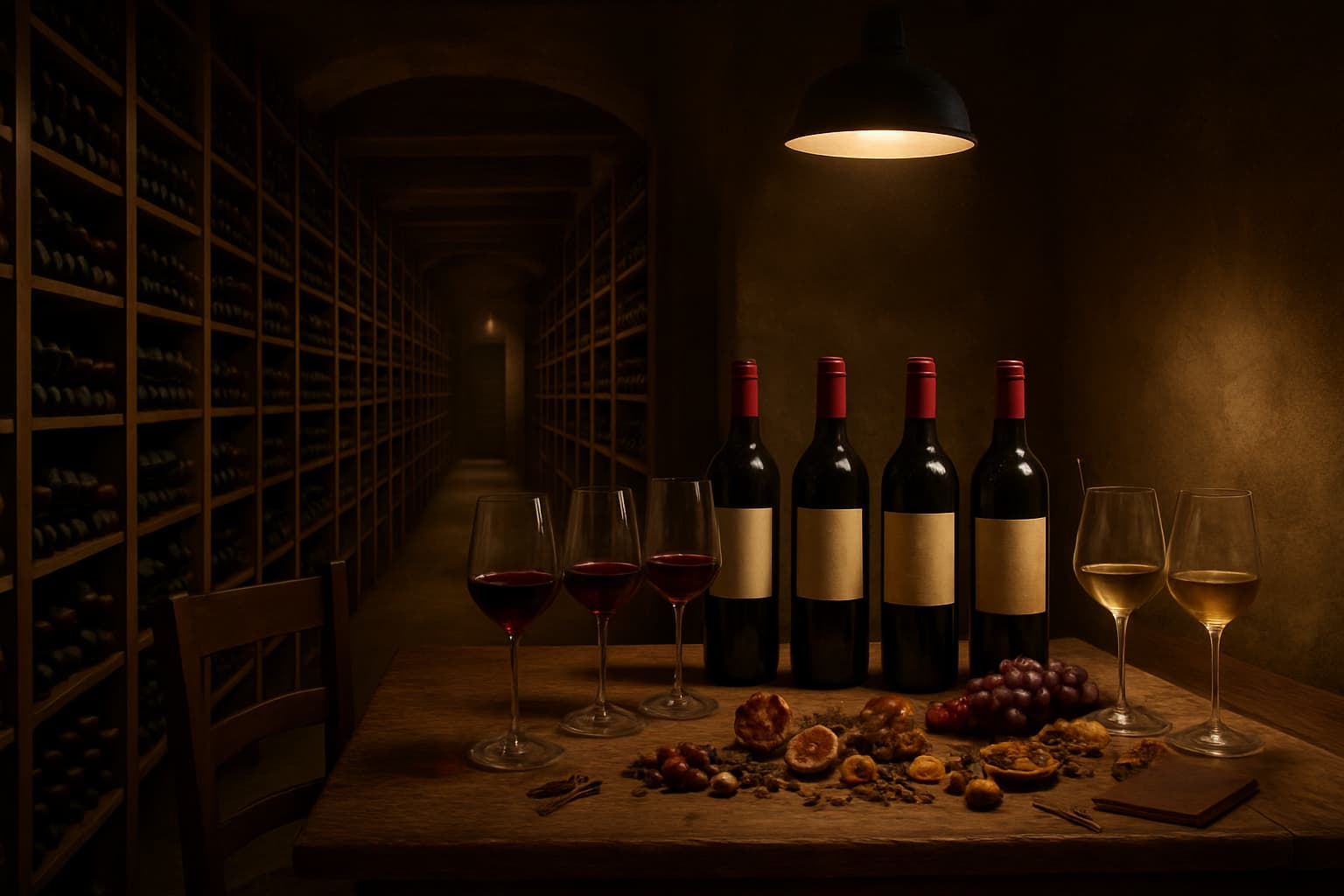
Oh, what a delicious topic we have today—how a wine ages! Pull up a chair, pour yourself a little something (strictly for research, of course), and let’s dive into this marvelous notion called “aging potential.” It’s one of those phrases that people toss around in wine shops with great confidence, but it can sound rather mysterious if no one has ever really explained it to you. So let’s roll up our sleeves and demystify it together.
When people say a wine has “good aging potential,” they’re talking about its ability not just to survive in the bottle over time, but to improve—to become more complex, more harmonious, more interesting than it was when it was young.
A wine with high aging potential:
A wine with low aging potential:
So aging potential is not about snobbery; it’s about understanding what a wine is built for. Some are sprightly youngsters meant to be enjoyed immediately, like a simple roast chicken fresh from the oven. Others are like a long-simmered stew—they need time to come together and show their full glory.
Think of wine as a little ecosystem in a bottle—acids, tannins, sugars, alcohol, and aromatic compounds all jostling about in there. The way these elements are balanced determines whether the wine will age gracefully or fall apart.
Here are the main pillars of aging potential:
Acidity is like the spine of a wine—it holds everything upright.
This is why many white wines that age well—like Riesling or top-quality Chablis—tend to be quite tangy in their youth. That zing is your clue that they have the stamina to go the distance.
Tannins are those drying, slightly bitter compounds you feel on your gums and tongue, especially in red wines. They come mainly from:
In young wines, tannins can feel:
But with time, tannins polymerize—they link together and soften, like a tough cut of meat becoming tender in a long braise. Well-structured tannins are one of the great engines of aging. They give a wine the framework to develop complexity rather than just fading away.
Sugar and alcohol also help preserve wine:
Think of sugar and alcohol as the fat in cooking: in the right amount, they carry flavor and give richness; in excess, they overwhelm.
A wine that ages well usually has:
If any one element sticks out awkwardly in youth—too sharp, too hot, too bitter—it may or may not resolve with age. The best candidates for aging are wines that feel powerful yet balanced even when young.
Now, what’s going on in that quiet, dark bottle all those years? A good deal of chemistry, but let’s keep it friendly.
Young wines often show primary aromas:
As they age, these transform into secondary and tertiary aromas:
It’s like watching a bright, simple melody grow into a full orchestral piece. The tune is still there, but it’s surrounded by layers of harmony.
A well-aged wine can feel almost silky, like a sauce that has been whisked and reduced until it’s perfectly smooth and glossy.
These visual changes are clues to how far along a wine is in its aging journey.
Here’s an important truth: most wines are made to be enjoyed young. Really—and that’s perfectly wonderful.
Many wines are crafted for immediate pleasure:
These wines are like a quick weeknight supper—simple, satisfying, not meant to be fussed over for years. If you keep them too long, they can lose the very qualities that make them charming: freshness, fruitiness, and vibrancy.
So aging potential is not a measure of “quality” in some moral sense; it’s about style and intention. A wine can be absolutely delightful and high-quality and still be best drunk within a year or two.
Although producer, region, and vintage matter enormously, certain grapes and styles are famous for their ability to age.
These wines often age 5–20 years or more, depending on the specific bottling.
And of course, sweet and fortified wines—Sauternes, Tokaji, Port, Madeira, some Sherries—can age for decades, sometimes longer than we do.
Without a crystal ball, you can still make educated guesses. Here are some pointers:
Even a wine with marvelous aging potential can be ruined by poor storage. If you’re going to tuck a bottle away, treat it kindly:
You don’t need a fancy cellar, but you do need to avoid extremes. A cool closet or a dedicated wine fridge can work wonders.
There is no exact stopwatch that dings and says, “Now!” A wine’s peak is a bit like a roast in the oven—you check it, you prod it, you learn from experience.
Clues that a wine is in a good place:
Clues that a wine may be past its best:
Remember, “peak” is also subjective. Some people love the fresh, youthful stage of a wine; others adore the earthy, mature character of a well-aged bottle. There’s room for both preferences at the table.
You don’t need to hoard cases of wine for decades to understand aging potential. Here are some simple ways to learn:
Treat it as a culinary experiment, like trying the same recipe with different cooking times. The fun is in the comparison.
Aging potential is not a mystical quality reserved for rare and expensive bottles; it’s simply the wine’s capacity to grow and transform over time. It depends on structure (acidity, tannin, sugar, alcohol), balance, and the intentions of the winemaker.
Some wines are like fresh salads—best enjoyed immediately. Others are like a grand cassoulet or a long-simmered stock; they need time to come into their own. Neither is “better” in a moral sense—they’re just different culinary (and vinous) experiences.
If you keep a few ideas in mind:
…then you’ll be well on your way to choosing when to drink your bottles with confidence and curiosity.
And that, my dear, is the joy of it: wine is not just a drink, it’s a story in slow motion. Aging potential tells you how long that story can go on—and how many delicious chapters you might discover along the way.
Tannins are astringent compounds found in wine that contribute to its texture and aging potential, often causing a drying or puckering sensation in the mouth. They are derived from grape skins, seeds, and stems, as well as from oak barrels used during aging.
/ˈtænɪnz/
Malic acid is a naturally occurring organic acid found in grapes that contributes to the tart, green apple-like flavor and crispness in wine. It plays a significant role in the taste and acidity of wine.
/mælɪk ˈæsɪd/
Look at the style and grape
If it’s a style known for aging (like a classified Bordeaux or a serious Barolo), chances are it has some potential.
Check the structure
Consider the producer and price
Serious producers making ageworthy wines tend to have a track record—and their wines usually aren’t the cheapest on the shelf. Not always, but often.
Read the back label or producer notes
Many producers will say something like “enjoy now or cellar for 5–10 years.” Take that as a gentle guideline.
Ask your wine merchant
A good wine shop clerk is like a trusted butcher or fishmonger—if you tell them what you’re planning, they can guide you beautifully.
Filtration in winemaking is the process of removing solid particles from wine to clarify and stabilize it before bottling, using various types of filters to achieve different levels of clarity and remove unwanted elements like yeast, bacteria, and sediment.
/fɪlˈtreɪʃən/
Oxidation in wine is a chemical reaction between the wine and oxygen that can change its flavor, aroma, and color. This process can be beneficial or detrimental depending on the extent and context of the exposure.
/ˌɒksɪˈdeɪʃən/
Microclimate refers to the unique climate conditions of a small, specific area within a larger region, significantly influencing grapevine growth and the characteristics of the resulting wine.
/ˈmīkrōˌklīmit/
Get weekly wine recommendations, vineyard news, and exclusive content delivered to your inbox.
-323e09e3.webp&w=3840&q=75)
-220d6fa8.webp&w=3840&q=75)