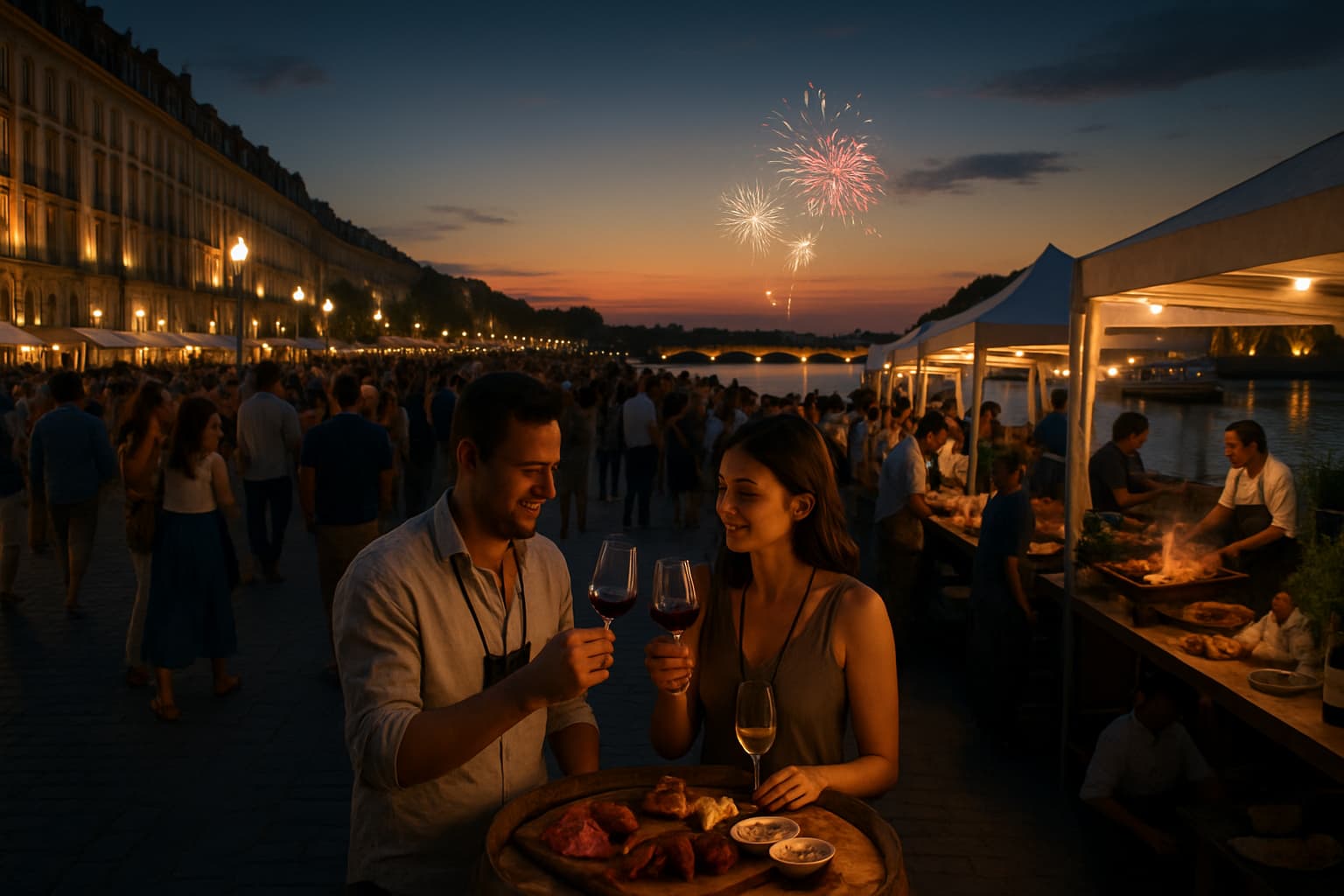
Oh, what a marvelous idea—to talk about wine, rivers, fireworks, and feasting in France, all at once! Pull up a chair, pour yourself a little glass of something red, white, or sparkling, and let’s take a delicious stroll through one of France’s most exuberant celebrations of the grape: Bordeaux’s grand wine festival along the Garonne.
A Riverfront Feast for the Senses
Imagine a warm June evening in southwestern France. The sun lingers over the Garonne River, the façades of Bordeaux’s 18th-century buildings glow honey-gold, and the air is scented with grilled duck, roasted garlic, and just a whisper of oak and berries from a nearby glass of claret. All along the riverfront, people wander, sip, nibble, and laugh. Boats glide by, music drifts over the water, and fireworks wait in the wings for nightfall.
That is the spirit of Bordeaux’s great wine festival: a joyous, open-air celebration of wine, food, and the city’s centuries-old love affair with the vineyard. It’s not just a tasting—it’s a full-bodied experience, with a bouquet of history, culture, and sheer joie de vivre.
What Exactly Is This Festival?
At its heart, this is a grand public fête held every two years (biennially) along Bordeaux’s renovated riverfront, the Quais de Bordeaux. For several days—usually in late June—the city transforms into a sprawling wine village, with:
- Dozens of wine pavilions representing Bordeaux’s many appellations
- A long promenade of food stalls, chefs, and local specialties
- Cultural events, concerts, and exhibitions
- A spectacular nightly sound-and-light show and fireworks over the river
- River cruises, vineyard tours, and often a guest “wine region of honor” from abroad
It’s designed to be welcoming, not intimidating. You don’t need to be a sommelier, you don’t need to speak perfect French, and you certainly don’t need to swirl and sniff like a snob. You simply need curiosity, a taste for adventure, and comfortable shoes.
A City and Its Wines: A Little History in Your Glass
To understand why this festival feels so grand, you must understand that Bordeaux and wine are practically married. They’ve been together for almost 2,000 years.
- Roman roots: The Romans planted vines here in the 1st century AD. The soils—gravel, clay, limestone—turned out to be wonderfully kind to grapes.
- Medieval boom: In the Middle Ages, Bordeaux wine (known as “claret” in England) became the darling of the English court after the marriage of Eleanor of Aquitaine to Henry II. Barrels sailed out of the Garonne by the thousands.
- 18th-century glory: Many of the grand riverfront buildings you see today were built during Bordeaux’s golden age of trade. Wine merchants, shipowners, and négociants turned the city into a glittering commercial hub.
- Modern renaissance: After some ups and downs, Bordeaux has reinvented itself in recent decades—restoring its architecture, building a sleek tramway, and polishing the riverfront into a pedestrian paradise. The festival is really a celebration of this renaissance.
So, when you wander the wine pavilions, you’re not just sipping fermented grape juice. You’re tasting centuries of trade, politics, climate, and craftsmanship—distilled into a few glorious sips.
The Wine Route Along the Quays
Think of the festival layout as a walkable wine map. Instead of hopping from château to château in a car, you stroll along the river and let the appellations come to you.
You’ll typically find areas dedicated to:
- Médoc & Graves: Home to some of the world’s most famous red wines—structured, age-worthy, often with notes of blackcurrant, cedar, and a bit of tobacco.
- Saint-Émilion, Pomerol & Fronsac: Lush, Merlot-driven reds, often softer and rounder, with plummy, velvety textures.
- Côtes de Bordeaux: Charming, often excellent-value wines from hillsides along the river.
You purchase a tasting pass—usually a glass with a lanyard and a set number of tastings—and then wander from pavilion to pavilion, having your card scanned or your coupons collected as you go. Each stand is staffed by producers, négociants, or trained pourers, who can explain the wines in simple terms (and often in English, if you ask kindly).
The joy is in comparing:
- How does a Médoc Cabernet differ from a Saint-Émilion Merlot?
- What happens when Sauvignon Blanc and Sémillon marry in a white blend?
- Why does a Sauternes taste like liquid sunshine and marmalade?
You can taste, ask questions, and discover your own favorites—without having to drive a single kilometer.
Eating Your Way Through the Festival
Wine without food is like a waltz without music—possible, but much less fun. Fortunately, Bordeaux agrees. The festival is a paradise for hungry souls.
You’ll find:
Part of the fun is experimenting:
- Try Sauternes with blue cheese—a salty-sweet revelation.
- Taste a rosé with grilled seafood.
- Pair a structured red with duck or steak and notice how the tannins soften when confronted with rich, juicy meat.
The festival is essentially one long lesson in pairing, but a delicious, informal one where the “curriculum” is: taste, enjoy, repeat.
More Than Wine: Culture, Music, and Fireworks
You might think this is all about wine and food—and you’d be half right. But the festival also wraps wine in a splendid cloak of culture and spectacle.
You’ll usually find:
- Concerts and performances: From jazz bands to classical ensembles, folk music to modern pop, there’s something to keep your toes tapping as you sip.
- Art and exhibitions: Bordeaux often uses the occasion to showcase wine-related art, photography, or historical displays.
- Guest regions: Many editions feature an invited wine region from another country—Chile, Portugal, Italy, you name it—so you can travel the world in your glass.
- Sound-and-light shows: At night, the grand façades along the river become a canvas for projected images, telling stories of Bordeaux’s history, vineyards, and maritime past.
It feels wonderfully communal—thousands of people, locals and visitors alike, sharing in a kind of civic toast to life’s pleasures.
How to Make the Most of Your Visit
A festival like this rewards a bit of planning, just as a good dinner party does.
When to Go
- The event usually takes place in late June, over several days.
- Evenings are particularly magical, with cooler temperatures, lights, and fireworks.
- Weekdays are often less crowded than Friday and Saturday nights.
Getting Around
- Bordeaux’s tram system is efficient and easy to use. There’s no need to drive (and with all that wine, you really shouldn’t).
- The festival stretches along the Garonne riverfront, which is flat and very walkable. Wear comfortable shoes.
- Many visitors stay in the city center, so they can simply stroll back to their hotels after the festivities.
Tasting Wisely
- Don’t feel obliged to finish every pour. It’s perfectly acceptable to spit or leave some in the glass; there are spittoons everywhere.
- Drink plenty of water and nibble frequently. Think of food as your friendly sidekick.
- Pace yourself. You don’t have to taste everything in one evening—choose a few appellations to focus on each day.
Beyond the Quays
If you have time, consider:
- Vineyard visits: Many châteaux in Médoc, Saint-Émilion, Graves, and beyond offer tours and tastings. Some coordinate special events during the festival.
- La Cité du Vin: Bordeaux’s modern wine museum, with immersive exhibits about wine regions all over the world. It’s like a playground for wine lovers.
- Old Bordeaux: Wander the narrow streets, squares, and markets; visit the Place de la Bourse, the Miroir d’Eau, and the grand boulevards.
A Festival for Beginners and Connoisseurs Alike
One of the loveliest things about this celebration is that it welcomes everyone:
- If you’re new to wine, you can treat it as a friendly introduction. Learn the basics of red vs. white, dry vs. sweet, and how different grapes taste. No one is grading you.
- If you’re more experienced, you can explore specific appellations, compare vintages, and chat with producers about terroir, oak aging, and blending decisions.
- If you’re just along for the ride, you can focus on food, music, and the atmosphere, and simply sip what looks appealing.
The festival’s tone is refreshingly unpretentious. It’s about pleasure, discovery, and sharing, not about showing off one’s knowledge. In that sense, it’s very much in the spirit of good home cooking: generous, open, and meant to be enjoyed together.
Why This Festival Matters
Underneath all the fun and fireworks, there’s something rather meaningful happening. The festival:
- Strengthens the bond between the city and its surrounding vineyards, reminding everyone that wine is part of Bordeaux’s identity.
- Supports local producers, giving them a direct line to consumers and a chance to tell their stories.
- Demystifies wine, making it accessible to people from many countries and backgrounds.
- Celebrates craftsmanship, from the vineyard workers to the cellar masters, the chefs, and the artisans.
In a world that often rushes past its meals and sips its drinks without noticing, this festival is a gentle, boisterous reminder to slow down, taste, and appreciate.
A Toast to Bordeaux’s Grand Celebration
If you love wine, food, history, or simply the pleasure of being outdoors in a beautiful city with happy people, this festival deserves a place on your travel wish list. It’s not a stiff, formal affair; it’s a living, breathing, laughing celebration of what happens when sun, soil, grapes, and human hands work together over centuries.
Picture yourself there: strolling along the river, glass around your neck on a little cord like a medal of honor, sampling a Saint-Émilion here, a crisp Entre-Deux-Mers there, nibbling on a slice of duck or a plump oyster, listening to music as the sky darkens and the first fireworks burst above the Garonne.
It’s a reminder that wine is not just for connoisseurs and critics. It’s for people—ordinary, hungry, curious people—who gather to share flavors, stories, and laughter. And that is something worth raising a glass to.
So, whenever you can, make your way to Bordeaux during this marvelous fête. Come hungry, come curious, and come ready to taste life—one sip at a time.