Wine Styles
“Where every bottle tells a story”
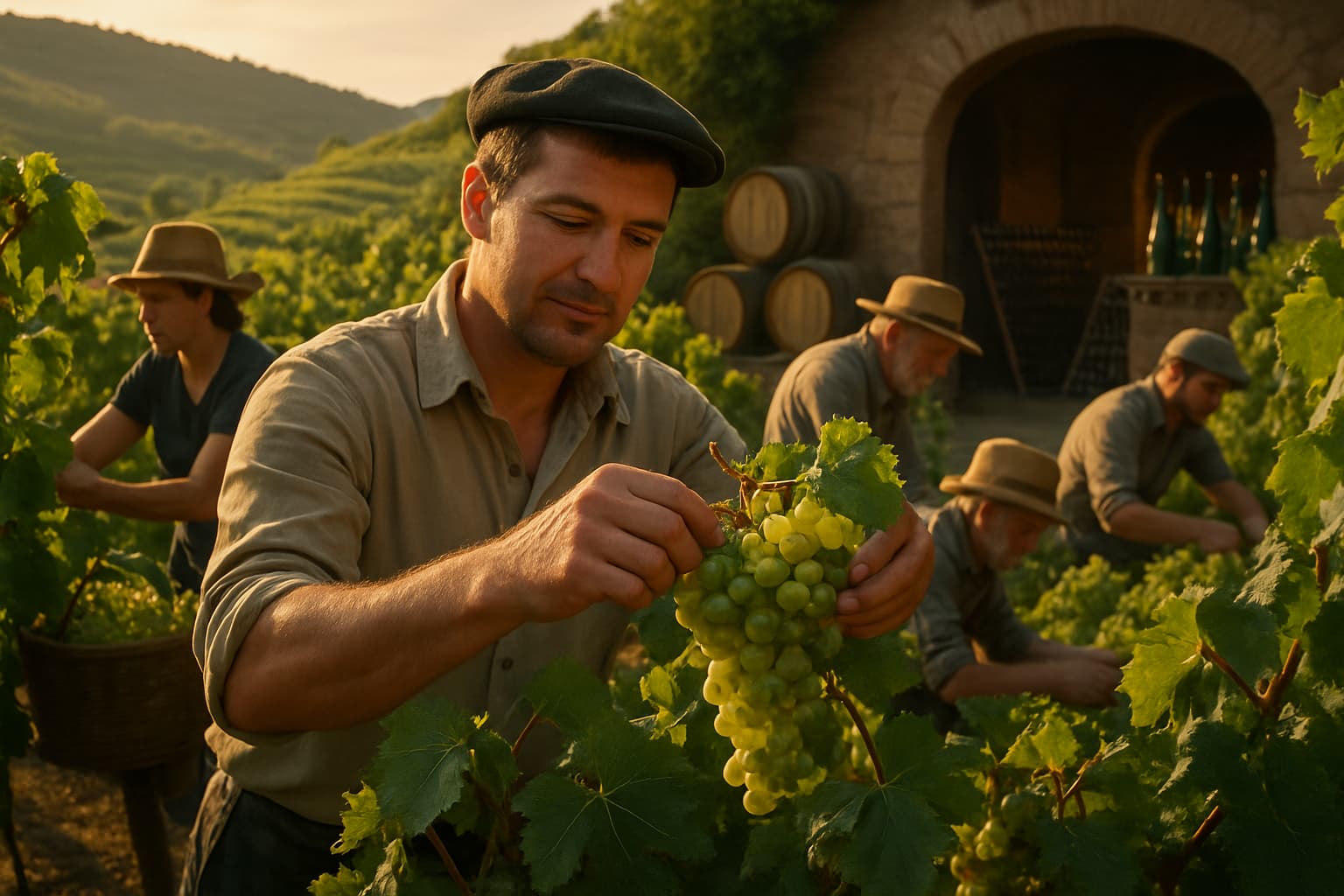
Ah, my friends, gather 'round for a moment, won't you? Let me paint a picture for you, one that sparkles like the finest bubbles rising in a glass of golden elixir. Imagine standing in the sun-drenched vineyards of Catalonia, where the air is alive with the whispers of ancient traditions and the promise of something truly extraordinary. This is the world of Spanish Cava, a sparkling wine born from the earth itself, crafted with a method that echoes the rhythms of nature and the wisdom of generations. It's not just a drink; it's a story of passion, precision, and the unyielding pursuit of perfection. Today, we'll delve into the heart of this tradition, exploring its roots, secrets, and why it continues to captivate wine lovers around the globe.
To truly appreciate Cava, we must first understand its origins, as every great story begins with a humble beginning. In the late 19th century, amidst the rolling hills of Spain's northeast, visionary winemakers looked across the Pyrenees to the Champagne region of France and found inspiration rather than rivalry. The Traditional Method—known in France as méthode champenoise—was a revelation, a way to capture life's effervescence in a bottle. However, these Spanish artisans, with their indomitable spirit, didn't merely imitate; they adapted and innovated, creating something uniquely their own. Cava was officially recognized in 1986 with its own Denominación de Origen (DO), but its roots trace back to 1872, when the first sparkling wines were produced in the town of Sant Sadurní d'Anoia. This story embodies resilience, emerging from the phylloxera epidemic that devastated European vineyards and forced winemakers to pivot and persevere. In this narrative, we see a deeper philosophy: Cava represents not just survival, but a celebration of adaptation, a testament to how human ingenuity can transform adversity into art.
Now, let's examine the core of Cava—the Traditional Method itself. This process is a marvel that demands patience, skill, and a reverent respect for time. After the initial fermentation of the base wine, a carefully selected blend of grapes—typically Macabeo for its floral notes, Xarel·lo for its structure, and Parellada for its acidity, with occasional additions of Chardonnay or Pinot Noir—is bottled with a mixture of sugar and yeast. Here, the magic unfolds: the second fermentation occurs in the bottle, creating those iconic bubbles through a natural process called autolysis. Over months or even years, the yeast cells break down, imparting complex flavors and a creamy texture that no machine could replicate. But it's not just science; it's an art. The wine then undergoes riddling, where bottles are gradually tilted and turned on special racks to collect the sediment in the neck—a labor-intensive ritual often performed by hand in traditional cellars. Finally, disgorging removes the sediment, and a dosage of wine and sugar is added to balance the flavors. The result is a sparkling wine that can age gracefully for decades, evolving like a well-told story. Through this method, we glimpse the nuances of balance—between innovation and tradition, and between the wildness of fermentation and the precision of the cellar master's hand. It's a philosophy that reminds us: true excellence is cultivated, not rushed.
No discussion of Cava would be complete without exploring the regions and producers that bring this liquid poetry to life. The heart of Cava production lies in Catalonia, especially the Penedès region, where the Mediterranean climate and diverse terroir provide an ideal canvas. Soils vary from calcareous clays to sandy loams, each imparting unique characteristics to the grapes. However, Cava extends beyond this area, with production in regions like Conca de Barberà and Utiel-Requena, each offering its own microclimate and stylistic flair. Leading producers include established names like Freixenet and Codorníu, whose cellars are like cathedrals, aging millions of bottles in cool, dark depths. Yet, alongside these giants, small family-owned estates preserve the soul of Cava. For example, Raventós i Blanc emphasizes organic and biodynamic practices, honoring the land with sustainable methods rooted in tradition. This regional diversity reflects Spain's cultural mosaic, where every bottle tells a story of local heritage and global ambition. In contrast to Champagne, which exudes luxury and exclusivity, Cava offers approachability and value, prompting us to consider the nuances of accessibility in a world often fixated on elitism. It's a reminder that greatness doesn't always come with a high price; sometimes, it's found in the everyday magic of a well-crafted sparkler.
When tasting Cava, the real joy emerges. Let me guide you through it, as if we were sharing a glass. A classic Brut Cava, with its pale straw color and persistent bubbles, might delight your palate with crisp apple, citrus zest, and a hint of toasted brioche. The finish is dry and refreshing, with a lingering minerality. But don't limit yourself to Brut; explore the range. Rosé Cavas, made from Garnacha or Monastrell grapes, deliver fruity exuberance with notes of strawberry and rose petals, ideal for a summer evening. For something bolder, a Gran Reserva Cava—aged for at least 30 months—reveals layers of complexity, from nutty undertones to earthy spices. Pairing enhances the experience: imagine it with tapas like patatas bravas, where the wine's acidity cuts through the richness, or with seafood paella, creating a harmonious symphony of flavors. Yet, beyond these sensory pleasures, Cava fosters connection—to the land, history, and one another. In our fast-paced world, it encourages us to pause, savor, and appreciate the subtle nuances that enrich life.
Looking ahead, Cava faces challenges and opportunities, much like any enduring tradition in a changing world. Climate change threatens grape yields and ripening with shifting weather patterns, but innovative producers are responding with sustainable practices like dry farming and renewable energy. There's also a rising trend toward organic and vegan Cava, appealing to environmentally conscious consumers. This evolution highlights a key truth: traditions must adapt to thrive, blending past wisdom with present needs. Will Cava remain an underdog or rise to global prominence? Only time will tell, but its spirit of resilience will persist.
In closing, as the last bubble fades in your glass, reflect on the enduring allure of Spanish Cava and its Traditional Method. It's more than a wine; it's a narrative of human endeavor, embodying history, culture, and the natural world. The next time you raise a glass, remember the hands that tended the vines, the hearts that crafted the elixir, and the stories in every sip. May it inspire you to find the extraordinary in the everyday. Here's to the journey—may it be as effervescent as Cava itself. (Word count: 1,248)
Tannins are astringent compounds found in wine that contribute to its texture and aging potential, often causing a drying or puckering sensation in the mouth. They are derived from grape skins, seeds, and stems, as well as from oak barrels used during aging.
/ˈtænɪnz/
Malic acid is a naturally occurring organic acid found in grapes that contributes to the tart, green apple-like flavor and crispness in wine. It plays a significant role in the taste and acidity of wine.
/mælɪk ˈæsɪd/
Filtration in winemaking is the process of removing solid particles from wine to clarify and stabilize it before bottling, using various types of filters to achieve different levels of clarity and remove unwanted elements like yeast, bacteria, and sediment.
/fɪlˈtreɪʃən/
Oxidation in wine is a chemical reaction between the wine and oxygen that can change its flavor, aroma, and color. This process can be beneficial or detrimental depending on the extent and context of the exposure.
/ˌɒksɪˈdeɪʃən/
Microclimate refers to the unique climate conditions of a small, specific area within a larger region, significantly influencing grapevine growth and the characteristics of the resulting wine.
/ˈmīkrōˌklīmit/
Get weekly wine recommendations, vineyard news, and exclusive content delivered to your inbox.