Wine Terminology
“Where every bottle tells a story”
-b5f3495e.webp&w=3840&q=75)
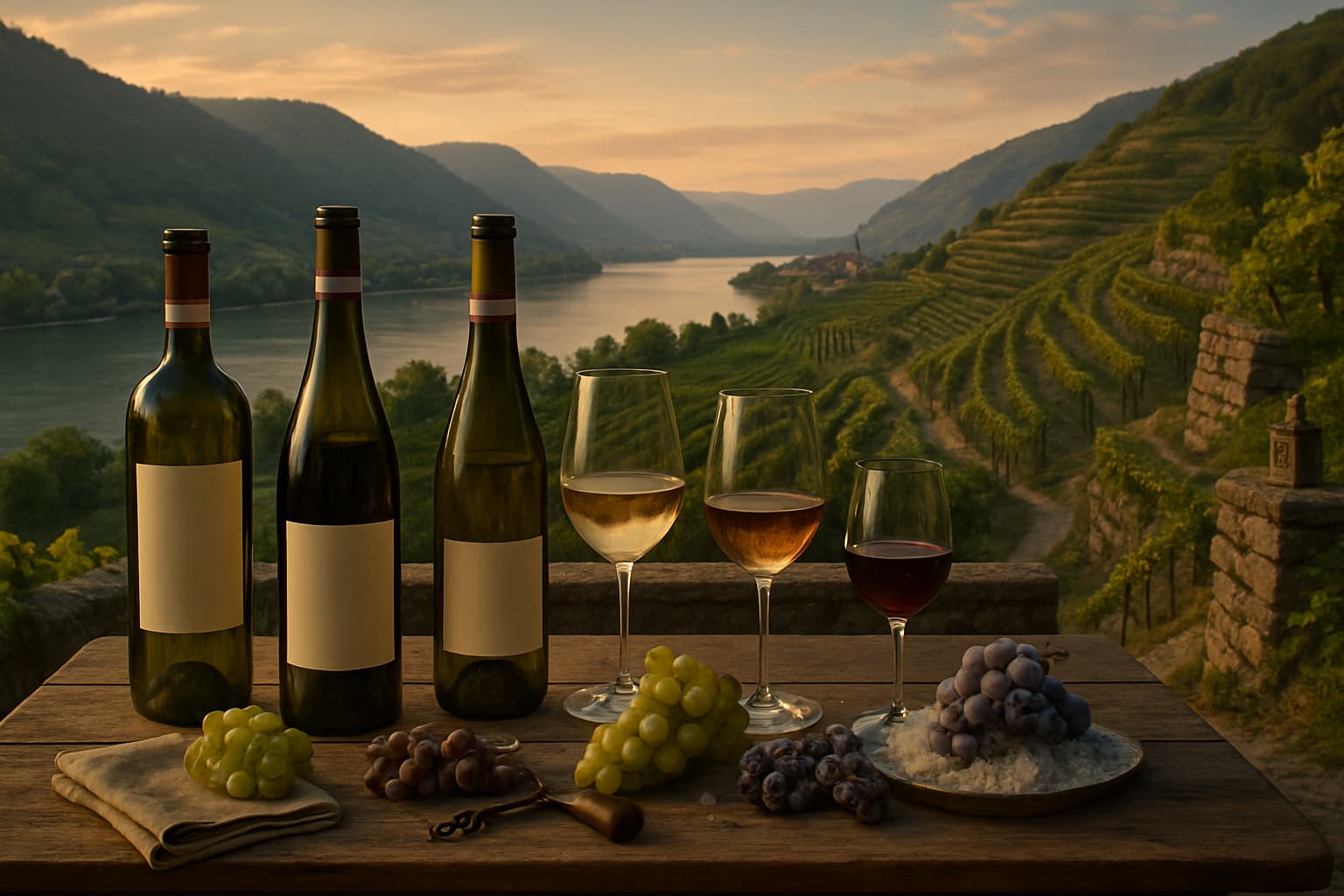
On a still evening, when the sun withdraws gently behind a line of hills and the world seems to pause for breath, there is a moment of quiet revelation to be found in a simple glass of wine. Lift it to your nose, close your eyes, and suddenly you are transported: to sun‑warmed orchards, to damp forest floors after rain, to cellars lined with ancient barrels. This invisible bridge between glass and landscape, between present and past, is what we call aroma.
It is here, in the unseen world of scent, that wine reveals its deepest secrets.
Before a drop of wine touches the tongue, our nose has already begun its work. Humans are visual creatures, yet it is our sense of smell that most powerfully connects us to memory, emotion, and place. In wine, aroma is not a mere accessory; it is the central narrator, telling the story of grape, soil, climate, and time.
When we speak of a wine’s aroma, we are describing the smells that arise from the glass, carried by delicate molecules that drift upwards and into the nose. These scents can be as simple as fresh citrus, or as intricate as a tapestry of flowers, spices, earth, and age‑worn leather. Each glass is a miniature ecosystem of volatile compounds, each one whispering: “This is where I came from. This is how I was made.”
In the language of wine, two terms often dance closely together: aroma and bouquet. They are related, yet not quite the same.
In modern usage, the distinction has blurred; many people use “aroma” as a broad term for all smells in wine. Yet this older differentiation reminds us that a wine’s scent is not static. It evolves, just as landscapes evolve, shaped first by nature, then by human hands, and finally by the patient work of time.
Hidden within every glass of wine is a microscopic drama. Thousands of different chemical compounds drift and swirl, each carrying its own scent signature. Remarkably, many of these aromatic compounds are present in vanishingly small concentrations—measured in parts per billion—yet our noses can detect them with astonishing sensitivity.
Some of the key players include:
What we perceive as a single aroma—say, “cherry” in a Pinot Noir—is in fact a chorus of many different molecules, combining to trigger a familiar impression in the brain. Our mind, ever eager to make sense of complexity, gives this chorus a name.
Like the stages of a migrating bird’s journey, wine aromas follow a kind of life cycle, each phase revealing a different facet of the wine’s story.
Primary aromas arise from the grape variety and its environment. They tell us who the grape is and where it has grown.
These aromas are strongest in young wines, much like the vivid colours of a juvenile bird’s plumage.
Secondary aromas emerge during fermentation and early winemaking processes:
Here, the influence of human choice becomes apparent. The winemaker decides how long the juice will ferment, what vessels to use, whether to encourage certain fermentations, and how long the wine will rest on its lees. Each decision leaves an aromatic fingerprint.
As wine ages—whether in barrel or bottle—its aromas transform. Fresh fruit may recede, giving way to subtler, more complex scents:
These tertiary aromas are the quiet, reflective stage of the wine’s life—a deepening of character, like the lines on an elder’s face, telling stories of years unseen.
To appreciate aroma fully is not a matter of snobbery, but of attention. It is a small act of mindfulness, a way of listening to the liquid in the glass.
In this simple ritual, we are not merely smelling wine; we are training our attention, learning to perceive the world more finely.
Each grape variety has its own aromatic signature, much as each species in a forest has its own call. A Sauvignon Blanc from a cool, windswept valley may sing of gooseberries and cut grass; a Syrah from a sun‑baked slope might murmur of black pepper, dark berries, and smoke.
Yet beyond the grape itself lies terroir—the total environment in which the vine grows: soil type, climate, slope, exposure, and the microbial life surrounding the roots. Two vineyards, planted with the same grape, can yield wines with entirely different aromatic profiles:
In the glass, aroma becomes the messenger of place, carrying the imprint of distant hillsides into our homes and hearts.
The aromas of wine are not only a source of delight; they are also tools for understanding:
Perhaps most profoundly, aroma connects wine to memory. A single whiff may evoke a childhood orchard, a holiday by the sea, or a walk through autumn woods. In this way, wine becomes more than a beverage; it becomes a vessel for time itself.
In our fast‑moving world, it is easy to overlook the quiet wonders that surround us. Yet in something as modest as a glass of wine, an entire universe of scent awaits discovery. Aroma is the voice of the vine, the echo of the soil, the trace of the season’s weather, and the signature of the winemaker’s hand. It is the accumulation of countless small events—sunlight on leaves, rain on earth, yeast at work in dark cellars—distilled into a fleeting sensation at the rim of a glass.
To pause, to lift that glass, and to breathe in deeply is to participate in a grand, slow story: of plants and people, of landscapes and lifetimes. In that moment, you are not merely drinking wine; you are listening to the world speak in one of its most delicate, ephemeral languages—the language of aroma.
Tannins are astringent compounds found in wine that contribute to its texture and aging potential, often causing a drying or puckering sensation in the mouth. They are derived from grape skins, seeds, and stems, as well as from oak barrels used during aging.
/ˈtænɪnz/
Malic acid is a naturally occurring organic acid found in grapes that contributes to the tart, green apple-like flavor and crispness in wine. It plays a significant role in the taste and acidity of wine.
/mælɪk ˈæsɪd/
Aroma traditionally refers to the smells that originate from the grape itself and the early stages of fermentation. These are sometimes called primary and secondary aromas:
Bouquet, on the other hand, is often used to describe the complex scents that develop as the wine ages, particularly in bottle. These tertiary aromas emerge slowly over time: dried fruits, tobacco, forest floor, truffle, dried flowers, leather.
Observe first
Hold the glass by the stem and look at the wine. Its colour and viscosity hint at age, grape, and style, preparing the mind for what the nose will find.
Smell without swirling
Bring the glass to your nose and take a gentle sniff. This first impression is often delicate, capturing the lightest, most volatile notes.
Swirl and smell again
Now swirl the glass. This increases the wine’s surface area and encourages aromatic compounds to evaporate. Smell once more, more deeply. New layers emerge; the wine seems to awaken.
Search for families, not words
Rather than hunting for the perfect descriptor, think in broad categories:
From there, you may find more specific images: lemon zest, blackcurrant, rose petal, wet stone.
Notice change over time
As the wine sits in the glass, it evolves. Aromas may open, shift, or fade. A wine is not a static object; it is a living, breathing thing, reacting to air and temperature.
Filtration in winemaking is the process of removing solid particles from wine to clarify and stabilize it before bottling, using various types of filters to achieve different levels of clarity and remove unwanted elements like yeast, bacteria, and sediment.
/fɪlˈtreɪʃən/
Oxidation in wine is a chemical reaction between the wine and oxygen that can change its flavor, aroma, and color. This process can be beneficial or detrimental depending on the extent and context of the exposure.
/ˌɒksɪˈdeɪʃən/
Microclimate refers to the unique climate conditions of a small, specific area within a larger region, significantly influencing grapevine growth and the characteristics of the resulting wine.
/ˈmīkrōˌklīmit/
Get weekly wine recommendations, vineyard news, and exclusive content delivered to your inbox.
-02e8ead1.webp&w=3840&q=75)
-d95a5857.webp&w=3840&q=75)