Wine Terminology
“Where every bottle tells a story”
If you’ve ever taken a sip of red wine and felt your mouth suddenly turn into the Sahara Desert—lips sticking to your teeth, tongue feeling a bit rough and furry—then you’ve met astringency. It’s that curious, puckering, drying sensation that makes some people exclaim, “Ooh, that’s serious wine!” and others mutter, “Good heavens, what did I just drink?”
Astringency is one of the great characters in the drama of wine. It’s not about flavor so much as texture—how the wine feels in your mouth. Once you understand it, you’ll start to see why some wines are marvelous with a juicy steak and rather dreadful with a delicate poached fish. Let’s roll up our sleeves and dive in, shall we?
Astringency is not the same as bitterness, nor is it exactly dryness in the sense of “not sweet.” It’s a tactile sensation—like rubbing your tongue against velvet that’s just a bit too rough, or drinking very strong black tea that’s been steeped too long.
In wine terms, astringency is that drying, tightening, sometimes slightly rough feeling in your mouth, especially along the gums and inner cheeks. It can feel:
It’s not a taste—like sweet, sour, salty, bitter, or umami. Instead, it’s a mouthfeel sensation, much like the creaminess of a rich sauce or the fizz of bubbles in Champagne.
The main actors behind astringency in wine are tannins. Tannins are naturally occurring compounds found in:
They belong to a family of compounds called polyphenols. Tannins exist in many foods and drinks you already know: black tea, dark chocolate, walnuts, pomegranate, unripe persimmons, and even some spices. Taste a strong cup of over-steeped tea, let it sit on your tongue, then swallow—that grippy, drying sensation is astringency in all its glory.
In wine, tannins are extracted during fermentation, especially in red wines, where the juice is fermented with the skins and sometimes stems. The longer and more vigorously the juice mingles with the skins, the more tannin is pulled into the wine. It’s a bit like steeping a tea bag: a short dip gives you a gentle brew; a long soak yields a robust, sometimes aggressive result.
What’s actually happening in your mouth? A bit of kitchen chemistry.
Your saliva contains proteins that help everything slide around comfortably so you can chew, swallow, and speak without feeling like sandpaper. Tannins are rather mischievous little molecules that love to bind with these proteins.
When you drink a tannic wine:
This is astringency: the physical perception of those proteins being “tied up” by tannins. It’s a bit like suddenly removing the butter from a sauce—everything feels harsher and less smooth.
Wine terminology can be a bit of a tangled apron string, so let’s straighten it out.
Astringency
Bitterness
Dryness (in wine label terms)
So you might say:
They’re related, but not interchangeable.
Astringency shows up most prominently in red wines, but it can appear in others too.
Red wines are the astringency stars because they’re made with extended contact with grape skins and sometimes seeds and stems. Some classic examples:
Most white and rosé wines have minimal skin contact, so they’re usually low in tannins and astringency. However:
Astringency in sparkling wine is usually subtle, as the bubbles and acidity tend to dominate the sensation. But some traditional-method sparkling wines, especially those with extended aging, can have a faint, fine-grained astringency.
Astringency isn’t automatically a flaw. In many serious red wines, it’s a hallmark of structure and age-worthiness. But like salt in cooking, it must be in balance.
Pleasant, balanced astringency feels:
Harsh, unbalanced astringency feels:
Think of it like the crust on a beautifully roasted chicken. You want crisp, flavorful skin that contrasts with the tender meat. But if it’s burnt and bitter, it ruins the dish. Astringency should provide structure and contrast, not punishment.
One of the great miracles of wine is how it changes with age. Tannins are part of that magic. Over time, tannin molecules can link together, forming longer chains that feel softer and less aggressive on the palate.
This is why some young red wines can taste almost painfully astringent, yet after several years in the bottle, they become velvety, smooth, and elegant. It’s like letting a stew simmer all afternoon—the flavors and textures meld and mellow.
So when a winemaker or sommelier says, “This wine needs time,” they often mean, “These tannins are a bit rowdy right now, but they’ll calm down and become charming with age.”
Astringency doesn’t live in a vacuum; it dances with whatever you eat.
Fat, protein, and salt are marvelous partners for tannic wines:
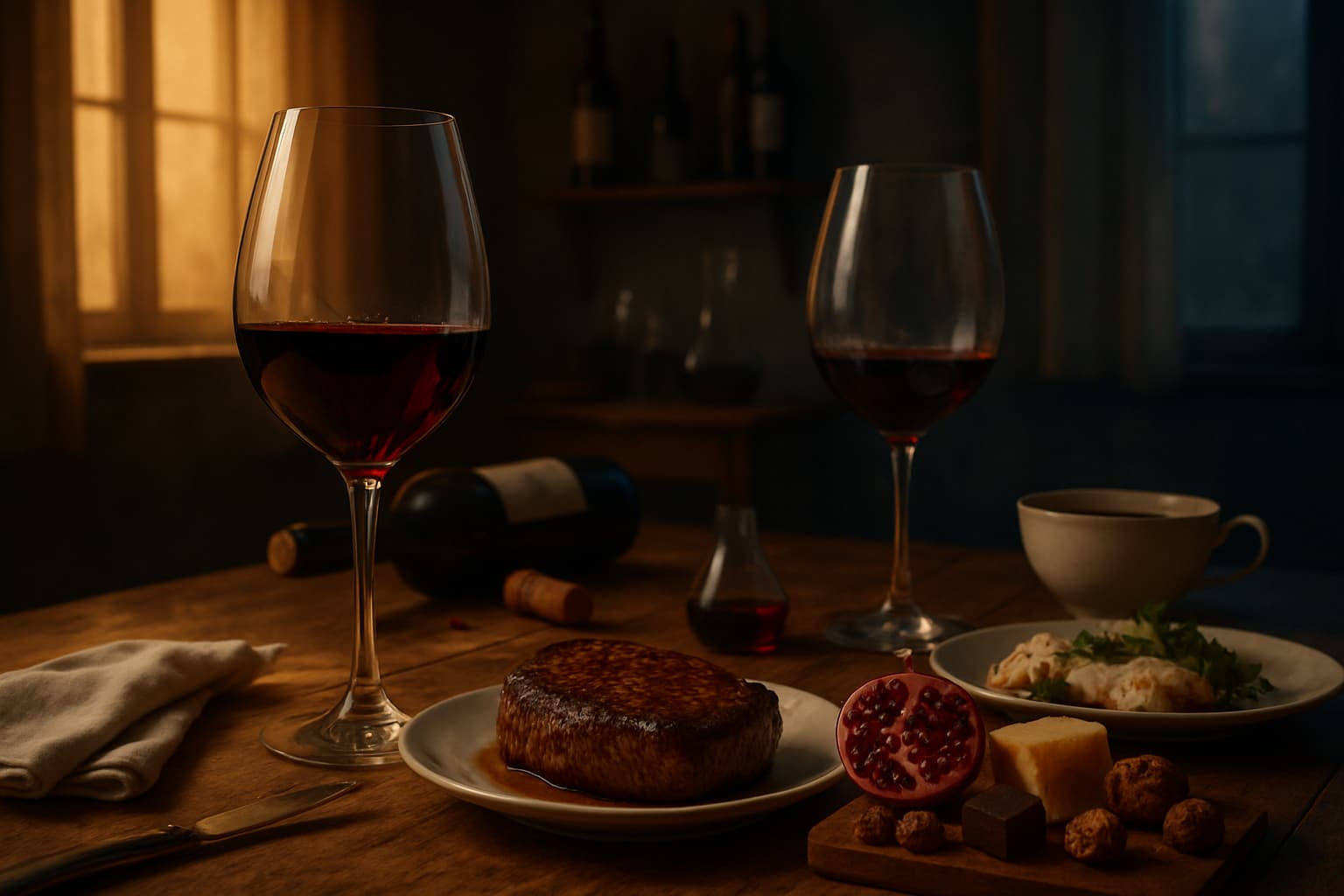
This is why a robust, tannic red can taste almost too fierce on its own, but becomes glorious with a well-marbled steak or a rich stew. The food tames the astringency, and the astringency, in turn, cuts through the richness of the dish, keeping each bite lively rather than cloying.
Pair that same tannic wine with a delicate salad or a flaky white fish, and you’ll likely find it far too astringent and overpowering—like wearing hiking boots with a silk evening gown.
To become comfortable with astringency, treat it like a new ingredient in your culinary toolkit.
If your mouth feels drier, tighter, or slightly rough, that’s astringency.
You have several options—no need to suffer:
Once you tune into astringency, it becomes a useful clue about a wine’s character and potential.
Astringency can hint at:
It’s like learning to read the body language of the wine—how it feels tells you how it might behave with food and over time.
You don’t have to love highly tannic wines to be a good wine drinker—heavens, no. But understanding astringency lets you make more confident choices.
If you enjoy:
You may find you have a natural fondness for wines with a bit of grip and structure. If you prefer softer, smoother sensations, you might gravitate toward wines with gentle or low astringency. Both preferences are perfectly valid—just like preferring cream sauces to tomato-based ones, or vice versa.
The goal is not to suffer through wines you don’t enjoy, but to recognize what’s happening in your mouth and why, so you can select wines that suit your taste and your meal.
Astringency is one of the great textural elements of wine. It is:
Once you learn to recognize astringency, you’ll find it’s not a mysterious villain, but a powerful tool—like acid in cooking, or salt, or a good sear on a steak. Used well, it adds depth, complexity, and longevity to wine.
So next time you take a sip of a robust red and feel that gentle grip along your gums, don’t be alarmed. Say to yourself, “Ah, there you are! A bit of astringency—how very useful.” Then reach for a piece of cheese, a slice of roast, or a hearty stew, and let wine and food do their marvelous little waltz together.
Tannins are astringent compounds found in wine that contribute to its texture and aging potential, often causing a drying or puckering sensation in the mouth. They are derived from grape skins, seeds, and stems, as well as from oak barrels used during aging.
/ˈtænɪnz/
Malic acid is a naturally occurring organic acid found in grapes that contributes to the tart, green apple-like flavor and crispness in wine. It plays a significant role in the taste and acidity of wine.
/mælɪk ˈæsɪd/
There’s a moment, when you pour a glass of wine, that feels almost indecently intimate. The bottle tips, the liquid arcs, and then—before you even bring the glass to your lips—you give it that little...
Filtration in winemaking is the process of removing solid particles from wine to clarify and stabilize it before bottling, using various types of filters to achieve different levels of clarity and remove unwanted elements like yeast, bacteria, and sediment.
/fɪlˈtreɪʃən/
Oxidation in wine is a chemical reaction between the wine and oxygen that can change its flavor, aroma, and color. This process can be beneficial or detrimental depending on the extent and context of the exposure.
/ˌɒksɪˈdeɪʃən/
Microclimate refers to the unique climate conditions of a small, specific area within a larger region, significantly influencing grapevine growth and the characteristics of the resulting wine.
/ˈmīkrōˌklīmit/
Get weekly wine recommendations, vineyard news, and exclusive content delivered to your inbox.
-e4b2322f.webp&w=3840&q=75)
-012baf26.webp&w=3840&q=75)