Wine Terminology
“Where every bottle tells a story”
There’s a moment in every wine lover’s life when the glass is raised, the aromas rise up, and a quiet question lingers in the background: Why does this taste the way it does?
You swirl, you sniff, you sip—and somewhere on a label, or in a tasting note, you see a single word: barrique.
It looks simple enough. But behind that word lies centuries of craft, forests carefully tended, fires that toast the insides of barrels, and winemakers making choices that shape the very soul of a wine.
So sit back for a moment. Let’s walk slowly through vineyards and cooperages, and into the cellar, to understand what “barrique” truly means—and why it matters every time you pour a glass.
In the world of wine, a barrique is more than just a barrel. Technically, it’s a specific type of small oak barrel, traditionally used for aging wine, especially in France.
The term comes from French, and while many languages have their own word for barrel, barrique has become a kind of international shorthand for small oak barrels used in quality wine aging.
In the cellar, when a winemaker chooses a barrique, they’re not just choosing a container. They’re choosing a partner in shaping flavor, texture, and longevity.
Long before stainless steel tanks gleamed in modern wineries, wine had to move—from vineyard to village, from port to palace. Clay amphorae, animal skins, and wooden casks all did their time in history’s cellar.
But the barrique? It rose to prominence in Bordeaux.
In the great châteaux of Bordeaux, wine merchants and shippers needed a practical way to store, move, and trade wine. A 225-liter barrique turned out to be:
Over time, something remarkable was noticed: wines stored in these small barrels didn’t just travel well—they tasted better.
The oak lent subtle flavors: vanilla, spice, toast. The slow, gentle seep of oxygen through the wood softened harsh tannins and brought harmony to the wine. What began as a shipping container became a tool of refinement.
From Bordeaux, the barrique spread across France, then across Europe, and eventually across the wine world.
Not all barrels are created equal. The size of a barrel changes how it affects the wine.
A barrique, at around 225 liters, has a high ratio of surface area (wood) to volume (wine). That means:
Compare that to:
Larger barrels give less intense oak influence and a gentler oxygen effect. A barrique, by contrast, is like a focused conversation between wood and wine—intimate, deliberate, and powerful.
To understand a barrique, you must start in the forest.
Most barriques are made from French or American oak, each bringing its own character.
French Oak (Quercus robur, Quercus petraea)
American Oak (Quercus alba)
Winemakers choose between these oaks—and sometimes blend their use—based on the style of wine they’re aiming for.
A powerful, ripe New World Cabernet might lean into American oak’s boldness. A delicate Burgundy Pinot Noir may whisper through fine-grained French oak.
Once the staves are shaped and assembled, the inside of a barrique is toasted over an open flame. This isn’t just for show. It’s chemistry.
Toasting changes the structure of the wood, releasing aromatic compounds that later migrate into the wine.
Typical levels of toast:
Light toast
Winemakers choose the toast level the way a chef chooses how long to roast a vegetable or sear a steak. It’s all about balance—too much, and the wine is buried; too little, and the potential is left untapped.
A barrique has a kind of life story.
In their first use, new barriques give the most:
Using a high percentage of new barriques is a bold stylistic choice. It can create powerful, luxurious wines—but if the fruit isn’t strong enough, the oak can overwhelm.
After the first fill, the oak’s voice softens.
Second-fill barriques:
Third-fill and beyond:
Eventually, a barrique becomes what winemakers sometimes call “neutral”—it no longer adds significant flavor, but still shapes the wine’s aging through micro-oxygenation.
When wine rests in a barrique, several things happen quietly in the dark.
The oak contributes a palette of aromas and flavors, such as:
These notes don’t replace the fruit; at their best, they frame it—like a good soundtrack supporting the scene.
Oak itself contains tannins, and the slow oxygen exposure helps polymerize the tannins from the grape skins and seeds. The result:
That gentle oxygen flow:
In a sense, the barrique acts as a training ground, where the young wine matures, gains discipline, and learns how to age gracefully.
Certain regions and styles are almost synonymous with barrique aging.
Even when the label doesn’t say “barrique,” phrases like “barrel-aged,” “oak-aged,” or “matured in small oak barrels” often point in that direction.
You don’t need a sommelier’s certificate to sense the presence of a barrique. You just need to pay attention.
When you smell and taste:
Notice the non-fruit aromas.
Over time, you begin to recognize the difference between a wine shaped by stainless steel and one that has spent quiet months resting inside oak.
Like all powerful tools, the barrique inspires debate.
Some say modern winemaking has leaned too heavily on small barrels, using oak as makeup to cover weak fruit. Others argue that, in skillful hands, barriques are essential to the greatest wines on earth.
The truth lies, as it often does, somewhere in the middle.
Too much barrique influence:
Balanced use of barrique:
A thoughtful winemaker treats a barrique the way a composer treats an instrument: powerful, expressive, but only one part of the orchestra.
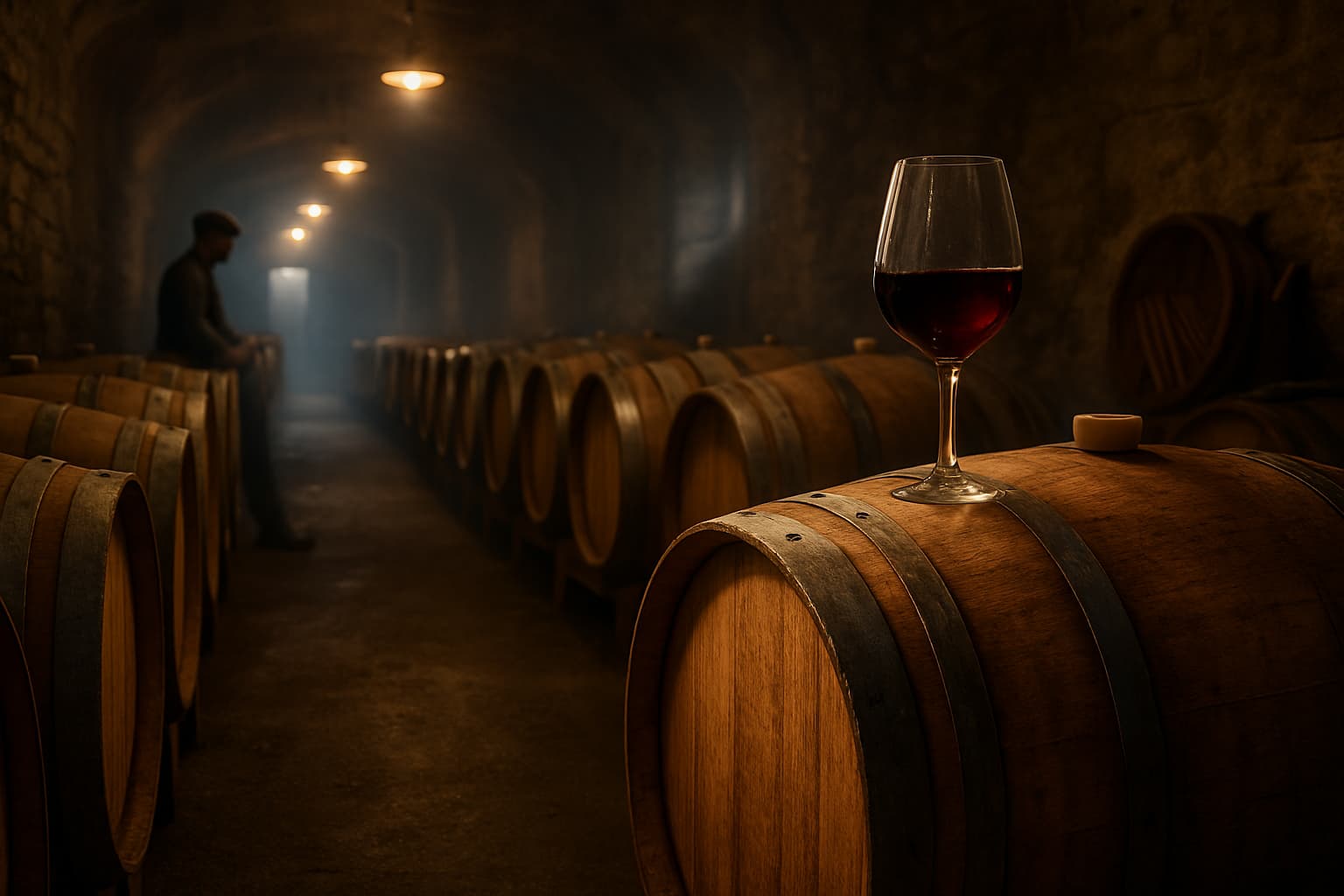
Somewhere, right now, in a cool, dim cellar, rows of barriques are resting. Inside them, wines are slowly changing—breathing, softening, finding their shape.
Most of us will never walk through those cellars. We’ll meet the result later, in the glass, with a cork pulled and a story ready to be told.
When you see that word—barrique—on a label or hear it spoken by a sommelier, you’ll know it’s not just a technical term. It’s a sign of choices made:
And the next time you take a sip of a wine that seems just a little more polished, a little more layered, a little more complete, you might imagine that small oak barrel, patiently doing its work in the dark.
Because in the long, unfolding story of wine, the barrique is not the star of the show—
but without it, many of the greatest scenes would never have been possible.
Tannins are astringent compounds found in wine that contribute to its texture and aging potential, often causing a drying or puckering sensation in the mouth. They are derived from grape skins, seeds, and stems, as well as from oak barrels used during aging.
/ˈtænɪnz/
Malic acid is a naturally occurring organic acid found in grapes that contributes to the tart, green apple-like flavor and crispness in wine. It plays a significant role in the taste and acidity of wine.
/mælɪk ˈæsɪd/
Medium toast
Heavy toast (or Medium+ / High)
Bordeaux (France):
Burgundy (France):
Rioja (Spain):
Napa Valley and other New World regions:
Premium Chardonnays worldwide:
Feel the texture.
Observe the finish.
There’s a moment, when you pour a glass of wine, that feels almost indecently intimate. The bottle tips, the liquid arcs, and then—before you even bring the glass to your lips—you give it that little...
Filtration in winemaking is the process of removing solid particles from wine to clarify and stabilize it before bottling, using various types of filters to achieve different levels of clarity and remove unwanted elements like yeast, bacteria, and sediment.
/fɪlˈtreɪʃən/
Oxidation in wine is a chemical reaction between the wine and oxygen that can change its flavor, aroma, and color. This process can be beneficial or detrimental depending on the extent and context of the exposure.
/ˌɒksɪˈdeɪʃən/
Microclimate refers to the unique climate conditions of a small, specific area within a larger region, significantly influencing grapevine growth and the characteristics of the resulting wine.
/ˈmīkrōˌklīmit/
Get weekly wine recommendations, vineyard news, and exclusive content delivered to your inbox.
-e4b2322f.webp&w=3840&q=75)
-012baf26.webp&w=3840&q=75)