Wine Terminology
“Where every bottle tells a story”
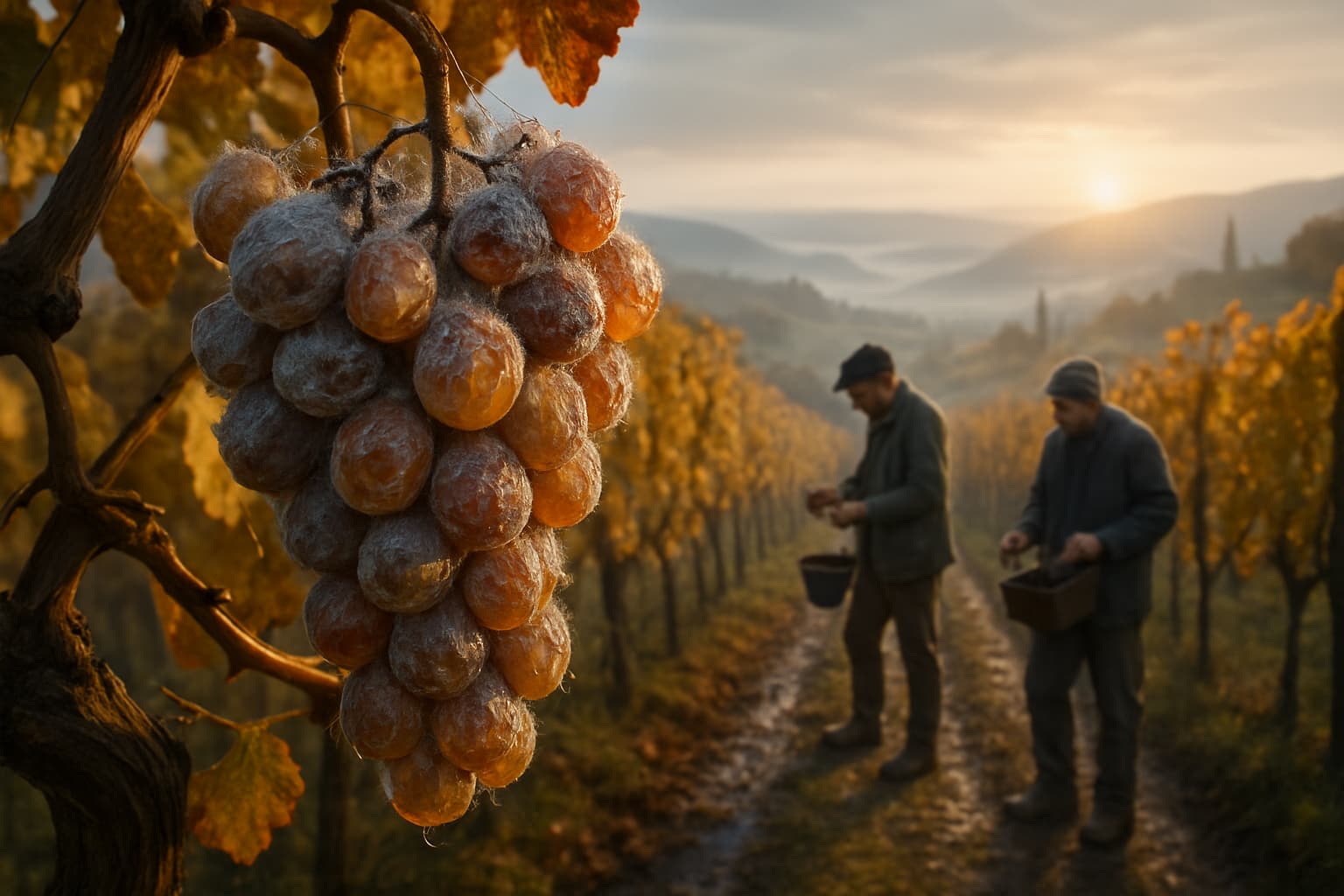
It begins with rot.
Not the clean word you expect in wine. Not oak or blossom or fine French stone. A gray mold takes hold of the grape. It looks like ruin. It looks like the end of the harvest. Men who have worked all year walk the rows and curse under their breath.
But this is how some of the greatest sweet wines in the world are born.
Botrytis cinerea. Noble rot. A disease that is not always a disease. A flaw that can become a gift if the weather and the grower and the harvest all walk a narrow line together.
This is its story.
Botrytis cinerea is a fungus. A humble thing. It lives in vineyards and orchards and gardens all over the world. It waits in the soil, in dead leaves, in old wood. It loves damp mornings and crowded vines and careless pruning. Under the wrong conditions it spreads fast and wild. Then it is called gray rot. It ruins the crop.
The berries soften. They split. The skins break. The bunch turns brown and gray. The fruit smells of mold and decay. Sugar drops. Acidity falls. Everything that makes a grape good for wine is washed out of it. You can only lose with that kind of rot.
But if the weather is right, and if the grape is right, and if the grower has the nerve to wait, the same fungus turns into something else. Then they call it noble rot. The words change, and so does the fate of the wine.
The line between ruin and nobility is thin. It is drawn by water and air and time.
To make noble rot, the season must move in a certain rhythm.
You need misty mornings. Fog rises from a river or from low ground. It drifts through the vines and hangs there. The air is damp and cool. The fungus wakes. It spreads across the grape skins and settles in. It starts its work.
Then you need sun. Not weak light, but clean, drying sun in the afternoon. Enough heat and wind to keep the berries from bursting and collapsing into slime. Enough time each day for the skins to dry and tighten.
This pattern must repeat. Damp. Sun. Damp again. Day after day.
The fungus pierces the grape skin with tiny filaments. It does not smash the berry. It makes small wounds. Water seeps out. The grape slowly loses moisture but stays whole. The skin wrinkles. The berry shrivels. It looks like a raisin that has seen some trouble.
Inside, something else is happening. The water leaves, but the sugar stays. The acids stay. The minerals and flavor compounds stay. Everything that gives the grape character is pushed into a smaller space. The juice becomes thick and heavy. Sweetness rises to levels that normal ripening never reaches.
The fungus also changes the chemistry. It breaks down cell walls. It alters acids and aroma precursors. It lays down new compounds of its own. Later, in the glass, you will find honey and apricot and marmalade and saffron and smoke. These are the marks of the mold.
It is a strange alchemy. Loss and gain at once. Less water. More soul.
Not all grapes take kindly to Botrytis cinerea. Some fall apart too fast. Some do not gather enough sugar. Some never show the right flavors.
Certain varieties are prone to noble rot and have built their fame on it.
Sémillon
Thick-skinned, with a quiet nature. It grows in Bordeaux and other warm, misty places. It takes botrytis slowly and with dignity. It gathers great sweetness and still holds its shape. In Sauternes and Barsac, it is the backbone of the wine.
Other grapes—Chenin Blanc in the Loire, Furmint in Tokaj, even some regional varieties—also work with botrytis. But the story is the same. The grape must be able to hold its body while it dries and sweetens. It must not break down into mush. It must have enough acid to stand up to the sugar.
Without that structure, the wine will be cloying and dead.
The fungus can appear in many vineyards. But there are only a few places where it turns into a tradition.
South of Bordeaux, two rivers meet: the cold Ciron and the warmer Garonne. In autumn, their difference in temperature pulls fog across the low hills. The mist rolls in at dawn, then burns off in the afternoon sun.
This is the cradle of noble rot.
Here, the growers wait. They do not harvest all at once. They pass through the rows again and again, sometimes six or eight times in a season. Each pass is called a tri—a selection. They pick only the berries that are ready, one at a time, with sticky fingers and aching backs.
The yield is tiny. From a healthy vine, you might get a bottle or more in a normal year. From a botrytized harvest in Sauternes, you might get a glass.
The wines are golden when young. They smell of honey and ripe apricot and candied citrus peel. With age they darken to amber and copper. They gain notes of caramel, toasted nuts, spice, smoke, and dried fruit. The best can live for decades. Some outlive the men and women who made them.
In the hills of northeastern Hungary, another fog rises. It gathers in the valleys around the Bodrog and Tisza rivers. It lingers in autumn among the Furmint vines.
Here, the botrytized grapes are called aszú berries. They are picked by hand and collected in small wooden tubs. For centuries, winemakers measured them in puttonyos—baskets of shriveled grapes added to a base wine to set the sweetness level.
The process is different from Sauternes, but the heart is the same: shriveled berries, concentrated sugar, piercing acidity, long aging in cool cellars. The wines smell of orange peel, apricot, honey, tea, and sometimes a faint, noble bitterness. They carry the taste of old Europe and long patience.
In Germany, autumn can be misty and cold. Botrytis comes, but not every year in the right way. When it does, growers make Beerenauslese and Trockenbeerenauslese—wines from individually selected botrytized berries. The names are long. The wines are rare. They are like liquid crystal—sweet, bright, and exact.
In Austria, the Loire, parts of Australia, and other corners of the world, noble rot appears in pockets. Some producers chase it. Others fear it. The fungus does not care. It comes when the weather suits it.
You lift the glass. The wine clings to the bowl. It moves slowly. The color is deep gold or amber. On the nose, there is sweetness before you even taste it. But it is not just sugar.
You find:
On the palate, the wine is thick and rich. It coats the tongue. But the best examples are not heavy. The acidity cuts through the sweetness like a sharp knife through ripe fruit. You feel both weight and lift at once.
The finish goes on. It does not fade quickly. It lingers with layers of fruit, spice, and that strange, noble depth that is hard to name.
This is what Botrytis cinerea does when the grower and the season have treated it well. It takes what should have been a fault and turns it into a signature.
Working with botrytized fruit is hard. The harvest is slow and costly. The grapes are fragile. They rot in the wrong way if you wait too long. They lack juice if you pick too early.
Once in the cellar, the trouble is not over.
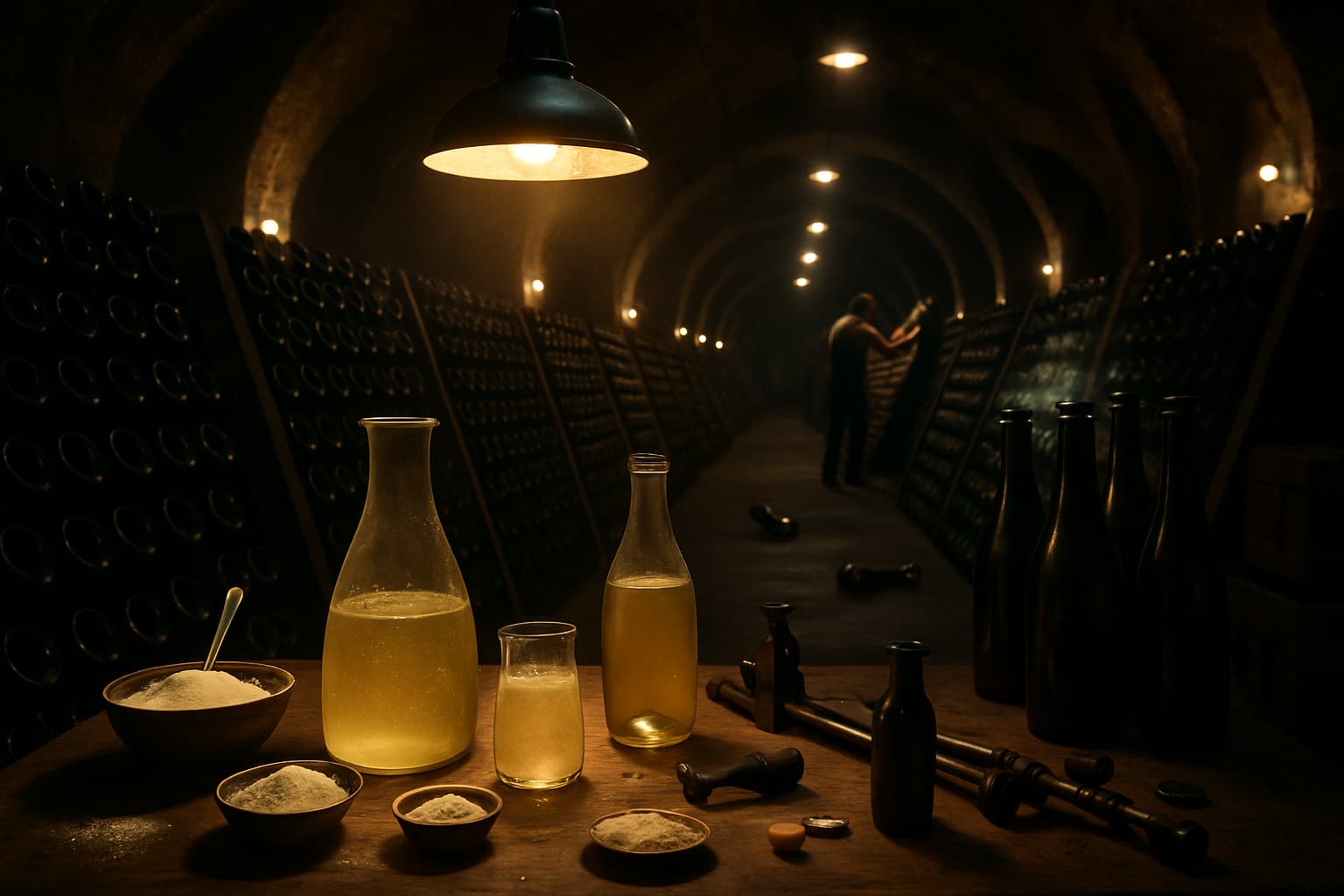
Pressing
The shriveled berries hold little liquid. You must press them long and gently to squeeze out their thick juice. It is like pressing syrup from leather.
Fermentation
The sugar level is very high. Yeast struggle in such a rich must. Fermentation can be slow. It can stop early. You must watch the tanks and barrels like a hawk. In some cellars, it can take months for the wine to finish its slow, sweet crawl.
Aging
Many noble rot wines are aged in oak. The wood brings oxygen and spice. It helps the wine settle and knit together. Time is an ally here. The wines can rest in barrel for years before bottling. Then they rest again in glass.
Every step costs time and money. Yields are low. The risk is high. A bad season can wipe out the crop. That is why these wines are rare and often expensive. You pay for the gamble and the loss as much as for the liquid in the bottle.
The same fungus that makes noble rot can also destroy a vineyard. The difference lies in timing and control.
If the season stays wet and cold, the berries split and collapse. Other microbes move in—vinegar bacteria, wild molds. The bunch turns to foul mush. You cannot make fine wine from that.
Even in a good year, too much botrytis can be a problem for dry wines. It can strip away freshness. It can give off-flavors of mushroom and earth where you want clean fruit. Many growers fight the fungus with canopy management, careful pruning, and fungicide treatments when they aim for dry, pure wines.
So Botrytis cinerea is not a hero or a villain by itself. It is a force. It can go either way. The grower decides whether to fight it or court it.
If you care about wine, you should know this mold—not to fear it, but to understand what it does.
When you see words like “noble rot,” “botrytized,” “Sauternes,” “Tokaji Aszú,” “Beerenauslese,” or “Trockenbeerenauslese” on a label, you are looking at wines shaped by Botrytis cinerea. You can expect:
These wines pair well with blue cheese, foie gras, rich pâtés, roasted nuts, fruit tarts, and simple desserts that are not too sugary. They can also be drunk alone, after a long meal, when there is nothing left to do but talk and remember.
You do not drink much of them. You do not need to. A little goes a long way.
In the vineyard, Botrytis cinerea looks like failure. It crawls over the grapes with its gray fuzz and brown scars. It speaks of damp mornings and lost work. It is easy to hate it.
But under the right sky, in the hands of patient men and women, this same fungus gives birth to wines that can outlast wars and borders and lifetimes. Wines that carry the taste of autumn fog and late sun and the narrow escape from ruin.
There is a lesson in that. Some of the finest things in life are born close to decay. You stand in the field and watch the fruit shrivel. You wait when every instinct tells you to harvest now and be safe. You trust the rot. You let it run just far enough, and no farther.
In the end, you crush the ruined grapes and draw out something golden and enduring.
That is what Botrytis cinerea is: a quiet, gray mold that teaches wine—and those who drink it—how beauty can rise from the edge of spoilage, and how sweetness, to be complete, must be cut and carried by a keen, living edge.
Tannins are astringent compounds found in wine that contribute to its texture and aging potential, often causing a drying or puckering sensation in the mouth. They are derived from grape skins, seeds, and stems, as well as from oak barrels used during aging.
/ˈtænɪnz/
Malic acid is a naturally occurring organic acid found in grapes that contributes to the tart, green apple-like flavor and crispness in wine. It plays a significant role in the taste and acidity of wine.
/mælɪk ˈæsɪd/
Sauvignon Blanc
Sharper. More aromatic. When blended with Sémillon, it brings lift and a cutting line of acidity. It keeps the sweet wine from turning fat and dull.
Muscadelle
A minor player in Bordeaux, but it offers floral notes. In small amounts, it adds perfume to the noble rot blend.
Riesling
In Germany and Austria, Riesling faces the mold with a different kind of strength. It keeps its steel. Even when the grapes shrivel to almost nothing, the acidity remains high. The wines can be unearthly—light on the tongue yet deep and long in the finish.
There’s a moment, when you pour a glass of wine, that feels almost indecently intimate. The bottle tips, the liquid arcs, and then—before you even bring the glass to your lips—you give it that little...
Filtration in winemaking is the process of removing solid particles from wine to clarify and stabilize it before bottling, using various types of filters to achieve different levels of clarity and remove unwanted elements like yeast, bacteria, and sediment.
/fɪlˈtreɪʃən/
Oxidation in wine is a chemical reaction between the wine and oxygen that can change its flavor, aroma, and color. This process can be beneficial or detrimental depending on the extent and context of the exposure.
/ˌɒksɪˈdeɪʃən/
Microclimate refers to the unique climate conditions of a small, specific area within a larger region, significantly influencing grapevine growth and the characteristics of the resulting wine.
/ˈmīkrōˌklīmit/
Get weekly wine recommendations, vineyard news, and exclusive content delivered to your inbox.
-e4b2322f.webp&w=3840&q=75)
-012baf26.webp&w=3840&q=75)