Wine Terminology
“Where every bottle tells a story”
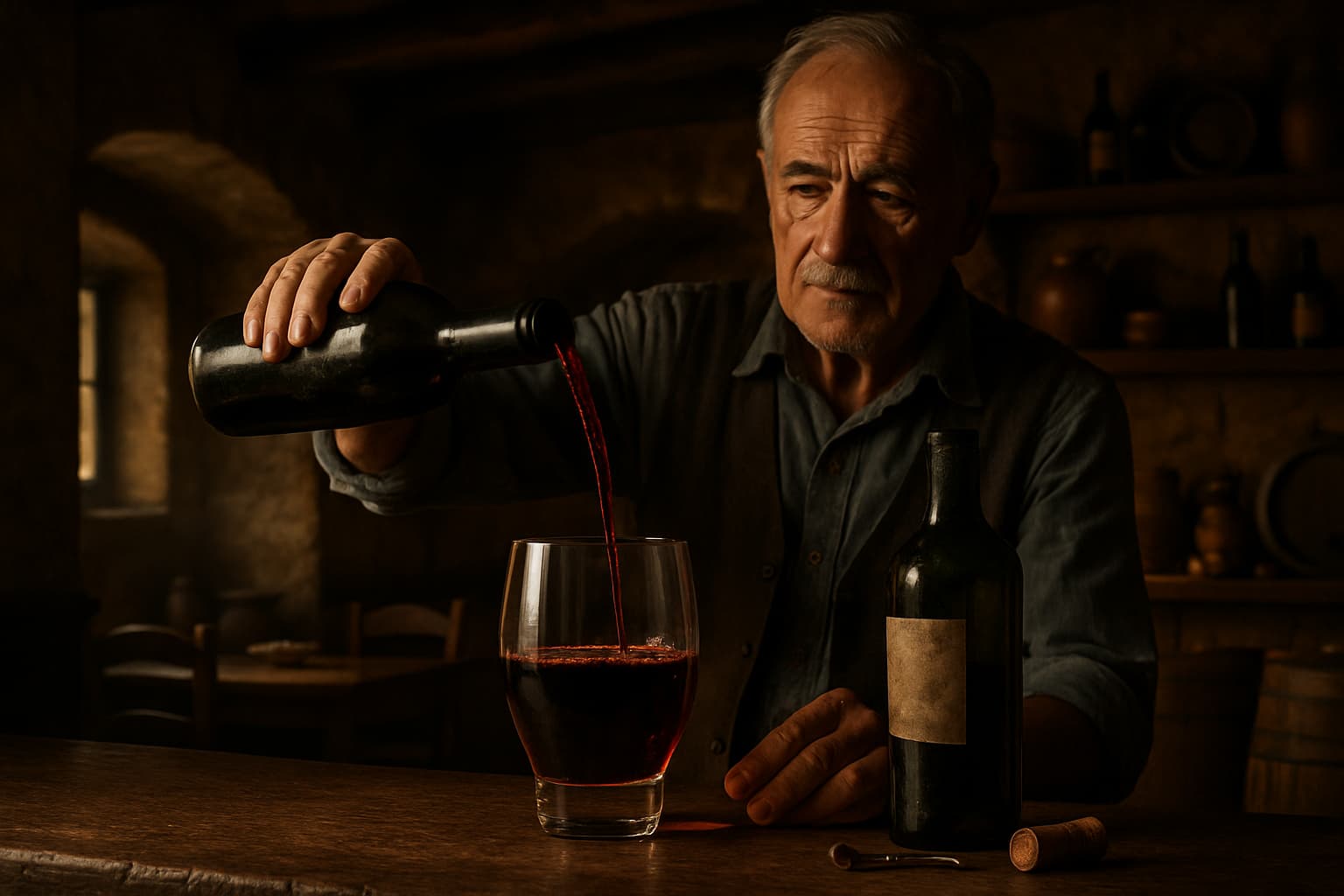
The old man poured the wine into a short glass. It was red and deep and quiet. He turned it in his hand and watched the light move through it.
“This is crianza,” he said. “It has waited. So it is ready.”
That is where it begins: with waiting. With time. With wood and stone and the patience of men and women who work the vines and the barrels and trust that the slow work will not betray them.
Crianza is a simple word. But in wine it is not simple. It is a promise about age—about the years in the barrel and in the bottle, about what has been done and what has been endured.
In Spanish, “crianza” means raising, bringing up, nurturing—like raising a child. In wine, it is the act of letting the wine grow up in wood and in glass until it is no longer young and wild.
On a bottle from Spain, the word is not poetry. It is law. It tells you how long the wine has been aged before you hold it in your hand. It is a contract between the winemaker and the drinker. It says: this has been cared for, for a certain time, in a certain way.
But beyond the law there is something else: the idea that wine is not just a drink but a living thing that must be guided. That it must pass through darkness and stillness before it can be called complete.
Spain does not leave “crianza” to chance or marketing. The rules are hard and clear. They change a little from region to region, and between red, white, and rosé, but the spine is the same: time.
For red wines in most Spanish regions:
In classic regions like Rioja and Ribera del Duero, the traditions are stricter:
Rioja red crianza:
Ribera del Duero red crianza:
The rest of the time, the wine rests in bottle, in cool cellars, in the dark. It is quiet work. No one sees it. But this is where the wine comes together. The harsh edges soften. The fruit and oak learn to speak to each other without shouting.
White and rosé wines do not need as much time. Their beauty is lighter, often more fragile.
In many regions:
In Rioja, for example:
The oak is often gentler here: larger barrels, less toast. The goal is not to bury the fruit but to give it a backbone, a line of structure, a faint taste of bread and nuts and smoke.
Crianza is not alone. It stands in the middle of a ladder of aging.
Most Spanish wines fall into four broad groups:
Crianza sits in the middle. It is the working person’s aged wine. Not as young and raw as joven. Not as solemn and long-suffering as gran reserva. It has seen things. It has matured. But it can still laugh.
The taste of crianza depends on the grape and the place. But there are patterns you can trust.
In regions like Rioja and Ribera del Duero, red crianza is often made from Tempranillo. This grape loves oak and time.
You may find:
The tannins—those dry, grippy things that come from skins and seeds and wood—are firmer than in a young wine, but more rounded. The fruit is not as bright as in a joven. It is deeper, more settled, like a person in midlife who has worked with their hands and learned when to speak and when to be silent.
The wine often has medium to full body, good acidity, and a finish that lingers but does not brood. It is meant to be drunk with food: grilled lamb, roast chicken, sausages, hard cheeses. It stands up to fat and salt and smoke without losing itself.
White crianza, especially from Rioja, can surprise you.
You may find:
These wines can be richer than many people expect from whites. The oak gives them weight and length. They are good with roast fish, poultry, stews with white beans, salted cod, and aged cheeses.
Rosé crianza is rarer, but when you find it, it can show strawberries and herbs under a faint veil of spice and wood. It is a serious rosé, meant for the table, not the pool.
Crianza is married to oak. You cannot speak of one without the other.
In Spain, two main kinds of oak are used:
American oak (Quercus alba)
French oak (Quercus robur, Quercus sessiliflora)
The age of the barrel matters too. New oak shouts. Old oak whispers. Many crianza wines see a mix of older barrels, so the wood shapes the wine without drowning it.
The time in oak lets oxygen slip slowly into the wine. This softens tannins and binds flavors together. The fruit becomes less raw. The wine learns to hold itself.
For the drinker, “crianza” on a label is a guide. It tells you:
It also often sits at a sweet spot of value:
In a good producer’s range, the crianza is often the wine they hope people will drink most nights of the week—the wine that carries the house style. It must be honest, because it is the one most people will know.
The word is Spanish, and the rules are Spanish. But the idea of “raising” a wine is older than the law and wider than one country.
In some parts of the New World—Chile, Argentina, even the United States—winemakers sometimes use “crianza” informally to suggest aging in oak and bottle, nodding to Spanish tradition. Outside Spain, though, it has no fixed legal meaning. On those labels it is more story than statute.
In Portugal, a related word, “estágio,” is used for aging, but the system is different. In France and Italy, the same idea lives under other names: “élevage,” “affinamento,” “invecchiamento.” The work is the same. The words are different.
Still, when you see “crianza” on a bottle, you can be sure of one thing: the wine has not been rushed to market. It has been held back, taught to stand, to walk, to speak in a fuller voice.
You do not need ceremony, but a little care helps.
Too cold and the oak and tannin will harden. Too warm and the alcohol will rise and blur the flavors.
The wine is made to be at the table, with voices and plates and knives and forks. It is not a wine that asks you to sit in a corner and study it. It wants company.
In the end, crianza is more than a rule about months and barrels. It is a belief that time and patience give shape to things. That raw strength is not enough. That a good life, like a good wine, needs guidance and restraint and a place to rest.
The growers prune the vines. They pick the grapes by hand in the cold mornings. They crush and ferment and press and fill the barrels. Then they wait. The wine lies in the dark. It takes what it needs from the oak. It gives up what it must. It becomes something else.
When you drink a crianza, you taste that waiting. You taste the choice not to sell the wine as soon as it could be bottled. You taste the quiet years.
The old man in the small bar knows this, even if he does not speak of it. He pours the wine. He sets the glass on the worn wood. The room smells of smoke and meat and old stone.
“You can drink it now,” he says.
The wine has been raised. It has grown up. It is ready to meet you.
Tannins are astringent compounds found in wine that contribute to its texture and aging potential, often causing a drying or puckering sensation in the mouth. They are derived from grape skins, seeds, and stems, as well as from oak barrels used during aging.
/ˈtænɪnz/
Malic acid is a naturally occurring organic acid found in grapes that contributes to the tart, green apple-like flavor and crispness in wine. It plays a significant role in the taste and acidity of wine.
/mælɪk ˈæsɪd/
Vino Joven (young wine)
Crianza
Reserva
Gran Reserva
Glass
Time in the glass
Food
There’s a moment, when you pour a glass of wine, that feels almost indecently intimate. The bottle tips, the liquid arcs, and then—before you even bring the glass to your lips—you give it that little...
Filtration in winemaking is the process of removing solid particles from wine to clarify and stabilize it before bottling, using various types of filters to achieve different levels of clarity and remove unwanted elements like yeast, bacteria, and sediment.
/fɪlˈtreɪʃən/
Oxidation in wine is a chemical reaction between the wine and oxygen that can change its flavor, aroma, and color. This process can be beneficial or detrimental depending on the extent and context of the exposure.
/ˌɒksɪˈdeɪʃən/
Microclimate refers to the unique climate conditions of a small, specific area within a larger region, significantly influencing grapevine growth and the characteristics of the resulting wine.
/ˈmīkrōˌklīmit/
Get weekly wine recommendations, vineyard news, and exclusive content delivered to your inbox.
-e4b2322f.webp&w=3840&q=75)
-012baf26.webp&w=3840&q=75)