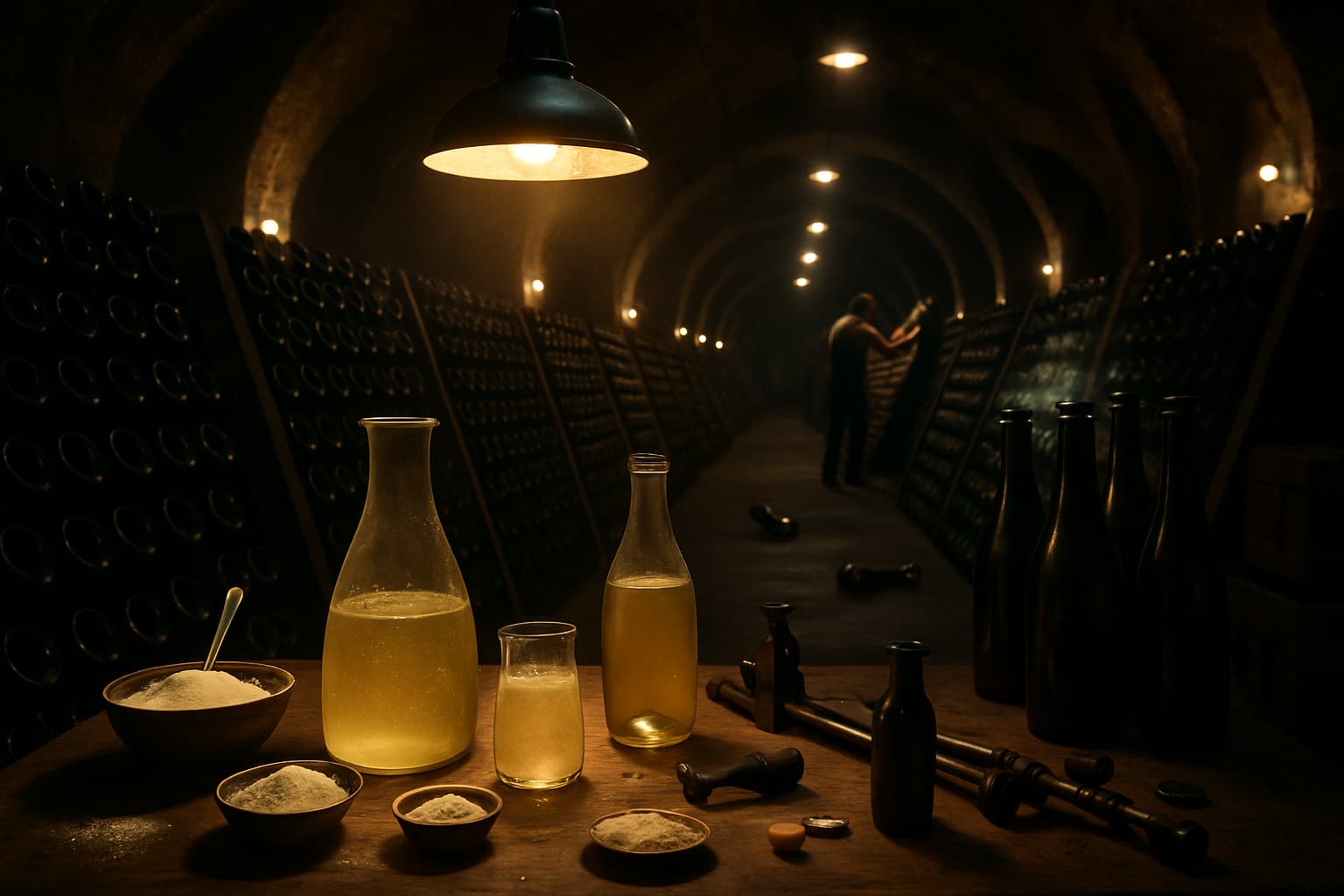
Wine Terminology
“Where every bottle tells a story”
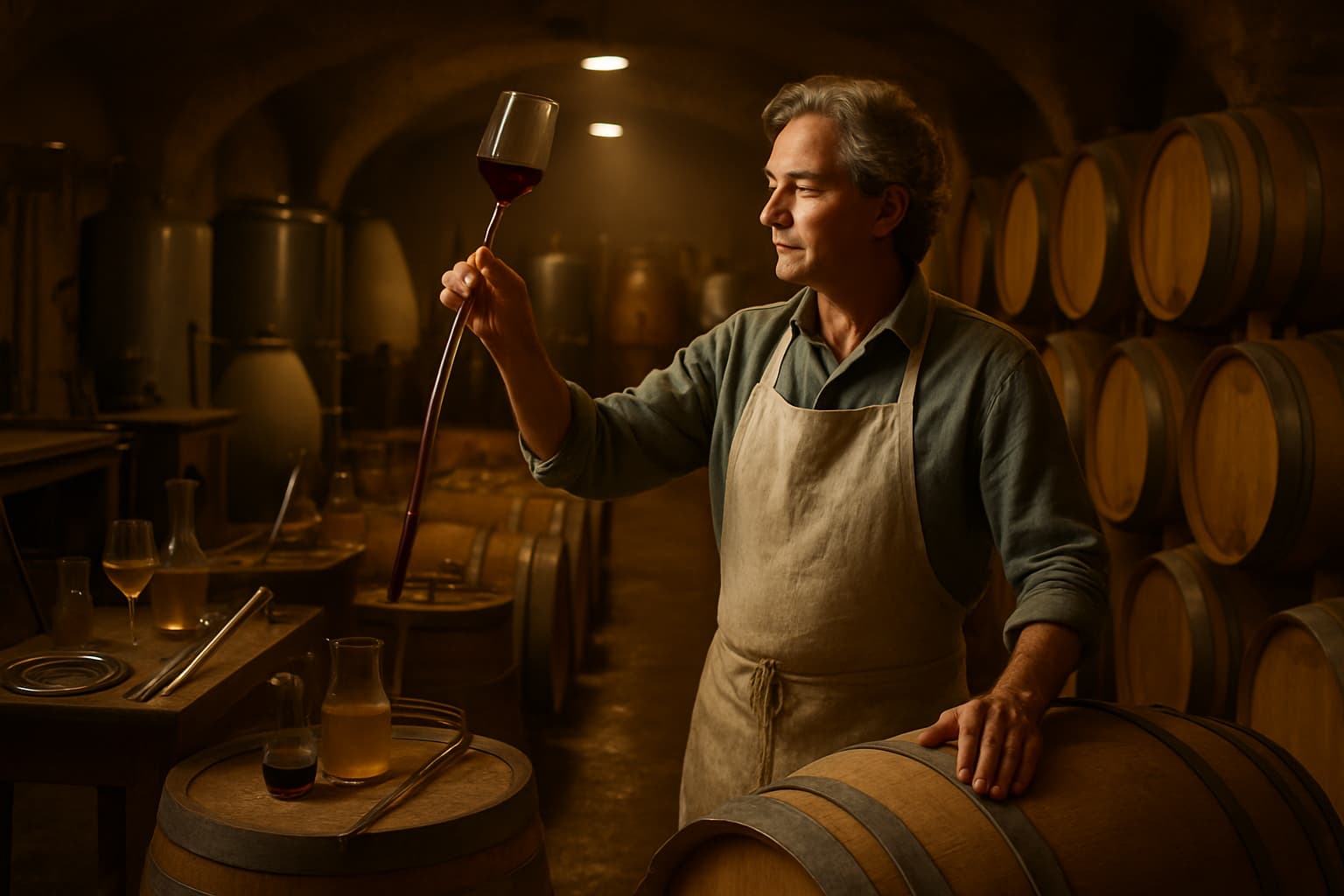
Oh, my dear, let’s tie on our aprons and step into the cellar, shall we? Today we’re not just sipping wine, we’re raising it—quite literally. Because that, in essence, is what élevage is all about: the upbringing of wine, the way you might lovingly bring up a child or carefully tend a pot of boeuf bourguignon until it’s just right.
Élevage is one of those marvelous French terms that sounds a bit mysterious, but once you understand it, you’ll never look at a bottle of wine the same way again. It’s the hidden chapter between fermentation and bottling, where a wine’s character is coaxed, polished, and sometimes dramatically transformed. So, let’s roll up our sleeves and peek behind the cellar door.
In French, élever means “to raise” or “to bring up,” as you would a child or a young plant. In wine, élevage refers to the entire process of maturing and refining a wine after fermentation and before bottling.
Think of it as the wine’s education and finishing school:
During this period, the winemaker makes a series of decisions—about vessels, timing, blending, and more—that shape the final taste, texture, and personality of the wine. It’s not just waiting around; it’s active, attentive, hands-on work.
Let’s walk through what typically happens in élevage, step by step, like following a good recipe.
Once fermentation is complete, the new wine is often cloudy and full of spent yeast cells and grape solids, called lees.
The winemaker will usually rack the wine—gently moving it from one vessel to another, leaving the heavy sediment behind. This is like straining your stock: you want clarity and purity, but you might keep some flavorful bits if you know what you’re doing.
Here is where élevage becomes truly artistic. The winemaker must choose where the wine will rest and develop:
Stainless steel tanks
Clean, neutral, like a good sturdy saucepan. They don’t add flavor; they simply preserve the wine’s fresh, fruity character and crispness.
The choice of vessel is like choosing whether to roast, braise, or sauté. The same raw ingredient (the wine) will taste very different depending on the method.
During élevage, oxygen is both friend and foe.
Winemakers control oxygen by:
It’s like simmering a sauce: a gentle, controlled heat transforms and concentrates; a roaring boil destroys.
Now, let’s talk about lees, those little flavor-packed yeast remnants. They can be a marvelous tool in élevage, especially for white wines.
Leaving wine on its fine lees can:
Regions like Muscadet and Burgundy often use extended lees contact to give their wines more depth and complexity.
Bâtonnage is the French term for stirring the lees, usually with a long stick or rod. This:
Imagine stirring the fond at the bottom of your pan into a sauce—that’s where so much of the flavor lives. But, as always, too much stirring can make things heavy or muddled. The winemaker tastes and decides when enough is enough.
Oh, oak! It’s the butter, cream, and herbs of the wine world—wonderful when used with restraint.
The winemaker must decide:
Too much oak is like too much garlic—delicious in moderation, but it can easily take over the dish.
During élevage, the winemaker may have dozens—or even hundreds—of separate lots:
These can be blended at various stages to:
Blending is like tasting all your pots on the stove and deciding how they’ll come together on the plate: a little more of this barrel, a touch less of that one, perhaps a splash of something with brighter acidity to lift the whole.
The length of élevage can vary from a few months to several years, depending on:
Examples:
Time in élevage allows:
But time alone isn’t magic. It must be appropriate time, with careful supervision—just as a stew can go from marvelously tender to mushy if you forget it on the stove.
When you swirl and sniff your glass, many of the traits you notice are the direct result of élevage decisions.
Short élevage in steel
Bright, crisp, fruity, and floral. Think zippy Sauvignon Blanc or simple Pinot Grigio.
Longer élevage with lees and oak
Creamier texture, notes of butter, toast, brioche, vanilla, and nuts. Classic Chardonnay styles, especially from Burgundy or California.
Minimal oak, shorter élevage
Juicy, fresh, fruit-driven wines with lively acidity and gentle tannins. Great for early drinking.
Extended élevage in oak
More structure, deeper color, layers of spice, smoke, chocolate, and cedar. Wines built for aging, like Bordeaux, Rioja, or many top New World reds.
In traditional-method sparkling wines (like Champagne), élevage includes:
This can last many years and is an essential part of the wine’s character.
Different regions have strong traditions around élevage:
Modern winemakers also experiment with:
Élevage is where tradition and creativity dance together.
You don’t need a winemaking degree to benefit from understanding élevage. A few practical tips:
Read the back label or producer notes
Look for phrases like “aged in French oak for 12 months,” “sur lie,” or “stainless steel only.” These hint at texture and flavor.
Élevage is the quiet, patient, often invisible work that turns raw wine into something graceful, harmonious, and complete. It’s the long simmer on the back burner, the careful tasting and adjusting, the choice of pot and flame and timing.
When you lift a glass to your nose and find:
you’re tasting the results of élevage.
So the next time you enjoy a bottle, imagine the wine not just as a product, but as a character that has been raised with care: guided by the winemaker’s hand, shaped by the vessel it rested in, and matured at its own proper pace. Behind every graceful sip is a long, quiet story in the cellar—and that story is called élevage.
Bon appétit—and, of course, bon vin!
Tannins are astringent compounds found in wine that contribute to its texture and aging potential, often causing a drying or puckering sensation in the mouth. They are derived from grape skins, seeds, and stems, as well as from oak barrels used during aging.
/ˈtænɪnz/
Malic acid is a naturally occurring organic acid found in grapes that contributes to the tart, green apple-like flavor and crispness in wine. It plays a significant role in the taste and acidity of wine.
/mælɪk ˈæsɪd/
Concrete tanks
Slightly porous, good at temperature control, often imparting a gentle, rounded texture without obvious flavor. Think of them like a heavy cast-iron pot, holding heat and providing stability.
Oak barrels (barriques, foudres, etc.)
Oak is the big personality in élevage. It can add flavors (vanilla, spice, toast), oxygen exchange, and textural richness. But too much oak is like too much salt—it overwhelms everything.
Amphorae and clay vessels
A charming return to ancient methods. These can offer gentle micro-oxygenation and a very pure expression of fruit and terroir, with a subtly different texture.
French oak
Generally more subtle and refined: notes of cedar, baking spice, gentle vanilla. Often used for Burgundy, Bordeaux, and high-quality whites and reds.
American oak
More pronounced flavors: coconut, dill, sweet vanilla. Famously used in many Riojas and some New World wines.
New vs. old barrels
Barrel size
Match style to occasion
Think of élevage as seasoning and cooking method
Fermentation gives you the raw ingredient; élevage is how it’s prepared. If you know you like wines that are “buttery and oaky” or “crisp and mineral,” you’re really expressing a preference about élevage.
There’s a moment, when you pour a glass of wine, that feels almost indecently intimate. The bottle tips, the liquid arcs, and then—before you even bring the glass to your lips—you give it that little...
Filtration in winemaking is the process of removing solid particles from wine to clarify and stabilize it before bottling, using various types of filters to achieve different levels of clarity and remove unwanted elements like yeast, bacteria, and sediment.
/fɪlˈtreɪʃən/
Oxidation in wine is a chemical reaction between the wine and oxygen that can change its flavor, aroma, and color. This process can be beneficial or detrimental depending on the extent and context of the exposure.
/ˌɒksɪˈdeɪʃən/
Microclimate refers to the unique climate conditions of a small, specific area within a larger region, significantly influencing grapevine growth and the characteristics of the resulting wine.
/ˈmīkrōˌklīmit/
Get weekly wine recommendations, vineyard news, and exclusive content delivered to your inbox.
-e4b2322f.webp&w=3840&q=75)
-012baf26.webp&w=3840&q=75)