Wine Terminology
“Where every bottle tells a story”
There’s a moment on a hot afternoon in some nowhere Italian town when you don’t want a beer, you don’t want a Negroni, and you definitely don’t want a big, brooding red that smells like leather and dead poets. You want something cold, something alive, something that snaps you awake without punching you in the face. That’s where this little word sidles up to the bar:
Frizzante.
Not the loud, in-your-face New Year’s Eve fireworks of Champagne. Not the flat, serious lecture of still wine. Frizzante lives in the middle—soft fizz, low drama, easy charm. It’s the half-smile of the wine world. And like most Italian things, it’s both simple and way more complicated than it looks.
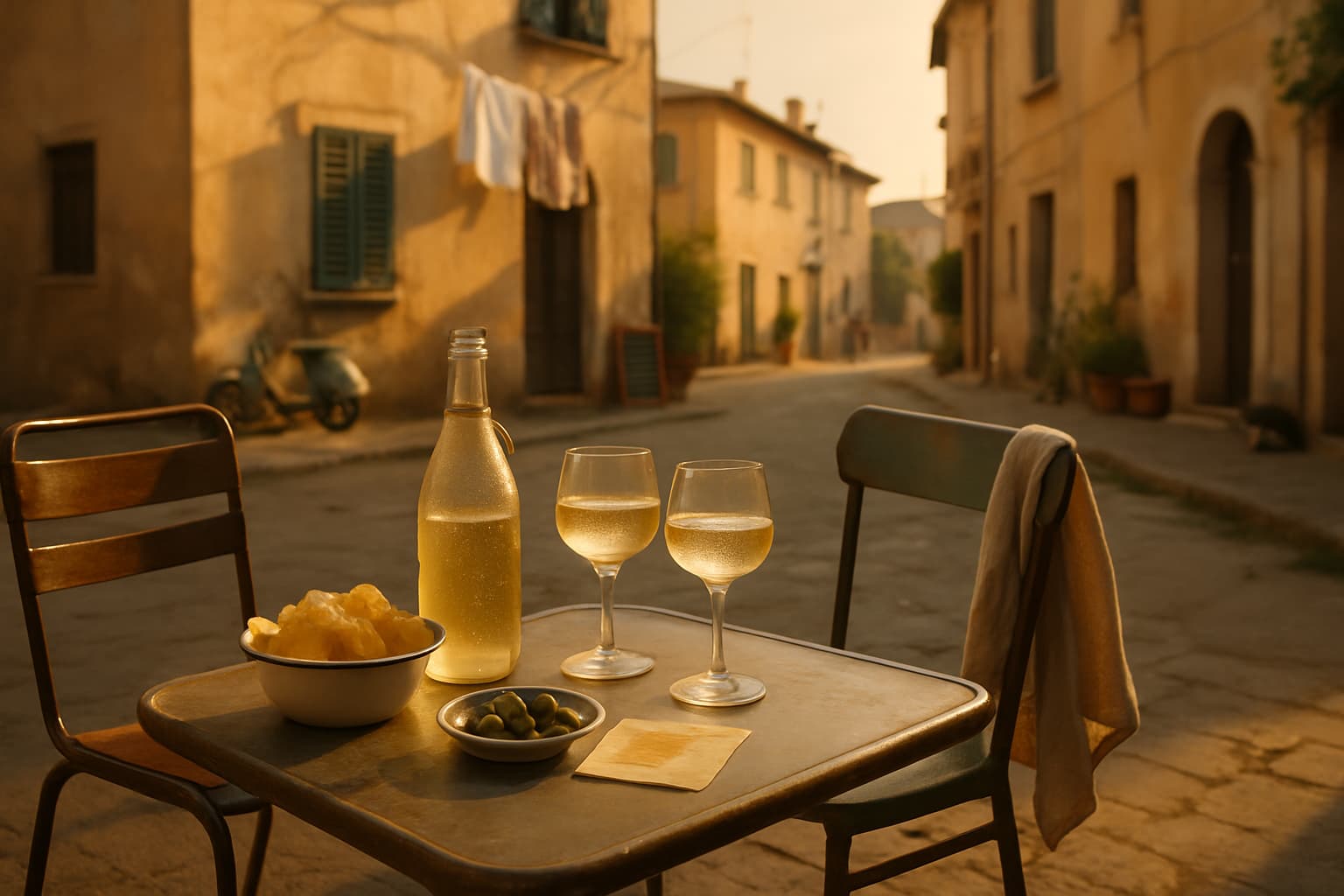
Pull up a cheap metal chair, order a glass, and let’s talk about what the hell it actually is.
In Italian, frizzante basically means “fizzy” or “sparkling.” But in wine-speak, it’s not just a cute word on a label. It’s a legal style—a specific level of bubbles.
Think of bubbles like the volume on a stereo:
The difference isn’t just marketing. It’s pressure. Literally.
You won’t feel that number, but you’ll taste it. Frizzante is the soft sigh of carbonation, not the violent pop. It’s the difference between a chill conversation and a nightclub at 2 a.m.
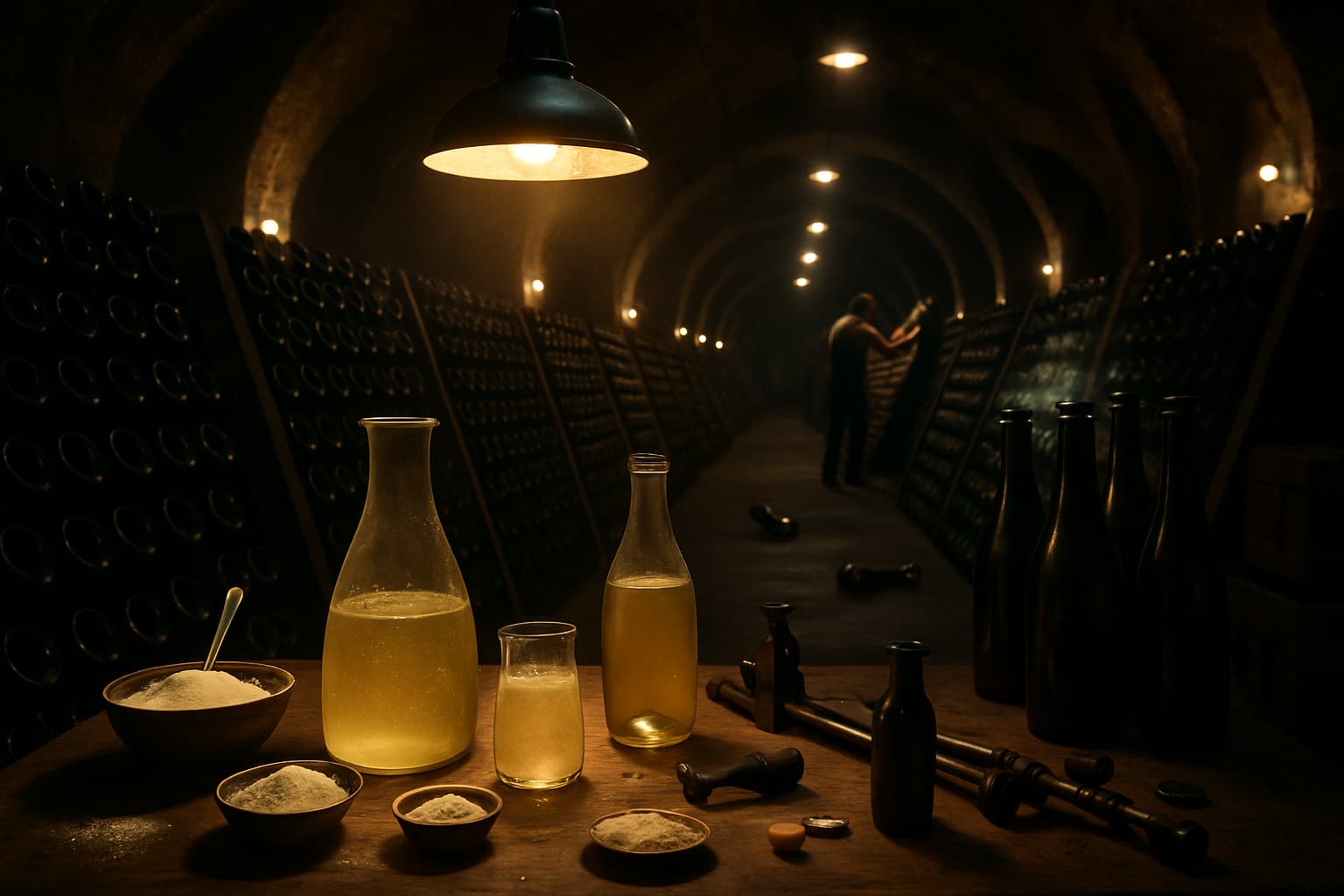
You don’t get bubbles by manifesting them. You get them the old-fashioned way: yeast eating sugar and producing CO₂. There are a few main ways to end up with frizzante-level fizz.
This is the workhorse method, especially for Italian frizzante:
Turn the dial down early? You get frizzante. Let it go longer or under higher pressure? You get full sparkling. Same method, different attitude.
You can also get frizzante-level fizz from traditional method (like Champagne) or ancestral method (pet-nat) wines that just don’t build up as much pressure. Maybe they were bottled with less sugar, maybe fermentation was stopped early, maybe the winemaker just wanted a softer style.
The result is still that gentle, prickle-on-the-tongue sensation—but with more yeasty, bready, sometimes funky complexity if it stayed on the lees (dead yeast cells) for a while.
There’s also the industrial way: inject CO₂ like it’s soda. Perfectly legal in some categories. Often cheap, often soulless. If it tastes like alcoholic Sprite and costs less than a sandwich, you can guess how it got fizzy.
Is that evil? Not necessarily. But if you’re looking for character, you usually want fermentation-born bubbles, not soda-gun bubbles.
Frizzante is not just “bad sparkling wine.” It’s a deliberate choice.
Texture:
Experience:
Food pairing:
The Italians, being sane people, keep frizzante around for actual life, not just for anniversaries and awkward office parties.
This isn’t some rare unicorn style. You’ve probably walked past it a hundred times.
Prosecco isn’t just that fully sparkling, brunch-mimosa fuel. There’s a quieter cousin: Prosecco Frizzante.
Often, Prosecco frizzante is:
If a bottle of Prosecco has a string tie or simple cork and string instead of a wired cage, odds are you’re looking at frizzante.
Lambrusco is that red, fizzy wine people either love, hate, or misunderstand. A lot of it is frizzante.
The frizzante versions are made to go with the food of Emilia-Romagna:
The gentle fizz cuts through fat like a scalpel. You drink it cold, from whatever glass is clean, and wonder why you ever drank heavy reds with pizza.
Moscato d’Asti is basically the angelic dessert version of frizzante:
It’s what you drink when you don’t want a heavy dessert but also don’t want to be the person ordering black coffee while everyone else is still having fun.
Look for the word “frizzante” itself. Italy doesn’t hide this. But there are a few tells:
You don’t always want fireworks. Sometimes you want a cigarette on the balcony, not a stadium concert. Frizzante is perfect when:
It’s hot and you’re hungry
Fried fish, calamari, potato chips, olives, salty snacks—frizzante loves them all. The bubbles scrub your palate clean after each bite.
A few ground rules so you don’t treat it like a warm soda:
Serve it cold
6–10°C (43–50°F). Cold, but not brain-freeze cold.
The wine world loves hierarchy. Grand Cru this, single-vineyard that, rare cuvée, hand-numbered bottles, waiting lists, tasting rooms that feel like banks. Frizzante doesn’t care about any of that.
It’s the anti-ceremony wine.
It just wants to be cold, open, and in your glass while you’re living your actual life—standing over a stove, sitting on a curb, arguing about nothing important with people you like.
There’s a kind of honesty in that. Not every bottle needs to be a revelation. Some just need to be good company.
Next time you’re staring at a wall of bottles:
See “frizzante” on a label?
Choosing between fully sparkling and frizzante?
If wine were a party guest, Champagne would be the overdressed one making speeches. Frizzante would be the friend in a wrinkled shirt who brought great snacks, rolled in late, and somehow made the whole night better without trying.
You don’t always need fireworks. Sometimes you just need a quiet bottle with a little fizz and no agenda.
That’s frizzante: less pressure, more pleasure. Drink accordingly.
Tannins are astringent compounds found in wine that contribute to its texture and aging potential, often causing a drying or puckering sensation in the mouth. They are derived from grape skins, seeds, and stems, as well as from oak barrels used during aging.
/ˈtænɪnz/
Malic acid is a naturally occurring organic acid found in grapes that contributes to the tart, green apple-like flavor and crispness in wine. It plays a significant role in the taste and acidity of wine.
/mælɪk ˈæsɪd/
Closures:
Label language:
Price and vibe:
You’re day-drinking
Lower pressure, often lower alcohol, and a relaxed personality mean you can knock back a few glasses without feeling like you’re auditioning for a Champagne commercial.
You’re eating “real people” food
Pizza, burgers, fried chicken, tacos, ramen, cold cuts—frizzante doesn’t demand a white tablecloth. It’s a democratic wine.
You’re wine-curious but not a wine nerd
It’s approachable. No one’s going to quiz you on terroir. You don’t need to swirl and pontificate. You just drink the damn thing.
Use normal glasses if you want
Flutes are fine, but a simple white wine glass works better. You get more aroma, more flavor, less pretense.
Don’t age it
This is not a cellar wine. Drink it young, fresh, alive. If it’s been sitting around for years, it’s probably lost its charm and half its fizz.
There’s a moment, when you pour a glass of wine, that feels almost indecently intimate. The bottle tips, the liquid arcs, and then—before you even bring the glass to your lips—you give it that little...
Filtration in winemaking is the process of removing solid particles from wine to clarify and stabilize it before bottling, using various types of filters to achieve different levels of clarity and remove unwanted elements like yeast, bacteria, and sediment.
/fɪlˈtreɪʃən/
Oxidation in wine is a chemical reaction between the wine and oxygen that can change its flavor, aroma, and color. This process can be beneficial or detrimental depending on the extent and context of the exposure.
/ˌɒksɪˈdeɪʃən/
Microclimate refers to the unique climate conditions of a small, specific area within a larger region, significantly influencing grapevine growth and the characteristics of the resulting wine.
/ˈmīkrōˌklīmit/
Get weekly wine recommendations, vineyard news, and exclusive content delivered to your inbox.
-e4b2322f.webp&w=3840&q=75)
-012baf26.webp&w=3840&q=75)