Wine Terminology
“Where every bottle tells a story”
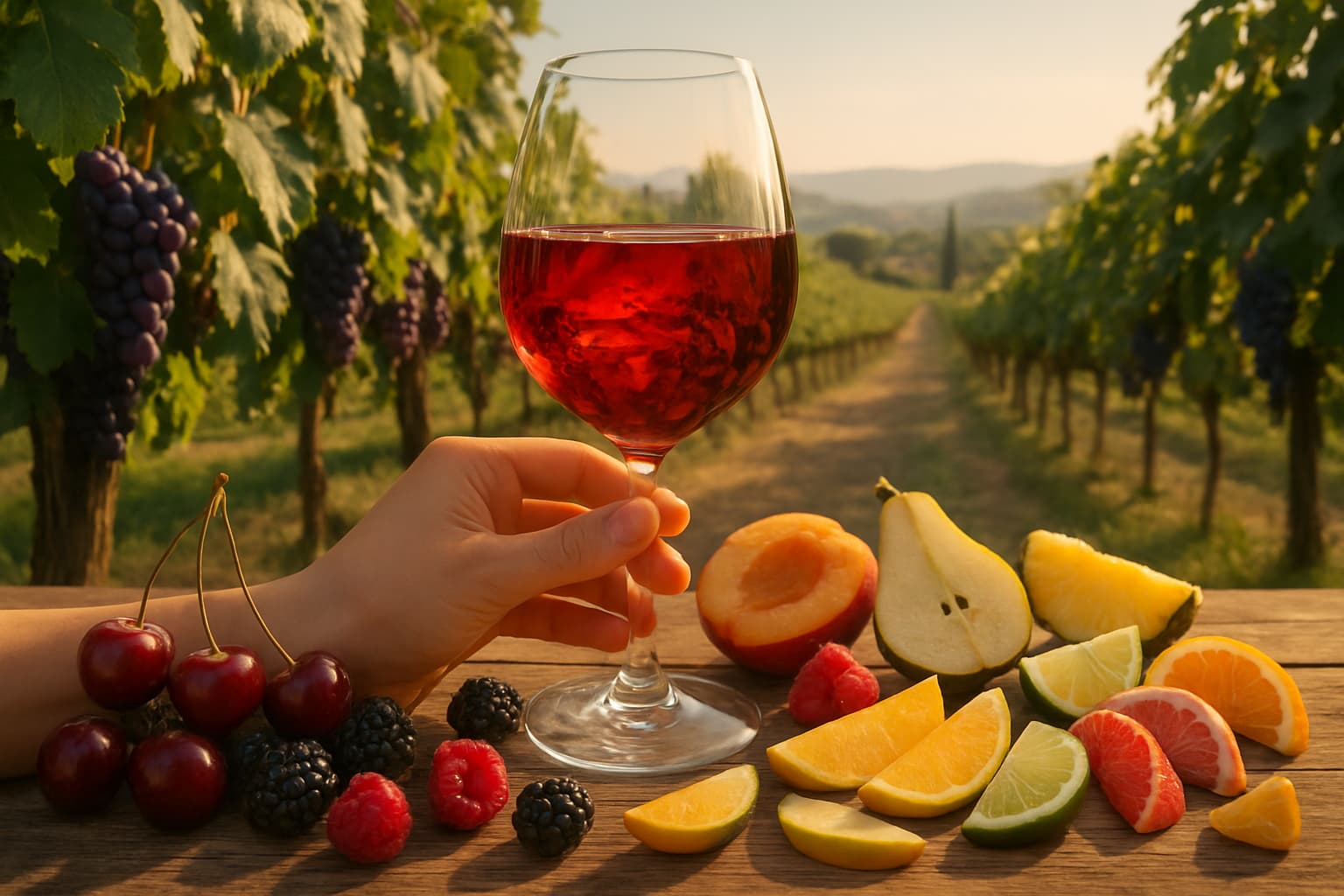
On a warm afternoon in a quiet vineyard, one might lift a glass of wine to the light and see, suspended within it, not just liquid, but the memory of sunlight, the echo of spring blossoms, and the slow, patient work of vines. Then, with a first inhalation, comes a rush of aroma: cherries, blackberries, ripe peaches, perhaps even a whisper of tropical fruit. It is in this moment that many wine lovers reach for a single, evocative phrase: fruit-forward.
Yet what does this expression truly mean? Is it a simple description of taste, or does it hint at something deeper—about climate, winemaking, and our own human fascination with sweetness, ripeness, and pleasure? Let us journey into the glass and discover.
In the language of wine, fruit-forward describes a wine in which the aromas and flavors of fruit are the most prominent, easily noticeable characteristics. These wines may evoke:
In a fruit-forward wine, these notes step confidently to the front of the stage. Other elements—earth, spice, oak, minerality—may still be present, but they play supporting roles, adding complexity rather than dominating.
Crucially, fruit-forward does not necessarily mean sweet. Many fruit-forward wines are completely dry; their sense of “fruitiness” arises from aroma and flavor, not from sugar. The mind, ever suggestible, often confuses the lushness of ripe fruit flavors with sweetness, even when none is present.
To understand fruit-forward character, we must look beyond the glass to the grapevine itself.
Grapes contain a remarkable variety of aromatic compounds—esters, terpenes, thiols, and more. During fermentation, yeasts transform grape sugars into alcohol and carbon dioxide, but in doing so, they also create new aromatic molecules. These compounds are responsible for the wine’s scents of:
A wine described as fruit-forward typically has a high intensity of these fruit-related aromatics, easily perceived even by less experienced tasters.
As grapes ripen on the vine, their sugars increase, their acids soften, and their flavor compounds become more concentrated. Grapes harvested at fuller ripeness often yield wines with:
Such wines frequently present themselves as fruit-forward, as if the sun’s energy has been captured and distilled into each drop.
Across the planet, from the rolling hills of California to the sunlit slopes of Australia and the river valleys of Chile, climate plays a decisive role in shaping whether a wine is fruit-forward.
Warm climates (parts of California, Southern Italy, Spain, Australia, Argentina):
Grapes ripen more easily, often developing lush, ripe flavors of blackberry, plum, or tropical fruits. Wines from these regions frequently lean toward a fruit-forward style, with generous, open aromas.
Cool climates (Burgundy, parts of Germany, coastal Chile, New Zealand):
Grapes retain more acidity and may show more restrained, delicate fruit notes—cranberry, red currant, green apple, lemon. These wines can still be fruit-forward, but in a more subtle, linear way, their fruit character precise rather than opulent.
Beneath the vines, the soils—limestone, clay, gravel, volcanic ash—shape the vine’s access to water and nutrients. While fruit-forwardness is often more closely linked to ripeness and winemaking, terroir can influence:
A fruit-forward Pinot Noir from a limestone-rich Burgundian slope may express bright red berries and delicate floral notes, while a fruit-forward Cabernet Sauvignon from gravelly soils in Napa may burst with cassis, blackberry, and dark plum.
Once the grapes are harvested, the winemaker becomes a kind of conductor, deciding which aspects of the fruit will sing the loudest.
For white and rosé wines, cooler fermentation temperatures help preserve delicate, volatile aromatic compounds, yielding wines that smell vividly of fresh fruit. Minimal oxidation and careful handling ensure that those bright, primary fruit notes remain intact.
For red wines, decisions about:
all influence whether fruit remains at the forefront or shares the stage with tannin, spice, and structure.
Oak barrels can add aromas of vanilla, toast, spice, and smoke. Used judiciously, they can enhance the perception of fruit, like a frame around a painting. Used heavily, they can overshadow it.
Fruit-forward wines often:
The result is fruit that is pure, unmasked, and immediate.
To appreciate fruit-forward wines fully, it helps to contrast them with other stylistic expressions.
Both can be dry, and both can be complex. The difference lies in which aromas take precedence.
Mineral-driven wines are often described with words like:
Such wines may show fruit, but it is often more restrained, sharing equal billing with these more austere, structural notes. Many Chablis, some Rieslings, and certain high-altitude whites fall into this category.
A crucial distinction:
A dry, fruit-forward Riesling might explode with lime, green apple, and peach on the nose while finishing crisp and tart. A sweet wine will leave a palpable impression of sugar on the tongue.
While almost any grape can be made in a fruit-forward style, some varieties are naturally expressive.
Standing before a bottle, how might one predict whether the wine will be fruit-forward?
Consider:
Once poured, use your senses:
In the grand theatre of dining, fruit-forward wines play a generous and accommodating role.
Fruit-forward reds pair beautifully with:
Fruit-forward wines are often wonderful partners for:
Like all living things, wine changes with time. A young wine may be exuberantly fruit-forward, overflowing with primary aromas of fresh berries or citrus. As it ages, however, the fruit can recede, making way for more complex, tertiary notes:
Some wines are crafted to be enjoyed in this youthful, fruit-forward phase, when their energy is at its peak. Others are built for the long journey, where fruit is only the opening chapter in a much longer story.
Understanding whether a particular wine is meant to be drunk young or cellared is part of the quiet wisdom that wine slowly teaches us: that there is a time for exuberant fruit, and a time for subtle reflection.
Perhaps fruit-forward wines speak to something ancient in us. For millennia, humans have sought out ripe fruit as a source of nourishment and pleasure. To encounter those same aromas—cherry, plum, peach, citrus—transformed and concentrated in wine is to experience a familiar joy in a new, more intricate form.
There is also a democratic kindness in fruit-forward wines. Their aromas are often easy to recognize, even for those new to wine. They invite rather than intimidate, offering a welcoming gateway into the wider, more complex world of wine appreciation.
In the end, to call a wine fruit-forward is to acknowledge the primacy of the grape itself—the simple, miraculous berry that hangs on the vine, quietly absorbing the sun, the wind, and the soil’s whispered minerals. Before the influence of barrel, before the alchemy of age, there is fruit: pure, bright, and immediate.
Lift such a wine to your nose, and you are transported: to orchards heavy with apples, to hedgerows brimming with berries, to vineyards glowing in late-afternoon light. Each sip becomes a small act of time travel, carrying the memory of a season, a place, and a moment of perfect ripeness.
In that sense, a fruit-forward wine is more than just a style. It is a celebration of nature’s generosity—of the vine’s patient labor, the sun’s steady warmth, and our own enduring delight in the simple, profound pleasure of fruit captured in a glass.
Tannins are astringent compounds found in wine that contribute to its texture and aging potential, often causing a drying or puckering sensation in the mouth. They are derived from grape skins, seeds, and stems, as well as from oak barrels used during aging.
/ˈtænɪnz/
Malic acid is a naturally occurring organic acid found in grapes that contributes to the tart, green apple-like flavor and crispness in wine. It plays a significant role in the taste and acidity of wine.
/mælɪk ˈæsɪd/
Fruit-forward whites complement:
There’s a moment, when you pour a glass of wine, that feels almost indecently intimate. The bottle tips, the liquid arcs, and then—before you even bring the glass to your lips—you give it that little...
Filtration in winemaking is the process of removing solid particles from wine to clarify and stabilize it before bottling, using various types of filters to achieve different levels of clarity and remove unwanted elements like yeast, bacteria, and sediment.
/fɪlˈtreɪʃən/
Oxidation in wine is a chemical reaction between the wine and oxygen that can change its flavor, aroma, and color. This process can be beneficial or detrimental depending on the extent and context of the exposure.
/ˌɒksɪˈdeɪʃən/
Microclimate refers to the unique climate conditions of a small, specific area within a larger region, significantly influencing grapevine growth and the characteristics of the resulting wine.
/ˈmīkrōˌklīmit/
Get weekly wine recommendations, vineyard news, and exclusive content delivered to your inbox.
-e4b2322f.webp&w=3840&q=75)
-012baf26.webp&w=3840&q=75)