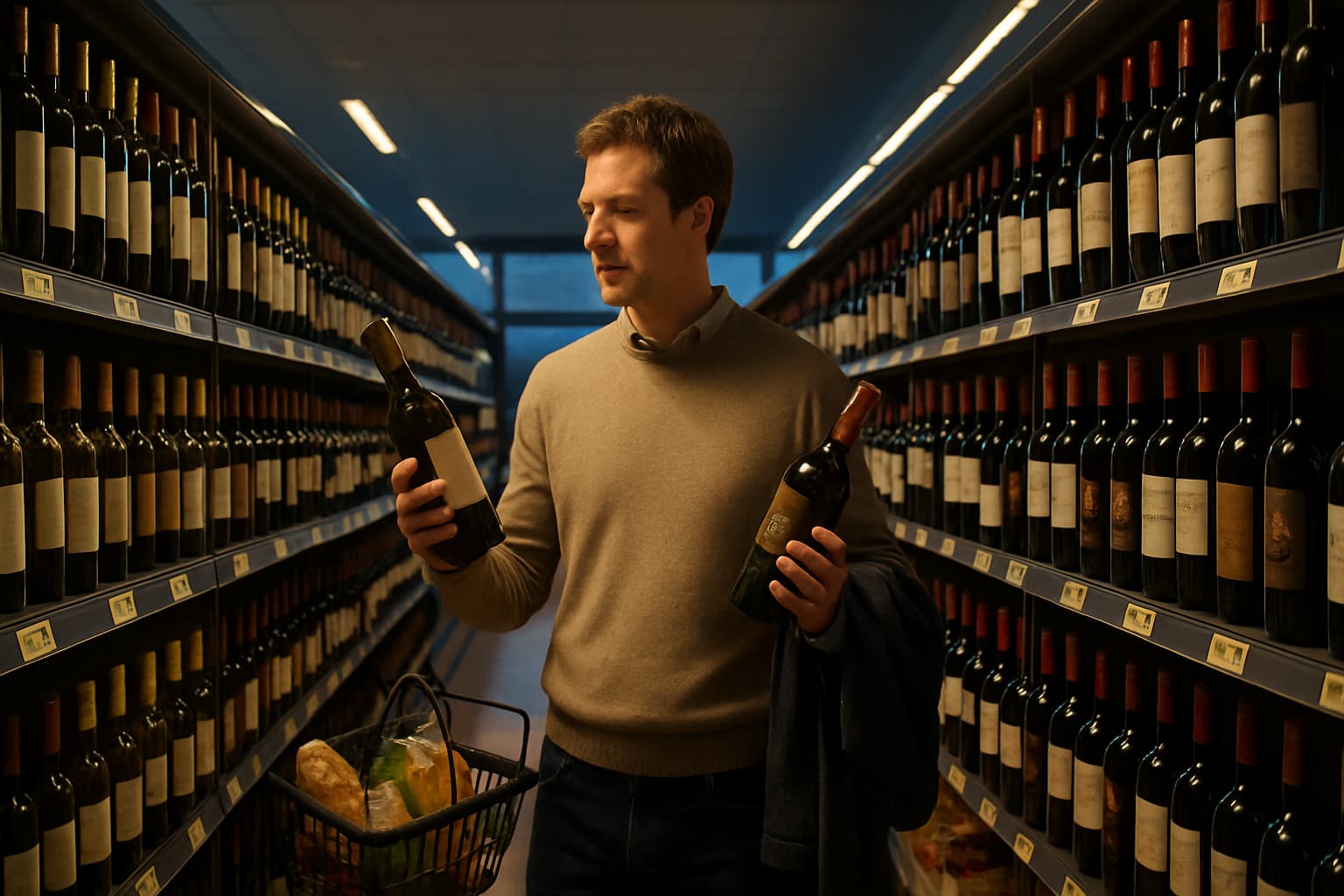
There’s an old saying that “wine is bottled geography.”
But in our time, it has become something more: bottled economics, bottled politics, and bottled globalization.
When a glass of Malbec from Argentina meets a dinner table in Tokyo, or a crisp Sauvignon Blanc from New Zealand is poured in a New York rooftop bar, there’s an invisible web of ships, currencies, treaties, and human labor stretching quietly across the world. That’s the story we’re going to uncork today: how wine moves around the planet, and what those flows mean for the global economy.
From Local Vineyards to a Global Marketplace
Once upon a time, wine was mostly a local affair. What grew in your valley was what ended up in your glass. Today, the map looks very different.
- A handful of countries dominate production.
- Another set dominates consumption.
- And in between, an intricate trade network keeps the bottles moving.
The modern global wine trade is the result of centuries of cultural tradition meeting a few decades of rapid economic integration. Tariffs dropped, container ships grew larger, and consumers from Shanghai to São Paulo acquired a taste for what was once a strictly European luxury.
Wine, in other words, has become a quiet but powerful player in the world economy—one that reflects deeper trends in trade, development, and even climate change.
The Big Players: Who Makes the Wine, and Who Drinks It?
If you zoom out and look at the world’s vineyards from above, a few regions stand out like old friends.
Major Producers
Traditionally, three countries have formed the backbone of global wine production:
- Italy – A patchwork of regions, from Piedmont to Sicily, producing everything from Barolo to Prosecco.
- France – The cradle of many of the world’s most famous appellations: Bordeaux, Burgundy, Champagne, the Rhône.
- Spain – Vast vineyard area, with Rioja, Ribera del Duero, Cava, and countless lesser-known gems.
Together, they account for a large share of global output. But they no longer stand alone.
The so‑called “New World” producers have stepped firmly onto the stage:
- United States – Led by California, but with growing regions in Oregon, Washington, and beyond.
- Chile and Argentina – Powerhouses of the Southern Hemisphere, exporting value-driven and increasingly premium wines.
- Australia and New Zealand – From bold Australian Shiraz to razor-sharp New Zealand Sauvignon Blanc, they’ve become fixtures on global shelves.
- South Africa – Bridging Old and New World styles, with a strong export orientation.
These producers don’t just add volume—they reshape competition, pricing, and consumer expectations.
Major Consumers
On the other side of the ledger, we find the thirsty:
- United States – One of the largest wine markets by volume and value, driven by a broad middle class and a strong restaurant culture.
- European Union – France, Italy, Spain, Germany, the UK, and others remain heavy consumers, though per‑capita consumption has shifted over time.
- China – A relative newcomer, but a crucial growth market, especially for red and premium wines—though demand has been volatile.
- United Kingdom – A major importer with almost no domestic production relative to consumption; a global hub for wine trade, distribution, and fine wine auctions.
When you look at who produces and who consumes, you see a key fact: the world’s wine doesn’t stay where it’s grown. It moves—across oceans, currencies, and cultures. And that movement is where the economic story truly begins.
The Architecture of Wine Trade Flows
Picture the global wine market as a network of rivers flowing from vineyard-rich regions to cities and households around the world. Some rivers are slow and steady; others surge with seasonal or speculative currents.
Old World → Global Markets
Traditional European producers ship vast quantities to:
- North America (especially the U.S. and Canada)
- Northern Europe (Germany, the UK, Scandinavia)
- East Asia (China, Japan, South Korea)
These flows often involve premium and super‑premium wines, as well as large quantities of mid-range and bulk wine.
New World → Old World and Beyond
New World producers have carved out powerful niches:
- Chile and Argentina export heavily to the U.S., the UK, and increasingly to China.
- Australia has focused strongly on China and the UK, though geopolitical tensions have affected this pattern.
- New Zealand ships a large share of its Sauvignon Blanc to the U.S. and the UK.
These countries often compete on value, consistency, and branding, challenging Old World producers that rely more on heritage and appellation.
Intra‑European Trade
Within the European Union, wine flows freely across borders:
- Italian Prosecco in British supermarkets.
- Spanish bulk wine quietly blended into other European products.
- French wines distributed throughout the continent with minimal trade friction.
This single market effect has amplified trade volumes and increased specialization.
Value vs. Volume: The Two Faces of Wine Trade
Not all wine is created—or traded—equally.
On one side, you have bulk wine:
- Shipped in large containers.
- Bottled closer to the destination.
- Sold at lower price points, often under supermarket or private labels.
On the other side, you have bottled and premium wines:
- Shipped in glass bottles.
- Marketed with brand stories, appellations, and terroir.
- Sold at higher margins.
The economic impact differs:
- Bulk wine supports large-scale agriculture, logistics, and cost‑efficient distribution. It’s about volume and price competition.
- Premium and luxury wine drives high value-added exports, tourism, and brand prestige. It’s about scarcity, storytelling, and perceived quality.
A country might export less wine by volume but earn more in revenue if it’s positioned at the premium end of the market. That’s why France can export fewer liters than some competitors, yet still lead in export value.
Economic Impact on Producing Countries
Behind every bottle lies an ecosystem of labor, land, capital, and culture. When wine enters the global market, that ecosystem changes—sometimes for the better, sometimes with hidden costs.
Rural Employment and Regional Development
Wine production is labor-intensive, especially in regions that hand-harvest or focus on quality:
- Vineyard workers plant, prune, and harvest.
- Wineries employ cellar hands, winemakers, and technicians.
- Ancillary services—bottle makers, label designers, logistics providers—grow around the sector.
For many rural areas, especially in Southern Europe, South America, and South Africa, wine exports are a lifeline:
- They slow rural depopulation.
- They support small towns and local economies.
- They preserve agricultural landscapes that might otherwise be abandoned.
But this prosperity can be fragile—tied tightly to global demand, currency fluctuations, and climate.
Foreign Exchange and Trade Balances
For export-oriented producers, wine is a valuable source of foreign currency:
- Chile, Argentina, South Africa, and New Zealand rely on agricultural exports—including wine—to stabilize their trade balances.
- A strong export sector can support national currencies and fund imports of machinery, technology, and energy.
However, exchange rates cut both ways:
- A strong domestic currency can make a country’s wine more expensive abroad, hurting competitiveness.
- A weak currency can boost exports—but raise costs for imported inputs like equipment and glass.
Wine producers live at the mercy of these invisible tides.
Investment, Modernization, and Technology
Growing access to global markets brings new incentives:
- Wineries invest in better equipment, from stainless steel tanks to precision viticulture tools.
- Producers adopt data-driven agriculture, using satellite imagery and soil sensors to manage vineyards more efficiently.
- International investors buy vineyards and wineries, injecting capital but also reshaping local ownership patterns.
This modernization can raise productivity and quality, but it can also concentrate ownership and sideline small, traditional producers who can’t keep up.
Economic Impact on Consuming Countries
The story doesn’t end at the border. In importing nations, wine trade has its own ripple effects.
Consumer Choice and Price Dynamics
Global trade has turned wine from a niche or local product into a mass‑market beverage in many countries:
- Consumers enjoy unprecedented variety—Old World classics, New World innovations, organic, biodynamic, natural, and more.
- Competition among exporting countries helps keep prices in check, especially in mid‑range segments.
For countries with little domestic production—like the UK, many Asian nations, and parts of Northern Europe—imports make wine accessible to a broad population, transforming lifestyles and dining culture.
Retail, Hospitality, and Services
Wine imports support:
- Supermarkets and specialty wine shops.
- Restaurants, bars, and hotels.
- Sommeliers, importers, distributors, and educators.
In major cities, wine has become an integral part of the experience economy—wine bars, tasting events, pairings, and tourism packages. The economic value extends far beyond the bottle itself.
Wine Tourism: When Trade Inspires Travel
As bottles travel outward, people travel inward.
Global recognition of a region’s wine often sparks wine tourism:
- Visitors flock to Napa, Bordeaux, Tuscany, Mendoza, Stellenbosch, and Marlborough.
- They spend on lodging, food, transportation, and experiences.
- Local economies diversify beyond agriculture into hospitality and services.
This tourism can be transformative:
- It creates new jobs.
- It encourages infrastructure improvements.
- It deepens the region’s global brand.
But it also raises questions about sustainability, gentrification, and the balance between serving visitors and preserving local life.
Trade Policies, Tariffs, and Politics in the Glass
Wine doesn’t flow through a frictionless world. It moves through a maze of:
- Tariffs and duties
- Trade agreements
- Sanitary and phytosanitary regulations
- Labeling and appellation rules
A sudden tariff hike can turn a profitable export market into a loss overnight. Political tensions have, at times, led to:
- Punitive tariffs on certain countries’ wines.
- Informal boycotts or import slowdowns.
- Regulatory barriers that favor domestic producers.
Conversely, free trade agreements can unlock new opportunities, reducing tariffs and simplifying customs procedures. For many wine-producing countries, negotiating favorable access to key markets is a strategic priority.
Climate Change: The Silent Reshaper of Trade Flows
Beyond economics and politics, there is a quieter, more implacable force at work: the changing climate.
- Traditional wine regions face hotter summers, unpredictable frosts, and shifting disease pressures.
- Some areas are forced to adapt grape varieties, vineyard practices, and harvest dates.
- New regions—at higher altitudes or latitudes—are emerging as viable wine producers.
Over time, these shifts will alter:
- Which countries can produce certain styles of wine.
- The relative competitiveness of regions.
- The balance of trade as some areas gain suitability while others struggle.
Global wine trade flows are, in a sense, a living map of where the climate still allows the delicate balance of sugar, acid, and aroma to emerge from the grape.
Inequality and Concentration: Who Really Profits?
As with many global trades, the benefits of wine are not shared evenly.
- Large multinational companies control significant shares of production, distribution, and branding.
- Small family wineries may struggle to access export markets, negotiate with powerful distributors, or meet regulatory demands.
- Retail markups and branding can capture much of the final value, leaving growers with modest margins.
In some regions, vineyard workers—often migrants or seasonal laborers—receive low wages and face precarious conditions, even as the wines they help create sell for high prices abroad.
The global wine economy, then, is not just a story of prosperity—it’s also a story of power, bargaining, and who gets to claim the value of the land and the labor.
Digital Disruption: E‑Commerce and Direct‑to‑Consumer
In recent years, another force has begun reshaping trade flows: the digital marketplace.
- Online retailers and wine clubs allow consumers to access wines from around the world with a few clicks.
- Direct‑to‑consumer shipping, where legal, lets wineries capture more margin and build closer relationships with buyers.
- Data analytics help producers understand which markets respond to which styles and price points.
These changes can:
- Reduce the power of intermediaries.
- Help small producers reach niche audiences in distant countries.
- Create new expectations for transparency, traceability, and authenticity.
Yet legal constraints remain, especially around cross-border alcohol shipping. The digital future of wine trade is promising—but unevenly distributed.
The Deeper Meaning in a Moving Bottle
When you hold a bottle of wine, you’re holding more than fermented grape juice. You’re holding:
- A piece of land, with its particular soil and climate.
- The labor of vineyard workers and winemakers.
- The investment of families, companies, and sometimes entire regions.
- The imprint of trade agreements, tariffs, and logistics networks.
- The shadow of climate change and the hope of adaptation.
Global wine trade flows are, in many ways, a quiet mirror of our world:
- They reveal how culture travels and is transformed.
- They show how rural landscapes connect to urban lifestyles.
- They expose the tensions between tradition and modernization, small producers and global brands.
Economically, wine trade generates billions in revenue, sustains rural communities, diversifies national export portfolios, and enriches consumer choice. But it also concentrates power, exposes producers to volatile markets, and raises questions about sustainability—both environmental and social.
So the next time you pour a glass from a faraway place, pause for a moment. Behind that gentle swirl of color lies an intricate journey: across borders, through markets, along shipping routes, and into the heart of global commerce.
In that quiet moment, with the glass in your hand, you’re not just tasting a wine.
You’re tasting a world in motion.