Wine Terminology
“Where every bottle tells a story”
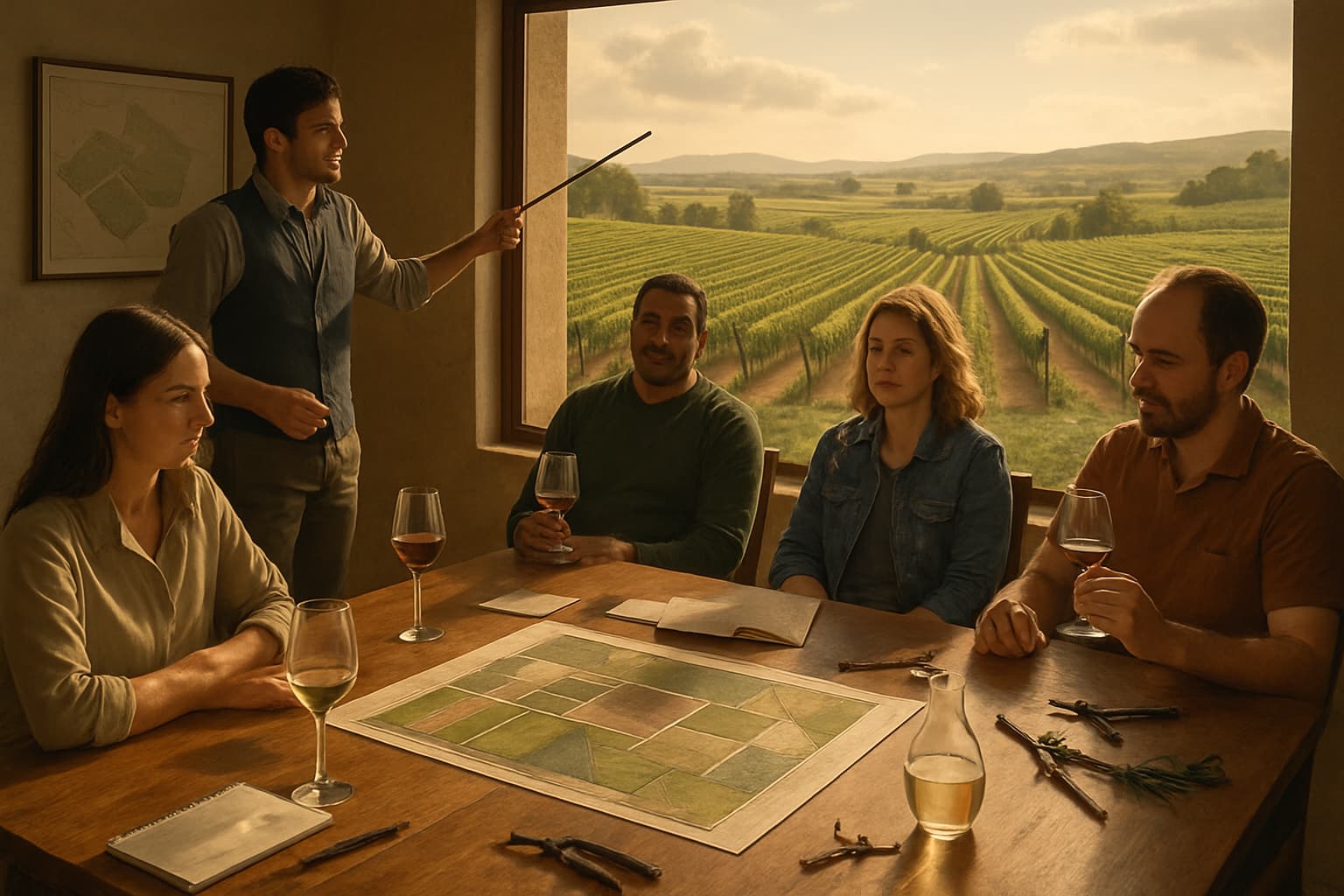
You’re sitting in a tasting room somewhere in wine country. The sommelier is droning on, pointing at a map like a bored geography teacher. “This vineyard is six hectares,” he says, and everyone around you nods like they understand what that means.
They don’t.
But they also don’t want to look stupid, so they swirl their glasses and pretend “hectare” is just another fancy wine word, like “terroir” or “malolactic” or “I totally meant to spend $80 on this bottle.”
Let’s fix that.
This isn’t complicated. It’s dirt. It’s math. It’s money. It’s ego. And it’s one of those quiet, unsexy words that actually controls a lot of what ends up in your glass.
Strip away the French accent and the wine-world snobbery, and a hectare is just a unit of area. Land. Ground. The stuff vines grow out of.
If you’re more of a “football field” person:
A standard soccer pitch is roughly 0.7–1 hectare, depending on who lined it. So think “a big field,” not “a backyard,” not “a small country.”
In the wine world, the hectare is the basic building block. It’s how vineyard size, yield, and production are measured—and bragged about.
You’ll see it on:
If you drink European wine, you’re in hectare-land whether you like it or not.
When someone says, “This domaine has 8 hectares of vines,” they’re not just giving you a fun trivia fact. They’re telling you, in a sideways, coded way:
In wine, size matters. But not always the way you think.
Tiny holdings (1–5 hectares)
That’s the scrappy indie band of wine. Maybe a small family estate. Maybe a passionate lunatic pruning vines by hand in the rain. Limited production. Often more artisanal. Sometimes more expensive. Sometimes just… small and mediocre. Size alone doesn’t make it good.
Medium estates (5–30 hectares)
This is where a lot of serious quality producers live. Big enough to be a real business, small enough that someone still actually knows each parcel.
Large vineyards (30+ hectares) Now you’re in “we have an office” territory. Could be industrial plonk. Could be a very well-run, quality-focused estate with teams of people doing things right.
The hectare number is the first clue in a detective story: what kind of operation are we dealing with here?
Here’s where it gets interesting.
You’ve got a hectare of vines. What you do with it determines whether you’re making oceans of cheap swill or a few precious barrels of something people fight over in restaurants.
Wine people talk about yield – how much wine you get per hectare. Usually in:
Rough ballpark:
Low yields (say 20–40 hl/ha)
Fewer grapes per vine. The vine puts more concentration into each bunch.
You often get more intensity, structure, and complexity.
Also: less wine to sell. Higher prices. More “limited allocation” drama.
High yields (60–100 hl/ha and beyond)
More grapes, more juice, more bottles.
Can be perfectly fine for fresh, simple wines meant to be drunk by the bucket on a Tuesday.
But push it too far and you get thin, watery wines with all the personality of a hotel minibar Chardonnay.
So when a winemaker says, “We farm 6 hectares but keep yields to 30 hl/ha,” what they’re really saying is:
“We could make more wine. We choose not to. Please respect the hustle and pay accordingly.”
Because this is wine, of course there are rules. Whole bureaucracies exist just to tell people what they can and can’t do with a hectare of vines.
In many European regions, the appellation laws set a maximum yield per hectare. For example:
Same hectare. Different rules. Different wines. Different prices.
These regulations exist (in theory) to:
In practice, they also keep lawyers and bureaucrats employed and give winemakers something to complain about over lunch.
Let’s say a producer has 2 hectares of a famous cru.
They farm carefully and keep yields low at 30 hl/ha.
Math time:
Eight thousand bottles. For the whole world. For every sommelier, every collector, every Instagram influencer who just has to show you their “cellar.”
Suddenly, that “2-hectare parcel” doesn’t sound like much.
This is why people go feral over certain wines. It’s not just hype. Sometimes, there really isn’t much to go around. A few hectares, farmed at low yields, and poof: the entire production fits into what Costco would consider a slow Tuesday shipment.
Not all hectares are created equal.
A hectare of flat, fertile land in the middle of nowhere is cheap and boring. A hectare in a Grand Cru vineyard in Burgundy? That’s lottery-ticket, generational-wealth, “we don’t talk about the price in front of the children” territory.
Land value in wine regions is insane, and it’s all about:
A producer saying “we own 0.7 hectares of [insert legendary vineyard]” is flexing. That might be all they have—but in that particular spot, it’s enough to build a career.
These tiny slivers of land become myth. People talk about them like they’re sacred. But at the end of the day, it’s still just dirt measured in hectares. Very expensive, very fought-over dirt.
When you see that word in a winery description – “12 hectares under vine” – here’s what you can start to infer:
If you’re used to acres, hectares feel like someone swapped your measuring cups for beakers.
Quick mental cheats:
So:
In Europe and most of the wine world, it’s all hectares. In the US, grape growers talk in acres. Importers and writers play translator.
But in serious wine writing, especially about Old World regions, hectares are the standard. If you want to read deeply, you’re stuck with them.
It’s easy to think of a hectare as just a number. A tidy, rectangular block on a map.
Reality is messier:
A hectare isn’t just 10,000 square meters. It’s:
Wine people talk about hectares because that’s the scale at which all of this happens. It’s the unit of obsession.
Next time you’re reading a back label or a winery profile and you see something like:
“Family estate farming 7 hectares on limestone soils, yields kept to 35 hl/ha.”
Translate it:
Or:
“Cooperative sourcing from 300 hectares, average yields 80 hl/ha.”
That’s:
You don’t have to become a walking metric conversion chart. Just learn to see “hectare” as a signal: how much land, how it’s used, and what that might mean for what’s in the bottle.
No one orders a second glass because the producer has 9.5 hectares instead of 12. That’s not how pleasure works.
But understanding hectares lets you:
Wine loves to wrap itself in mystery and mythology: monks, crus, secret parcels, ancient vines. Underneath all that, there’s a simple, almost boring fact: someone owns or farms a certain number of hectares, and what they choose to do with those hectares decides nearly everything.
So the next time some sommelier leans in and says, “This comes from less than a hectare of old vines,” you don’t have to just smile politely.
You’ll know that means:
You don’t have to worship it. You don’t have to buy the story.
But at least now, when they start throwing “hectare” around like a magic word, you’ll know it’s not magic.
It’s just a field.
Measured carefully.
Worked hard.
Poured into your glass.
Tannins are astringent compounds found in wine that contribute to its texture and aging potential, often causing a drying or puckering sensation in the mouth. They are derived from grape skins, seeds, and stems, as well as from oak barrels used during aging.
/ˈtænɪnz/
Malic acid is a naturally occurring organic acid found in grapes that contributes to the tart, green apple-like flavor and crispness in wine. It plays a significant role in the taste and acidity of wine.
/mælɪk ˈæsɪd/
Scale of production
Style and intent
Rarity and price
Risk and commitment
There’s a moment, when you pour a glass of wine, that feels almost indecently intimate. The bottle tips, the liquid arcs, and then—before you even bring the glass to your lips—you give it that little...
Filtration in winemaking is the process of removing solid particles from wine to clarify and stabilize it before bottling, using various types of filters to achieve different levels of clarity and remove unwanted elements like yeast, bacteria, and sediment.
/fɪlˈtreɪʃən/
Oxidation in wine is a chemical reaction between the wine and oxygen that can change its flavor, aroma, and color. This process can be beneficial or detrimental depending on the extent and context of the exposure.
/ˌɒksɪˈdeɪʃən/
Microclimate refers to the unique climate conditions of a small, specific area within a larger region, significantly influencing grapevine growth and the characteristics of the resulting wine.
/ˈmīkrōˌklīmit/
Get weekly wine recommendations, vineyard news, and exclusive content delivered to your inbox.
-e4b2322f.webp&w=3840&q=75)
-012baf26.webp&w=3840&q=75)