Wine Events and Festivals
“Where every bottle tells a story”
-27d88ef8.webp&w=3840&q=75)
The first thing you notice is the smell. Not the sour stench of spilled beer and regret that hangs over most German festivals like a guilty conscience, but something stranger, softer, more dangerous: ripe grapes, sugar, yeast, roasted almonds, sausage fat sizzling in the open air, and the faint, perfumed ghost of Riesling lingering in the August heat like a polite hallucination.
You step into Wiesbaden’s Wine Week thinking it will be civilized. After all, this is not Oktoberfest with its oompah brass and lederhosened lunatics surfing on beer benches. This is wine. Refined. Elegant. Controlled.
Then the first glass hits your bloodstream, and you realize you were wrong. Very wrong.
This is not a beer festival. This is a slow-motion white-wine riot in one of Germany’s richest spa towns—ten days of Riesling, Sekt, late‑harvest sugar bombs, and dangerously drinkable Federweißer, all wrapped in the respectable mask of culture, tourism, and civic pride. Underneath that mask, though, something feral is moving. And it drinks.
Wiesbaden is not some rustic wine village tucked into a valley with goats and grandmothers. It’s a polished spa city, the capital of Hesse, with casinos, stately 19th‑century facades, and hot springs that once lured aristocrats and high‑functioning degenerates from all over Europe—the kind of place where fortunes were lost at roulette and reputations dissolved in steam baths.
So of course it makes sense that once a year, the city hands its immaculate central squares over to the winegrowers of the Rheingau and Rheinhessen and says: “Here. Take the Kurhaus, take the Marktkirche, take the whole damn city center. Bring your barrels. Bring your bottles. We’ll pretend this is about culture and regional identity. You and I both know it’s about drinking.”
That’s the core of this thing: a spa town hosting a festival for a drink that is equal parts medicine, memory, and madness.
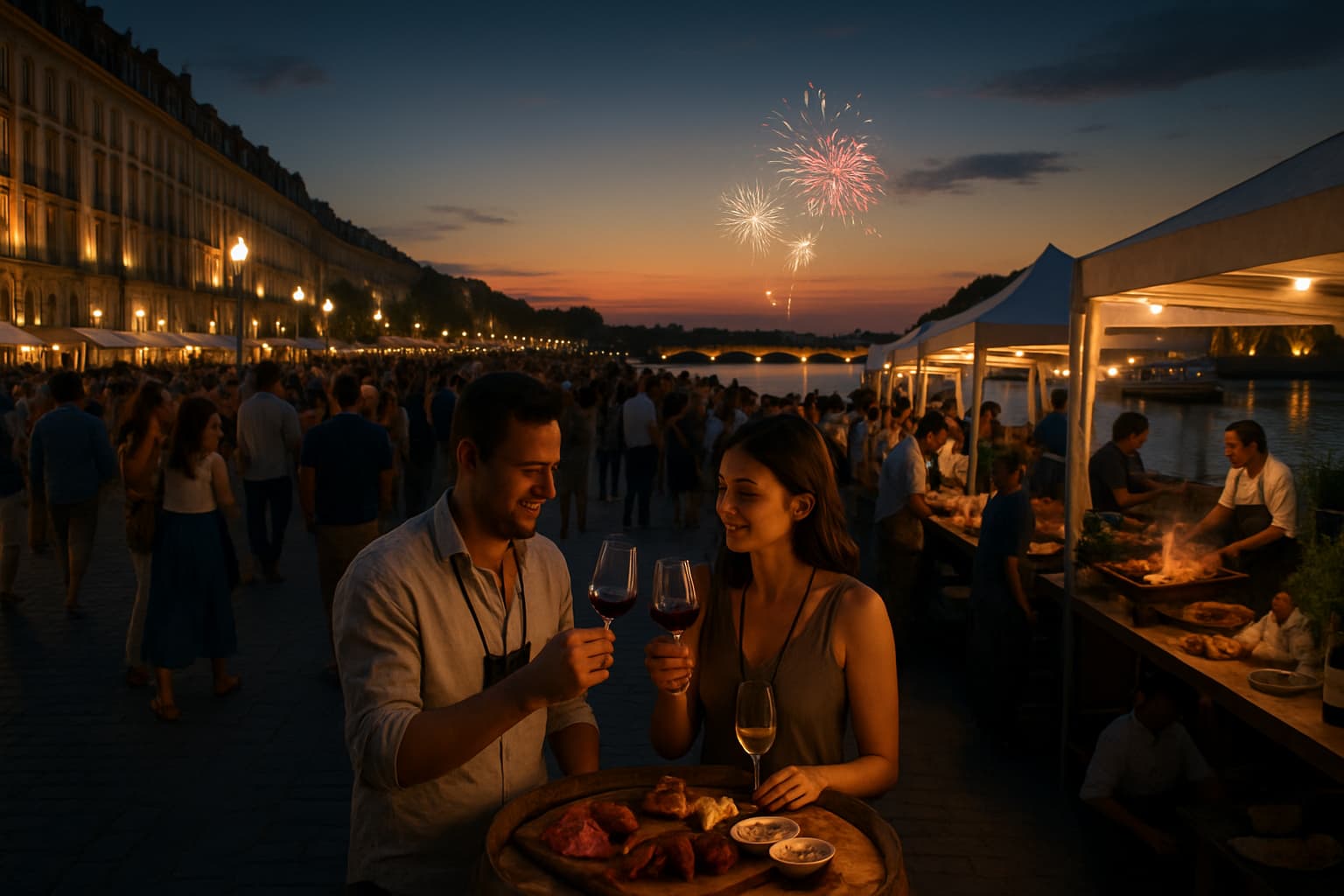
The festival spills across the heart of Wiesbaden—Schlossplatz, Dern’sches Gelände, around the towering red‑brick Marktkirche, and into the elegant arc of the Kurhaus and its manicured park. For roughly ten days in late summer (usually late August bleeding into early September), the city’s orderly geometry is overrun by wine stands, food stalls, and a roaming, glass‑clutching population that grows steadily louder as the sun goes down.
No plastic cups here. You pay a deposit for a real glass—sturdy, stemmed, the kind of thing that feels like commitment. You carry it with you from stand to stand, refilling it with every shade of white, rosé, and red the region can produce. The clink of glass becomes the soundtrack of the night.
Each stand belongs to a winery—often family operations from the Rheingau hills or the rolling vineyards of Rheinhessen. Names repeat like a litany: Johannisberg, Rüdesheim, Eltville, Oestrich‑Winkel, Ingelheim, Nierstein. If you know your German wine law, these are not just places; they are battlefields where winemakers fight over slopes, sunshine hours, and soil types like medieval warlords.
To the untrained eye, it’s just a maze of booths and fairy lights. To the obsessive, it’s a live‑action wine map.
This whole circus exists for one main reason: Riesling.
The Rheingau is one of the spiritual homelands of this grape—Germany’s sharp, shimmering, high‑wire act of a wine. At this festival, Riesling is not just a drink; it’s a political platform, a religion, and a dare.
You can taste it in every evolutionary stage:
And then there is Sekt, German sparkling wine. The good stuff—traditional method, long lees aging, real structure. You’ll see locals ordering it by the bottle, not the glass, because once the corks start flying, the night accelerates.
If you’re foolish enough to try to “taste everything,” you’ll end the evening arguing with the Marktkirche spires about the meaning of terroir.
Make no mistake: without food, this festival would be a mass‑casualty event.
The organizers know this, so they line the squares with enough heavy German cuisine to soak up a small ocean of wine. You’ll find:
The wise move is to treat the food stalls like checkpoints in a marathon—essential pauses in a long campaign.
By late afternoon, the squares are full. Office workers in suits loosen their ties and trade spreadsheets for stemware. Retired couples in pastel jackets swirl their glasses with professional concentration. Students show up in packs, chasing the cheapest pours and the loudest music.
And then there are the wine pilgrims: people who came here on purpose, with notebooks and spittoons and a plan. They begin the day with discipline, talking about slate versus loess soils, south‑facing slopes, and the impact of the Rhine’s reflective surface on ripening. By 10 p.m., they’re singing along with whatever band is hammering out 80s rock covers on the temporary stage.
Music is constant—live bands, DJs, the occasional earnest singer‑songwriter trying to compete with the roar of thousands of mildly inebriated humans. The atmosphere is more electric than refined. This is not a quiet tasting room; it’s a street‑level experiment in communal intoxication.
Yet for all the drinking, the mood stays mostly good‑natured. You don’t see the same violent edge that hangs over beer festivals at closing time. Maybe it’s the wine. Maybe it’s the crowd. Maybe it’s the unspoken understanding that this is a marathon, not a sprint.
The mechanics of the festival are simple and cruelly efficient:
The rhythm of the night goes like this:
At some point, you realize you’ve stopped checking which winery you’re at. You just hold out your glass and trust the universe.
For the wineries, this is not just a party—it’s a brutal, high‑stakes marketing operation disguised as fun.
They bring their best sellers, their flagship Rieslings, their crowd‑pleasing rosés. Some pour in logo‑stamped aprons, others in polo shirts with embroidered crests, all smiling with that weary, wired look of people who have been on their feet for ten hours selling liquid personality.
This is where you see the full spectrum of German wine culture:
If you have the presence of mind to ask questions—and the German to do it—you can learn more in one night here than in weeks of reading. If you don’t, you can still drink very, very well.
There are two ways to experience this festival: as a victim, or as a semi‑functional participant.
If you prefer the second option, consider the following:
This is not a tasting room with a sommelier watching your every move. This is open‑air chaos with a wine list. The responsibility is yours.
Strip away the noise, and something unusual remains.
Most festivals are about the substance: beer, schnapps, whatever. This one is about place. The wines all come from the region around Wiesbaden, from vineyards you could reach in half an hour’s drive. The people pouring them often made them. The city hosting the whole affair is not a faceless metropolis, but a spa town with a long, strange history of indulgence and cure.
So you stand there, glass in hand, in front of a neo‑Gothic church and an imperial‑era Kurhaus, drinking Riesling grown on slopes that monks cultivated centuries ago, while a cover band massacres “Sweet Caroline” and a group of students tries to decide whether to switch to rosé.
It is ridiculous. It is commercial. It is crowded, loud, and occasionally tacky.
And yet, beneath the fairy lights and cheap plastic signage, there is something honest going on: a city celebrating the liquid that binds its region together. Not in a museum, not in a guidebook, but in the only way that really matters—by pouring it, sharing it, and drinking far too much of it under the open sky.
The next day, Wiesbaden wakes up with a collective hangover. Street cleaners move in like a cleanup crew after a small war. The squares look normal again, almost. The only evidence of last night’s excess is the faint stickiness underfoot and the occasional abandoned festival glass someone forgot to cash in.
You, if you’ve done this right—or wrong—will wake up with a head full of fog and a phone full of blurry photos of wine labels, half‑eaten Flammkuchen, and strangers you swore you’d never forget.
You might not remember every wine you drank. You might not remember the names of the stands, or the exact path you took through the festival. But you will remember the feeling: the warm, humming sense that for a few hours, an entire city agreed that the only reasonable thing to do with a late‑summer evening was to drink what its surrounding hills produce best, in scandalous quantities, together.
In a world that’s increasingly sanitized, optimized, and digitized, there is something gloriously human about that. Messy. Loud. Imperfect. Real.
If you’re looking for a tidy, academic introduction to German wine, this is not your event. If you want to understand what wine actually is—not a luxury product, not a score on a critic’s sheet, but fermented geography shared in public under the indifferent gaze of a red‑brick church—then you could do far worse than losing yourself for a night in Wiesbaden’s swirling, Riesling‑fueled madness.
Just don’t call it civilized.
Tannins are astringent compounds found in wine that contribute to its texture and aging potential, often causing a drying or puckering sensation in the mouth. They are derived from grape skins, seeds, and stems, as well as from oak barrels used during aging.
/ˈtænɪnz/
Malic acid is a naturally occurring organic acid found in grapes that contributes to the tart, green apple-like flavor and crispness in wine. It plays a significant role in the taste and acidity of wine.
/mælɪk ˈæsɪd/
Filtration in winemaking is the process of removing solid particles from wine to clarify and stabilize it before bottling, using various types of filters to achieve different levels of clarity and remove unwanted elements like yeast, bacteria, and sediment.
/fɪlˈtreɪʃən/
Oxidation in wine is a chemical reaction between the wine and oxygen that can change its flavor, aroma, and color. This process can be beneficial or detrimental depending on the extent and context of the exposure.
/ˌɒksɪˈdeɪʃən/
Microclimate refers to the unique climate conditions of a small, specific area within a larger region, significantly influencing grapevine growth and the characteristics of the resulting wine.
/ˈmīkrōˌklīmit/
Get weekly wine recommendations, vineyard news, and exclusive content delivered to your inbox.