Sustainable and Organic Wine
“Where every bottle tells a story”
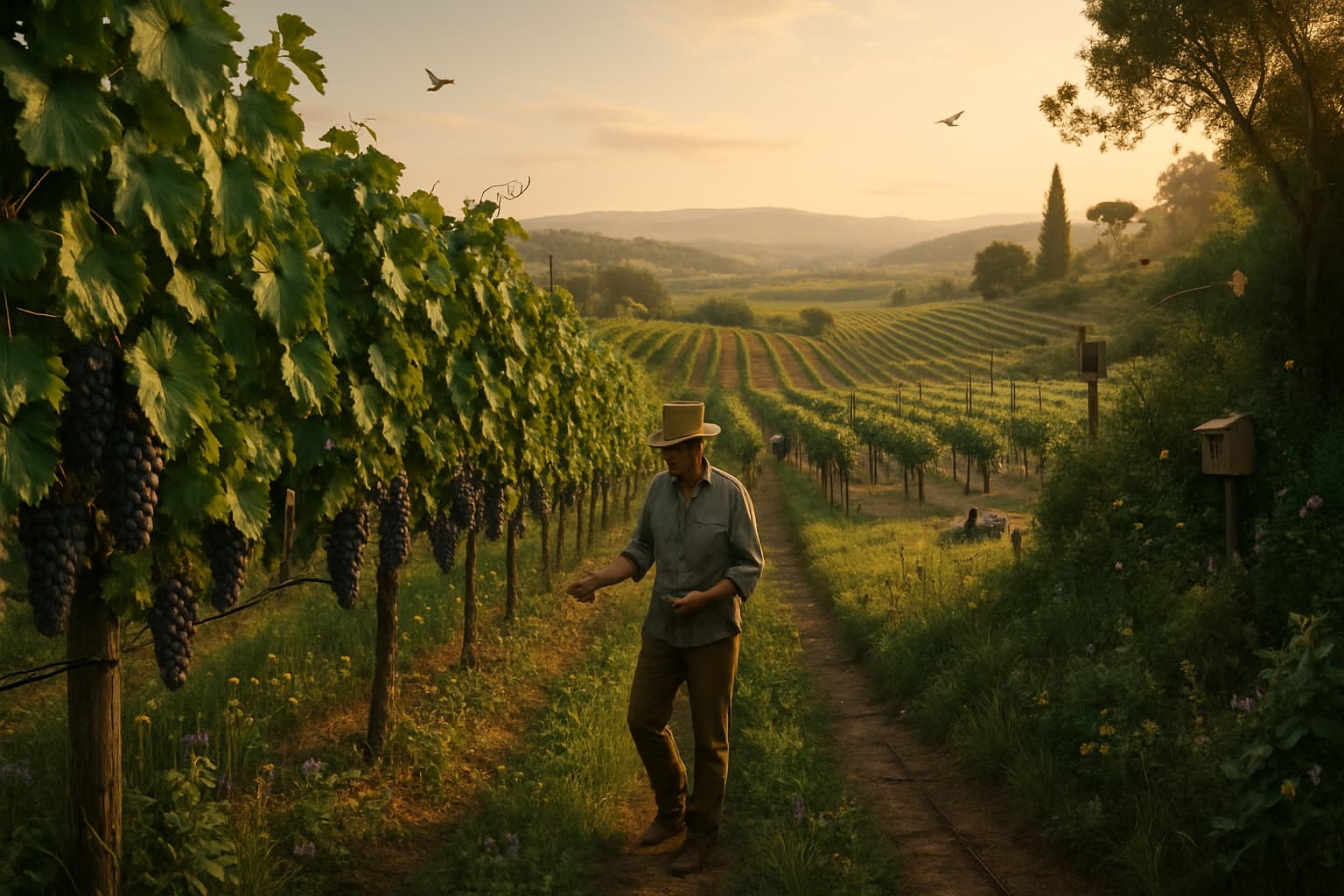
Picture, if you will, a sun‑splashed vineyard in the early morning: dew on the leaves, birds gossiping in the hedgerows, and not a harsh chemical in sight. Just soil, vines, insects, and a very determined winegrower trying to coax beauty from nature without bullying it. That, dear reader, is the spirit of organic viticulture—like making a glorious meal from simple, honest ingredients, treating each element with respect and care.
Let’s roll up our sleeves and step into the vineyard kitchen, so to speak, and see what makes organic grape growing tick, how it’s certified, and why it matters in your glass.
“Organic” isn’t just a fancy word that wineries sprinkle on the label like parsley on a plate. It has a very specific meaning—rooted in law, science, and a philosophy about how we treat the land.
At its heart, organic viticulture is about:
The goal is not simply “no chemicals” (after all, copper and sulfur are chemicals too), but rather a shift from dominating nature to collaborating with it. Think of it as the difference between over‑salting a dish to force flavor and slowly building flavor with stocks, herbs, and good technique.
Organic viticulture is a whole toolkit of practices, each addressing a different vineyard challenge. Let’s wander through them, row by row.
Healthy wine begins with healthy soil—just as a good stew begins with a proper stock.
Cover Crops
Instead of bare dirt between vine rows, organic growers plant grasses, legumes, and wildflowers:
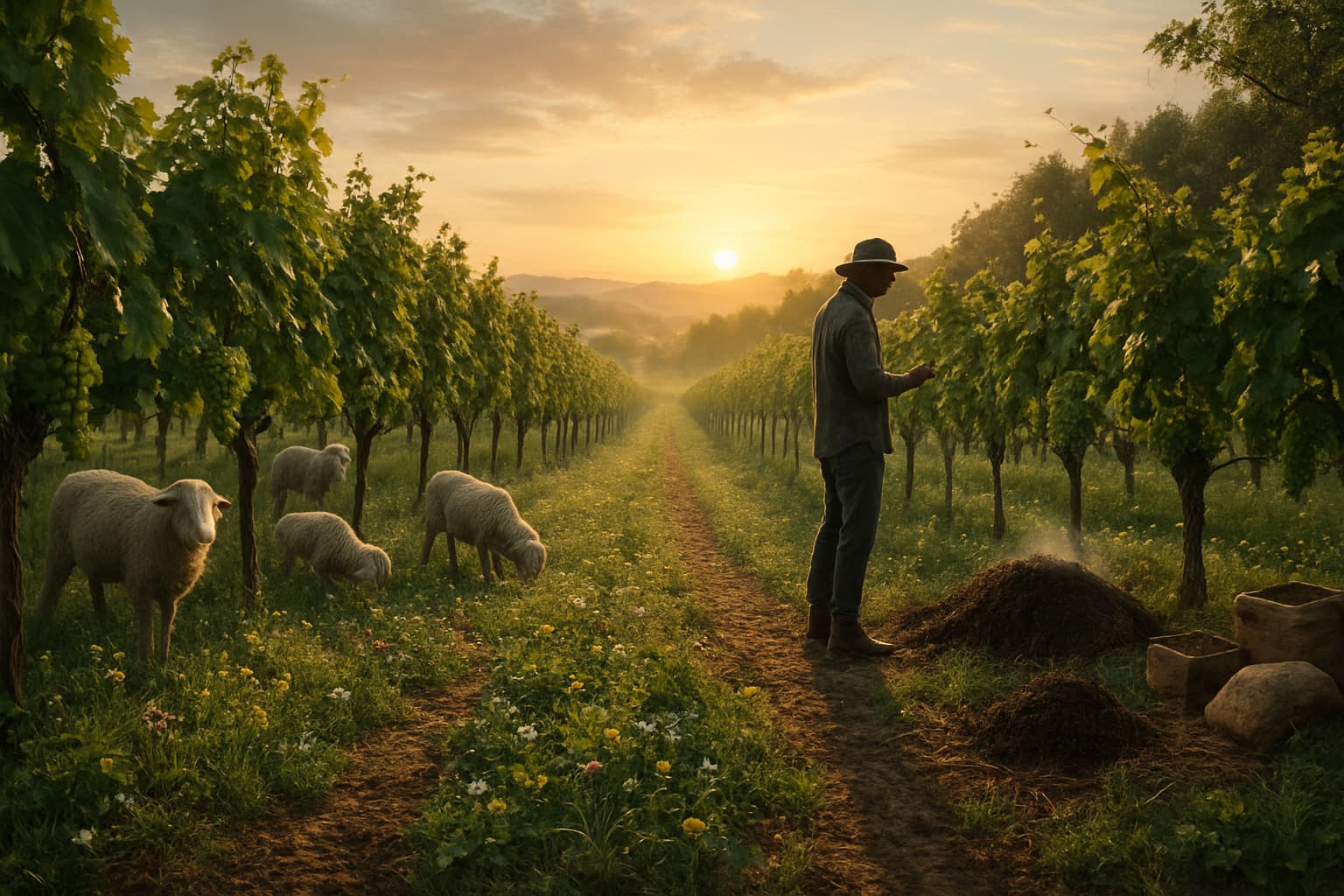
Cover crops are mowed, rolled, or incorporated into the soil, adding organic matter—a sort of green manure. This improves water retention, aeration, and nutrient cycling.
Compost and Organic Amendments
Rather than synthetic fertilizers, organic vineyards use:
This is slow, steady nourishment—like simmering a broth instead of dumping in bouillon cubes.
Weeds are simply plants growing where we’d rather they didn’t. In conventional vineyards, herbicides like glyphosate are common. In organic vineyards, growers must be more clever.
Common organic strategies include:
The aim is not a sterile, weed‑free moonscape, but a managed balance—enough ground cover for biodiversity and erosion control, without overwhelming the vines.
Vineyards are buffets for insects and other critters. Organic viticulture uses Integrated Pest Management (IPM) principles—with a strong emphasis on prevention and ecology.
Encouraging Beneficial Insects
Instead of killing everything that crawls, organic growers:
Biological Controls
When pests rise, organic growers may introduce natural enemies or use biological tools, such as:
Physical and Cultural Practices
If conventional pest control is like using a sledgehammer, organic pest control is more like careful knife work—precise, intentional, and a bit more skillful.
Grapevines are particularly prone to fungal diseases: powdery mildew, downy mildew, botrytis, and more. Without synthetic fungicides, organic growers rely on a combination of prevention and a few allowed materials.
The Preventive Arsenal
Allowed Sprays in Organic Viticulture
These materials are not benign fairy dust; they must be used carefully and in limited quantities. Modern organic standards often set strict caps on copper use, pushing growers to rely more on good vineyard design and canopy work.
Organic vineyards tend to aim for moderate yields and high quality, rather than maximum tonnage.
The result, when done well, is grapes with concentrated flavors, balanced acidity, and a more honest expression of their site—much like a dish that lets the main ingredient shine rather than drowning it in seasoning.
Now, onto the paperwork—less romantic than sunrise in the vines, but terribly important. “Organic” on a label isn’t just a matter of trust; it’s a legal claim backed by certification.
While details vary by country, the basic steps are quite similar.
United States (USDA Organic)
This makes “organic wine” in the U.S. quite rare compared to Europe, where sulfites are allowed in organic wines (within limits).
European Union (EU Organic)
Other Regions
The essential idea is the same: third‑party verification that the vineyard is managed according to organic rules, with traceability from soil to bottle.
People often toss around “organic,” “biodynamic,” and “natural” as if they were interchangeable. They’re cousins, certainly, but not identical twins.
Organic
Biodynamic
Natural Wine
You can have organic wine that is not biodynamic or “natural,” biodynamic wine that is organic in practice, and “natural” wine that is uncertified but farmed organically. It’s a bit of a Venn diagram—best approached with curiosity and a bit of skepticism.
Organic viticulture isn’t just for the romance of it; there are tangible benefits.
Environmental Gains
Worker and Community Health
Resilience to Climate Stress
It’s rather like a well‑stocked kitchen: if you’ve built depth and flexibility into your pantry and skills, you can adapt to surprises much more gracefully.
Organic viticulture can be demanding—no use pretending otherwise.
Some conscientious growers follow organic principles but choose not to certify, either to avoid administrative overhead or because they occasionally need tools not allowed under strict rules. Labels don’t always tell the whole story—but certification is still the most reliable signal available to consumers.
When you’re standing in front of a wine shelf, wondering which bottle to take home for dinner, here are a few practical pointers:
Then, the most delightful part: taste with attention. Does the wine feel lively, balanced, expressive of its place? Organic doesn’t guarantee greatness, but many of today’s most exciting wines come from vineyards where the soil is cherished, not exploited.
Organic viticulture is, in many ways, a return to older wisdom, seasoned with modern science. It asks us to:
Like a well‑cooked meal from simple, high‑quality ingredients, organically grown wine often carries a certain clarity and integrity. You taste not just grapes, but a place and a philosophy: patience instead of shortcuts, stewardship instead of extraction.
So the next time you uncork a bottle from an organically farmed vineyard, pause for a moment. Think of the cover crops rustling between the rows, the ladybugs patrolling the leaves, the compost steaming gently on a cool morning, and the grower out there, boots muddy, doing the quiet, persistent work of farming with nature rather than against it.
Then raise your glass and enjoy—because sustainability, when done well, should be as delicious as it is responsible. Bon appétit, and bon vin!
Tannins are astringent compounds found in wine that contribute to its texture and aging potential, often causing a drying or puckering sensation in the mouth. They are derived from grape skins, seeds, and stems, as well as from oak barrels used during aging.
/ˈtænɪnz/
Malic acid is a naturally occurring organic acid found in grapes that contributes to the tart, green apple-like flavor and crispness in wine. It plays a significant role in the taste and acidity of wine.
/mælɪk ˈæsɪd/
Conversion Period
A vineyard must be managed organically for a set number of years (often three) before grapes can be sold as “organic.” During this time, no prohibited substances may be used.
Application and Inspection
The grower chooses a certifying body (government or accredited private organization) and submits:
An inspector visits the vineyard, checks records, looks at storage areas, and may take samples.
Compliance and Certification
If everything meets the standard, the vineyard (and sometimes the winery) is certified. Annual inspections and audits follow to maintain certification.
Filtration in winemaking is the process of removing solid particles from wine to clarify and stabilize it before bottling, using various types of filters to achieve different levels of clarity and remove unwanted elements like yeast, bacteria, and sediment.
/fɪlˈtreɪʃən/
Oxidation in wine is a chemical reaction between the wine and oxygen that can change its flavor, aroma, and color. This process can be beneficial or detrimental depending on the extent and context of the exposure.
/ˌɒksɪˈdeɪʃən/
Microclimate refers to the unique climate conditions of a small, specific area within a larger region, significantly influencing grapevine growth and the characteristics of the resulting wine.
/ˈmīkrōˌklīmit/
Get weekly wine recommendations, vineyard news, and exclusive content delivered to your inbox.