Wine Literature and Media
“Where every bottle tells a story”
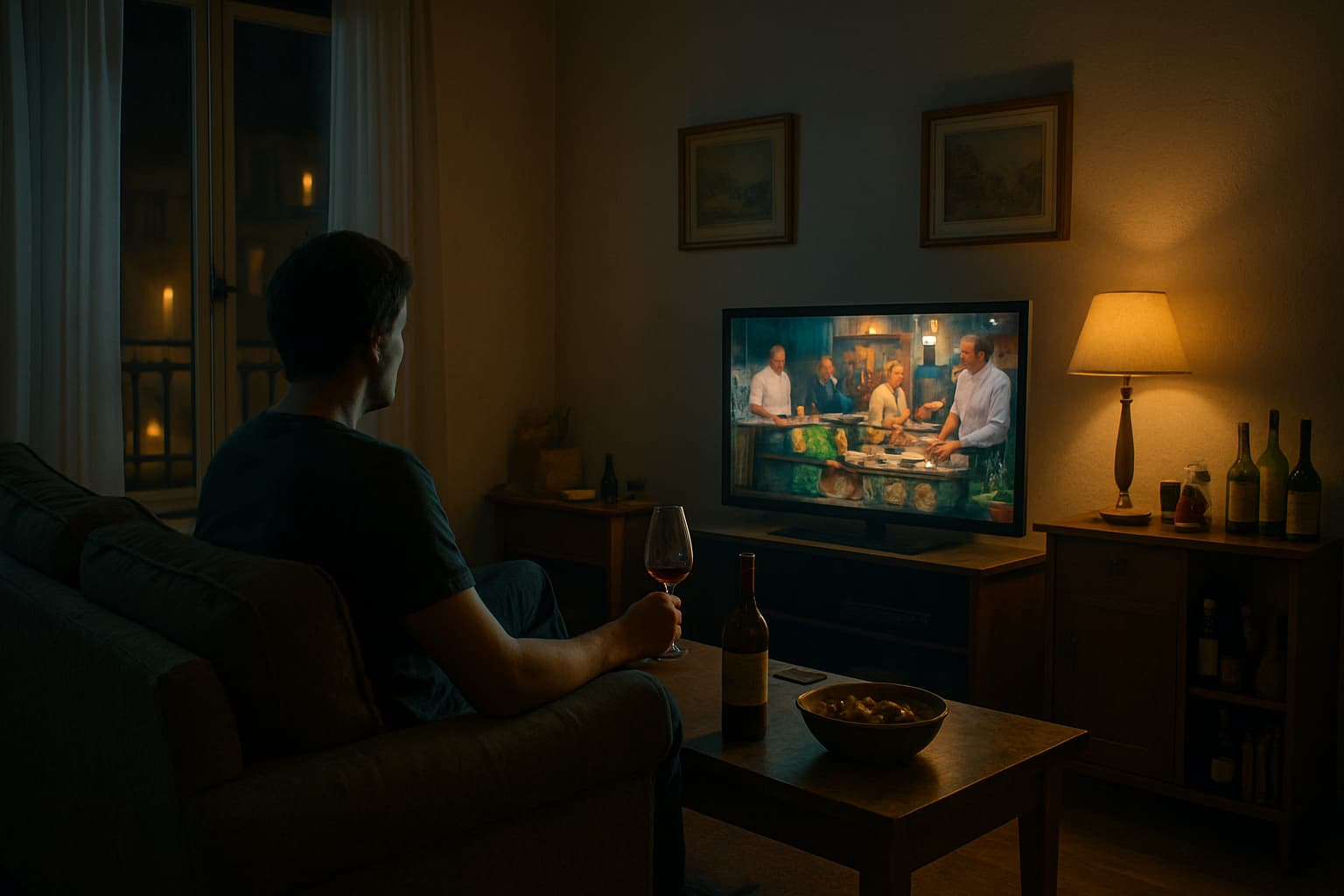
You’re alone in a rented apartment in some anonymous European city. The kind with white walls, bad art, and a couch that’s seen things. It’s late. The bottle of supermarket red you grabbed “just to have something” is already half gone. You flick on the TV. And there it is: a cooking show. Studio lights, a grinning host, some poor bastard of a celebrity chef pretending they’re thrilled to be there, and—of course—wine.
In Europe, this isn’t just background noise. This is culture. This is propaganda. This is seduction. This is a continent quietly teaching you what to drink, how to drink, and what it means when you do.
Let’s talk about wine and television cooking shows in Europe—the love story, the hustle, and the quiet education happening in millions of living rooms, every damn night.
Wine in Europe used to be like tap water. On the table, all the time. No one talked about it. Nobody swirled it, sniffed it, or described it as “playful yet brooding” like some emotionally stunted actor. You drank it because that’s what you did. It was part of the meal, part of the day, part of being alive.
Then television got involved.
First came the old-school shows: serious men in jackets, copper pots, and a quiet glass of red lurking on the edge of the cutting board. They didn’t talk about it much. It was just there, like gravity. But that quiet glass did something important: it told you that real cooking—grown-up cooking—involved wine. Not as an afterthought, not as decoration. As a given.
Fast forward a few decades. Now you’ve got hosts pouring Prosecco into everything that doesn’t move, British chefs banging on about “a nice Chianti” for your ragù, French presenters treating a glass of Burgundy like a religious relic, and Spanish cooking shows where a bottle of Rioja is as essential as salt.
TV turned wine from a silent partner into a co-star.
The UK is a weird place for wine. They don’t really make much of it (yes, English sparkling, I see you), but they drink a hell of a lot of it. And British TV cooking shows are a big reason why so many people who grew up on lager and instant coffee now know what Malbec is.
On British screens, you’ve got:
This shift matters. For a long time, wine in Britain was a class marker. Ordering Bordeaux meant you were “in the know,” or at least wanted people to think you were. TV cooking shows chipped away at that. When you see a cheeky, sweary chef on prime time throwing a glug of red into a pan and taking a swig from the same bottle, it sends a message: this isn’t just for people who own country houses and say “supper.”
It’s for you. On your crappy sofa. Eating pasta out of a bowl. With a ten-quid bottle from the supermarket.
In France, wine doesn’t need to be explained. It’s assumed. It’s like talking about oxygen. Or bread.
French cooking shows treat wine like an old friend who doesn’t need an introduction. They’ll say:
“On va prendre un petit rouge du coin”
(“We’ll grab a little local red.”)
And that’s it. No sermon. No tasting notes. Just: red. Local. Obviously it’s good.
You’ll see:
French TV cooking doesn’t have to sell wine. It just shows it. In the background, in the glass, in the pan. It’s a quiet masterclass in normalization: this is how you live. This is how you eat. This is how you drink.
And that’s powerful. Because you’re not being taught. You’re being absorbed into a worldview.
Italian cooking shows are less about recipes and more about vibes. A grandmother in Emilia-Romagna rolling pasta at a table that’s seen five generations. A guy in a too-tight shirt drizzling olive oil like he’s blessing the dish. And always, somewhere in the frame: wine.
In Italy on TV:
Italian TV doesn’t treat wine as a luxury good. It treats it as a birthright, a habit, a shared memory. The cooking shows become a kind of televised nonna, telling you—without quite saying it—how to live a little better, slower, more rooted. And wine is always there, nodding along.
Spain’s food television is like its bars: noisy, generous, unpretentious. You get a lot of shouting, a lot of olive oil, and a lot of wine that doesn’t apologize for being simple and damn drinkable.
On Spanish cooking shows, you’ll see:
And there’s an important detail: Spanish TV often shows regional wines with regional dishes. Albariño with Galician seafood. Txakoli with pintxos in the Basque Country. Cava with Catalan snacks. It subtly teaches you that wine isn’t just “red or white”—it’s where you are, who you’re with, and what’s on the table.
Of course, once TV producers realized wine could be content, not just a prop, the “expert” appeared.
Now you’ve got:
Sometimes this is useful. You learn that you don’t need to spend a fortune to drink well. You hear that there’s life beyond Pinot Grigio and supermarket Merlot. You see real people making real wine in places that aren’t on the tourist map.
Sometimes it’s bullshit: a glorified commercial dressed up as authenticity. The host sighing over a glass like they’re having a religious experience, while a discreet logo glows in the corner of the screen.
But even then, you’re learning something: that wine is worth talking about. Worth paying attention to. Worth more than just “red with meat, white with fish.”
A lot of what happens with wine on European cooking shows is about moving product.
But here’s the twist: even as they sell to you, they’re also educating you. You start recognizing grape names. You start noticing that “DOC,” “AOC,” “DO” on labels might actually mean something. You remember that the chef used “dry white” for fish, and you find yourself flipping the bottle to read the back label for clues.
The supermarket aisle becomes less of a panic attack and more of a scavenger hunt.
TV doesn’t just sell wine. It shapes what people think wine is.
Is this all good? No. Is it all bad? Also no.
The good:
The bad:
But that’s television. It simplifies. It sells. It packages.
You might think you’re just zoning out in front of a cooking show. But if you watch enough European food TV, you pick up a few deeper truths:
Wine is a language of place.
Every time a chef says “we always drink this with that,” they’re telling you how a culture understands itself.
Next time you’re in Europe, or just watching it from your couch:
And if you find yourself in some anonymous rental at midnight, with a cheap bottle and a rerun of a cooking show in a language you barely understand, lean into it. Let the sound of pots clanging and corks popping wash over you. Watch how they pour. When they drink. What they drink with what.
Because buried under the studio lights and the sponsorship deals, there’s something stubborn and real: a very old continent, still teaching you—through a flickering screen—how to sit down, shut up for a second, and enjoy a glass of wine with your food like a human being.
In a world that’s increasingly fake, curated, and algorithm-driven, that simple act—wine, food, table—might be the most honest thing left on television.
Tannins are astringent compounds found in wine that contribute to its texture and aging potential, often causing a drying or puckering sensation in the mouth. They are derived from grape skins, seeds, and stems, as well as from oak barrels used during aging.
/ˈtænɪnz/
Malic acid is a naturally occurring organic acid found in grapes that contributes to the tart, green apple-like flavor and crispness in wine. It plays a significant role in the taste and acidity of wine.
/mælɪk ˈæsɪd/
Wine is a social tool.
The glass in the host’s hand is an invitation: sit, stay, listen, share. Food TV without wine often feels sterile. With wine, it feels like a table you could actually sit at.
Wine doesn’t have to be complicated.
The best shows don’t drown you in jargon. They give you permission not to know everything. To just drink what tastes good with what’s in front of you.
Wine can be honest—or a lie.
A battered carafe of house red in some rural French show? Probably honest. A perfectly lit bottle of branded Prosecco next to a perfectly arranged charcuterie board? Maybe less so.
Filtration in winemaking is the process of removing solid particles from wine to clarify and stabilize it before bottling, using various types of filters to achieve different levels of clarity and remove unwanted elements like yeast, bacteria, and sediment.
/fɪlˈtreɪʃən/
Oxidation in wine is a chemical reaction between the wine and oxygen that can change its flavor, aroma, and color. This process can be beneficial or detrimental depending on the extent and context of the exposure.
/ˌɒksɪˈdeɪʃən/
Microclimate refers to the unique climate conditions of a small, specific area within a larger region, significantly influencing grapevine growth and the characteristics of the resulting wine.
/ˈmīkrōˌklīmit/
Get weekly wine recommendations, vineyard news, and exclusive content delivered to your inbox.