-44d111a7.webp&w=3840&q=75)
Wine Terminology
“Where every bottle tells a story”
-8dd86257.webp&w=3840&q=75)
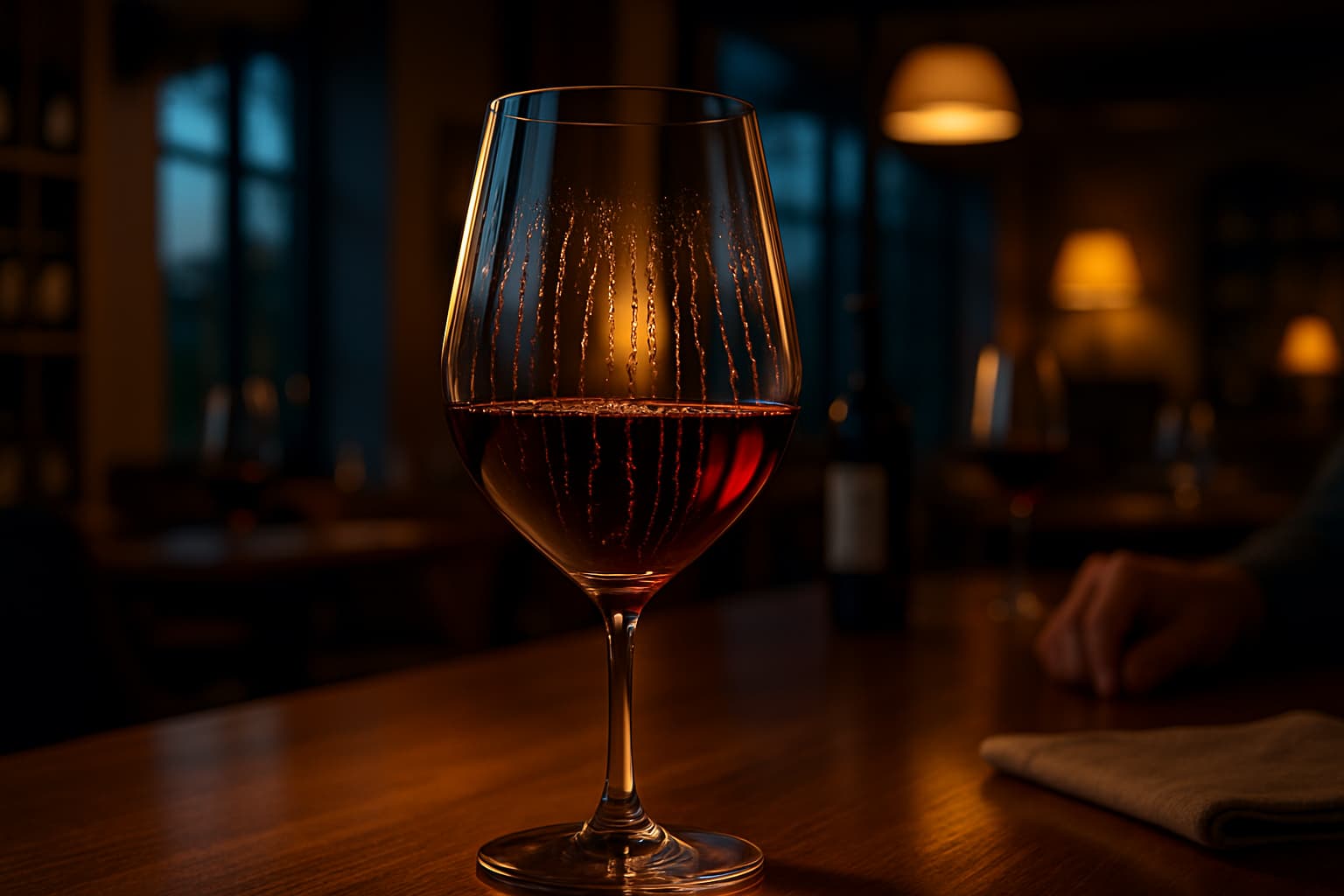
There is a moment, when you lift a glass of wine to your lips, that feels almost like a held breath. Before you taste, before you swallow, something in you waits to see if this will be a fleeting flirtation or the beginning of a quiet love affair. That moment is where one of the most important – and most misunderstood – concepts in wine lives: balance.
Not a technical term to be ticked off on a tasting sheet, not a cold, analytical judgment, but a kind of harmony in the glass. Balance is what makes you take another sip without thinking, what makes a wine feel complete rather than cobbled together. It’s the difference between a wine you talk about and a wine you finish.
Let’s slip into that glass together and explore what balance really means, why it matters so much, and how you can start to sense it for yourself – without needing a diploma, just curiosity and a willing palate.
When people murmur reverently that a wine is “beautifully balanced,” they’re not praising a single thing. They’re talking about a relationship – how all the different elements of the wine coexist and converse.
In simple terms, balance is the proportion between a wine’s main structural components:
A wine is considered balanced when no single element screams for attention or drowns out the others. Instead, everything works together like a well-rehearsed ensemble rather than a soloist determined to dominate.
Think of it as seasoning in cooking. Salt, acid, fat, heat – too much of one and the dish is jarring; just enough of each and the whole thing sings. A wine in balance doesn’t shout; it hums.
To understand balance, it helps to get acquainted with the individual players. Each one brings something essential to the glass, but each can also misbehave if left unchecked.
Acidity is the wine’s bright, mouthwatering quality – that little nip that makes your tongue wake up and your mouth water. It’s what keeps a wine from feeling flat or flabby.
You’ll notice acidity as:
Too much acidity and the wine can feel sharp, sour, or angular – like biting into an underripe fruit. Too little, and the wine can seem dull, heavy, or cloying, especially if there’s noticeable sweetness or high alcohol.
In balance, acidity acts like a gentle spine – holding everything upright, giving shape and energy.
Sweetness in wine isn’t just about dessert bottles. Even “dry” wines can have a whisper of residual sugar, imperceptible as sugar but present as roundness, softness, and charm.
Sweetness can:
But sweetness is a seductive friend. Too much, without sufficient acidity or structure, and the wine can feel sticky, syrupy, or one-note – pleasant at first sip, tiring by the third.
In a balanced wine, sweetness doesn’t shout “I am sweet!” It glides in quietly, smoothing edges, adding texture, like a silk lining you only half notice but would miss if it weren’t there.
Alcohol is the hidden heat in your glass – a quiet fire that can either warm you gently or singe if mishandled.
You’ll perceive higher alcohol as:
Alcohol gives wine weight and presence, but too much, especially if not supported by fruit, acidity, or tannin, makes the wine feel hot, ungraceful, even a little brutal.
In balance, alcohol is like candlelight: noticeable only as a soft glow, not a blazing spotlight.
Tannin is the tactile element in red wine – the drying, slightly bitter sensation that can feel like strong tea or dark chocolate. It comes from grape skins, seeds, and stems, and from oak aging.
You’ll recognize tannin as:
Too much rough, unripe tannin and the wine feels austere, astringent, almost aggressive. Too little, in a wine meant to have structure, and it can feel soft, shapeless, even jammy.
In a balanced wine, tannin is like the bones under the flesh – giving form, not dominating the experience. It supports the fruit rather than stripping it away.
Body is how heavy or full the wine feels in your mouth – its physical presence. A light-bodied wine might feel like skimmed milk; a full-bodied one, more like cream.
Flavor intensity and concentration are about how deeply the wine tastes – not just what you taste, but how much of it.
Balance comes when:
An unbalanced wine might feel big and alcoholic but oddly hollow in flavor, or intensely flavored but thin and sharp, like a sauce that’s reduced too far.
The wonder of balance is not that each component is “perfect” in isolation, but that they make sense together.
Consider a few deliciously different examples:
In each case, balance is relative. A high-acid wine can be balanced; a soft, low-acid wine can be balanced. What matters is not the numbers on a technical sheet but the sensation in your mouth: Does everything feel in proportion? Does anything jar?
It’s tempting to confuse “I like this” with “this is balanced,” and “I don’t like this” with “this is flawed.” But the two are not the same.
You might adore:
All of these can be balanced, as long as their individual elements are in harmony with one another.
Equally, you might admire a wine’s balance while knowing it’s not your style. Like respecting a beautifully tailored suit that you’d never wear yourself, you can recognize that a wine is well-made and harmonious, even if your heart lies elsewhere.
Balance is an objective ideal; preference is deliciously subjective.
You don’t need to memorize tasting grids or mutter about malic acid to start noticing balance. You simply need to pay attention to how the wine feels and behaves from first sip to last.
Try this gentle, sensual ritual:
Wine doesn’t live in a vacuum; it shares our tables, our meals, our evenings. Balance in the glass often translates into versatility at the table.
When a balanced wine meets a well-seasoned dish, the experience can feel almost seamless, as if the wine were another ingredient, completing rather than competing.
Balance isn’t always fixed; it can be something a wine grows into.
Winemakers often speak of crafting a wine with the balance to age – meaning that the structure is there not just for today’s pleasure but for tomorrow’s discoveries.
In a world that often prizes superlatives – the ripest, the richest, the most powerful – balance can sound almost modest. Yet it’s balance, not sheer intensity, that keeps you coming back to the glass.
A balanced wine:
You can find balance in a humble country wine and miss it in a prestigious, expensive bottle. Price, reputation, even critic scores are no guarantee; your own palate is your best guide.
In the end, balance in wine is not a dry technicality, but a deeply sensual experience. It is the quiet thrill of a wine that feels whole – where brightness and richness, structure and softness, fruit and freshness all coexist without quarrel.
When you next pour a glass, don’t worry about getting the vocabulary right. Instead, ask yourself:
If the answer is that nothing shouts, nothing sags, and you find your hand reaching, almost absent-mindedly, for another sip – you have found balance. And, as in life, it is that elusive, exquisite equilibrium that turns the everyday act of drinking into a small, shimmering pleasure.
Tannins are astringent compounds found in wine that contribute to its texture and aging potential, often causing a drying or puckering sensation in the mouth. They are derived from grape skins, seeds, and stems, as well as from oak barrels used during aging.
/ˈtænɪnz/
Malic acid is a naturally occurring organic acid found in grapes that contributes to the tart, green apple-like flavor and crispness in wine. It plays a significant role in the taste and acidity of wine.
/mælɪk ˈæsɪd/
A crisp, dry Riesling:
A rich, oaked Chardonnay:
A structured Cabernet Sauvignon:
A sweet dessert wine:
First sip, no analysis
Take a mouthful and just notice your instinctive reaction. Do you want another sip immediately? Does anything feel “off” – too sharp, too hot, too sweet, too bitter?
Notice the attack
How does the wine enter your mouth? Is it bright and lively, soft and round, bold and intense? Does one element leap out – the acidity, the alcohol, the tannin?
Sense the mid-palate
As you hold the wine in your mouth, does it feel full, thin, creamy, airy? Do the fruit flavors feel generous enough to match the structure (acidity, tannin, alcohol)?
Follow the finish
After you swallow, what lingers? A pleasant echo of fruit and gentle structure? Or a harsh burn, a sour snap, a cloying sweetness? Balance often reveals itself most clearly in the finish.
Ask the simplest question
Does anything feel out of step, as if one part of the wine is shouting over the others? If not – if everything seems to flow together – you are likely tasting balance.
Filtration in winemaking is the process of removing solid particles from wine to clarify and stabilize it before bottling, using various types of filters to achieve different levels of clarity and remove unwanted elements like yeast, bacteria, and sediment.
/fɪlˈtreɪʃən/
Oxidation in wine is a chemical reaction between the wine and oxygen that can change its flavor, aroma, and color. This process can be beneficial or detrimental depending on the extent and context of the exposure.
/ˌɒksɪˈdeɪʃən/
Microclimate refers to the unique climate conditions of a small, specific area within a larger region, significantly influencing grapevine growth and the characteristics of the resulting wine.
/ˈmīkrōˌklīmit/
Get weekly wine recommendations, vineyard news, and exclusive content delivered to your inbox.
-361a711c.webp&w=3840&q=75)