-44d111a7.webp&w=3840&q=75)
Wine Terminology
“Where every bottle tells a story”
-361a711c.webp&w=3840&q=75)
It is a truth almost universally acknowledged that a person in possession of a glass of sparkling wine must be in want of an explanation of what, precisely, “Brut” signifies. The word adorns innumerable bottles, whispered by sommeliers with an air of quiet authority, and yet is often imperfectly understood by those who drink it with the greatest pleasure. Let us, then, set aside vague impressions and attend to the matter with the seriousness it deserves—for even the most frivolous bubble may conceal a world of meaning.
The term “Brut,” though now familiar in English parlours and ballrooms, is of French origin. In its most literal sense, it means “raw,” “unrefined,” or “rough.” This is hardly flattering when applied to a gentleman’s manners, but in the case of wine, it refers not to incivility of character, but to a low level of sweetness.
In the world of sparkling wine, “Brut” is not a brand, nor a grape variety, nor a mark of superior or inferior quality. It is, instead, a technical indication of sweetness—more precisely, of how much sugar remains in the wine after production, or has been added in a final, delicate adjustment. To understand Brut, one must first understand that sparkling wine is not merely fermented grape juice with airs, but a carefully balanced composition in which sweetness, acidity, effervescence, and aroma must coexist in a state of mutual toleration, if not perfect harmony.
Though it would be quite improper to burden the reader with every wearying detail of winemaking, a modest acquaintance with the process will render the meaning of Brut much clearer.
Most traditional sparkling wines—such as Champagne—undergo two fermentations:
First Fermentation
Grapes are harvested and pressed, and the juice is fermented into a still, dry wine. This base wine is often quite tart and plain, better suited to a philosopher’s contemplation than a lady’s refreshment.
Second Fermentation
The winemaker blends (or “assembles”) various base wines and then adds a mixture of yeast and sugar, known as the liqueur de tirage. The wine is bottled and sealed, and the yeast, with admirable industry, consume the sugar and produce carbon dioxide. Trapped within the bottle, the gas dissolves into the wine and becomes those lively bubbles which so delight the eye and tickle the nose.
During this second fermentation, the yeast eventually die and settle as sediment. Later, the bottles are riddled (gradually turned so the sediment collects in the neck) and then disgorged (the sediment is removed). At this point, the wine is very dry—too dry, in many cases, for polite society.
It is here that sweetness enters the conversation.
After the sediment is removed, the winemaker must refill the small space left behind. This is done with a mixture called the liqueur d’expédition, or dosage—a combination of wine and, sometimes, sugar. The amount of sugar in this dosage determines the final sweetness of the wine and, consequently, its official sweetness category.
This is the point at which a wine is declared Brut, or something else entirely.
The sweetness of sparkling wine is measured by the amount of sugar per litre, expressed as grams per litre (g/L). The European Union, whose regulations are much like a stern but fair aunt, has set official ranges for these categories. Though individual producers may flirt with the edges of these ranges, they must, in general, obey them.
To understand Brut, one must see it in the company it keeps. Sparkling wines are divided into several sweetness levels, and the names are not always as self-explanatory as one might wish.
Here is the general order, from driest to sweetest:
It is clear, then, that Brut occupies a position of moderation: dry enough to appear elegant and restrained, yet not so severe as to frighten away those unaccustomed to austerity. One might say it is the Mr. Darcy of sweetness levels—reserved, disciplined, but not incapable of warmth.
To describe Brut simply as “dry” is rather like describing a country estate as “big”—true, but unhelpfully vague. The experience of Brut sparkling wine is shaped by several elements:
The slight touch of sugar in Brut does not dominate these flavours; it merely rounds them, much as a well-chosen word softens the edge of a sharp observation.
Although Champagne has made the word “Brut” famous, the term is not confined to that illustrious region. It appears on sparkling wines from many countries and styles:
Thus, “Brut” is a passport that travels widely, though what it encounters in each region—grape varieties, climate, and winemaking traditions—may differ considerably.
When confronted with a crowded shelf or an insistent wine list, the word “Brut” may serve as a useful guide, provided one understands its implications.
Brut is the safest choice when one must satisfy a variety of tastes. Its dryness is elegant, but its small measure of sweetness renders it broadly agreeable.
If a bottle is labeled “Brut,” you may reasonably expect:
If you see terms like Brut Nature, Extra Brut, or Demi-Sec, you may infer that you are moving respectively toward greater severity or greater sweetness, and should choose accordingly, as you would choose a companion for a long evening’s conversation.
Several confusions are common, and it is best to dispel them at once:
“Brut” does not mean high quality.
A Brut wine may be excellent or indifferent; the term speaks only to sweetness, not merit. One must rely on producer, region, and reputation for that.
“Extra Dry” is not drier than Brut.
This is one of nature’s little jokes—or rather, the wine trade’s. Extra Dry is, in fact, slightly sweeter. A person who chooses Extra Dry imagining it more austere than Brut may be agreeably surprised—or gently disappointed.
Brut is not a grape variety.
It is a style. The grapes used may be Chardonnay, Pinot Noir, Pinot Meunier, Glera, or many others, depending on the region and tradition.
In an age which alternately idolizes severity and indulgence, Brut sparkling wine stands as a quiet advocate for balance. It is neither stern enough to intimidate, nor yielding enough to cloy. It is, in its way, the most sociable of wines—equally at home at a grand wedding breakfast or a modest supper amongst intimate friends.
To understand that “Brut” refers to sweetness level, and specifically to a dry style containing up to 12 grams of sugar per litre, is to remove one small veil from the face of the wine world. The glass in one’s hand is no longer a mystery, but a known companion: crisp, lively, and measured.
And if, having learned all this, you raise a glass of Brut and find in its bubbles not only pleasure but comprehension, then the word on the label will have performed its duty—to inform without ostentation, and to guide without presumption. In wine, as in society, such modest clarity is a virtue worth toasting.
Tannins are astringent compounds found in wine that contribute to its texture and aging potential, often causing a drying or puckering sensation in the mouth. They are derived from grape skins, seeds, and stems, as well as from oak barrels used during aging.
/ˈtænɪnz/
Malic acid is a naturally occurring organic acid found in grapes that contributes to the tart, green apple-like flavor and crispness in wine. It plays a significant role in the taste and acidity of wine.
/mælɪk ˈæsɪd/
Brut Nature / Brut Zéro / Zero Dosage
Extra Brut
Brut
Extra Dry / Extra Sec
Sec (Dry)
Demi-Sec
Doux
Dryness with Grace
Brut wines do not taste sugary, but they are not meant to be harsh. The small quantity of sugar present is less for sweetness than for balance, smoothing the natural acidity of the wine.
Lively Acidity
Grapes for sparkling wine are often harvested earlier, when their acidity is high. Brut wines therefore tend to be crisp and refreshing, with a sensation of freshness that can revive even the most fatigued of guests.
Fine Bubbles
In well-made Brut wines, the bubbles are small and persistent, forming an elegant mousse rather than a coarse froth. This contributes to the wine’s perceived refinement.
Aromas and Flavours
Depending on the grapes and production method, Brut sparkling wines may show notes of:
Champagne (France)
Brut is by far the most common style. A non-vintage Brut Champagne is the calling card of many houses, intended to represent their character in its most approachable form.
Crémant (France)
Sparkling wines from regions such as Alsace, Burgundy, and the Loire often use Brut to describe their dryness level.
Cava (Spain)
Brut Cava, made primarily from Spanish varieties such as Macabeo, Xarel·lo, and Parellada, offers a different expression of dryness and freshness.
Prosecco (Italy)
Though often associated with fruitier, softer styles, many Proseccos are labeled Brut. Their dryness is typically wrapped in generous fruit, giving an impression of sweetness even when the sugar is modest.
New World Sparkling Wines (e.g., United States, Australia, New Zealand)
Producers frequently adopt the term Brut for their dry sparkling wines, often made in the traditional method and modeled on Champagne.
With Food
Brut sparkling wines are admirably versatile. They pair well with:
For Those Uncertain of Their Preferences
If one is not yet acquainted with the extremes of Brut Nature or the indulgence of Demi-Sec, Brut offers a balanced introduction to the category.
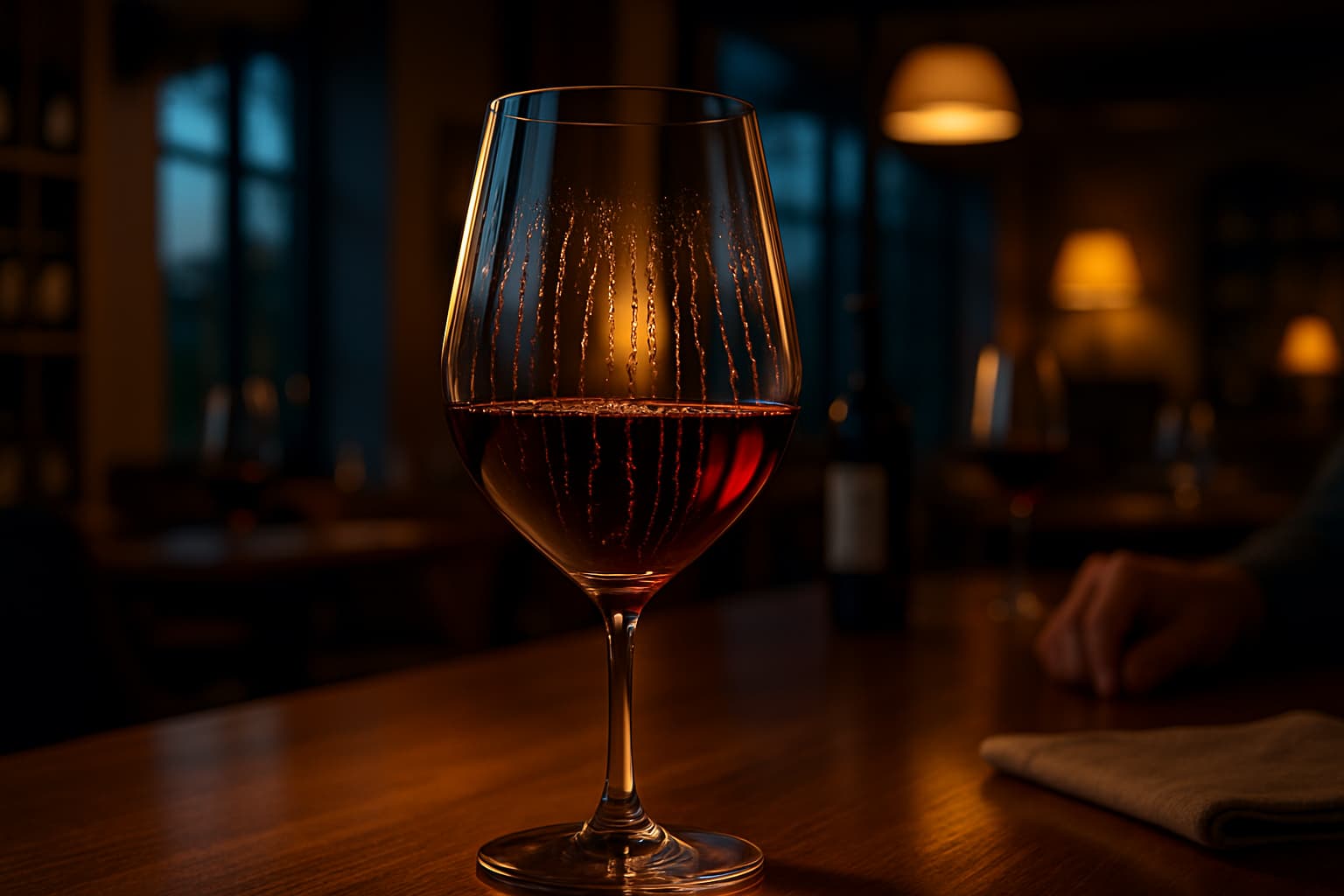
In the soft glow of a tasting room, a glass of wine is gently swirled. The liquid rises, clings to the glass, and then, with unhurried grace, descends in delicate trails. These shimmering rivulets are...
Filtration in winemaking is the process of removing solid particles from wine to clarify and stabilize it before bottling, using various types of filters to achieve different levels of clarity and remove unwanted elements like yeast, bacteria, and sediment.
/fɪlˈtreɪʃən/
Oxidation in wine is a chemical reaction between the wine and oxygen that can change its flavor, aroma, and color. This process can be beneficial or detrimental depending on the extent and context of the exposure.
/ˌɒksɪˈdeɪʃən/
Microclimate refers to the unique climate conditions of a small, specific area within a larger region, significantly influencing grapevine growth and the characteristics of the resulting wine.
/ˈmīkrōˌklīmit/
Get weekly wine recommendations, vineyard news, and exclusive content delivered to your inbox.
-8dd86257.webp&w=3840&q=75)