Sustainable and Organic Wine
“Where every bottle tells a story”
Here’s the thing about wine: for a long time, most of us never asked what the hell was actually in the bottle. We cared about the label, the region, the score from some critic with a swollen liver and a good tailor. Maybe we pretended to smell “forest floor” or “wet stone” so we didn’t look like idiots in front of the sommelier. But how the grapes were grown? What chemicals went into the vineyard? What the winemaker did—or did not do—to the juice? That was background noise.
Now, the curtain’s starting to peel back. People want to know if their wine is organic, sustainable, biodynamic, “natural.” They want to feel a little less like they’re drinking agricultural mystery juice and more like they’re making a choice that doesn’t torch the planet or their body. The problem? The wine world is a labyrinth of bullshit, half-truths, and marketing spin.
So let’s cut through it. No romance, no brochure language. Just what these words actually mean, why they matter, and how to drink better without turning into a sanctimonious bore.
Modern wine, like modern food, is the bastard child of efficiency and chemistry. After World War II, synthetic fertilizers, herbicides, fungicides, and pesticides—originally developed for other purposes—found a happy home in agriculture. Vineyards were no exception.
Sprays to kill mildew. Sprays to kill insects. Sprays to kill weeds. Fertilizers to boost yields. Then in the cellar: cultured yeasts, fining agents, stabilizers, acid adjustments, sugar additions, tannin powder, enzymes, and a whole periodic table of “corrections” to make inconsistent grapes behave.
Did the wine taste good? Often, yes. Did anyone talk about the environmental cost, the erosion, the dead soils, the farmworkers breathing in this crap? Not really.
Sustainable and organic wine are, at their best, a reaction to that—a refusal to pretend that the vineyard is a factory floor and the wine is just a branded product. But each term means something specific—and sometimes less than you think.
“Organic” sounds clean. Pure. Like the grapes were serenaded with folk music and picked by people who do yoga at sunrise. Reality is less Instagrammable, but still meaningful.
At its core, organic viticulture is about what you don’t do:
Instead, organic growers rely on:
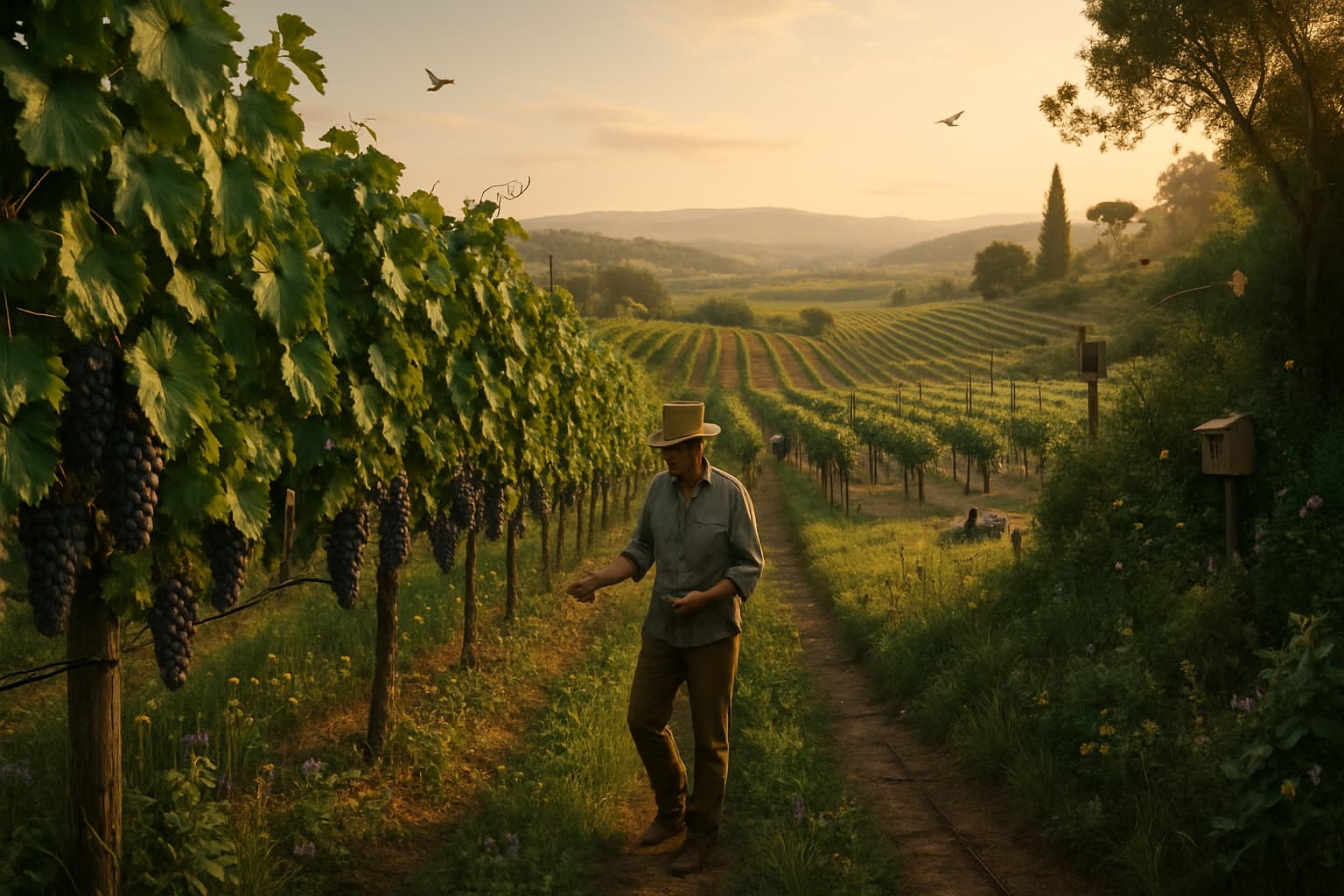
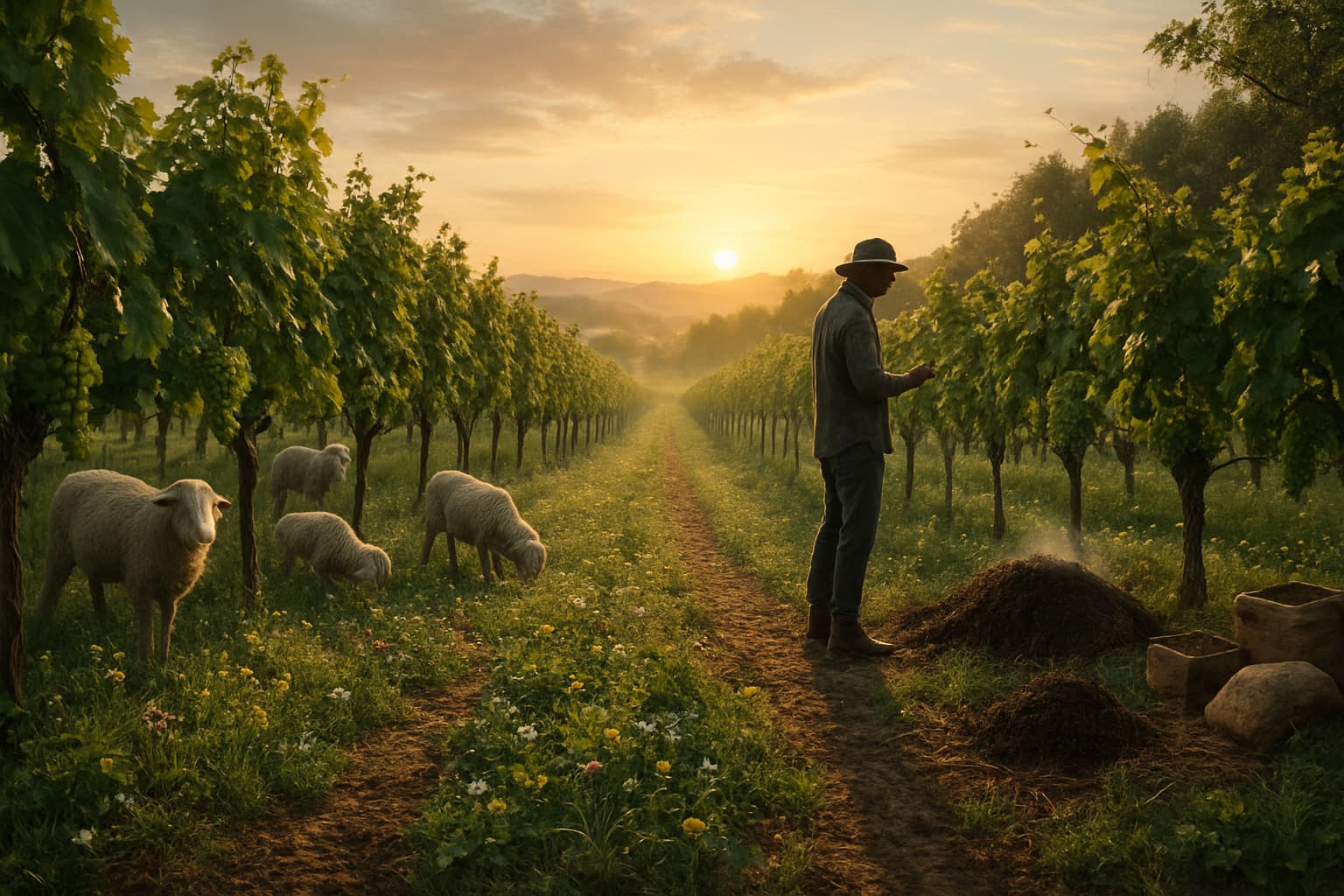
The philosophy: keep the soil alive. A living soil—full of fungi, bacteria, worms, and other creepy-crawlies—is better at holding water, resisting erosion, and feeding the vine in a balanced way. That usually means more resilient vines, less disease pressure, and, if you believe the faithful, more character in the wine.
Here’s where it gets messy, and varies by country:
US (USDA Organic)
Sulfites are the big drama point. They’re preservatives. They keep wine from turning into vinegar or brown sludge. Most people tolerate them fine; the “sulfite headache” story is mostly myth, often masking the fact that you just drank half a bottle of red on an empty stomach.
In the US, because “organic wine” can’t have added sulfites, you see a lot more labels that say:
If you want wine from organically farmed vineyards without obsessing over sulfites, that’s usually the sweet spot.
“Sustainable” is the least sexy word in the wine world. It sounds like a corporate memo. But if done right, it might actually be more important than organic.
Sustainability is about the whole system, not just banning a few chemicals. A sustainable wine program looks at:
Environmental impact
In practice, sustainable certification programs (like SIP in California, LIVE in the Pacific Northwest, or various regional schemes around the world) use a points system or checklist. They might allow some synthetic treatments when absolutely necessary, but they limit and monitor them. They push for smart irrigation, renewable energy, habitat corridors, and less waste.
Sustainable doesn’t mean chemical-free. It doesn’t mean organic. It means pragmatic. It’s the grower saying:
“I’ll do everything I can to farm responsibly, but if a once-in-a-decade mildew apocalypse hits, I’m not losing my entire crop on principle.”
If organic is the strict diet, sustainable is “I mostly eat well, but I’m not going to die on the altar of purity over one cheeseburger.”
Done right, sustainability is about long-term thinking: will this vineyard still be alive and productive in 50 years, or will it be a dead, compacted dust bowl?
You can’t talk about sustainable and organic without the other weird cousins showing up.
Biodynamics is like organic farming with a mystical twist. Based on the ideas of Rudolf Steiner, it includes:
It sounds like stoner astrology for farmers. Yet some of the world’s greatest estates—Burgundy, Alsace, the Loire, parts of Italy—swear by it. Whether it’s the cosmic forces or just the obsessive attention to detail, biodynamic vineyards often show:
Is it science? Not entirely. Is it bullshit? Not entirely either. It’s a belief system layered on top of very good farming.
“Natural wine” isn’t a legal term. It’s more of a shrug and a manifesto:
When it works, natural wine can be wild, alive, electric—like the volume’s been turned up on fruit, texture, and funk. When it doesn’t, it tastes like a mouse died in your glass and no one called the authorities.
Natural wine is a reaction against industrial sameness, against wines that all taste like they were made in the same anonymous factory. It’s not always “better,” but it’s a middle finger to the idea that wine should be polished and predictable.
You could say, “I don’t care. I just want something that tastes good with my steak.” Fair. But here are a few reasons this stuff is worth thinking about:
Healthy soil and thoughtful farming aren’t just eco-virtue. They matter for flavor:
You may not taste “organic” as a flavor. But you often taste the results of better farming: more precision, more freshness, more sense of place.
Wine is agriculture. Agriculture shapes landscapes. Monoculture vineyards, drenched in chemicals, don’t exactly support a thriving ecosystem.
Sustainable and organic practices can mean:
If you like the idea of your favorite wine region still existing in 30 years, this stuff matters.
A lot can legally go into wine without ever showing up on the label: fining agents made from egg whites, fish bladders, or milk proteins; enzymes; concentrates; tannin powders; acid, sugar, oak chips—you name it.
Sustainable and organic producers are, on average, more transparent and less trigger-happy with the chemistry set. Not saints. Just less inclined to treat wine like soda.
You don’t need a PhD in wine law. You just need a basic filter.
At a wine shop or restaurant, ask:
If the staff stares at you like you just asked for a gluten-free cigar, find a new place.
You’re not joining a religion. You’re just trying to make choices that line up with your values and your taste. It’s fine to drink a conventional wine you love. It’s fine to prefer a clean, classic Bordeaux over some cloudy, kombucha-adjacent natural wine. The goal is awareness, not purity.
This isn’t a fairy tale. There are real limitations and plenty of marketing fluff.
The real story isn’t saints and sinners. It’s people trying to grow grapes in a chaotic world, making trade-offs, and deciding where they draw the line.
You don’t need to memorize every certification scheme or debate sulfite levels on the internet. Start simple:
In the end, wine is fermented grape juice meant to be shared around a table, with food, with people you like, maybe people you love, maybe people you’ll regret. Sustainable and organic wine aren’t about moral superiority. They’re about acknowledging that what’s in your glass came from a piece of earth, tended by human hands, in a world that’s already on fire in more ways than one.
If you can drink something that tastes good, respects the land a bit more, and doesn’t rely on a pharmacy of tricks to stand up straight—why the hell wouldn’t you?
Pour a glass. Ask a few more questions than you used to. And remember: the best wine is the one that tells you where it came from without lying, without makeup, without bullshit. Whether the label says organic, sustainable, biodynamic, or nothing at all—that’s the real thing you’re chasing.
Tannins are astringent compounds found in wine that contribute to its texture and aging potential, often causing a drying or puckering sensation in the mouth. They are derived from grape skins, seeds, and stems, as well as from oak barrels used during aging.
/ˈtænɪnz/
Malic acid is a naturally occurring organic acid found in grapes that contributes to the tart, green apple-like flavor and crispness in wine. It plays a significant role in the taste and acidity of wine.
/mælɪk ˈæsɪd/
EU (and many other regions)
Social responsibility
Economic viability
Certifications on the label
Back labels that say things like
Importers and producers with a reputation
Some importers specialize in organic, biodynamic, or natural producers. Once you find one you like, you can follow their portfolio like a playlist.
Filtration in winemaking is the process of removing solid particles from wine to clarify and stabilize it before bottling, using various types of filters to achieve different levels of clarity and remove unwanted elements like yeast, bacteria, and sediment.
/fɪlˈtreɪʃən/
Oxidation in wine is a chemical reaction between the wine and oxygen that can change its flavor, aroma, and color. This process can be beneficial or detrimental depending on the extent and context of the exposure.
/ˌɒksɪˈdeɪʃən/
Microclimate refers to the unique climate conditions of a small, specific area within a larger region, significantly influencing grapevine growth and the characteristics of the resulting wine.
/ˈmīkrōˌklīmit/
Get weekly wine recommendations, vineyard news, and exclusive content delivered to your inbox.