-ad848eb5.webp&w=3840&q=75)
Wine Terminology
“Where every bottle tells a story”
-8876c953.webp&w=3840&q=75)
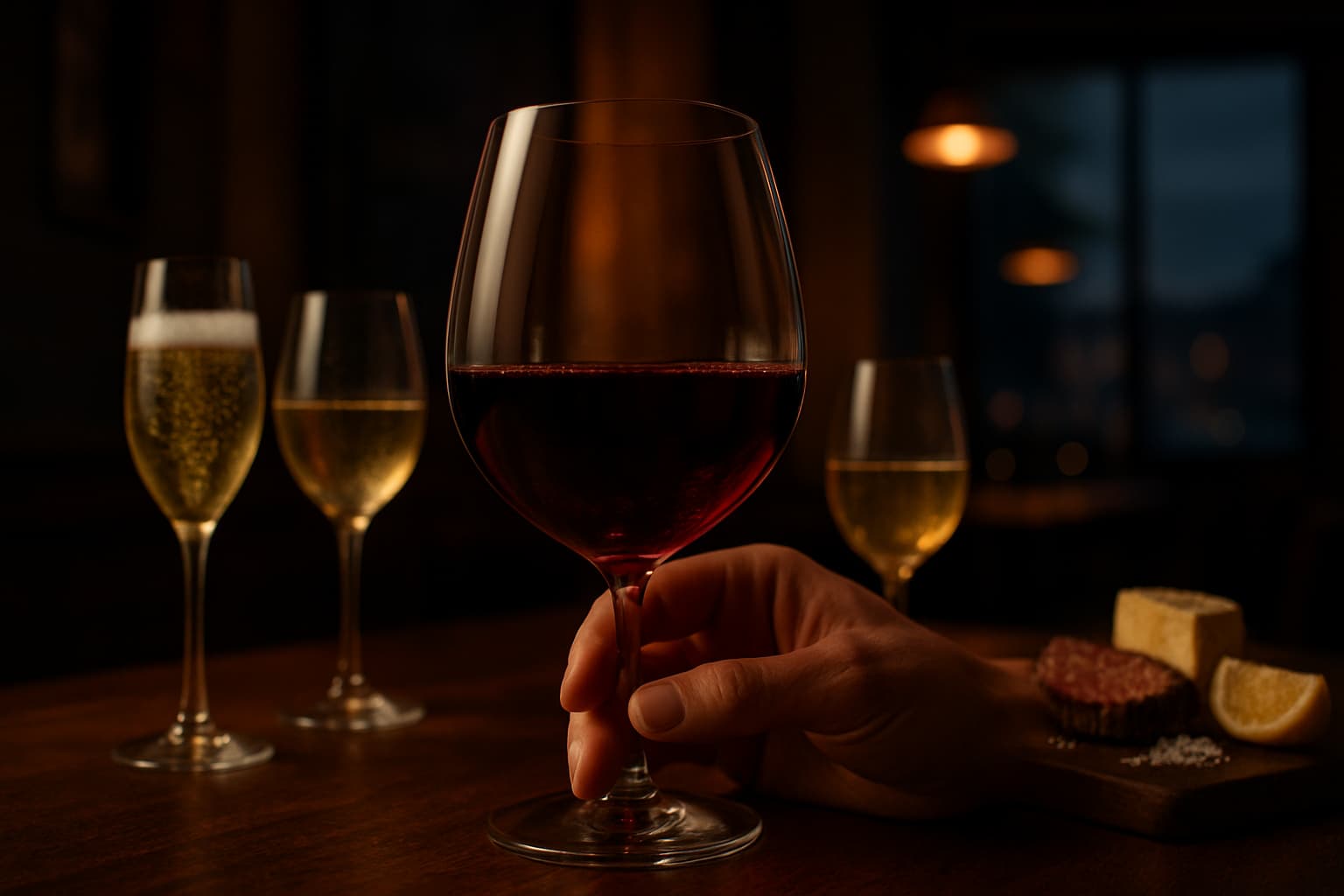
The wine on the table is not special. That is the point of it. It stands there in the middle of the meal, between the bread and the salt, and it does its work without complaint. You pour it, you drink it, and the talk goes on.
People call it many things. In the law books it is one thing. In the mouths of men and women it is another. But when you drink it, you do not care what they call it. Still, the words matter. They decide what can be written on the label, what can be sold across a border, what can be taxed, and what a man thinks he is buying when he hands over his money.
This is the story of that plain bottle—the one they call table wine.
In the old countries, when someone spoke of table wine, they did not mean a grand thing. They meant the opposite. It was the wine you drank every day, if you were lucky enough to drink every day.
It was simple. Dry. Not too strong. Red or white. It went with food. It did not demand attention. It did not ask to be discussed. It was there to loosen the tongue and oil the talk, to make the bread taste better and the meat softer in the mouth.
In this common way of speaking, table wine means:
It is the wine of the kitchen table, not the wine of the glass case. It is the wine of workers, of families, of long lunches that run into the afternoon.
But the world grew more complicated. Lawyers and officials took the simple words and turned them into categories and codes. They had to do it, perhaps, to keep order. But the word changed shape under their hands.
In the law, table wine is not just a feeling or a habit. It is a defined category, measured and limited. Governments do not care if the wine goes well with stew. They care how strong it is, how sweet it is, and what is written on the label.
In many places, especially in the United States and parts of Europe, “table wine” became a formal class with rules. These rules often concern:
The bottle that seems simple on the table may belong to a tangle of regulations.
In the United States, the government speaks through the Tax and Trade Bureau. It does not speak like a poet. It speaks like a clerk with a ruler in his hand.
For many years, American law divided wine into classes, and what we call “table wine” was one of them. The numbers have shifted with time, but the idea stayed: table wine is wine of moderate strength, not fortified, not sparkling.
The key legal ideas around table wine in the U.S. have been:
On labels, the phrase “Table Wine” once appeared often, especially on inexpensive bottles. It told the buyer:
Over time, marketers decided that “table wine” sounded too humble, even cheap. They preferred words like “California Red” or “Dry White Wine,” or invented names that sounded grand. The law still knew what table wine meant, but the labels began to forget the phrase.
Yet the category remains in the background. When a winery files papers, when a customs officer checks a shipment, when tax is calculated, the quiet phrase “table wine” still does its work.
Across the ocean, the word took on another life. In Europe, especially in countries like France, Italy, and Spain, table wine became the lowest rung in a ladder of quality and origin.
In France, the system spoke of:
In Italy:
In Spain:
The table wine sat at the bottom. It was often:
It was not meant to impress a judge at a tasting. It was meant to be drunk.
But even here, the story is not so simple. Some wines that were labeled as mere table wine were, in truth, excellent. They did not fit the rules of the higher categories—maybe they used grapes that were not allowed, or blends that broke the code. So they were forced to wear the humble name.
A man could be better than his papers. So could a wine.
Over the years, European law changed. New categories appeared, old ones were merged, and “table wine” was folded into broader groups like “wine without a geographical indication.” But the old words still linger in memory and on the tongues of drinkers.
There are two ways to speak of table wine.
In the law, it is a category:
In everyday talk, it is a feeling:
These two meanings overlap but do not match. A legally defined table wine may be very poor or very good. A wine that people call “just a table wine” may or may not be labeled that way in any official sense.
The confusion can matter. A buyer may see “table wine” on an old European label and think it is bad, yet the wine might be from a skilled grower who simply refused to follow the rules. Another buyer may use “table wine” to mean “cheap and rough,” even when the law calls the bottle something else entirely.
Words shift. The drink remains.
Beyond the lawyers and the clerks, there is the table itself. That is where the meaning lives.
Table wine is tied to food and to time. It is not a trophy. You do not lock it away. You open it. You pour it. You pass it around.
Its virtues are plain:
In old farmhouses and in city apartments, table wine was part of the day. A carafe on the sideboard. A jug in the cool of the cellar. It was not worshiped. It was used.
There is a kind of democracy in it. Grand wines divide people into those who can buy them and those who cannot. Table wine sits with whoever is hungry and thirsty. It belongs to the worker in his blue shirt and the clerk with ink on his fingers.
To call a wine “table wine” is not to say it must be bad. It only says that it does not pretend to be more than it is.
Some of the finest pleasures in wine are found in bottles that cost little and ask even less: a bright, simple red from a rough hillside, a pale, dry white that tastes of stone and lemon and nothing more.
These wines can be:
The danger lies in scorn. When people chase only the rare and the costly, they forget that wine began as a farm product and a daily drink. Table wine reminds us of that. It brings the vine back to the table and the table back to the earth.
In many shops today, you will not see the words “table wine” on the label, but the bottles are there all the same. They hide under other names:
They are made for the same role: to be poured without fuss, to be ordered by the carafe or by the glass, to carry a meal along.
The marketing men have dressed them up, but the heart is still the same. They are table wines in all but name.
When you choose such a bottle, you are choosing:
That is not a lesser choice. It is simply another one.
In a world crowded with scores and tasting notes and expensive bottles in locked cabinets, table wine stands as a kind of resistance. It says:
Wine is for drinking. Wine is for the meal. Wine is for company.
From a legal point of view, the term marks off a class of wines—moderate in strength, usually still, often taxed at a different rate, sometimes placed at the bottom of an official hierarchy.
From a human point of view, it marks something else:
The bottle on the table may not carry medals or grand words. It may be called “table wine” in the law, or in the talk of the people, or not at all. But if it does its work—if it eases the day, if it binds the talk, if it makes the food taste better—then it has earned its place.
In the end, the label fades and the glass is empty. What remains is the memory of the meal and the people who shared it. That is where table wine lives, and that is why it will never disappear, no matter what the lawyers write in their books.
Tannins are astringent compounds found in wine that contribute to its texture and aging potential, often causing a drying or puckering sensation in the mouth. They are derived from grape skins, seeds, and stems, as well as from oak barrels used during aging.
/ˈtænɪnz/
Malic acid is a naturally occurring organic acid found in grapes that contributes to the tart, green apple-like flavor and crispness in wine. It plays a significant role in the taste and acidity of wine.
/mælɪk ˈæsɪd/
Filtration in winemaking is the process of removing solid particles from wine to clarify and stabilize it before bottling, using various types of filters to achieve different levels of clarity and remove unwanted elements like yeast, bacteria, and sediment.
/fɪlˈtreɪʃən/
Oxidation in wine is a chemical reaction between the wine and oxygen that can change its flavor, aroma, and color. This process can be beneficial or detrimental depending on the extent and context of the exposure.
/ˌɒksɪˈdeɪʃən/
Microclimate refers to the unique climate conditions of a small, specific area within a larger region, significantly influencing grapevine growth and the characteristics of the resulting wine.
/ˈmīkrōˌklīmit/
Get weekly wine recommendations, vineyard news, and exclusive content delivered to your inbox.
-b5f1cbcc.webp&w=3840&q=75)