-ad848eb5.webp&w=3840&q=75)
Wine Terminology
“Where every bottle tells a story”
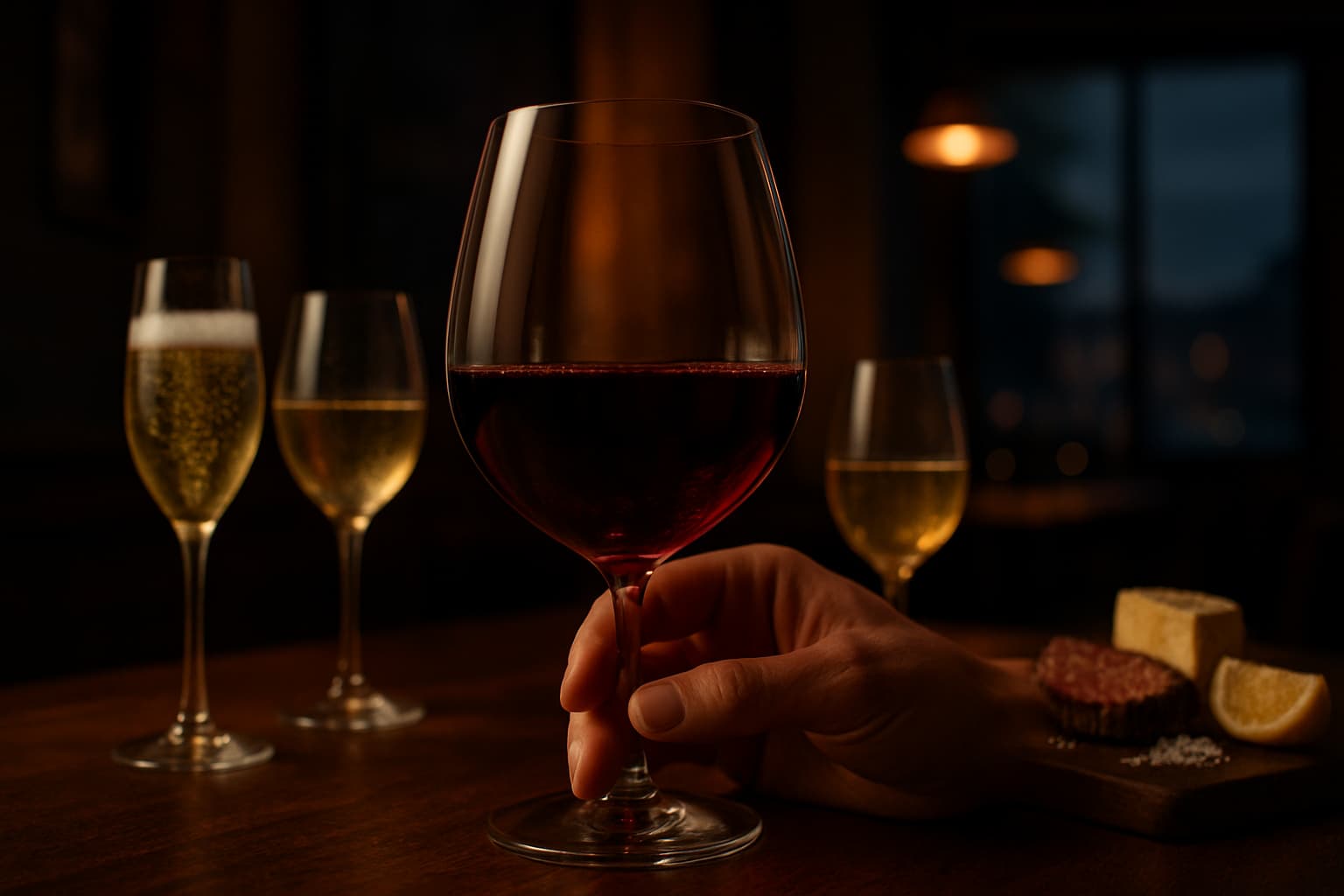
There are some phrases that sound almost indecent when you say them aloud, and “wine mouthfeel” is one of them. It’s not a crisp, clinical term; it’s a slow, lingering one, the sort that asks you to pay attention not just to what you taste, but to how you feel as you taste it. Mouthfeel is the secret, tactile life of wine—the way it moves, rests, clings, caresses, or even scratches its way across your tongue. It’s less about flavour and more about physical presence. And once you start noticing it, you’ll never be able to drink wine quite as absentmindedly again.
Let’s slip, unhurriedly, into this world of texture, weight, and sensation—the silk and velvet, the chalk and steel—so that “mouthfeel” becomes not a fussy technical term, but a deeply pleasurable part of your wine vocabulary.
We’re taught to talk about wine in terms of flavours: cherry, plum, citrus, vanilla, smoke. But flavour is only half the story. Mouthfeel is everything your mouth registers that isn’t strictly taste or aroma.
Think of:
When you say a wine is “lush,” “sharp,” “chewy,” “tight,” or “buttery,” you are talking about mouthfeel. It is the way the wine inhabits your mouth—its posture, its poise, its presence.
If mouthfeel were a wardrobe, “body” would be the cut of the dress: how much fabric, how much sweep, how much drama.
Wine is often described as:
This sense of weight comes from a combination of alcohol, glycerol (a naturally occurring, slightly viscous compound formed during fermentation), sugar, and even extract—all the dissolved solids from grape skins and pulp.
A wine with higher alcohol and more extract will feel more substantial, just as a stew feels heartier than a broth. You may not consciously taste “13.5% ABV,” but you’ll feel the warmth and heft of it, like a gentle spreading glow.
If you’ve ever drunk a young red wine and felt your gums go dry, as though someone had dusted the inside of your mouth with cocoa powder, you’ve met tannins.
Tannins are compounds found in grape skins, seeds, and stems, and in oak barrels. They bind with proteins in your saliva, stripping away your natural lubrication. The result is that drying, sometimes chalky, sometimes firm sensation.
Tannins can feel:
Time, like slow cooking, transforms tannins. A fiercely structured young red can, with age, melt into something suave and silken. This is why some wines are described as “tannic monsters” in their youth but “supple” and “polished” later on. Mouthfeel is not just a state; it’s a story of what the wine has been through.
If tannins are the grip, acidity is the cut—the bright, sharp line that keeps everything from collapsing into flab.
Acidity is what makes your mouth water. It’s that lemon-squeeze sensation at the sides of your tongue, the refreshing snap that makes you want another sip.
In terms of mouthfeel, acidity can make a wine feel:
A wine with good acidity feels alive, its edges defined. It can slice through rich food like a blade through butter, cleansing the palate and making each bite taste new again. Without acidity, wines risk feeling saggy and dull, like a sauce that’s forgotten its squeeze of lemon.
We often talk about sugar in terms of taste—dry versus sweet—but it also has a profound effect on mouthfeel.
Residual sugar (natural grape sugar left after fermentation) and glycerol contribute to:
Imagine honey drizzled into tea: not just sweeter, but fuller, more enveloping. That’s what sugar can do to wine’s mouthfeel—provided it’s held in check by enough acidity to keep everything from turning cloying.
Oak ageing doesn’t just add flavours of vanilla, toast, or spice; it can also change how a wine feels in your mouth.
Oak influence can bring:
Think of oak as both seasoning and texture—like adding cream and a slow stir to a sauce. You don’t just taste the difference; you feel it.
Bubbles, those tiny domestic fireworks in your glass, are pure mouthfeel theatre.
In sparkling wines, carbonation can feel:
Even still wines sometimes carry a faint spritz—a delicate prickle of dissolved CO₂ that gives a sense of lift and youthfulness. It can make a light white or rosé feel playful, almost flirtatious, in the mouth.
You don’t need a tasting grid or a clipboard. You need curiosity and a little slowness. The next time you have a glass of wine, try this:
Mouthfeel is intimate; it’s your physical response to the wine. It’s allowed—encouraged, in fact—to be personal.
Food and wine pairing is often taught as a matching of flavours, but the most magical pairings are often about texture.
Think of it as pairing fabrics: you don’t usually wear heavy velvet with gossamer silk. In the same way, you might not want a tannic, muscular red with a fragile, lemony sole.
Mouthfeel is why wine lends itself so naturally to sensual language. We call wines:
These are not flavour words; they’re body words, touch words. They speak of how the wine behaves in your mouth, how it moves and lingers and leaves.
Once you start noticing, you’ll find that mouthfeel is often what you’re really responding to when you say, “I love this,” or “It’s not quite my thing,” even if you can’t yet name it.
Wine, at its most beguiling, is not just something you taste but something you experience. Mouthfeel is that experience made conscious—the weight on your tongue, the brush of tannin on your gums, the cool edge of acidity, and the slow, spreading warmth of alcohol.
To understand mouthfeel is to give yourself permission to drink more slowly, more attentively, and—most importantly—more pleasurably. It’s the difference between merely registering that a wine is “nice” and knowing why it seduces you, comforts you, or leaves you a little cold.
So the next time you pour a glass, don’t rush. Let it roll, let it rest, let it whisper its textures to you. Taste, of course—but also feel. Wine, after all, is not just for the palate; it is for the whole, greedy, grateful mouth.
Tannins are astringent compounds found in wine that contribute to its texture and aging potential, often causing a drying or puckering sensation in the mouth. They are derived from grape skins, seeds, and stems, as well as from oak barrels used during aging.
/ˈtænɪnz/
Malic acid is a naturally occurring organic acid found in grapes that contributes to the tart, green apple-like flavor and crispness in wine. It plays a significant role in the taste and acidity of wine.
/mælɪk ˈæsɪd/
Filtration in winemaking is the process of removing solid particles from wine to clarify and stabilize it before bottling, using various types of filters to achieve different levels of clarity and remove unwanted elements like yeast, bacteria, and sediment.
/fɪlˈtreɪʃən/
Oxidation in wine is a chemical reaction between the wine and oxygen that can change its flavor, aroma, and color. This process can be beneficial or detrimental depending on the extent and context of the exposure.
/ˌɒksɪˈdeɪʃən/
Microclimate refers to the unique climate conditions of a small, specific area within a larger region, significantly influencing grapevine growth and the characteristics of the resulting wine.
/ˈmīkrōˌklīmit/
Get weekly wine recommendations, vineyard news, and exclusive content delivered to your inbox.
-b5f1cbcc.webp&w=3840&q=75)
-8876c953.webp&w=3840&q=75)