Wine Literature and Media
“Where every bottle tells a story”
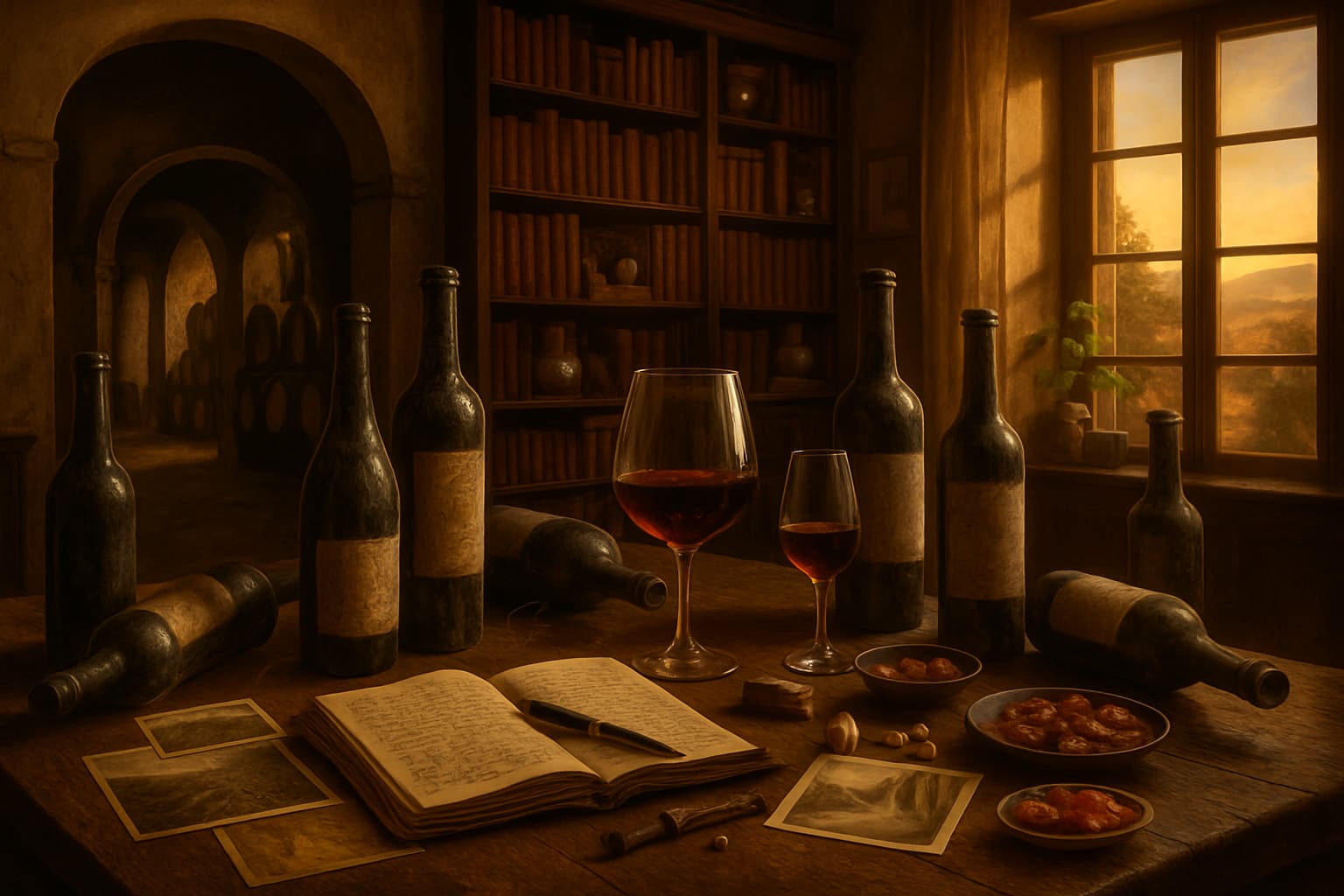
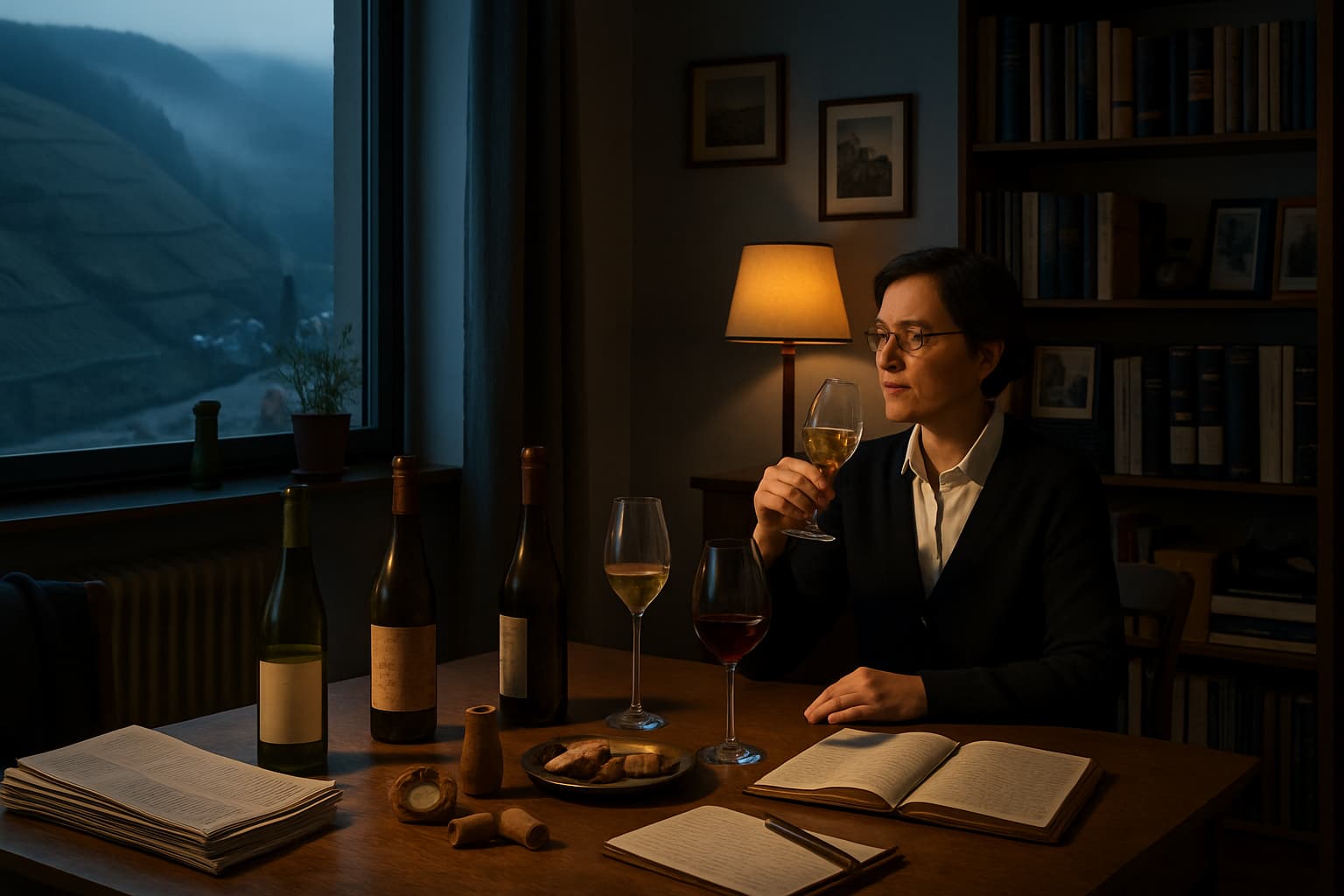
It begins, as these things so often do, not in a glass but on a page.
Before any of us ever lifts a shimmering, garnet-tinted Rioja to our lips, we have already drunk something far more potent: the stories. Spain’s great “icon wines” are not merely fermented grape juice, but characters in a long, unfolding novel – part family saga, part political history, part love story, with a dash of magical realism. And the literature that has grown up around them – books, essays, memoirs, tasting notebooks gone gloriously rogue – is where we first meet them in full colour.
To read about Spain’s most fabled bottles is to feel the warmth of late afternoon sun on old stone, to smell the mingled perfume of leather, dust and cherries, to hear the soft clink of glass and the rustle of labels in dim, cobwebbed cellars. The sensuality of the wines themselves is only half the story; the words that wrap around them are the velvet curtain we must part before stepping onto the stage.
Let us, then, uncork the literature of Spain’s icon wines – slowly, lovingly – and see what pours out.
The notion of an “icon wine” is not, strictly speaking, something one can measure with a hydrometer or a pH meter. It is part alchemy, part acclaim, part accumulation of whispered reverence over time. An icon wine is:
But beneath all of that, an icon wine is a story that has stuck. It is a wine whose narrative has been written and rewritten until it feels inevitable – inevitable enough that we forget how much work went into the telling.
This is where literature – in all its forms – comes in. Spain’s grandest bottles have been:
In Spain, the written word has been a kind of oak barrel for wine: shaping, smoothing, deepening its character in the public imagination. The bottle is the object; the literature is the aura. And when we talk about “icon wines”, we are often really talking about wines that have been richly, repeatedly, almost seductively described.
Spanish wine’s path into literature did not begin with glossy modern monographs on Vega Sicilia or Pingus. It began in a more old-fashioned way: as background, as seasoning, as a shimmering detail in novels, letters and travelogues.
In the nineteenth century, English and French writers – those inveterate wanderers and drinkers – wrote about Spanish wines in tones of slightly scandalised delight. Sherry, in particular, was not just a drink but a character. In Dickens, in Thackeray, in the letters of English grandees, “a glass of fine old sherry” from Jerez is shorthand for comfort, conviviality and a certain well-fed worldliness. These were not yet “icon wines” as we think of them, but the idea that Spanish wine could be noble, age-worthy, even aristocratic was quietly seeded on the page.
By the late nineteenth and early twentieth centuries, Rioja began to step into the literary spotlight. The phylloxera plague in France had driven Bordeaux merchants and techniques into Spain, and Rioja’s long-aged, oak-matured reds began to be described with a reverence that feels very familiar today. Early wine books and merchant catalogues – those unsung, text-heavy ancestors of our modern wine bibles – listed names like Marqués de Riscal and Marqués de Murrieta with a distinct hush. These documents are dry, yes, but in their tight columns of print you can feel the first stirrings of myth.
Fast forward to the post-war world, and the literature shifts again. As Spain slowly emerges from dictatorship and begins to rejoin the wider wine conversation, the first international guides and encyclopedias start to single out certain wines with a particular glow: Vega Sicilia Único from Ribera del Duero; López de Heredia’s Tondonia from Rioja; the ethereal old amontillados and palo cortados of Jerez. These aren’t yet the darlings of global collectors, but they are being named, printed, fixed in ink. And that, as any novelist knows, is where power begins.
Every icon needs its scripture. For Spain’s great wines, that scripture has come in the form of books – some scholarly, some sumptuous, all in their own way devotional.
A certain kind of wine book feels almost like a family album: thick paper, moody photographs of vineyards in morning mist, maps like treasure charts. Spanish regions such as Rioja, Ribera del Duero, Priorat and Jerez have each inspired these sweeping, almost cinematic works.
Within them, particular wines are singled out again and again:
These books do more than describe flavour; they choreograph feeling. They tell us not only what is in the glass, but how we are supposed to feel about it: reverent, awed, slightly humbled, like guests at a very old table.
Then there are the wine guides, the encyclopedias, the atlases. Less flamboyant, perhaps, but no less influential. Year after year, page after page, they give the same names high scores, glowing reviews and prime placement. Over time, this repetition becomes a kind of incantation.
Look through a decade or two of major guides and you will see the same Spanish names surfacing:
Each appearance is another brushstroke on the icon’s portrait. The language may be technical – tannins, acidity, structure – but beneath it hums a low, insistent music: these wines matter. These are the wines you should know, should desire, should – if you’re very fortunate – taste.
If books are the scriptures, critics are the evangelists. The rise of influential wine critics and publications in the late twentieth century changed not only how wines were sold, but how they were written about. Spain, long a slightly sleepy corner of the wine world in the English-speaking imagination, was suddenly centre stage.
The literature of Spanish icon wines cannot be told without mentioning the tidal influence of Robert Parker and similar critics. A handful of high scores in the 1990s and early 2000s transformed certain Spanish wines into cult objects almost overnight.
Pingus, with its tiny production and astronomical scores, became the stuff of near-mythical scarcity. Articles about it read like dispatches from a treasure hunt: few bottles, fervent demand, prices spiralling.
Priorat as a region was lifted by a swell of critical enthusiasm. The language used in these reviews – dense, powerful, opulent, massive – created an expectation of Spanish red wine as something almost baroque in its intensity.
Modern Rioja and Ribera del Duero producers, embracing new oak and riper fruit, were written into a narrative of “rediscovery” and “renaissance”.
These reviews, while ostensibly practical buying guides, are also pieces of literature, however brief: compressed stories of origin, style and destiny. And they helped carve the word “iconic” into the labels of certain Spanish wines as firmly as if it had been etched there.
Alongside the score-givers, there are the essayists and columnists who write about Spanish wines with a more conversational, sometimes more lyrical tone. In weekend supplements and specialist magazines, Spanish icons appear not as trophies, but as companions to meals, seasons and moods.
One might find a column describing the first glass of chilled, nutty fino sherry on a hot evening in Seville, the wine shimmering in the glass like pale gold silk. Another might recount opening a decades-old Rioja Gran Reserva on a winter night, the wine smelling of dried roses, old leather and cigar boxes – a library and a love letter in one.
These pieces rarely trumpet the word “icon”; they do something subtler. They embed the wines in lived experience, in memory and food and feeling. And that, in its quiet way, is just as powerful.
If one Spanish wine style has inspired particularly profound writing, it is sherry. Perhaps because sherry is, intrinsically, a meditation on time. The solera system – blending young and old wines so that each bottle contains infinitesimal traces of decades past – is almost novelistic in structure: layers upon layers, voices upon voices, a chorus of vintages singing together.
Writers on sherry often drift, delightfully, into philosophy:
The great old sherries – some drawn from casks that have been quietly topped up and drawn down for generations – are treated in the literature almost as oracles. Tasting notes become psalms of astonishment: “iodine and walnuts and orange peel and incense”, “like drinking the memory of a harbour at dusk”.
Here, the idea of an “icon wine” is less about price or prestige, and more about profundity. The literature around sherry invites us to see these wines as liquid time, as history made drinkable. And it is hard not to feel reverent when a writer describes a sip that seems to stretch backward for a century.
While the old guard of wine literature resides between hard covers and on newsprint, a newer, more unruly chorus has risen online. Blogs, social media, digital magazines and tasting apps have thrown open the doors of wine writing to a wider range of voices – and with them, a wider range of Spanish wines.
Where once only a handful of names were anointed as icons, we now see a more diverse pantheon emerging in the digital realm:
These may not yet be “icons” in the auction-house sense, but the language being woven around them – the intimacy of personal testimony, the immediacy of shared discovery – is laying the groundwork for a different kind of canon. One less dictated from above, more grown from below.
Where once a coffee-table book offered lush vineyard photography and sensuous descriptions, now a carefully composed Instagram post can do much the same. A bottle of Ribera del Duero against a backdrop of a tiled Spanish kitchen; a glass of Priorat held up to catch the last light; a plate of jamón and a half-drunk fino on a sunlit table – captions become miniature essays, tasting notes become love letters.
This is literature, too, albeit compressed and pixelated. And it continues the same tradition: to cloak Spanish wines in atmosphere, to make them feel not just drinkable but desirable, not just objects but experiences.
All this writing, all these words – do they change what is in the bottle? Chemically, no. Sensually, absolutely.
When we approach a wine already steeped in its story – when we have read of Vega Sicilia’s decades in barrel, of Tondonia’s cobwebbed cellars, of Pingus’ scarcity, of L’Ermita’s vertiginous vines – we do not taste in a vacuum. The literature has primed us, like a marinade infusing meat with expectation.
This is not a deception; it is a deepening. Wine is, after all, not just chemistry but context. And the literature of Spain’s icon wines gives us that context in full, fragrant detail. It allows us to drink not only with our tongues, but with our minds, our memories, our fantasies.
You do not need to own a single “icon bottle” to feast on the literature that surrounds them. In fact, the reading can be a pleasure all its own – a kind of vicarious tasting, calorie-free but headily intoxicating.
To start:
And then, if you can, buy a bottle or two – not necessarily the icons themselves, but their cousins, their neighbours, their younger siblings. Read about them; then pour them. See how the words and the wine dance together on your tongue.
In the end, the literature of Spain’s icon wines is not a static library, but a living, breathing conversation. Each new vintage, each new writer, each new reader lifting a glass and then a pen adds another layer.
Spain’s great bottles – from the dusky, timeworn sherries of Jerez to the majestic reds of Ribera del Duero and Rioja, from the dramatic heights of Priorat to the emerging darlings of Galicia and the islands – are more than luxury objects. They are stories in liquid form, and the words we pour around them are part of their very flavour.
To read about them is already to taste them, in some small, shimmering way. To taste them, having read, is to feel that you are stepping into a novel whose pages are still being written, whose characters deepen with every chapter, whose ending is – mercifully – nowhere in sight.
So let the corks stay where they are, if they must. For now, pour yourself a glass of time and imagination: a chapter here, a tasting note there, a reverent essay on a century-old solera. Spain’s icon wines will be waiting in their dark, silent bottles, while their stories flow freely all around us – rich, lingering and just a little intoxicating.
Tannins are astringent compounds found in wine that contribute to its texture and aging potential, often causing a drying or puckering sensation in the mouth. They are derived from grape skins, seeds, and stems, as well as from oak barrels used during aging.
/ˈtænɪnz/
Malic acid is a naturally occurring organic acid found in grapes that contributes to the tart, green apple-like flavor and crispness in wine. It plays a significant role in the taste and acidity of wine.
/mælɪk ˈæsɪd/
Vega Sicilia Único: Often described in hushed, almost ecclesiastical tones, as if it were less a wine than a visitation. Writers dwell on its decades-long ageing, its haunting aromas of dried fruit, tobacco, cedar and spice. To read about Único is to be told, repeatedly, that patience is rewarded, that time is a necessary ingredient in greatness.
López de Heredia’s Viña Tondonia: In Rioja literature, Tondonia is the heroine who refuses to compromise. Authors linger over the cobwebbed cellars, the stubborn adherence to long barrel-ageing, the almost anachronistic labels. The wine is described as “old-fashioned” in the most flattering sense: a living time capsule, a taste of pre-modern Rioja.
Pingus: The modern counterpoint, born in the 1990s in Ribera del Duero and catapulted to international fame by a handful of ecstatic reviews. The literature around Pingus reads like a fairy tale of sudden discovery: a small project, a visionary Danish winemaker, a tiny production, and then – like a spell – the world’s attention.
L’Ermita and Clos Mogador (Priorat): The books that chart Priorat’s rebirth are among the most romantic in Spanish wine literature. Here we have a ruined, near-forgotten region, a band of idealistic winemakers, vertiginous slate terraces (llicorella) and a sense of wild, almost operatic beauty. L’Ermita in particular is written about as if it were a mountain shrine, visited in pilgrimage by those who seek its dark, mineral intensity.
Filtration in winemaking is the process of removing solid particles from wine to clarify and stabilize it before bottling, using various types of filters to achieve different levels of clarity and remove unwanted elements like yeast, bacteria, and sediment.
/fɪlˈtreɪʃən/
Oxidation in wine is a chemical reaction between the wine and oxygen that can change its flavor, aroma, and color. This process can be beneficial or detrimental depending on the extent and context of the exposure.
/ˌɒksɪˈdeɪʃən/
Microclimate refers to the unique climate conditions of a small, specific area within a larger region, significantly influencing grapevine growth and the characteristics of the resulting wine.
/ˈmīkrōˌklīmit/
Get weekly wine recommendations, vineyard news, and exclusive content delivered to your inbox.