Wine Literature and Media
“Where every bottle tells a story”
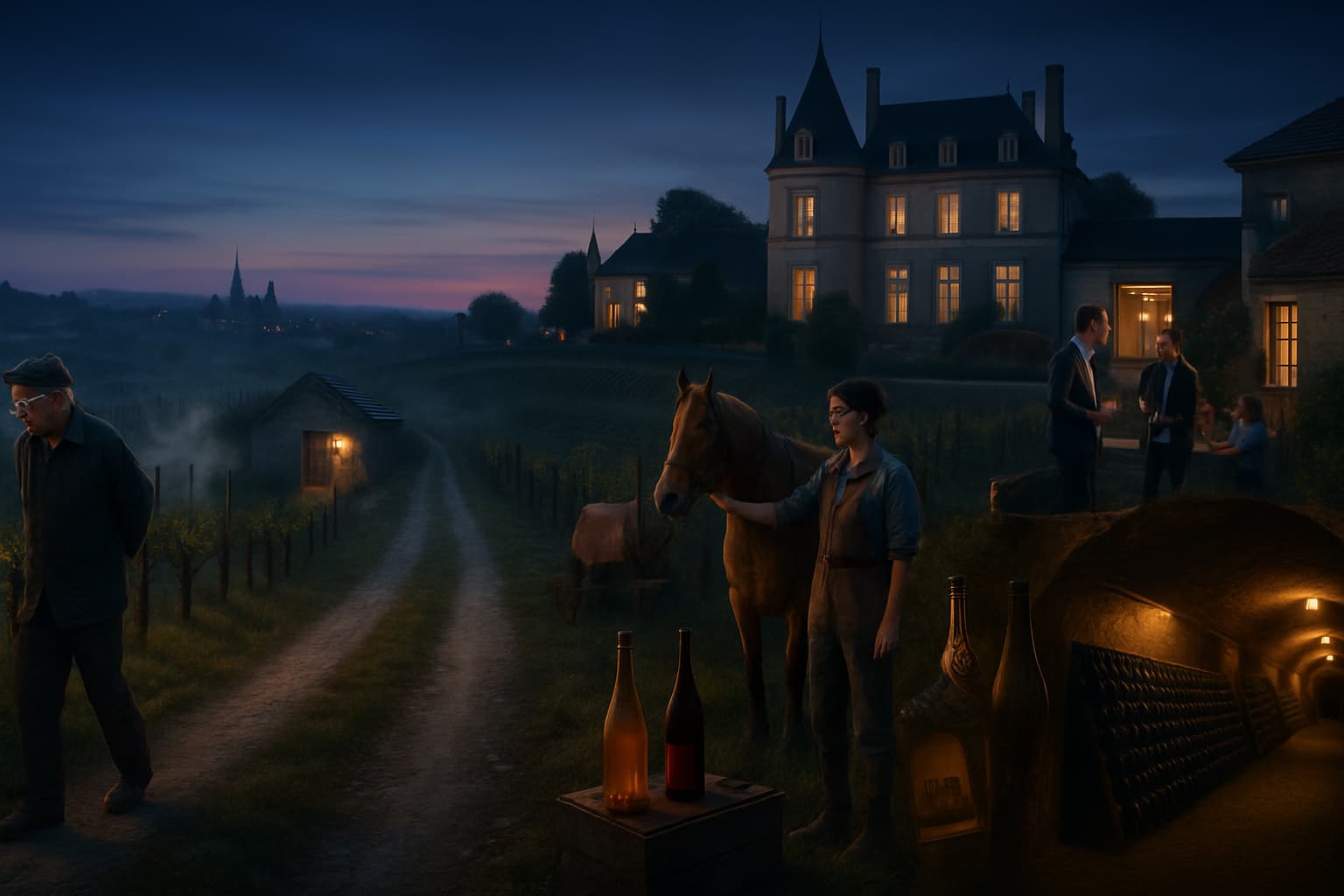
The road into wine country is always the same. It begins in a city where people drink to forget, and it ends in a village where people drink to remember. In between, there are hills and stone houses and old vines that have seen wars and bad harvests and good harvests and men who thought they were important. The films about these places try to catch all of that. Sometimes they do. Sometimes they do not. But when they are good, they make you taste the wine in your mouth even when there is no glass in your hand.
This is about those films—the ones that look at France and its vineyards and try to tell the truth, or at least a piece of it.
A vineyard is quiet when the sun is low and the work is done. The light comes in at an angle and the leaves move in the wind. The camera likes this. It likes the rows of vines and the old man walking between them with his hands behind his back. The French have been turning this into cinema for a long time, but the true wine documentary is a newer thing. It is not about actors. It is about the people who live in the vines and the cellars and the damp stone rooms that smell of must and oak and time.
Wine is slow, so the films are slow. They are not made for people who want car chases and quick endings. They are for those who can watch a man prune a vine and understand that this is not just cutting wood. It is a kind of prayer.
In Burgundy they speak softly, but the land speaks loud. The best films about it know this. They do not shout. They watch.
One of the finest is a long, patient work that follows the growers through the year. It shows the winter pruning when the hands grow numb and the breath hangs in the air. It shows the spring frost that can take a whole year’s work in one bad night. It shows the flowering, the fruit set, the green harvest, the waiting. Always the waiting.
You see the monks’ old walls—the clos—the tiny parcels of land that men kill each other over now with contracts and lawyers instead of swords. The film walks through names that have become like prayers: Romanée-Conti, La Tâche, Chambertin, Musigny. It shows how small they are. How fragile. A few rows. A patch of earth. Yet people cross oceans and pay fortunes for what comes out of them.
The growers talk, but the best parts are when they are quiet. A vigneron stands in his cellar and listens to the wine fermenting in the barrel. You hear the soft popping of the lees, the small hiss of gas. He does not speak because there is nothing to say. The film understands this. It lets the silence work.
That is the strength of the Burgundy documentaries: they are not about glamour. They are about obsession. Old men with mud on their boots who argue about a meter of soil. Young ones who fight their fathers about organics and biodynamics and whether to plow with a horse or a tractor. The camera watches this old religion of the land meeting the new faith of purity and ecology. It does not take sides. It just stays there, in the stone cellars and the fog, and lets the story come.
Bordeaux is different. The stones are grander. The gates are higher. The wine is built to last, and so are the châteaux. The documentaries that go there find another kind of story: not the monk’s wall, but the banker’s tower.
There are films that follow the great classified growths through the year and through the market. They show the neat rows of vines, the shining stainless steel, the consultants in pressed shirts. They show the en primeur tastings, where men and women in dark clothes swirl young wine in large glasses and speak of tannins and structure and points. The camera catches the faces of the owners as the scores come in. It is a war without blood but with winners and losers just the same.
In these films you see how wine becomes a global object—a thing to trade and hoard. Cases rolling into warehouses in London and Hong Kong. Auction rooms where a bottle from 1982 can cost more than a worker’s yearly wage. The old families talk about heritage and duty. The new investors talk about brand and market share. The film does not have to say much. You can see it.
There are also quieter Bordeaux films. They go behind the famous names and look at the smaller châteaux, the ones that fight to survive in the shadow of the giants. There you see the same problems as anywhere: frost, hail, disease, debt. A man walks his vines and says that if the bank does not renew the loan, he will lose what his grandfather planted. He says it simply. The camera does not move. That is enough.
In Bordeaux, the documentaries are about power: who has it, who wants it, and what they will do to keep it. The wine is good, sometimes great, but the story is about the world that grew up around it. The old order with its classifications and its English merchants and its long dinners. The new order with its hedge funds and its Asian buyers and its futures contracts. The films show the two worlds colliding in a glass of dark, strong wine.
Champagne looks light in the glass—pale, cold, full of bubbles that rise and die. The films about it know better. They go below the surface, into the chalk.
There are documentaries that walk the miles of cellars under Reims and Épernay, old tunnels carved into the white rock. You see the bottles sleeping on their sides, millions of them, and the men turning them by hand on wooden racks, riddling, a quarter turn at a time. It is slow work. The film keeps the pace slow. You feel the weight of it.
The good Champagne films remember the wars. They show the old photographs of cellars turned into shelters during the shelling, children playing among the stacks of bottles as the guns thunder above. They tell how the growers hid their wine from the occupying armies, how they sabotaged shipments, how they survived on thin soup and hope. Champagne is not just celebration. It is survival in a cold place.
You see the great houses with their polished tasting rooms and their grand marque labels. You see the small growers who now bottle their own wine and put their own names on it. They stand in front of a few rows of vines and say they want to show their terroir, their place, not just the blend of the region. The camera follows them through the seasons. The work is the same as anywhere else: pruning, tying, spraying, harvesting. But the end is different. The wine is made twice—once as still wine and again in the bottle. The films show the second fermentation, the disgorgement, the dosage. They show the science and the craft.
In Champagne, the documentaries are about contrast: the bright flute in a Paris bar and the dark tunnel beneath the earth; the fireworks on New Year’s Eve and the mud of the trenches fifty miles away. The films hold these things together and let you see that the bubbles carry all of it—the joy and the fear and the stubborn will to go on.
There are other films now. They do not go to the famous names first. They go to the small places, the forgotten hills, the stubborn men and women who decided to make wine another way. They call it natural, or low-intervention, or nothing at all. They just make it and drink it and talk about it in bars with peeling paint and loud music.
The documentaries that follow them are rougher. The cameras are closer. The sound is not always clean. But there is a kind of truth in them. You see a vigneron in the Loire who stopped using chemicals because they made him sick. You see a woman in Beaujolais who plows with a horse and ferments with the wild yeasts that live on the skins and in the cellar. You see cloudy wines, orange wines, wines that smell like cider or the sea. You see arguments. You see joy.
These films are about more than wine. They are about how to live. They talk about soil like it is a living thing, because it is. They talk about sulfur and filtration and extraction, but underneath that they are talking about control and freedom—how much you should bend nature to your will, how much you should let it run its course and accept what comes.
Sometimes these documentaries are romantic. They show the sunset over the vines and the long tables set outside with bread and cheese and bottles with hand-drawn labels. Sometimes they are hard. They show failed fermentations, spoiled barrels, inspectors, fines, the slow grind of bureaucracy. They show that to live by your ideals can cost you money, sleep, and friends.
But they also show something clean: a man or woman holding a glass of their own wine, tasting it, and smiling because it tastes like the place it came from and the year it was born. That is the heart of it. The camera catches that look and holds it. You understand why they do it.
The best French wine documentaries are not really about bottles. They are about three things: land, people, and time.
The land is always there. The films show it in every season. Winter vines like black ribs against the snow. Spring buds that can be killed by one hard frost. Summer heat that can ripen or burn. Autumn fog that brings noble rot or just rot. The camera goes low to the soil: limestone, clay, gravel, schist. It is not pretty talk. It is the base of everything.
The people come and go. Old hands with faces like dried apples. Young ones with clear eyes and big plans. Families that have been on the same hill for two hundred years. Outsiders who came because they fell in love with a bottle and never got over it. The documentaries let them speak—in kitchens, in fields, in cellars. Over coffee, over wine, or over nothing at all. You hear the same words in many mouths: patience, risk, luck, respect.
Time is the quiet character. The films move through the year, but they also move through generations. A father teaching a son to prune. A daughter fighting to take over when the law and the neighbors expect a man. Old footage of horses in the vines, new footage of drones and satellite maps. Bottles from 1945 opened beside bottles from last year. Time in the glass. Time in the faces. Time in the way a hand rests on a barrel as if on an old friend’s shoulder.
A person can drink a glass of wine in ten minutes and forget it in two. Or they can watch one of these films and understand that what is in the glass took a year in the vineyard and years in the cellar and centuries in the making of the place and the people. The documentaries of French wine do this. When they are honest, they strip away the romance that is cheap and leave the romance that is earned.
They show frost-bitten hands and tired backs and cellars that smell of mold. They show joy when the harvest is good and quiet anger when a hailstorm destroys it in fifteen minutes. They show the deals made in back rooms and the quiet pride in a small, perfect parcel of land that no one outside the village has heard of.
They are worth watching because they slow you down. They make you sit with the work and the waiting and the weather. They make you see that wine is not a luxury for rich people in big cities. It is a farmer’s gamble against nature and time. Sometimes they win. Sometimes they lose. The camera tells it straight.
When the film ends and you pour yourself a glass, it is not the same as before. You look at the color and think of the soil. You smell the wine and think of the cellar. You taste it and think of the year it was born and what the weather was like then on the other side of the world. You remember the faces of the people who made it. Their words. Their silence.
That is what these French wine documentaries give you. They do not just show vineyards. They teach you to drink with your eyes open.
Tannins are astringent compounds found in wine that contribute to its texture and aging potential, often causing a drying or puckering sensation in the mouth. They are derived from grape skins, seeds, and stems, as well as from oak barrels used during aging.
/ˈtænɪnz/
Malic acid is a naturally occurring organic acid found in grapes that contributes to the tart, green apple-like flavor and crispness in wine. It plays a significant role in the taste and acidity of wine.
/mælɪk ˈæsɪd/
Filtration in winemaking is the process of removing solid particles from wine to clarify and stabilize it before bottling, using various types of filters to achieve different levels of clarity and remove unwanted elements like yeast, bacteria, and sediment.
/fɪlˈtreɪʃən/
Oxidation in wine is a chemical reaction between the wine and oxygen that can change its flavor, aroma, and color. This process can be beneficial or detrimental depending on the extent and context of the exposure.
/ˌɒksɪˈdeɪʃən/
Microclimate refers to the unique climate conditions of a small, specific area within a larger region, significantly influencing grapevine growth and the characteristics of the resulting wine.
/ˈmīkrōˌklīmit/
Get weekly wine recommendations, vineyard news, and exclusive content delivered to your inbox.