Wine Literature and Media
“Where every bottle tells a story”
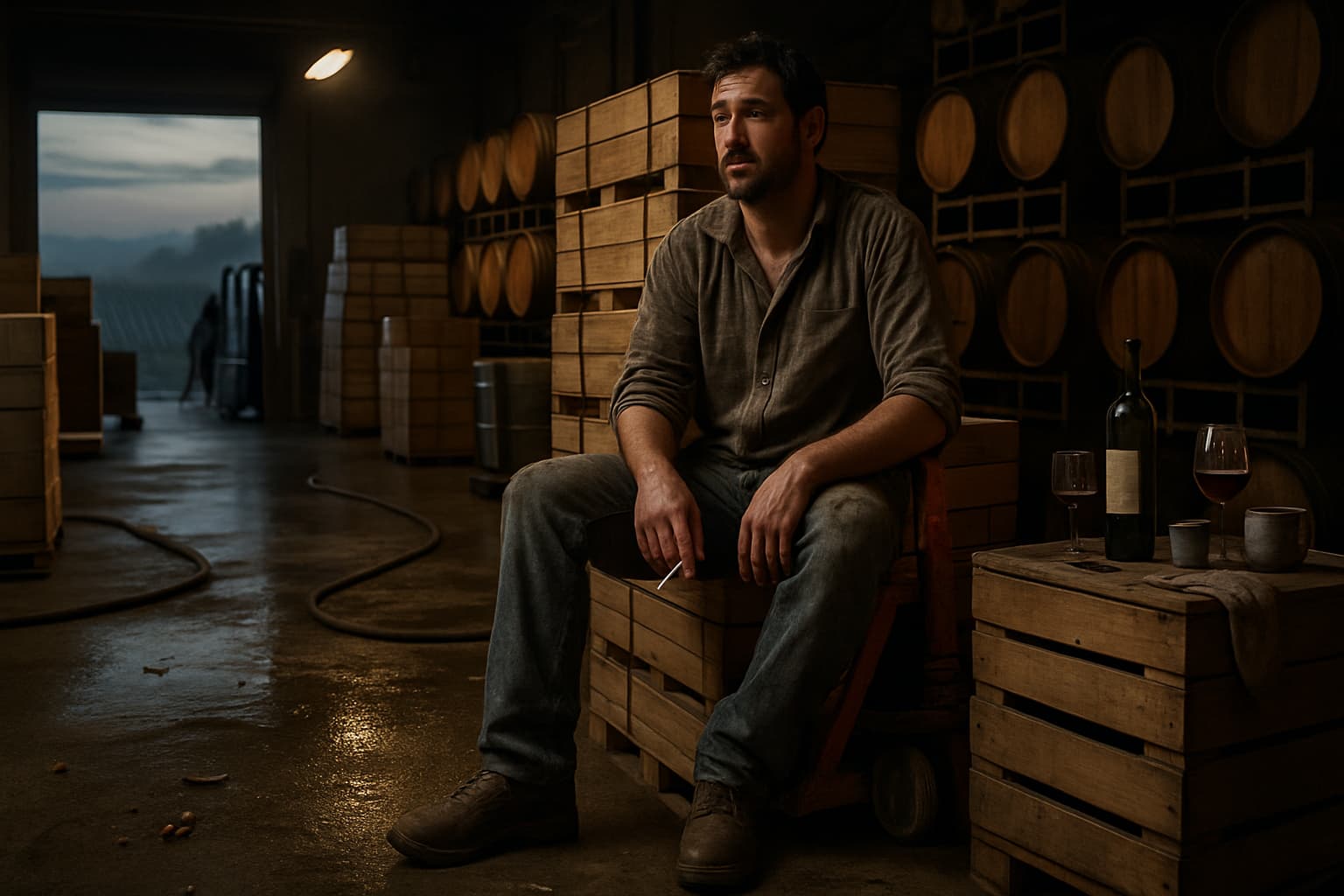
You don’t really get wine until you’ve seen it at its ugliest.
Not the candlelit restaurant version. Not the influencer swirl over a marble countertop. I’m talking about the 6 a.m. warehouse, the sticky floor of a bar after last call, the vineyard worker with purple hands and a cigarette hanging off his lip, arguing in a language you don’t speak about a grape you can’t pronounce.
Wine, for most people, is a lifestyle accessory. For the people who actually live in it—farmers, cellar rats, importers, waiters with bad backs and good palates—it’s a trade. A hustle. A long con played by nature, weather, and human delusion. And like any good adventure, it’s equal parts romance, bullshit, and bruised knuckles.
This isn’t a guide to “notes of blackberry and cedar.” This is about what it looks like when wine stops being a poetic noun and becomes a verb. When you move it, sell it, ship it, bleed for it. When it becomes work.
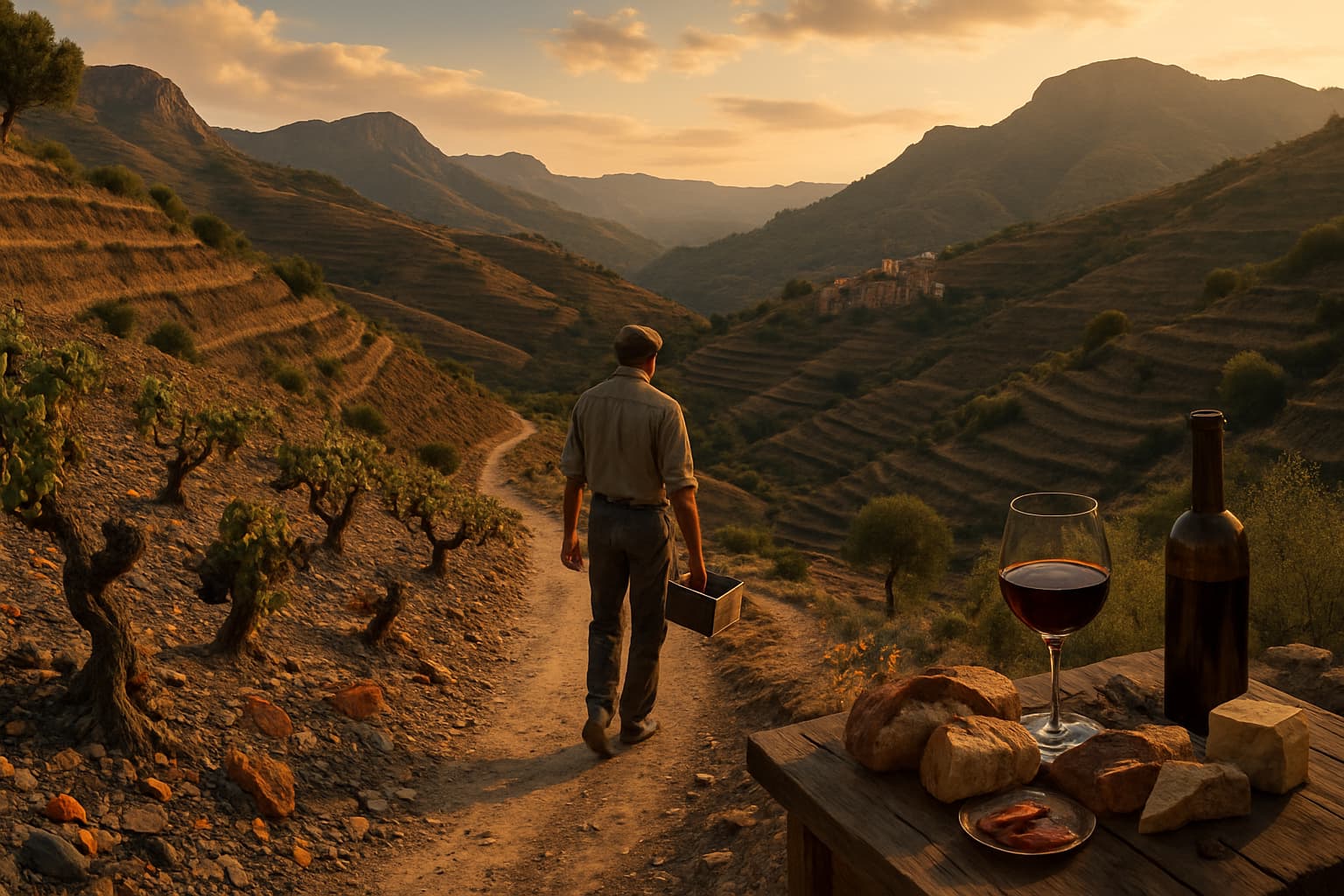
In every glossy wine documentary, there’s a shot of some tanned guy in a linen shirt, walking through his vineyard at sunset like he’s auditioning for a cologne ad. He talks about “passion” and “heritage” and “letting the terroir speak.”
Here’s what he doesn’t talk about:
“Passion” is the word people use when they want you to ignore the economics. The wine trade runs on money, risk, and timing. Passion is the garnish.
Walk into any back-vintage cellar in Burgundy or Napa, and you’ll feel it: the tension between art and inventory. Every bottle is both a dream and a unit on a spreadsheet. You can love wine, obsess over it, build your life around it—but if you’re in the trade, you’d better understand that you’re in the business of moving glass.
Romance doesn’t keep the lights on. Cases do.
Standing in a vineyard at dawn, it’s easy to get religious about the whole thing. The light hits the leaves just right, the air smells like wet earth and possibility, and some winemaker is telling you, very earnestly, that this particular slope, this particular soil, this particular clone of this particular grape is unique in the world.
And they’re not wrong. But they’re also leaving a lot out.
You want adventure in the wine trade? Start in the dirt.
The vineyard is where the wine trade stops being theoretical. It’s not “Bordeaux” or “Barolo” or “Sonoma” yet. It’s plants and weather and human bodies. If you work in the trade and never get out to the vines, you’re basically selling postcards of a place you’ve never visited.
Cellars are where the magic allegedly happens. In reality, they’re more like wine hospitals crossed with industrial laundromats. Stainless steel tanks, hoses, pumps, forklifts, barrels stacked like ammunition. It’s less “craft” and more “logistics with better lighting.”
Visit during harvest and you’ll understand why winemakers drink.
The adventure here isn’t glamorous. It’s the adrenaline of knowing that every choice echoes in glass for years. There’s no undo button. Just barrels quietly judging you.
Once the wine is in bottle, most people think the story ends. It’s actually where the next, messier chapter starts. Because wine doesn’t teleport from a French hillside to your local shop. It goes through a gauntlet of middlemen who each take a cut and add a story.
An importer is part talent scout, part travel agent, part used-car salesman.
They fly to regions you’ve never heard of, taste through a hundred mediocre wines in a damp cellar to find three that are actually worth a damn. Then they negotiate:
They gamble their reputation (and money) on producers who might be geniuses, or might be charming disasters. They argue with customs officials, navigate Byzantine regulations, and try to convince American drinkers that a cloudy orange wine from Slovenia is actually a good idea.
Some importers are saints. Some are parasites. Most are somewhere in between, trying to balance a love of obscure, soulful wines with the reality that they also have to sell a container of safe, boring Pinot Grigio to pay the bills.
In many places, especially in the U.S., you can’t just buy wine from whoever you want. There’s a “three-tier system”: producer → importer/distributor → retailer/restaurant → you. It’s like Prohibition never really ended; it just put on a suit.
Distributors are the ones with the trucks, warehouses, and sales reps pounding the pavement.
A good distributor rep is part therapist, part bartender, part drug dealer. They show up with samples, gossip, and quotas. They’re judged by numbers, not poetry. If your wine doesn’t move, it doesn’t matter how “authentic” it is. It disappears.
If the vineyard is the origin story, the restaurant floor is the stage. This is where all the romance, labor, and logistics get reduced to one moment: a bottle being opened in front of a customer who may or may not give a damn.
The sommelier, in popular imagination, is a kind of wine wizard: swirling, sniffing, spouting tasting notes like “bruised peach” and “wet river stone.” In reality, a working somm is:
They’re also dealing with guests who treat them like either oracles or waitstaff with better suits. Both views are wrong. A good somm is a translator. They take the chaos of the wine world and make it make sense at your table.
And yes, they drink. A lot.
You want to know what really shapes what you drink? By-the-glass lists.
Those wines are chosen because:
That funky natural wine the staff loves? It might get a token spot. The safe, name-brand Pinot Noir? That’s paying the rent.
The adventure here is more psychological than physical: how to gently nudge people out of their comfort zones without losing them. Pouring a taste of something strange and wonderful and watching a guest’s face light up—that’s the small, daily victory.
Walk into a good wine shop and it feels like a library: rows of bottles, each with a story. Walk into a bad one and it feels like a supermarket: labels screaming at you, everything blending into one big wall of “red or white?”
Behind those shelves is another kind of adventure: trying to curate a selection that:
You’re juggling:
You recommend a small producer from the Loire, and they ask, “Is it like Kendall-Jackson?” You smile, nod, and say, “If you like that, you’ll love this.” You’re a guide, a pusher, a confessor. You learn your regulars’ paydays and heartbreaks. You watch trends rise and fall: oaky Chardonnay, big Aussie Shiraz, natural wine, canned wine, low-alcohol wine.
Meanwhile, in the back room, you’re looking at invoices and wondering if you should’ve just opened a laundromat instead.
Anywhere there’s money and mystique, there’s bullshit. The wine trade is no exception.
Ultra-rare bottles—old Bordeaux, Burgundy, cult Napa—are magnets for fraud. Some guy with a printer, access to old glass, and a flexible moral code can turn a $50 bottle into a $5,000 “unicorn” if nobody’s paying attention.
Auction houses, collectors, even restaurants get burned. Labels are forged, fill levels adjusted, provenance invented. Stories are sold as much as the wine itself.
Then there’s the hype machine: scores, influencers, limited releases “allocated” to a chosen few. Scarcity is manufactured, demand whipped up. People camp out or join waitlists for bottles they’ll never open, just to say they own them.
Is the wine good? Sometimes. Is it that good? Rarely. But that’s not the point anymore. It’s status. It’s a flex.
For all the trade talk, the end of the line is always the same: someone, somewhere, puts that wine in their mouth.
They might be:
They don’t care about your shipping logistics or your yield per hectare. They care if it tastes good, if it makes sense with their food, if it fits their budget, if it makes their night a little better.
All the adventures—the travel, the harvests, the tastings, the negotiations, the heartbreak vintages and the miracle ones—converge in that one, quiet moment when the glass hits their lips.
If you’re in the trade and you forget that, you’re just moving boxes.
So why do people stay in this racket? Why keep chasing allocations, enduring harvests, arguing over pennies per bottle, dealing with regulations written by people who think rosé is a cocktail?
Because every now and then, everything lines up.
You’re in a crappy little bar in some nowhere town in Spain or Italy or Georgia. Plastic chairs, fluorescent lights, TV blaring a soccer match. The owner pours you something from a chipped carafe. It’s local, anonymous, made by someone whose name will never be on a magazine cover.
You take a sip. And for a second, the noise drops out. You taste the place. The season. The hands that made it. It’s not perfect. It’s not “98 points.” It’s alive.
That’s the hit people in the wine trade keep chasing. Not the score, not the status, not the Instagram post. That moment when fermented grape juice somehow becomes a conversation between soil, weather, time, and whoever’s holding the glass.
The adventure isn’t in the château tours or the fancy tastings. It’s in the grind, the gamble, the human mess behind every bottle. It’s in the warehouse at dawn, the vineyard at dusk, the sommelier in a too-tight suit trying to talk a scared diner into trying something new. It’s in the ugly parts and the beautiful ones, inseparable.
Wine, in the end, isn’t a luxury. It’s a story people are crazy enough to live inside. If you’re lucky, you get to drink a little of that madness.
And if you’re really lucky, you get to be part of the trade that keeps the whole absurd, glorious thing moving.
Tannins are astringent compounds found in wine that contribute to its texture and aging potential, often causing a drying or puckering sensation in the mouth. They are derived from grape skins, seeds, and stems, as well as from oak barrels used during aging.
/ˈtænɪnz/
Malic acid is a naturally occurring organic acid found in grapes that contributes to the tart, green apple-like flavor and crispness in wine. It plays a significant role in the taste and acidity of wine.
/mælɪk ˈæsɪd/
Filtration in winemaking is the process of removing solid particles from wine to clarify and stabilize it before bottling, using various types of filters to achieve different levels of clarity and remove unwanted elements like yeast, bacteria, and sediment.
/fɪlˈtreɪʃən/
Oxidation in wine is a chemical reaction between the wine and oxygen that can change its flavor, aroma, and color. This process can be beneficial or detrimental depending on the extent and context of the exposure.
/ˌɒksɪˈdeɪʃən/
Microclimate refers to the unique climate conditions of a small, specific area within a larger region, significantly influencing grapevine growth and the characteristics of the resulting wine.
/ˈmīkrōˌklīmit/
Get weekly wine recommendations, vineyard news, and exclusive content delivered to your inbox.