Wine Styles
“Where every bottle tells a story”
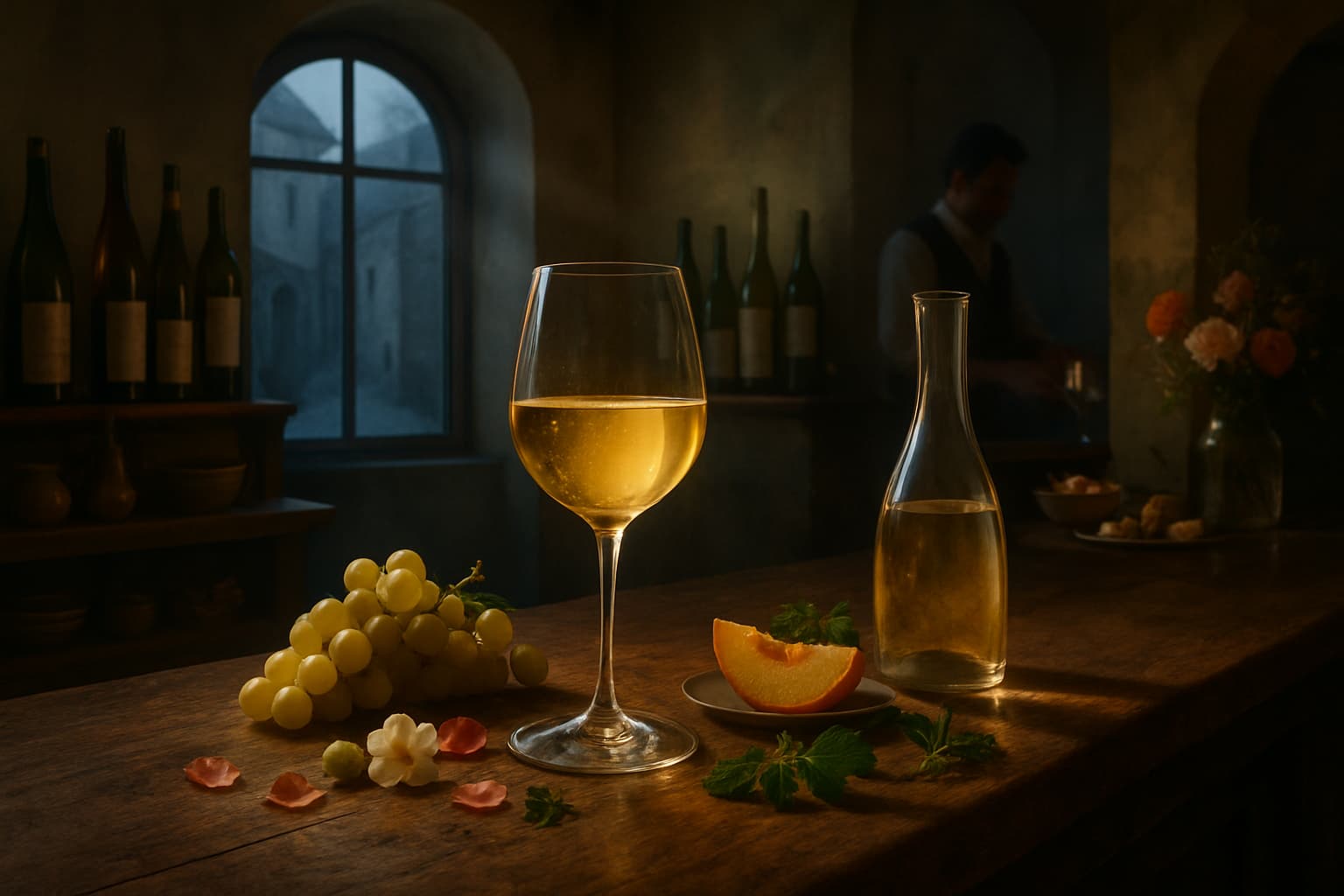
You walk into a bar in some half-forgotten European town. The bartender doesn’t ask what you want. He just puts a glass in front of you. It smells like walking into a flower shop strapped to a tropical fruit stand, with a side of gasoline and fresh herbs.
This is not your safe little Pinot Grigio. This is the other side of European white wine—loud, perfumed, sometimes weird, often beautiful. Aromatic whites. The ones that smell like something. The ones that don’t apologize.
If you think white wine is supposed to be “crisp, refreshing, citrusy” and basically nothing else, this is where the story gets more interesting. And a little unhinged.
Let’s talk about the wines that reek—in the best possible way—of terpenes, florals, and exotic fruit. The diva grapes. The showboats. The ones that don’t care if you think they’re “too much.”
Most white wines play it subtle. These don’t. Aromatic whites are like that friend who walks into a room and everyone knows instantly. No introduction needed.
Technically, what we’re talking about is high terpene content. Terpenes are aroma compounds—the same family of stuff that makes weed smell like weed, pine trees smell like pine, and lemons smell like lemons. In grapes, terpenes crank up the florals, the citrus oils, the spice, the perfume.
You swirl the glass, and before you even taste it, you’re hit with:
If neutral whites are background music, these wines are front row at a concert with the speakers pointed straight at your face.
Let’s get just technical enough to know what we’re drinking.
The main culprits behind these big aromas are terpenes like:
Some grapes are loaded with these. We call them aromatic varieties. Others are more restrained—“semi-aromatic” or “neutral.”
And then there’s another twist: some grapes are musqué clones—genetic variations that make them more perfumed than their more respectable cousins. Like that one cousin who shows up to family dinner with a face tattoo and a story about Burning Man.
Let’s meet the usual suspects. These are the grapes that carry the aromatic flag across Europe, each in their own weird, glorious way.
Muscat is like the oldest pop song you still secretly love. It’s ancient, it’s everywhere, and when it’s good, it’s stupidly charming.
What it smells like:
Where it thrives in Europe:
Muscat is rarely subtle. It’s dessert wine, aperitif, or “I want something that smells like a bakery in springtime” wine—not your serious, brooding cellar candidate. But when chilled properly and served with salty snacks or fruit tarts? It’s dangerous.
Gewürztraminer is not here to make friends. It’s here to dominate the room. The name basically means “spiced Traminer,” and that tracks.
Aromas you’ll get hit with:
Where it does its best work:
Gewürztraminer is the wine equivalent of walking into a room wearing too much cologne and not caring at all. It’s big, low-acid, and often slightly sweet or at least off-dry.
The trick is pairing it with food that can fight back:
On its own, too warm, with nothing to eat, it can feel like drinking rose-scented syrup. But handled right, it’s a monster you’re happy to unleash.
Riesling is the overachiever of aromatic whites. It can be bone-dry or dessert-level sweet, cheap and cheerful or more serious than your therapist. But always, always aromatic.
Typical aromas:
European strongholds:
Riesling is all about tension: high acidity, piercing aromatics, and incredible transparency to where it’s grown.
Pairings? This is one of the most food-friendly wines on earth:
If you think sweet = bad, dry = good, Riesling is here to mess with your head. A slightly sweet German Kabinett with high acid can feel fresher than your “crisp” supermarket Sauvignon.
No, Torrontés isn’t European—it’s Argentinian—but stylistically, it’s like the wild love child of Muscat and Gewürztraminer. If you like those European aromatics, you’ll probably find your way to Torrontés eventually. File it under “related trouble.”
Not all aromatic whites scream. Some just speak clearly and confidently. These are semi-aromatic grapes—still floral, still interesting, but less likely to punch you in the nose.
Viognier is like the seductive stranger at the bar who talks slowly and doesn’t blink much.
Aromas:
European homes:
Viognier is low in acid, high in texture. It can feel rich and almost oily. Great with:
Too warm and too ripe, and it becomes flabby and cloying. Keep it cool and give it food, and it shines.
Albariño itself is more citrus and stone fruit than full-on floral, but Iberia has some interesting semi-aromatic grapes worth hunting down:
These wines are usually low alcohol, fresh, and made for seafood. They’re not Muscat-level perfumed, but they definitely have more personality than your average neutral white.
You don’t have to go to New Zealand to get passion fruit and mango in a glass. Some European whites crank out tropical notes that feel more beach bar than alpine hut.
Sauvignon Blanc in Europe—especially from certain terroirs—can go beyond just “grassy and citrusy.”
In places like:
It’s not as terpene-driven as Muscat or Gewürztraminer, but it’s still aromatic, especially in cooler climates and with certain clones. Expect:
Pair it with goat cheese, shellfish, salads, anything green and herbal.
Furmint is the backbone of Tokaji, Hungary’s legendary sweet wine, but the dry versions are worth tracking down.
Aromas and flavors:
Dry Furmint can be razor sharp, high-acid, and deeply mineral. Think Riesling’s slightly feral cousin that grew up near an active volcano.
The grape gives you the raw material. The winemaker decides whether to turn the volume up, down, or sideways.
Most white wines are pressed off the skins quickly. But if you leave the juice with the skins for a while, you get:
This is where orange wines come in. Take an aromatic grape—say, Muscat, Gewürztraminer, or Furmint—ferment it like a red, and suddenly you’re in a whole new universe:
They can be funky, tannic, and polarizing. But with grilled fish, roasted vegetables, or Middle Eastern food, they make a weird kind of sense.
Leave the wine sitting on its dead yeast cells (lees) for a while, and you get:
With aromatic grapes, lees can tame the high-pitched florals and give you something more layered and savory. Think less “perfume counter,” more “bakery next to a flower shop.”
Oak can be a beautiful thing. It can also be a crime scene.
With aromatic whites, too much new oak is like dumping cologne on a garden. You lose the delicate stuff. The florals get buried under vanilla, toast, and spice.
Used carefully—older barrels, larger casks—oak can:
Used like a sledgehammer, it turns Gewürztraminer into a bizarre tropical-vanilla mess you regret halfway through the first glass.
You bought the bottle. Now don’t ruin it.
Aromatic whites need a little warmth to show off their nose. Too cold and they shut down.
You don’t need a $50 crystal glass, but:
Subtle food with a loud wine? The wine steamrolls everything.
General rules:
If in doubt, think about the wine’s weight and perfume level, then find food that won’t get bullied.
Aromatic whites are not background beverages. They demand attention. They’re messy, loud, sometimes tacky, often brilliant.
They matter because they:
They’re also a reminder that wine isn’t supposed to be safe all the time. It can be weird. It can smell like roses and lychee and petrol and honeysuckle and wet rocks and mango all in the same damn glass.
And that’s the point.
You don’t have to love every bottle. You’re not supposed to. But if you want to understand what European white wine can really do—beyond the chilled, anonymous stuff you down at brunch—you owe it to yourself to sit with a glass of Riesling from the Mosel, a Gewürztraminer from Alsace, a Muscat from some sunburned hillside in the south of France, and see just how far the nose can go.
Pour it. Smell it. Let it weird you out a little.
If your wine never makes you uncomfortable, you’re drinking too safe.
Tannins are astringent compounds found in wine that contribute to its texture and aging potential, often causing a drying or puckering sensation in the mouth. They are derived from grape skins, seeds, and stems, as well as from oak barrels used during aging.
/ˈtænɪnz/
Malic acid is a naturally occurring organic acid found in grapes that contributes to the tart, green apple-like flavor and crispness in wine. It plays a significant role in the taste and acidity of wine.
/mælɪk ˈæsɪd/
Filtration in winemaking is the process of removing solid particles from wine to clarify and stabilize it before bottling, using various types of filters to achieve different levels of clarity and remove unwanted elements like yeast, bacteria, and sediment.
/fɪlˈtreɪʃən/
Oxidation in wine is a chemical reaction between the wine and oxygen that can change its flavor, aroma, and color. This process can be beneficial or detrimental depending on the extent and context of the exposure.
/ˌɒksɪˈdeɪʃən/
Microclimate refers to the unique climate conditions of a small, specific area within a larger region, significantly influencing grapevine growth and the characteristics of the resulting wine.
/ˈmīkrōˌklīmit/
Get weekly wine recommendations, vineyard news, and exclusive content delivered to your inbox.