Wine Styles
“Where every bottle tells a story”
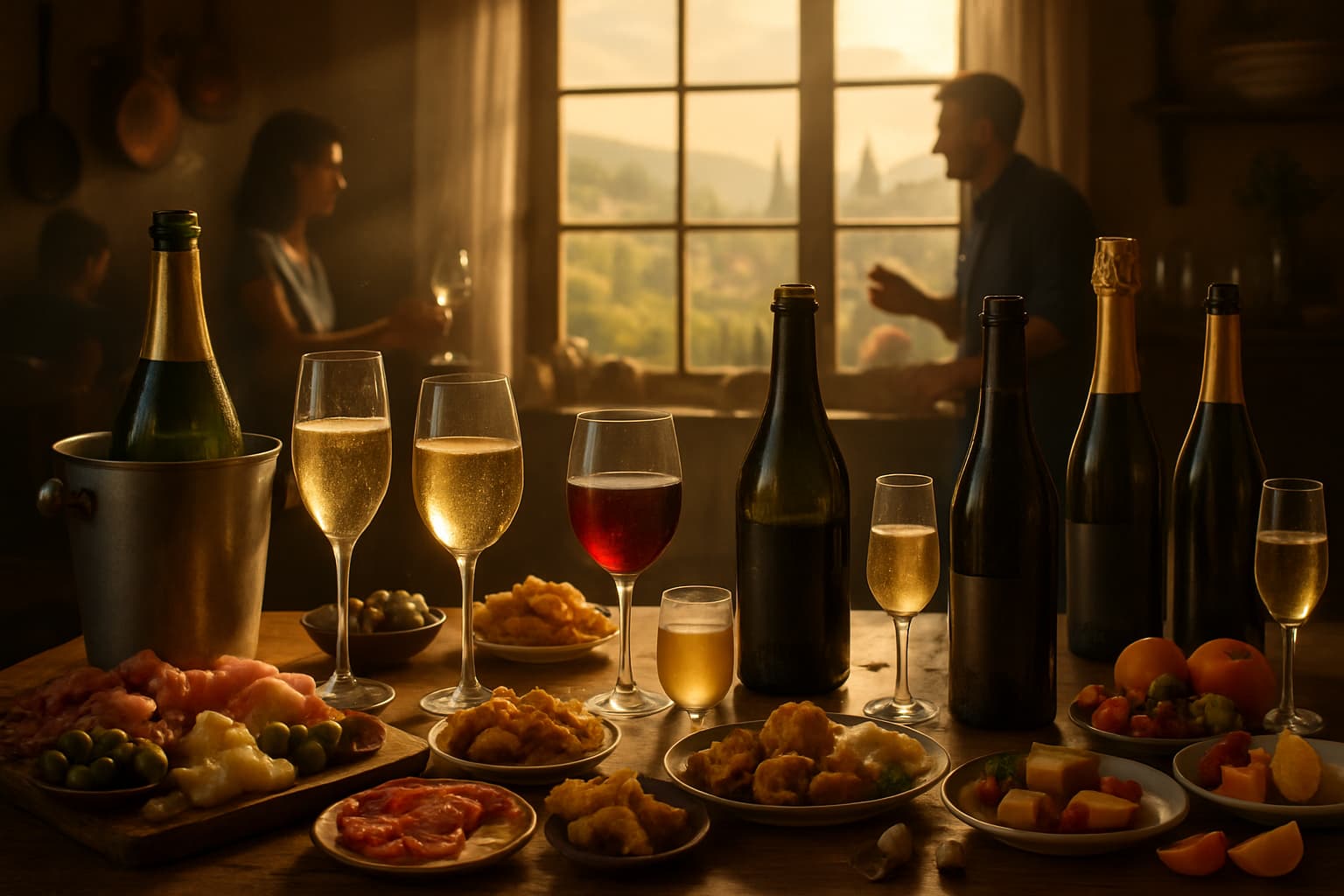
Oh, my dear, if you think sparkling wine is only about Champagne, sit down, take off your shoes, and let’s have a proper chat. There’s a whole world of bubbles out there, and much of it is made with a wonderfully practical, kitchen-friendly technique called the Charmat method. It’s less about solemn cellars and long aging, and more about joyous fruit, freshness, and wines that practically shout, “Open me on a Tuesday night!”
In Europe, winemakers have taken this method and spun it into all sorts of delightful regional styles—each with its own character, grapes, and culinary companions. Let’s pop the proverbial cork and explore them together.
First, a little mise en place for the mind.
The Charmat method (also called the tank method or Metodo Martinotti in Italy) is a way of making sparkling wine where the second fermentation—the one that creates the bubbles—happens in a sealed tank rather than in individual bottles.
In very simple terms:
Start with a base wine
Usually dry, often quite simple and fresh. Think of it as your stock before you turn it into soup.
Compared with the traditional method (used for Champagne, Cava, and many Crémants), Charmat is:
It’s like the difference between a long-simmered beef bourguignon and a bright, quick sauté of fresh vegetables. Both are delicious, but they serve different purposes, moods, and price points.
Because the wine doesn’t age for long on the yeast (the lees), Charmat-method sparkling wines tend to be:
In Europe, the Charmat method has become the backbone of styles meant for conviviality and ease—wines you serve generously, without fuss, and preferably with plenty of food and laughter.
Now, let’s tour the European map of bubbly, shall we?
Italy is absolutely the bustling, fragrant kitchen of Charmat-method sparkling wine in Europe. If Charmat had a spiritual home, it would probably be here, among the pasta pots and clinking glasses.
Region: Primarily Veneto and Friuli Venezia Giulia
Grape: Glera (with a few permitted companions)
Prosecco is the most famous Charmat-method sparkling wine in the world, and for good reason. It’s like a bowl of fresh orchard fruit with a little fizz.
Key styles:
Sweetness levels:
Typical flavors:
Green apple, pear, white peach, lemon, acacia blossom, and sometimes a touch of almond. Light, frothy, and terribly easy to drink.
Food pairings (the fun part!):
Region: Emilia-Romagna
Grapes: Various Lambrusco varieties (Lambrusco di Sorbara, Grasparossa, Salamino, and others)
Lambrusco has been misunderstood for years, but at its best, it’s utterly marvelous—dry, vibrant, and made for food.
Many modern Lambruscos, especially those aiming for bright fruit and freshness, are made by the Charmat method.
Styles:
Typical flavors:
Cherries, raspberries, blackberries, violets, and sometimes a bit of earthy or herbal character.
Food pairings:
Lambrusco made by Charmat tends to be fruitier and more playful than some of the more rustic, traditional versions. Think of it as the lively cousin who shows up with a guitar.
Region: Piedmont
Grape: Moscato Bianco
Here, the Charmat method is often adapted or combined with tank fermentation to preserve the grape’s gorgeous perfume and lower alcohol.
Typical flavors:
Orange blossom, peach, apricot, grape must, honey, and sometimes a hint of sage.
Food pairings:
These are wines that feel like a celebration all by themselves—perfect for those who like their bubbles with a kiss of sugar.
Italy is full of regional sparkling wines made by Charmat, often from local grapes:
These wines can be wonderfully affordable and are often made to be drunk young, chilled, and in good company.
France is so famous for its traditional-method sparklers that one might forget it also produces Charmat-style wines. They’re less trumpeted, but they do exist and can be delightful everyday bubbles.
Many French regions produce Vin Mousseux (fully sparkling) or Vin Pétillant (semi-sparkling) using the Charmat method, often from local grapes.
You may find:
These wines are usually labeled more generically—look for terms like:
They’re often inexpensive, bright, and meant for casual drinking—picnics, barbecues, and big gatherings where you need something festive but don’t want to mortgage the house.
Spain’s sparkling fame rests mostly on Cava, which is traditional method. However, there is a growing world of Charmat-method wines, especially in regions that want to emphasize aromatic grapes and easy-drinking styles.
You may find Charmat-method wines:
These wines tend to be:
Flavors and pairings:
They may not be as internationally famous as Prosecco, but they can be delightful discoveries when traveling—or when you stumble upon them in a well-stocked wine shop.
Now we come to a very exciting part of the wine map—countries where sparkling wine is booming, and the Charmat method is often the workhorse in the cellar.
Sekt is the German term for sparkling wine, and it can be made either by the traditional or Charmat method. While top Sekt often uses the traditional method, a huge portion—especially at the entry level—is made in tanks.
Grapes may include:
Typical Charmat-style Sekt:
Food pairings:
Across Central and Eastern Europe, many countries produce sparkling wines where Charmat plays a major role, especially at the approachable end of the spectrum.
These wines are often:
The label doesn’t always shout “Charmat,” but there are clues you can look for:
If you’re in doubt, a quick look-up of the producer or style usually reveals the method—much like checking a recipe before you start chopping onions.
To show these wines at their best:
Temperature:
Serve well-chilled, around 6–8°C (43–46°F). Warmer than that and they can taste a bit flabby; colder and you lose some aroma.
Glassware:
A tulip-shaped white wine glass is marvelous—it lets the aromas bloom more than a very narrow flute.
If traditional-method sparkling wines are the grand, slow-cooked roasts of the wine world, Charmat-method wines are the joyful stir-fries and generous bowls of pasta: quick, vivid, and made for sharing.
Across Europe, from Italy’s Prosecco hills to Germany’s Sekt houses and the cellars of Central and Eastern Europe, the Charmat method has given us:
So the next time you’re perusing the wine aisle, don’t only reach for the famous traditional-method names. Consider a Charmat-method sparkling wine from Europe—a Prosecco, a Lambrusco, a humble Vin Mousseux, or a curious Sekt. Chill it, pop it, pour it generously, and let those lively bubbles turn an ordinary moment into a small, sparkling feast.
After all, as in cooking, the real magic in wine often comes not from complexity alone, but from the simple joy of sharing something delicious.
You walk into a bar in some half-forgotten European town. The bartender doesn’t ask what you want. He just puts a glass in front of you. It smells like walking into a flower shop strapped to a...
Tannins are astringent compounds found in wine that contribute to its texture and aging potential, often causing a drying or puckering sensation in the mouth. They are derived from grape skins, seeds, and stems, as well as from oak barrels used during aging.
/ˈtænɪnz/
Malic acid is a naturally occurring organic acid found in grapes that contributes to the tart, green apple-like flavor and crispness in wine. It plays a significant role in the taste and acidity of wine.
/mælɪk ˈæsɪd/
Add sugar and yeast
This mixture, called the liqueur de tirage, goes into a pressurized tank with the base wine.
Second fermentation in tank
The yeast eats the sugar, producing alcohol and carbon dioxide. Because the tank is sealed, the gas dissolves into the wine, creating bubbles.
Filter and bottle under pressure
The wine is clarified, filtered, and then bottled while still under pressure, so the bubbles stay put.
Timing:
Drink them young. Most Charmat-method wines are not meant for long aging; they’re like fresh herbs—best when vibrant and lively.
Occasions:
Aperitifs, brunches, picnics, casual dinners, cooking nights with friends—any time you want something festive but not fussy.
Filtration in winemaking is the process of removing solid particles from wine to clarify and stabilize it before bottling, using various types of filters to achieve different levels of clarity and remove unwanted elements like yeast, bacteria, and sediment.
/fɪlˈtreɪʃən/
Oxidation in wine is a chemical reaction between the wine and oxygen that can change its flavor, aroma, and color. This process can be beneficial or detrimental depending on the extent and context of the exposure.
/ˌɒksɪˈdeɪʃən/
Microclimate refers to the unique climate conditions of a small, specific area within a larger region, significantly influencing grapevine growth and the characteristics of the resulting wine.
/ˈmīkrōˌklīmit/
Get weekly wine recommendations, vineyard news, and exclusive content delivered to your inbox.