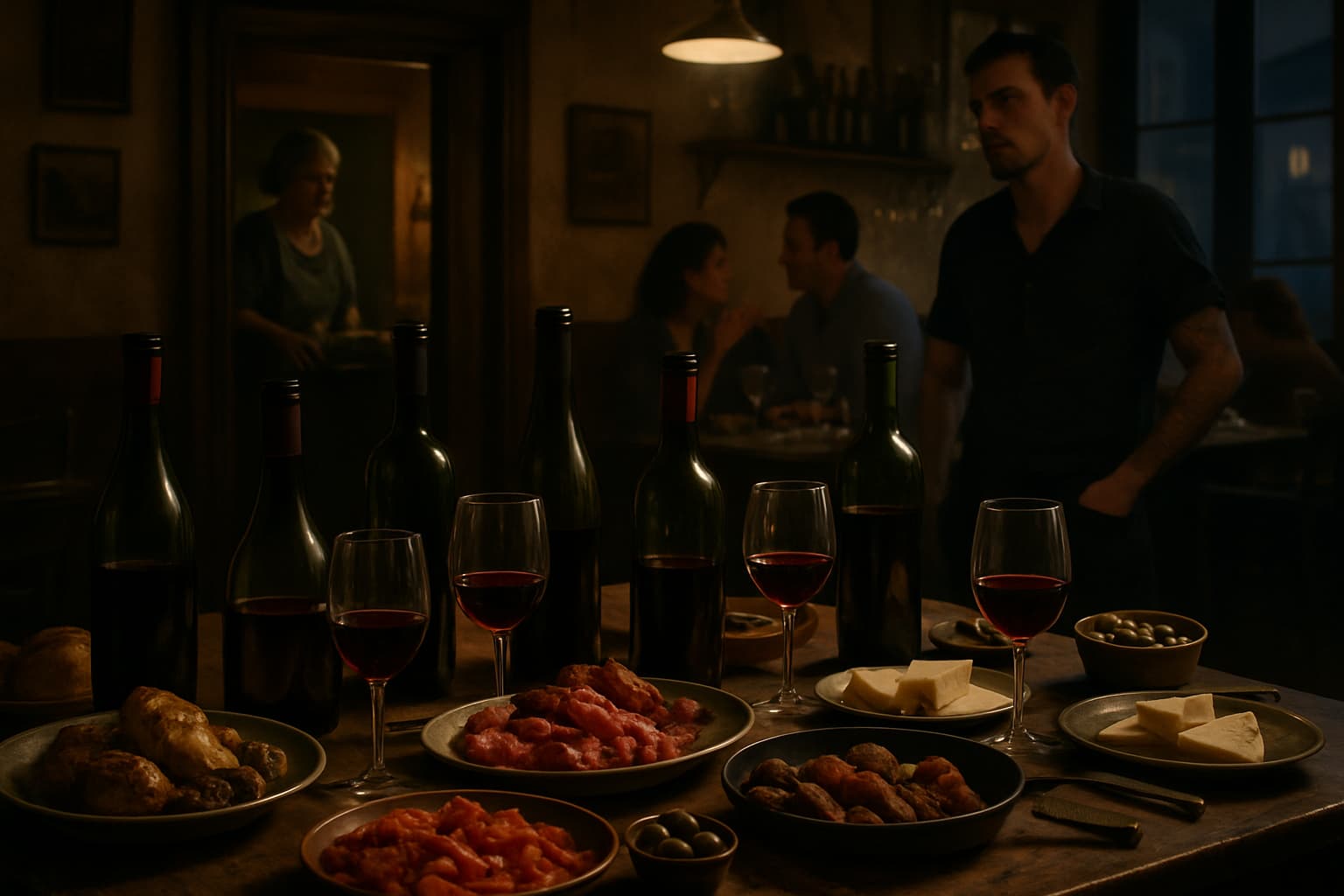
You sit down at a table in Europe. Not the white-tablecloth, Michelin-star fantasy—just a normal table in a normal place where people actually eat. There’s bread, something cured and salty, something stewed, something roasted, something grilled. Maybe there’s a grandmother in the kitchen. Maybe there’s a guy with tattoos and a cigarette hanging from his lip.
And there’s a red wine on the table.
It’s not some overblown, oaky, 15% fruit bomb screaming for attention like a reality TV contestant. It’s not a pale, fragile unicorn that collapses if you look at it wrong. It’s… in the middle. Quietly confident. Medium-bodied. European.
You take a sip. It doesn’t punch you in the face; it slides into the conversation like someone who’s seen some things and doesn’t need to brag. It tastes like where it’s from—soil, weather, food, people. And it makes the food taste better.
That’s what this is about: those medium-bodied European red wines that are built for the table, not the trophy shelf. The versatile, food-friendly workhorses that don’t need a spotlight, just a plate and some time.
Let’s talk about them like they deserve—no bullshit, no worship, just respect.
What the Hell Is a “Medium-Bodied” Red, Anyway?
Wine people love categories: light-bodied, medium-bodied, full-bodied. As if life works that cleanly. But for the sake of not losing our minds, let’s define what we’re talking about.
“Body” in wine is basically how heavy it feels in your mouth. Think:
- Light-bodied: like skim milk or cold tea
- Medium-bodied: like whole milk
- Full-bodied: like cream
Medium-bodied reds sit in that sweet spot: enough structure and flavor to stand up to food, but not so heavy they steamroll everything. You can:
- Drink them with a burger
- Drink them with roast chicken
- Drink them with pasta, charcuterie, pizza, grilled vegetables
- Actually finish the bottle without needing a nap or a priest
They usually clock in around 12–13.5% alcohol, have moderate tannins, and enough acidity to keep things lively. They’re not trying to impress a critic—they’re trying to survive dinner service.
Why Europe Does This Better Than Almost Anyone
Europe has been making wine longer than most countries have existed. And in a lot of places, wine is still a food—not a luxury good, not an investment, not a status symbol. It’s something you drink with lunch and dinner and maybe with that leftover piece of cheese at 11 p.m.
That means the wines evolved with the local food:
- Acid to cut fat
- Tannins to handle protein
- Earthy notes to play with mushrooms, cured meats, game
- Fruit that doesn’t taste like a candy-aisle explosion
Medium-bodied European reds are built for the table. They’re not designed to blow your head off in a blind tasting. They’re designed to make a grilled sausage, a bowl of lentils, or a plate of braised rabbit taste like a religious experience.
Let’s walk through some of the usual suspects—the bottles that show up in real restaurants, on plastic tablecloths, in noisy trattorias and bistros, where people are too busy eating to swirl and pontificate.
Italy: Where Red Wine Grew Up With Dinner
Italy is basically a never-ending argument about what to drink with what. But if you want versatile, medium-bodied reds that work with almost anything on a table full of food, this is where you start.
Chianti & Chianti Classico – Sangiovese with a Backbone
If you’ve ever had red wine in an Italian restaurant, odds are it was Chianti. At its worst, it’s thin and sour. At its best, it’s Sangiovese doing what it was born to do: make food taste better.
Typical profile:
- Medium body
- High acidity (mouthwatering, in a good way)
- Red cherry, dried herbs, maybe some leather and tobacco
- Tannins that grip just enough to remind you it’s there
Food moves:
- Pizza with tomato sauce
- Bolognese or any red-sauce pasta
- Roast chicken, pork, grilled sausages
- Pecorino, Parmigiano, cured meats
If the label says Chianti Classico, you’re usually stepping into better territory—more focus, more depth, still totally food-friendly. This isn’t a “special occasion” wine. This is Tuesday night when you’ve got leftover ragù and you’re tired of pretending you’ll start that diet tomorrow.
Barbera d’Asti & Barbera d’Alba – Acid Freaks in a Good Way
Barbera is the friend who shows up late but brings the good snacks. It’s from Piedmont, land of Barolo and Barbaresco—those big, brooding Nebbiolo wines that demand patience and a certain masochism.
Barbera is the opposite: no drama, just pleasure.
Profile:
- Medium body
- Super high acidity, low tannins
- Dark cherry, plum, sometimes a little spice
- Easy to drink—dangerously so
Food:
- Anything tomato-based
- Salumi, prosciutto, mortadella
- Grilled vegetables, mushrooms, roast pork
- Basically anything you’d eat in a northern Italian trattoria
It’s the wine you drink when you don’t want to think too hard. Which, frankly, is most of the time.
France: The Quiet Masters of the Middle
France is where wine went to finishing school. But not all French wine is about crystal stemware and hushed tones. Some of it is just… dinner wine. Beautiful, honest, medium-bodied, made to disappear with a roast chicken and a pile of potatoes.
Beaujolais (Cru Beaujolais, Not Just the Party Stuff)
Forget the cheap, bubblegum Beaujolais Nouveau that shows up once a year like a bad seasonal latte. Real Beaujolais—especially from the crus like Morgon, Fleurie, Moulin-à-Vent—is made from Gamay and can be some of the most joyful, flexible red wine on earth.
Profile:
- Light to medium body
- Bright acidity
- Red berries, violets, sometimes a bit of earth and spice
- Low to moderate tannins
Food:
- Roast chicken (this pairing should be a law)
- Charcuterie, pâté, terrines
- Burgers, grilled sausages
- Roast vegetables, mushrooms, even richer fish like salmon
This is the wine you drink in a crowded bistro with steak-frites, where the table is too small, the waiter doesn’t care about your feelings, and everything just… works.
Bordeaux (But the Right Kind)
Bordeaux has a reputation for being expensive, complicated, and full of people talking about vintages like they’re recounting war campaigns. But there’s a side of Bordeaux that’s just solid, medium-bodied claret—Cabernet and Merlot blends that are more about structure and balance than flexing.
Look for:
- Bordeaux Supérieur
- Côtes de Bordeaux (Blaye, Castillon, Francs)
- Lesser-known châteaux without the ego pricing
Profile:
- Medium body
- Blackcurrant, plum, cedar, a bit of graphite if you’re feeling poetic
- Firm but not brutal tannins
- Enough acidity to keep it from feeling heavy
Food:
- Steak, lamb, duck, burgers
- Hard cheeses
- Lentil stews, cassoulet, anything with beans and pork
This is the wine of Sunday lunches, not tasting-room theater. It’s meant to sit on a table covered in crumbs and grease stains, surrounded by people arguing about nothing important.
Spain: Where the Red Wine Has Seen Some Shit
Spain doesn’t get enough credit for how damn drinkable its red wines can be. Yes, there’s muscular Ribera del Duero and showy Priorat, but there’s also a whole world of medium-bodied reds that are tailor-made for tapas, grilled meats, and long, late dinners where you lose track of time and count.
Rioja – The Old Soul
Rioja is the classic. Tempranillo-based, aged in oak, with that mix of fruit and savory notes that feels like a well-worn leather jacket.
Styles:
- Crianza: younger, fresher, more fruit
- Reserva: a bit more oak, more complexity
- Gran Reserva: older, more time in barrel and bottle, can get very elegant
Profile (for the medium-bodied, food-loving side):
- Red cherry, dried strawberry, vanilla, dill, leather
- Medium body
- Gentle tannins, good acidity
Food:
- Lamb chops, grilled or roasted
- Jamón, chorizo, morcilla
- Patatas bravas, grilled peppers, mushrooms with garlic
- Anything from a tapas bar that isn’t still moving
Rioja is like that older friend who’s seen some dark nights but still shows up with a bottle and a story.
Mencía from Bierzo & Ribeira Sacra – The Quiet Overachiever
Mencía is one of those grapes that, once you get it, you wonder where it’s been all your life. Grown in northwest Spain—Bierzo, Ribeira Sacra—it makes reds that feel like a cross between Pinot Noir and Syrah, with a Spanish accent.
Profile:
- Medium body
- Red and black fruits, herbs, floral notes, sometimes a little smoke or mineral edge
- Fresh acidity, fine tannins
Food:
- Grilled pork, roast chicken, duck
- Charred vegetables, especially peppers and eggplant
- Octopus, rich fish dishes, seafood stews
These wines feel modern and ancient at the same time—like drinking from a place where the hills are steep, the vines are old, and nobody’s interested in making wine for Instagram.
Central & Eastern Europe: The Underrated Middle Ground
You want value? Character? Wines that don’t taste like they’ve been focus-grouped? Head east.
Blaufränkisch, Zweigelt & Friends (Austria, Hungary, Germany)
These wines don’t always get top billing, but they’re some of the most honest, medium-bodied reds out there.
Blaufränkisch (a.k.a. Lemberger in some places):
- Medium body
- Dark berries, spice, sometimes a peppery kick
- Good acidity, firm but approachable tannins
Zweigelt:
- Juicy red fruit, soft tannins
- Easygoing, very food-friendly
Food:
- Schnitzel, sausages, roast pork
- Cabbage, potatoes, grilled vegetables
- Charcuterie, simple meat dishes
These are the wines you drink in a pub that serves food from someone’s grandmother’s recipe notebook. No pretense, just comfort.
How to Actually Use These Wines at the Table
You don’t need a sommelier certification to get this right. Medium-bodied European reds are forgiving. They’re built to adapt.
A few simple rules that don’t suck:
-
If there’s tomato, you’re probably safe.
Pizza, pasta, braises with tomato—Chianti, Barbera, Rioja, Mencía, even Beaujolais can all play nice.
-
Rich sausages, roasted meats, duck, cheese—wines like Barbera, Beaujolais, Blaufränkisch cut through the richness without feeling like a sledgehammer.
And remember: the goal isn’t a “perfect pairing.” The goal is good company, good food, wine that doesn’t get in the way.
How Not to Screw It Up
A few easy ways to ruin a perfectly good bottle:
- Serving it too warm: Hot red wine tastes like flabby fruit and alcohol. Stick it in the fridge for 15–20 minutes. Slightly cool is your friend.
- Obsessing over the label: No one at the table cares about the vineyard altitude or the winemaker’s spiritual journey. They care if it tastes good.
- Saving it “for a special occasion”: The special occasion is that you’re alive, hungry, and someone’s made food. Open the damn bottle.
Why These Wines Matter More Than the Fancy Stuff
The real story of wine isn’t in the cellars of billionaires or in vertical tastings of rare vintages. It’s in the everyday bottles that sit on battered tables next to bowls of stew and plates of pasta.
Medium-bodied European reds are the backbone of that story. They’re:
- Affordable, most of the time
- Versatile as hell
- Deeply tied to the food and culture of where they’re from
- Made to be drunk now, with people, with noise, with life happening around them
They don’t demand silence. They don’t ask you to take notes. They don’t care if you can identify the exact percentage of new oak. They’re there to do a job: make dinner better, make conversation easier, make the night a little looser around the edges.
If you’re stocking a small rack, a kitchen shelf, or a corner of your fridge, forget the show ponies. Grab:
- A Chianti or Chianti Classico
- A Barbera d’Asti or d’Alba
- A good Beaujolais (especially a cru)
- A humble Bordeaux Supérieur
- A Rioja Crianza or Reserva
- A Mencía from Bierzo or Ribeira Sacra
- A Blaufränkisch or Zweigelt
Then cook something. Or order something. Or throw cheese and cured meat on a board and call it dinner.
Pour the wine. Don’t talk it to death. Let it do what it was meant to do: quietly, efficiently, beautifully, tie the whole damn meal together.