Wine Tasting
“Where every bottle tells a story”
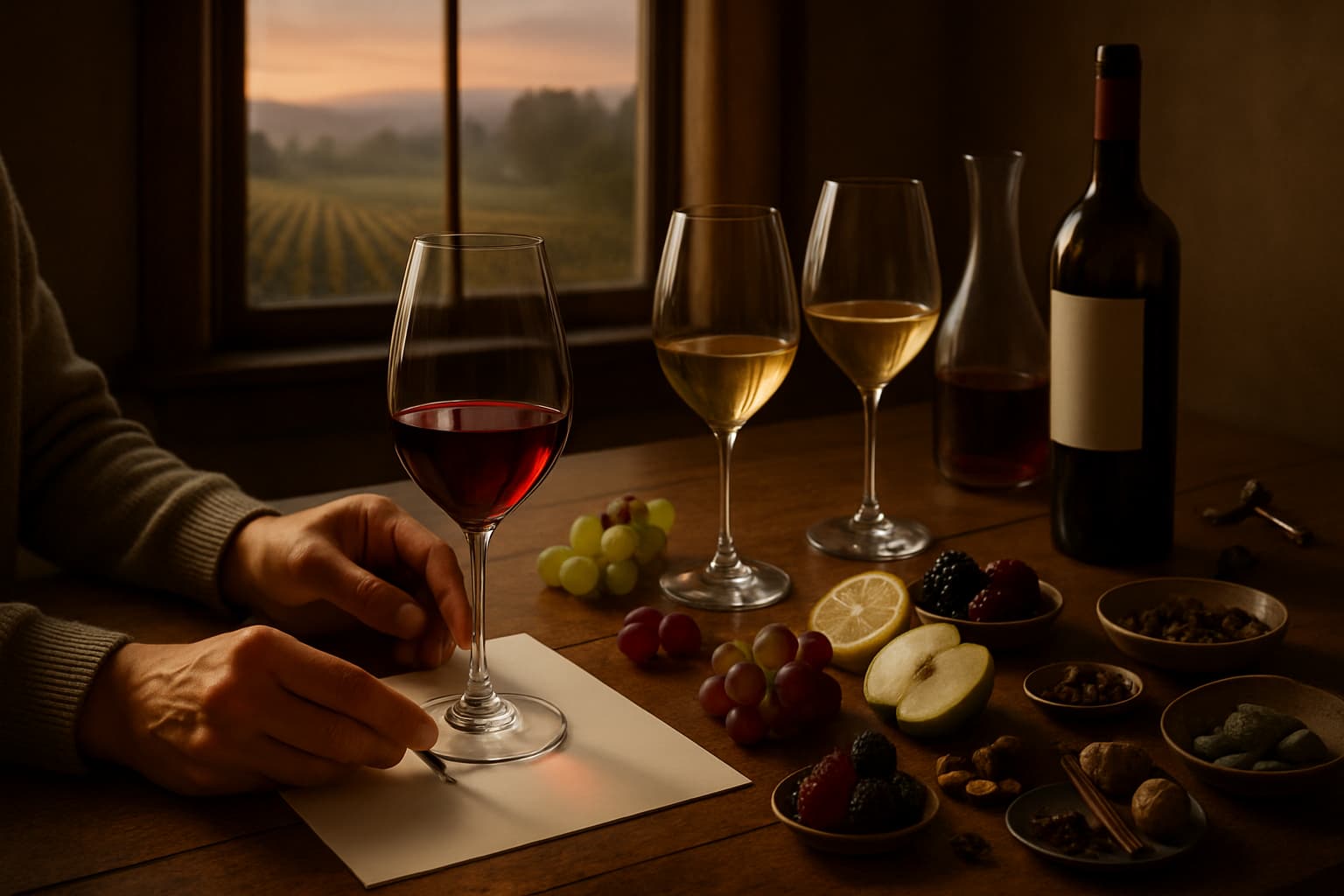
There are moments in human culture when something as simple as raising a glass becomes an act of quiet reverence. Wine tasting is one of those moments. It is not merely a matter of drinking; it is an intimate encounter with landscape, climate, geology, and time itself—distilled into a single, shimmering liquid.
In that glass, the story of a year of sun and rain, of soil and stone, of human patience and care, lies waiting to be discovered. To hear that story, we rely on three ancient and remarkably sensitive instruments: the eye, the nose, and the palate.
Let us embark, then, on a gentle exploration of these three pillars of wine tasting—sight, nose, and palate—as though we are naturalists in a new habitat, learning to see and sense a world that has always been there, quietly unfolding in each sip.
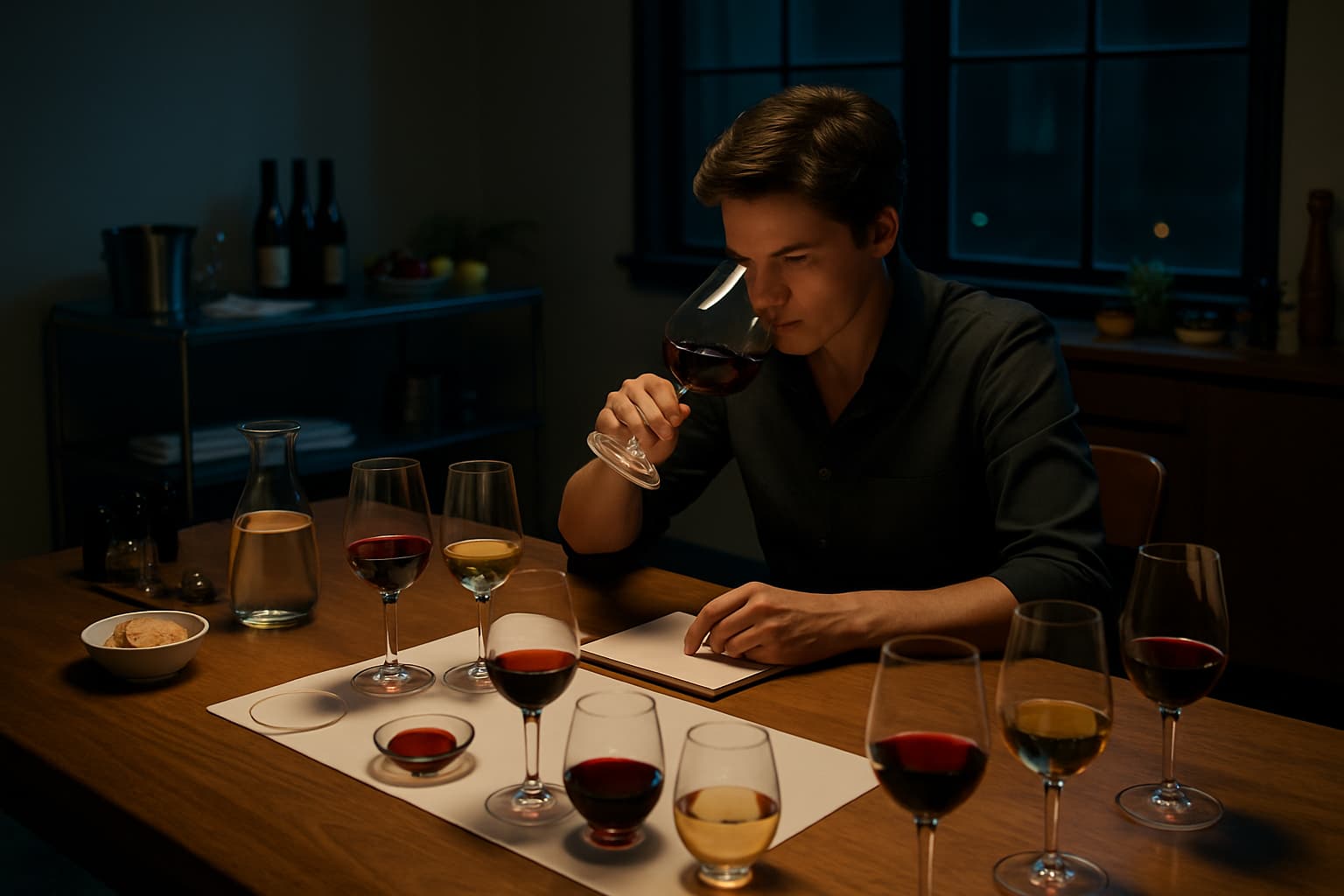
Before we even engage sight, nose, or palate, there is a moment of stillness. The glass is poured, and we pause. This pause is not mere ceremony; it is a resetting of the senses.
In this quiet theater, the wine becomes our subject, and we its patient observers.
Long before the first aroma rises from the glass, the eye begins to gather clues. To the untrained observer, it is merely red, white, or rosé. But under closer scrutiny, the color, clarity, and viscosity reveal a surprising depth of information.
Tilt the glass gently over a white surface and observe. The color is not just a matter of beauty; it is a map of the wine’s identity.
For white wines:
For red wines:
For rosé:
In this play of color, we witness the passage of time and the influence of grape variety and climate. It is as though each wine carries its own sunset.
Hold the glass against the light. Is the wine crystal-clear, slightly hazy, or noticeably cloudy?
Clarity tells us something about the winemaker’s philosophy: interventionist and polished, or rustic and hands-off.
Swirl the wine gently and watch the droplets that form and slide down the glass. These “legs” or “tears” are influenced by alcohol and glycerol content.
Contrary to popular myth, legs do not directly indicate quality. They are one clue among many, like a footprint on a forest path—suggestive, but not definitive.
Now we approach the most evocative aspect of wine tasting: the aroma. Here, the glass becomes a small, swirling ecosystem, releasing a complex bouquet of scents.
Bring the glass to your nose and inhale lightly. Do not plunge in with a deep, overwhelming sniff at first. Take a moment. Then swirl the wine gently to release more volatile compounds and smell again.
Ask yourself:
Already, you are beginning to map the wine’s aromatic landscape.
Wine’s aromas fall into three broad categories, each telling a different part of the story.
Primary aromas: from the grape itself and the vineyard
These are the scents that connect the wine most directly to the natural world:
Secondary aromas: from winemaking practices
These arise from fermentation and handling:
Tertiary aromas: from age and slow transformation
With time in bottle, wine develops deeper, more complex scents:
These tertiary notes are like the wrinkles of an old tree—evidence of years lived and seasons survived.
Not all aromas are welcome. Some indicate problems:
Learning to recognize faults is part of becoming a careful observer, just as a field biologist must distinguish a healthy habitat from a damaged one.
At last, we taste. But even here, we are not simply drinking. We are measuring, comparing, and sensing structure.
Take a modest sip and let the wine travel across your tongue. Hold it there briefly, drawing in a small breath through your teeth if you wish, to aerate it further. Now consider the following elements.
Is the wine dry, off-dry, medium-sweet, or lusciously sweet?
Sweetness is not about quality but about balance. Even the sweetest dessert wine can be precise and refreshing if acidity keeps it in check.
Acidity is felt along the sides of the tongue and as mouth-watering after you swallow or spit.
Cool-climate wines often display higher acidity, like a crisp mountain stream, while warmer climates may produce softer, riper profiles.
Tannins are structural compounds found in grape skins, seeds, and stems, and also contributed by oak. They create a drying, sometimes gripping sensation, particularly in red wines.
Consider:
High-tannin wines—such as young Cabernet Sauvignon or Nebbiolo—can feel firm and austere in youth but may soften and integrate with age, much like a once-rugged landscape smoothed by erosion over centuries.
Body is the sensation of weight or fullness in the mouth.
Body is influenced by alcohol, glycerol, extract, and sometimes sugar. It is the physical manifestation of the wine’s intensity.
On the palate, we confirm and refine what we sensed on the nose:
A well-made wine often displays harmony between aroma and flavor, as though nose and palate are telling the same story from different vantage points.
After swallowing or spitting, notice how long the flavors linger.
Length of finish is one of the key indicators of quality. It is the echo of the wine’s song, resonating after the last note is played.
When we step back from the individual components—sweetness, acidity, tannin, body, flavor—we begin to ask larger questions:
These questions transform tasting from mere analysis into appreciation. We are no longer just dissecting; we are listening.
Like learning the calls of birds or the patterns of the tides, wine tasting is a skill that deepens with repetition and attention.
Over months and years, your senses become more attuned. What once seemed vague—“it smells like wine”—becomes specific, intricate, and deeply engaging.
In the end, wine tasting is not about showing off knowledge or reciting obscure descriptors. It is about attentiveness. It is an invitation to slow down and to notice—to see the play of color, to trace the rise of aromas, to feel the architecture of flavor and structure.
Within each glass lies a confluence of forces: the geology of ancient seabeds, the migration of weather systems, the biology of yeast, the decisions of growers and winemakers, and the steady, patient passage of time. Sight, nose, and palate are our tools for perceiving this hidden world.
When you lift a glass and truly taste, you are not merely consuming a drink. You are bearing witness to a landscape, a season, and a human story—captured, for a brief and shimmering moment, in liquid form.
Tannins are astringent compounds found in wine that contribute to its texture and aging potential, often causing a drying or puckering sensation in the mouth. They are derived from grape skins, seeds, and stems, as well as from oak barrels used during aging.
/ˈtænɪnz/
Malic acid is a naturally occurring organic acid found in grapes that contributes to the tart, green apple-like flavor and crispness in wine. It plays a significant role in the taste and acidity of wine.
/mælɪk ˈæsɪd/
Filtration in winemaking is the process of removing solid particles from wine to clarify and stabilize it before bottling, using various types of filters to achieve different levels of clarity and remove unwanted elements like yeast, bacteria, and sediment.
/fɪlˈtreɪʃən/
Oxidation in wine is a chemical reaction between the wine and oxygen that can change its flavor, aroma, and color. This process can be beneficial or detrimental depending on the extent and context of the exposure.
/ˌɒksɪˈdeɪʃən/
Microclimate refers to the unique climate conditions of a small, specific area within a larger region, significantly influencing grapevine growth and the characteristics of the resulting wine.
/ˈmīkrōˌklīmit/
Get weekly wine recommendations, vineyard news, and exclusive content delivered to your inbox.