Wine Tasting
“Where every bottle tells a story”
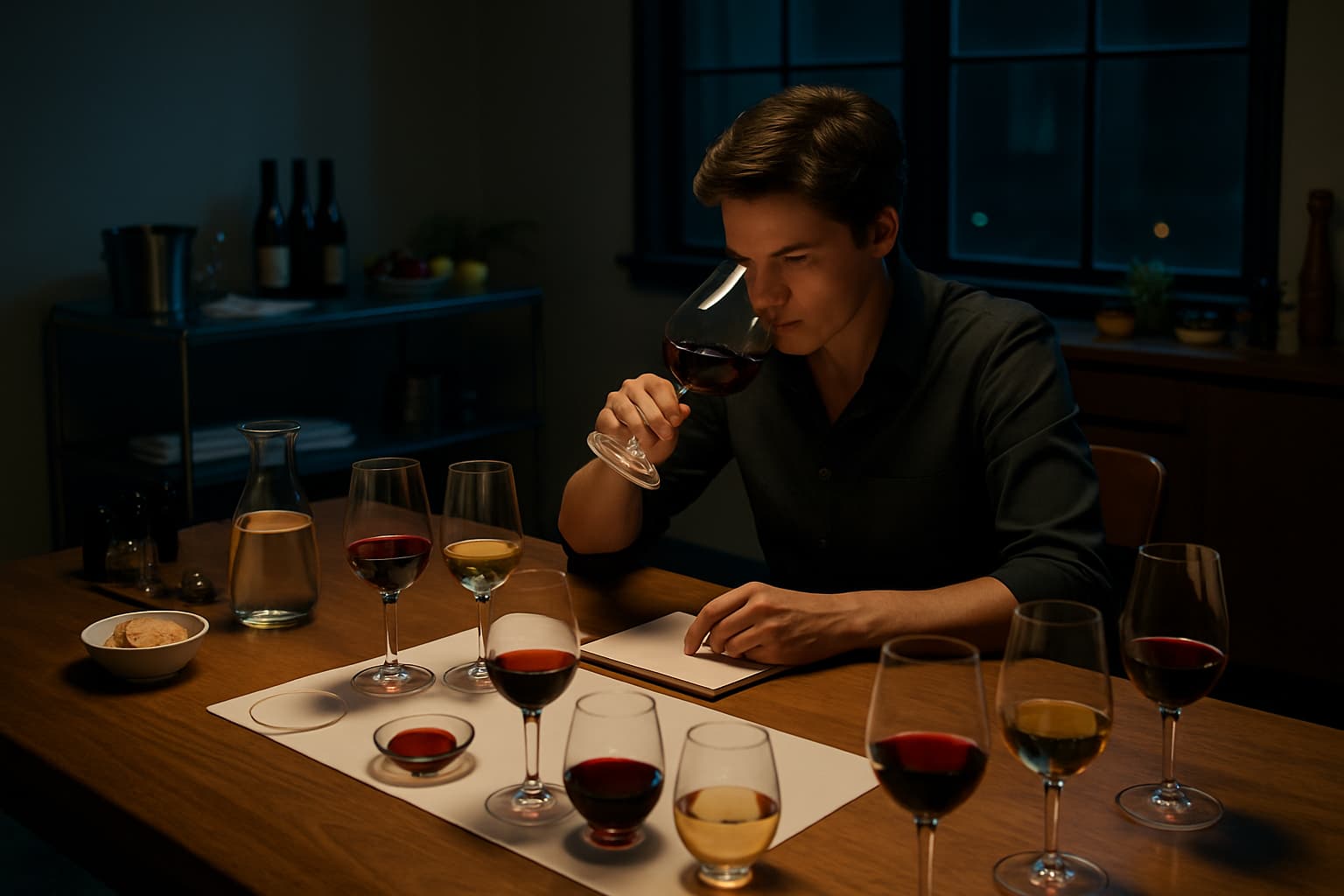
The first thing you need to understand is that wine is not polite. Wine is a feral chemical circus dressed up in a silk suit, and most people are too intimidated by the suit to notice the circus. They swirl, they sniff, they mumble things about “stone fruit” and “forest floor” like they’re reciting lines from a hostage video, and then they nod solemnly as if they’ve just confirmed the existence of God.
This is cowardice.
If you’re going to taste wine—really taste it—you have to walk into the glass like it’s a bar fight and you’re not sure who started it, but you’re absolutely certain you’re going to finish it. Aroma, flavor, structure: these are not dainty concepts. They’re weapons, clues, and roadmaps to the soul of the bottle, and the only way to master them is to stop worshiping the wine and start interrogating it.
So pour a glass. Not a thimble, not a sacramental drip—an honest pour. We’re going in.
Before you even get to aroma and flavor, you need to control the battlefield.
This is not snobbery; it’s basic lab protocol. You’re about to analyze a volatile, living liquid. Treat it with the same focus you’d give a loaded syringe or a suspicious stranger.
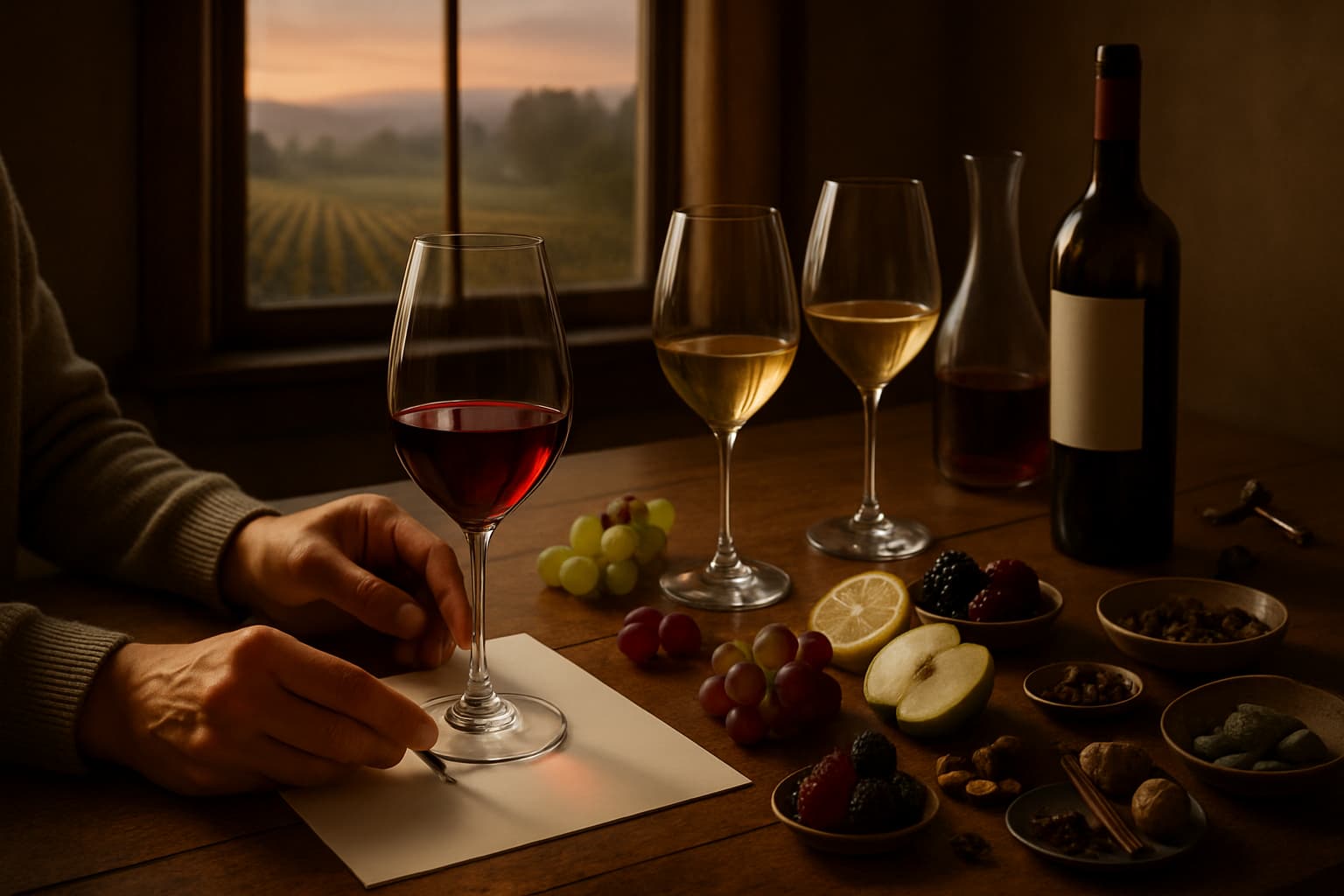
Before aroma, before flavor, you look. Wine is a professional liar, and it starts lying with color.
Tilt the glass over a white background and study it like a crime scene.
Appearance doesn’t tell you everything, but it sets the stage. You’re not just looking at a beverage; you’re looking at a timeline—grapes, climate, age, extraction, all muttering under the surface.
Now comes the real insanity: the nose.
Swirl the glass. Not a timid little circle like you’re afraid you’ll spill state secrets—give it a good, deliberate spin. You’re volatilizing aromatic compounds, waking up the beast.
Now stick your nose in the glass like you’re trying to climb inside.
Ask the first, brutal question: Does this smell clean, or does it smell wrong?
If the wine smells like a flooded hardware store, you don’t need poetic metaphors—you need another bottle.
Once you know it’s not a disaster, start hunting categories:
This is where the wine starts telling you stories about its upbringing.
Don’t try to name every aroma like you’re filling out a bureaucratic form. Just track patterns. Is it fresh or cooked? Bright or dark? Floral or earthy? Clean or funky? You’re building a mental fingerprint.
Now you drink. Not a sip like you’re testing poison—an actual mouthful. Let it roll across your tongue. Pull a little air in through your teeth if you can without choking yourself; this sprays the wine around, wakes up more aroma inside your skull.
Here’s the perverse truth: flavor is mostly smell. What you “taste” as cherry, lemon, or smoke is your nose working from the back of your throat. Your tongue only knows a handful of basic things:
So when you say, “This wine tastes like blackberry and cedar,” what you really mean is, “My nose is picking up blackberry and cedar while my tongue registers structure.”
Which brings us to the skeleton under the flesh: structure.
Structure is where the civilized tasting room ends and the biochemical brawl begins. This is the framework that holds the wine together, the architecture beneath the flavor.
Acidity is the sharpness, the snap, the thing that makes your mouth water like you’ve just licked a battery wrapped in lemon peel.
To test it:
High-acid wines feel energetic, tense, alive. Low-acid wines feel flat, flabby, like a deflated beach ball. In whites, acidity is the spine; in reds, it’s the nerve endings.
Tannin is the dry, bitter grip you feel on your gums and tongue with many red wines. It doesn’t taste like much; it feels like something is stealing the moisture from your mouth and replacing it with fine-grain sand.
Tannin comes from grape skins, seeds, stems, and oak. To gauge it:
Good tannin is structured, fine, integrated. Bad tannin is harsh, bitter, green—like sucking on a popsicle stick.
Body is the overall weight and texture of the wine in your mouth. Not flavor, not sweetness—mass.
Imagine the spectrum:
Body comes from alcohol, extract, glycerol, and style. A high-alcohol, ripe, oaked red will feel like a velvet sledgehammer. A cool-climate, low-alcohol white will dance around like nervous electricity.
You can feel alcohol as warmth in your chest or the back of your throat. When it’s in balance, it’s a pleasant glow, like a small internal campfire. When it’s out of balance, it’s a flamethrower.
If the wine feels hot, like it’s trying to cauterize your esophagus, the alcohol is too high for the rest of the structure. This is not “bold.” This is sloppy.
Actual sweetness is the residual sugar left in the wine. But your brain is easily fooled. Ripe fruit, low acid, and generous oak can make a dry wine feel sweet.
To test sweetness, focus on the tip of your tongue right after swallowing. A subtle, clean sense of sugar? Off-dry or sweet. No sugar, just fruit flavor? Probably dry.
Once you’ve broken the wine into its parts—aroma, flavor, acidity, tannin, body, alcohol—step back and ask the only question that matters: Does this all make sense together?
Great wines don’t just taste good in the moment—they echo. They hang around in your mind and mouth long after the glass is empty, like a good crime or a bad decision.
You don’t master aroma, flavor, and structure by reading tasting notes written by people who sound like they lick antique furniture for a living. You get better by paying attention.
Some brutal but effective training methods:
The point is not to become some robotic flavor-thesaurus. The point is to build a sharp, skeptical, sensory mind.
Wine doesn’t need more worship. It has enough shrines, enough hushed tones, enough people pretending to be moved by tasting notes they barely understand.
What it needs—what you need—is confrontation.
Aroma, flavor, and structure are not abstract concepts reserved for people in blazers with lapel pins. They are tools. Weapons. Ways of breaking the wine open and seeing what lives inside it. When you swirl, sniff, and taste with intent, you’re not just drinking—you’re investigating.
So the next time someone hands you a glass and starts muttering about “crushed violets” and “subtle hints of cigar box,” tune them out. Go inside the glass yourself.
If the wine is good, it will stand up to the interrogation. If it’s great, it will fight back—and you’ll want another round.
And that’s the point: not to memorize adjectives, not to impress anyone at dinner, but to engage with this strange, fermented beast in your glass like a conscious, curious, slightly unhinged human animal.
You don’t master wine by taming it. You master it by letting it show you just how wild it really is—and having the nerve to follow.
Tannins are astringent compounds found in wine that contribute to its texture and aging potential, often causing a drying or puckering sensation in the mouth. They are derived from grape skins, seeds, and stems, as well as from oak barrels used during aging.
/ˈtænɪnz/
Malic acid is a naturally occurring organic acid found in grapes that contributes to the tart, green apple-like flavor and crispness in wine. It plays a significant role in the taste and acidity of wine.
/mælɪk ˈæsɪd/
Fruit (the backbone):
Non-fruit (the plot twists):
Filtration in winemaking is the process of removing solid particles from wine to clarify and stabilize it before bottling, using various types of filters to achieve different levels of clarity and remove unwanted elements like yeast, bacteria, and sediment.
/fɪlˈtreɪʃən/
Oxidation in wine is a chemical reaction between the wine and oxygen that can change its flavor, aroma, and color. This process can be beneficial or detrimental depending on the extent and context of the exposure.
/ˌɒksɪˈdeɪʃən/
Microclimate refers to the unique climate conditions of a small, specific area within a larger region, significantly influencing grapevine growth and the characteristics of the resulting wine.
/ˈmīkrōˌklīmit/
Get weekly wine recommendations, vineyard news, and exclusive content delivered to your inbox.