Wine Literature and Media
“Where every bottle tells a story”
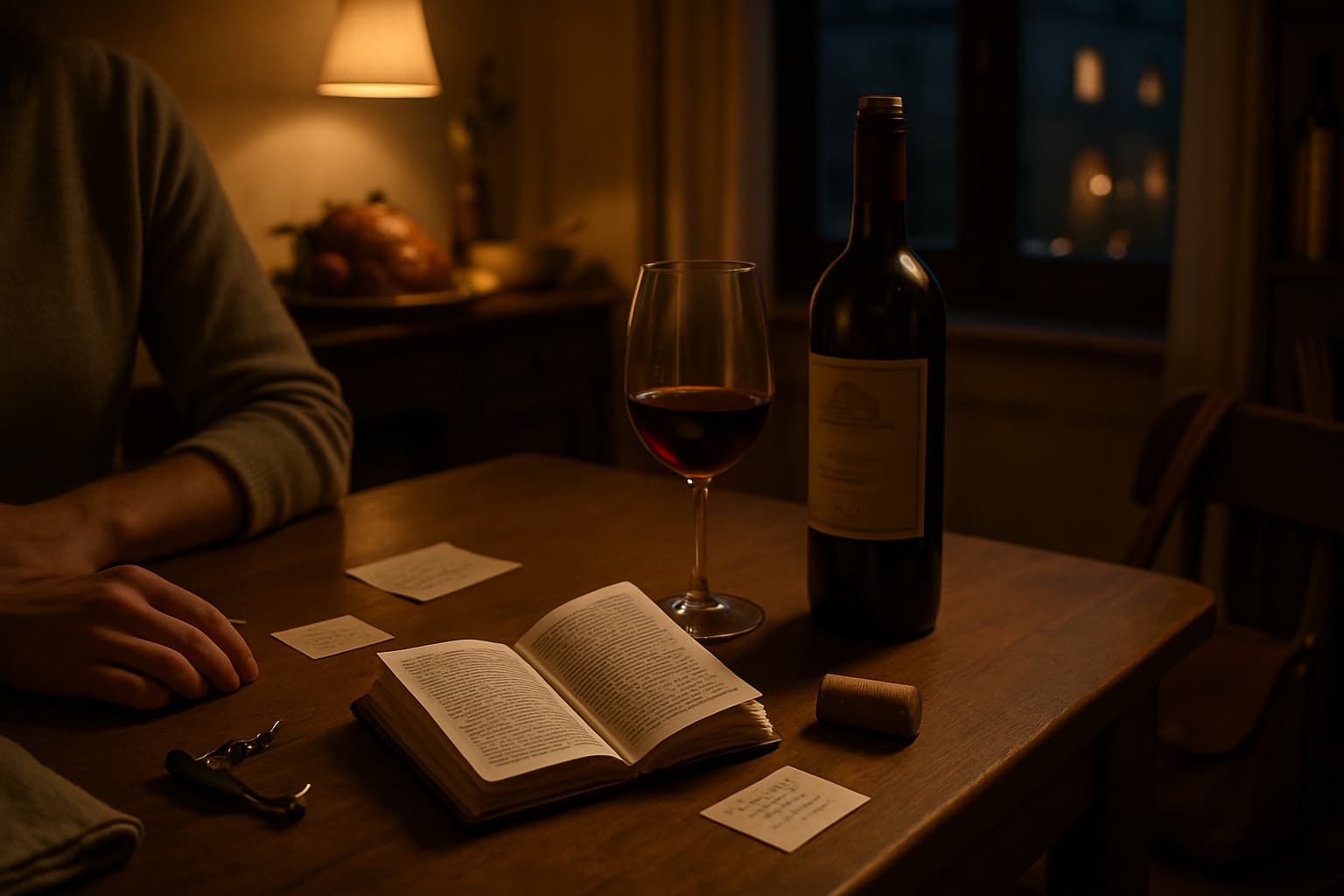
Oh, what a delicious little subject we have today. Pour yourself a glass of something you love—nothing too fussy, just friendly—and let’s talk about one of the tiniest, most useful, and most quietly influential wine companions you can slip into a pocket or handbag: Hugh Johnson’s marvelous little wine book.
This is not some grand, pompous encyclopedia that thuds onto the table like a Sunday roast. No, no. It’s more like a perfectly seasoned consommé—clear, concentrated, and astonishingly flavorful. And once you understand what’s simmering inside those small pages, you may find you don’t want to go wine-shopping, traveling, or even menu-reading without it.
Imagine you’re standing in front of a wall of bottles at the wine shop. Labels in French, Italian, Spanish, and perhaps a bit of poetic nonsense are staring back at you. You’re hungry, you’re busy, and the roast chicken is nearly done at home. You don’t have time to earn a wine diploma—you just want something good.
This is precisely where Hugh Johnson’s pocket-sized guide shines. It’s:
It’s not just a book of lists; it’s a quiet mentor. You flip, you glance, you choose—and suddenly your odds of picking something delicious go up dramatically.
Like a well-organized kitchen, the book is compact but astonishingly complete. Each yearly edition varies a bit, but the core structure is delightfully dependable.
The book is arranged by country and region, rather like a grand tour of the wine world—but in miniature. You’ll find:
Each region is broken down into:
All in a format you can skim as easily as a grocery list.
Hugh Johnson’s method is rather like a cook’s shorthand recipe card—brief but packed with meaning. Producers are rated with a system of stars or symbols, indicating:
You might see a note like:
These tiny remarks are like seasoning notes: “more salt, less pepper, careful with the garlic.” They help you understand what’s in the bottle beyond the flowery label.
One of the most valuable sections is the vintage guidance—short, sharp, and immensely helpful. For major regions, you’ll typically find:
If you’ve ever stared at a bottle and wondered, “Is this 2015 ready, or should I wait?” the book is like a kindly friend whispering in your ear, “Open it now, dear,” or “Tuck that one away for a few more winters.”
Hugh Johnson is to wine writing what a great teacher is to cooking: he doesn’t just tell you what to do—he helps you understand why and how. His long career has shaped how many people think and talk about wine.
In a world where wine can become terribly snobbish and intimidating, Johnson’s style is:
His writing has always had a touch of that “let’s roll up our sleeves and get on with it” spirit. Much like learning to roast a chicken properly, learning to choose a wine doesn’t need to be a grand drama—it can be an everyday pleasure.
The charm of this little book is that it serves:
Like a good cookbook, it grows with you. When you first pick it up, you might simply look for the highest-rated producer you can afford. Later, you’ll find yourself tracing regions, comparing vintages, and discovering new corners of the wine map.
Let’s be practical—how does this help you at the table, in the shop, or on your travels?
You’re faced with shelves of unfamiliar labels. Here’s how to put the book to work:
In five minutes, you’ve gone from “Oh dear” to “I know what I’m doing,” which is a very comforting transformation indeed.
If you’re lucky enough to travel to wine regions:
It’s like having a discreet, well-traveled friend in your pocket.
When confronted with a fat wine list and a hovering sommelier, the book can:
Think of it as a secret ingredient—you don’t wave it about, but you use it to make the whole meal better.
Because the book is updated annually, each edition captures:
Over time, if you keep several editions, you can flip back and see how regions have evolved, much like watching taste trends in cooking—how we moved from heavy cream in everything to lighter, brighter flavors.
There’s a temptation to think, “Oh, this is too advanced for me.” Nonsense. You don’t need to understand every term to benefit. Start simply:
Over time, you’ll begin to recognize names, styles, and patterns. It’s like learning basic knife skills in the kitchen: at first it’s clumsy, then suddenly you’re chopping onions like a pro.
One might wonder, “Why not just use a giant encyclopedia or the internet?” Well:
The brevity forces clarity. Every line has to earn its place, like ingredients in a good sauce. Nothing unnecessary, nothing showy—just what you need.
Wine, like cooking, is something you can spend a lifetime exploring. You don’t need to rush, and you don’t need to know everything to enjoy it deeply. This little book:
Think of it as a pocket tutor, a quiet coach, and a slightly opinionated friend, all bound up in one small volume.
In the end, the greatest value of Hugh Johnson’s annual pocket guide is that it makes wine feel more approachable, more understandable, and more fun—without stripping away its mystery and romance.
You still get the pleasure of discovery, the thrill of opening a new bottle, the surprise of a wine that’s better than you expected. But you also get a bit of guidance, a gentle hand on your shoulder saying, “Try this one; it’s likely to please.”
So the next time you’re planning a dinner, stocking your cellar, or simply picking up a bottle to go with a roast chicken or a hearty stew, consider tucking this little book into your bag. It won’t cook the meal for you, but it will help you choose just the right wine to make everything sing.
And that, my dear, is a very fine thing indeed.
Tannins are astringent compounds found in wine that contribute to its texture and aging potential, often causing a drying or puckering sensation in the mouth. They are derived from grape skins, seeds, and stems, as well as from oak barrels used during aging.
/ˈtænɪnz/
Malic acid is a naturally occurring organic acid found in grapes that contributes to the tart, green apple-like flavor and crispness in wine. It plays a significant role in the taste and acidity of wine.
/mælɪk ˈæsɪd/
Filtration in winemaking is the process of removing solid particles from wine to clarify and stabilize it before bottling, using various types of filters to achieve different levels of clarity and remove unwanted elements like yeast, bacteria, and sediment.
/fɪlˈtreɪʃən/
Oxidation in wine is a chemical reaction between the wine and oxygen that can change its flavor, aroma, and color. This process can be beneficial or detrimental depending on the extent and context of the exposure.
/ˌɒksɪˈdeɪʃən/
Microclimate refers to the unique climate conditions of a small, specific area within a larger region, significantly influencing grapevine growth and the characteristics of the resulting wine.
/ˈmīkrōˌklīmit/
Get weekly wine recommendations, vineyard news, and exclusive content delivered to your inbox.