Wine Literature and Media
“Where every bottle tells a story”
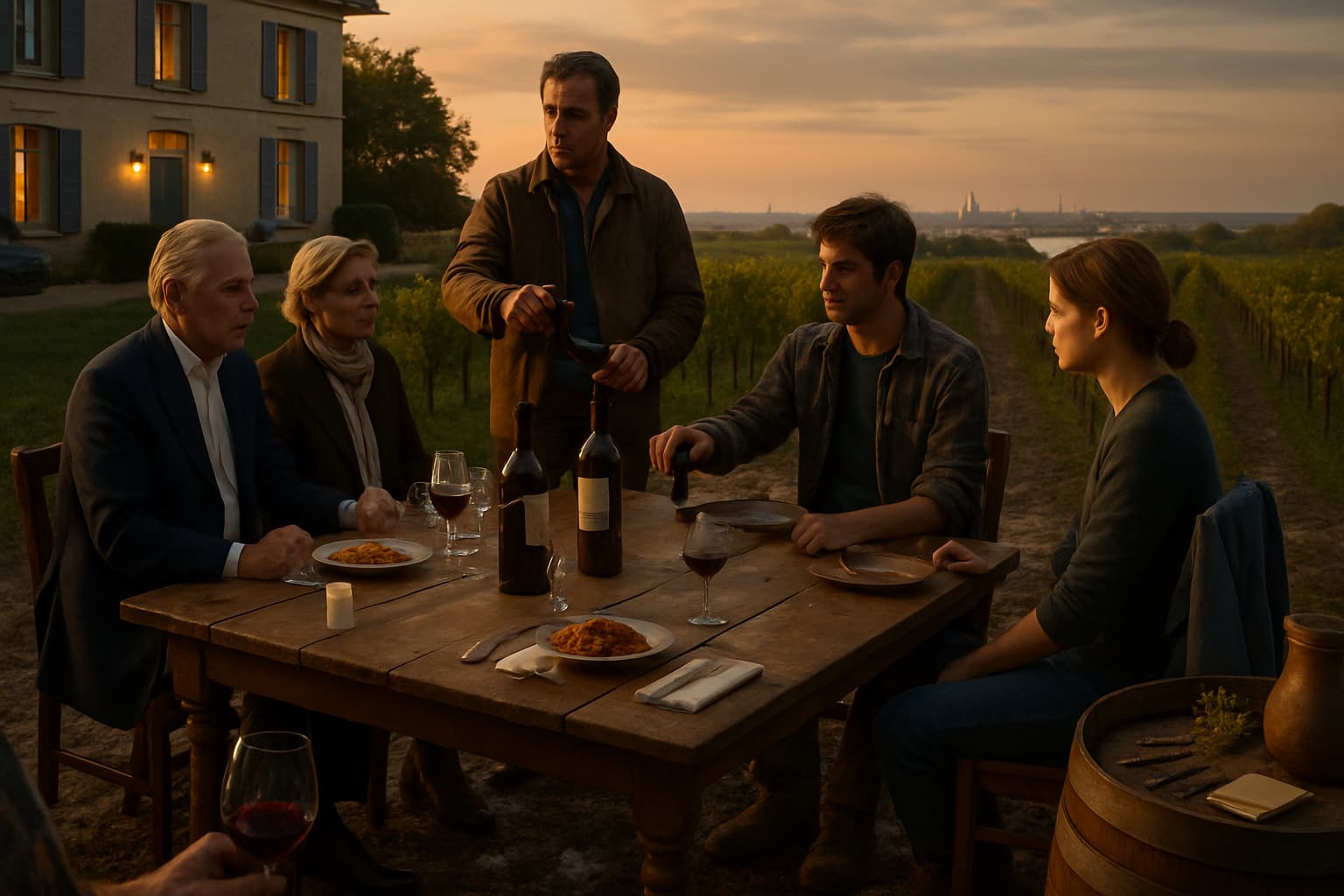
You arrive in Bordeaux expecting refinement. Crystal stemware. Starched linens. Men with pocket squares saying “minerality” like it’s a religious experience.
You’re not entirely wrong. But you’re not right, either. Because under the polished oak, the manicured vineyards, and the Michelin-star tasting menus, Bordeaux is something closer to a battleground: old money vs. new blood, farmers vs. investors, tradition vs. the climate, and a region trying to decide if it’s still the king of wine or just a very pretty museum.
This isn’t just a place where wine is made. It’s a place where wine runs the show. And if you want to understand wine culture—modern, global, occasionally insufferable wine culture—you have to walk through Bordeaux, mud on your boots, glass in hand, bullshit detector turned all the way up.
Let’s go inside.
Bordeaux is not one vineyard, not one style, not one story. It’s a whole universe carved up into pieces with names that sound like you should be whispering them: Pauillac, Margaux, Saint-Julien, Saint-Émilion, Pomerol.
But before we get poetic, let’s talk geography and money—because here, they’re the same thing.
Left Bank (west of the Gironde and Garonne rivers):
This is Cabernet Sauvignon country. Gravel soils, big châteaux, bigger egos. Names like Lafite, Latour, Margaux, Mouton. The labels that auction houses drool over and hedge fund guys pretend to understand.
Right Bank (east of the Dordogne and Gironde):
Merlot’s playground. Softer, rounder wines, but don’t confuse “soft” with “cheap.” Pomerol and Saint-Émilion can cost more than your rent. Petrus? That’s not a wine, that’s a financial instrument.
Bordeaux is an economy as much as a region. Wine isn’t a product here; it’s infrastructure. Generations live and die on whether the weather screws up the vintage. Bankers, brokers, and négociants (the middlemen) ride the waves of prices like day traders.
You can talk about terroir all you want, but in Bordeaux, terroir comes with a balance sheet.
In 1855, Napoleon III wanted a wine ranking for the Paris Exposition. So Bordeaux’s brokers made a list of the best Médoc and Sauternes wines—based on price and reputation—and called them Classified Growths (Grands Crus Classés).
That list still rules the Left Bank like a dusty old constitution nobody dares to burn.
On the Right Bank? Different game, different rules. Saint-Émilion has its own classification, updated (and litigated) every decade or so, like a reality show where châteaux gain or lose status. Pomerol, the home of Petrus, doesn’t have an official classification at all—because when you’re that famous, you don’t need a laminated badge.
Here’s the dirty little secret:
The classification is history, not gospel. Some Fifth Growths make better wine than some Seconds. Some unclassified estates are knocking the stuffing out of their “betters.”
The list is a map, not the territory. Treat it like a wine-tourist-trap sign: useful, but not holy.
Strip away the pomp and you get to the juice. Bordeaux is about blends. Not single-variety ego trips—teamwork.
On the Left Bank, the lineup usually looks like this:
On the Right Bank, it flips:
Flavor-wise, you’re in a spectrum:
Then there’s white Bordeaux—yes, it exists, and no, it’s not just an afterthought:
And the sweet wines—Sauternes and Barsac—are a whole other religion:
Behind every château façade is a farmer who worries about mildew, frost, hail, and whether the kids will take over or sell to some faceless luxury group.
For all the grandeur, Bordeaux is still agriculture. Vines don’t care about your brand strategy. They care about:
Walk through the vineyards in October and it’s mud—sticky and unforgiving. Hands stained purple. People exhausted, wired, praying the weather holds another three days.
Yet the story that gets told is all polished barrel rooms and tasting salons. The truth is closer to a small restaurant kitchen: organized chaos, stress, and a tiny margin between “perfect” and “we’re screwed.”
The Bordelais themselves?
Bordeaux built its reputation on balance: ripeness without flab, structure without brutality. That delicate line is getting harder to walk.
The region is responding, cautiously and sometimes reluctantly:
But the bigger question hangs in the air like humidity before a storm:
Can Bordeaux stay Bordeaux if the climate that made it what it is… disappears?
The world thinks Bordeaux is all $500 bottles in glass cases. That’s like thinking all French food is tasting menus and no one ever eats a ham-and-butter baguette on a park bench.
Yes, the top 1–2% of Bordeaux is stupidly expensive. Investment-grade. Flex wines. Bottles that get photographed more than they get opened.
But there are three Bordeaux zones you should care about if you’re not a hedge fund:
You want value?
Wine is not a museum piece. If your bottle is too precious to open, you’re not collecting wine; you’re hoarding anxiety.
Bordeaux has been mythologized to death. It’s the backdrop for:
The literature and media around Bordeaux helped build its image: serious, aristocratic, a bit intimidating. You were supposed to feel small in front of it, like a kid in a cathedral.
But the newer generation of writers, sommeliers, and drinkers is poking holes in that balloon:
Inside Bordeaux, the real drama isn’t in the auction houses. It’s in the tension between the myth and the messy reality.
You don’t need a tuxedo, a decanter shaped like a dragon, or a PhD in French pronunciation. You just need curiosity and a functioning palate.
Some simple, non-pretentious ground rules:
You want to understand Bordeaux? Don’t just walk the barrel rooms and stare at the rows of gleaming French oak like you’re in a church of money.
Sit down in a small restaurant in the city. Order a carafe of something you’ve never heard of. Eat entrecôte with bone marrow and frites. Listen to the hum of the room.
Or go out to a village bistro in the Médoc. Watch a vineyard worker pour a glass of the local red like it’s water, not treasure. No ceremony. No hushed reverence. Just life.
That’s the punchline:
Bordeaux, for all its grand cru labels and luxury branding, is at its best when it forgets it’s supposed to impress you—when it just shows up at the table, honest and flawed and alive.
Inside Bordeaux, past the rankings and the rivers and the rot and the money, there’s a simple heartbeat:
Grapes. People. Time. A bottle opened, shared, emptied.
That’s the real classification that matters:
Not First Growth or Fifth, not Left Bank or Right, but whether the wine in your glass makes the moment better, sharper, more vivid.
If it does, then congratulations—you’ve finally found your way inside.
Tannins are astringent compounds found in wine that contribute to its texture and aging potential, often causing a drying or puckering sensation in the mouth. They are derived from grape skins, seeds, and stems, as well as from oak barrels used during aging.
/ˈtænɪnz/
Malic acid is a naturally occurring organic acid found in grapes that contributes to the tart, green apple-like flavor and crispness in wine. It plays a significant role in the taste and acidity of wine.
/mælɪk ˈæsɪd/
Entre-Deux-Mers (“between two seas”):
The big, sprawling middle child between the rivers. Less glamorous, more everyday. Whites, reds, rosés, and a lot of wine that never makes it to Instagram but fills glasses in French bistros for normal humans.
Start with what’s open and affordable
Give it air, but don’t turn it into a ceremony
Drink it with food that can fight back
Don’t obsess over vintage charts
Ignore anyone who makes you feel stupid
Filtration in winemaking is the process of removing solid particles from wine to clarify and stabilize it before bottling, using various types of filters to achieve different levels of clarity and remove unwanted elements like yeast, bacteria, and sediment.
/fɪlˈtreɪʃən/
Oxidation in wine is a chemical reaction between the wine and oxygen that can change its flavor, aroma, and color. This process can be beneficial or detrimental depending on the extent and context of the exposure.
/ˌɒksɪˈdeɪʃən/
Microclimate refers to the unique climate conditions of a small, specific area within a larger region, significantly influencing grapevine growth and the characteristics of the resulting wine.
/ˈmīkrōˌklīmit/
Get weekly wine recommendations, vineyard news, and exclusive content delivered to your inbox.