Wine Tourism
“Where every bottle tells a story”
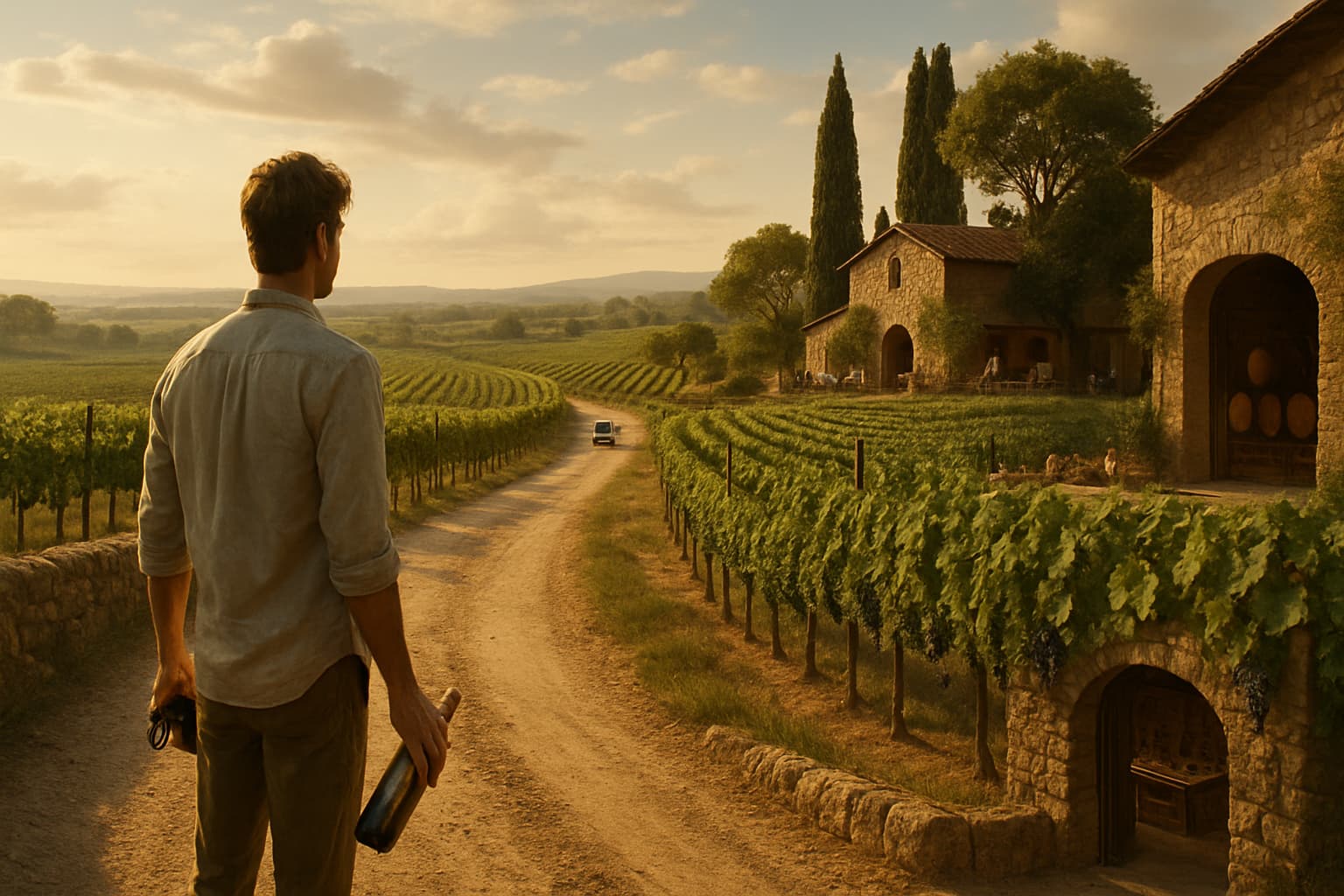
The road to the vineyard is usually a narrow one. It leaves the highway without warning and bends through fields and low stone walls. Dust lifts behind the car. The sun is strong. Ahead, the vines stand in long, straight lines, like soldiers who have been there a very long time and will be there long after you are gone.
This is how wine tourism begins—not with a grand idea, but with a turn in the road. You go to where the wine is born. You go to see the land that fills the glass.
People travel for many reasons. Some go to the sea to forget themselves. Some go to the mountains to feel small. Those who go to wine country want something quieter, but no less deep. They want to know why a simple drink can carry so much memory. They want to taste a place.
Wine is not just alcohol. It is time in a bottle. It is weather and soil and the hands that picked the grapes. When you stand in a vineyard, you see the truth of that. The wind on your face is the same wind that thickened the skins of the grapes in a hot year. The stones under your boots held the heat that ripened the fruit. The people you meet have lived by this harvest for generations.
Wine tourism is the wish to understand all of this by being there. You taste, but you also look, listen, and breathe. You drink the wine, but the wine also drinks you.
In wine country, there are two main rooms: the vineyard and the cellar. One is green and open and full of light. The other is dark and cool and smells of oak, stone, and slow work.
You walk between the vines. The ground is dry and uneven. The leaves rustle. If it is summer, the grapes hang in tight clusters, still hard, not yet sweet. If it is harvest, the air is thick with the smell of juice and fruit. You may see pickers moving quickly, their hands sure and fast. They do not waste motion. They do not talk much. The work is too important.
The guide tells you about the soil: clay, limestone, volcanic rock. Words that sound simple but mean everything here. They speak of drainage and exposure, of how the morning sun is softer than the afternoon, of how the hill protects the vines from the worst of the wind. You listen, and the land begins to make sense.
You learn new words: terroir, canopy, yield, ripeness. These are not tourist words. They are farmer words. But they matter, because they end up in your glass.
Then you go below. The air cools. Your eyes adjust. Barrels line the walls. Some are old and blackened. Some are new and pale. There is a faint drip of water somewhere, and the smell of wood and wine that has not yet become itself.
The winemaker talks about fermentation: stainless steel tanks, native yeasts, malolactic conversion. You may not remember the terms, but you remember the feeling of the room. It is a place of waiting. The wine is not rushed. It takes the time it needs, and the people who make it must learn patience or leave.
You see the old tools: hand corkers, wooden presses, stained hoses, the marks of past harvests on the walls. This is where the romance of wine meets the hard fact of work. The hoses are heavy. The barrels are heavy. The days at harvest are long—twelve hours, fourteen, sometimes more.
Wine tourism, at its best, does not hide this. It shows you that every easy sip came from someone else’s hard season.
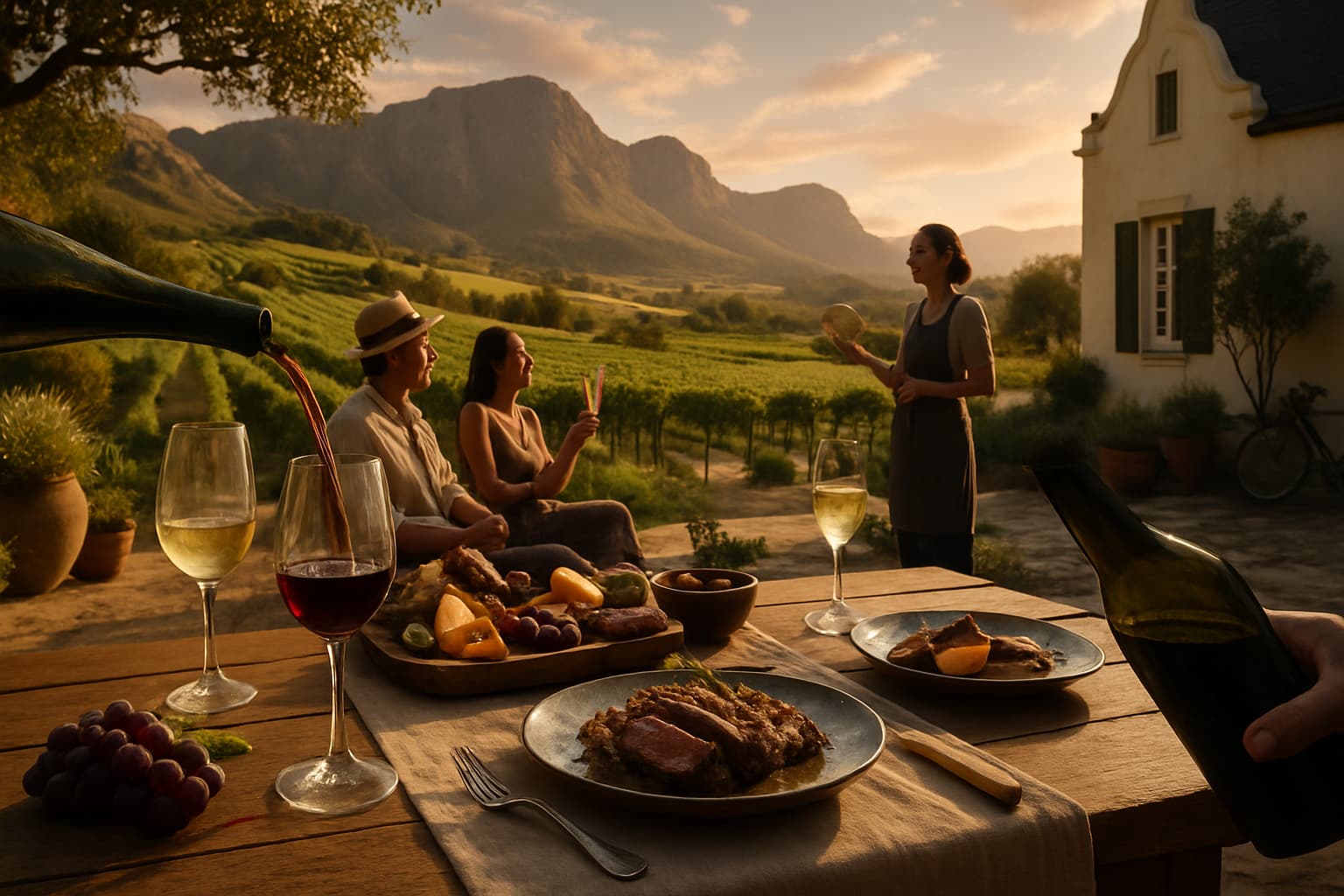
At the end, they pour. This is what most people think wine tourism is: the tasting. A row of glasses. A list of wines. A smile from the host. But the tasting is only the visible part. It is the last step of a long story.
You hold the glass by the stem. You look at the color: pale straw, deep ruby, a faint brick at the edge that hints at age. You swirl. The wine moves against the glass, slow or quick. You smell.
They tell you what you might find: cherry, tobacco, stone, lemon peel, smoke, wet earth after rain. Sometimes you find them. Sometimes you do not. That is all right. The important thing is not to name every note. The important thing is to pay attention.
Wine tourism teaches you that attention is a kind of respect. You do not rush the sip. You do not throw it back. You let it move across your tongue. You notice the first taste and the last. You see how it changes in the glass as time passes. You sit with it.
In this way, wine tasting is not so different from watching the sea or a fire. It is simple, but you can look at it for a long time.
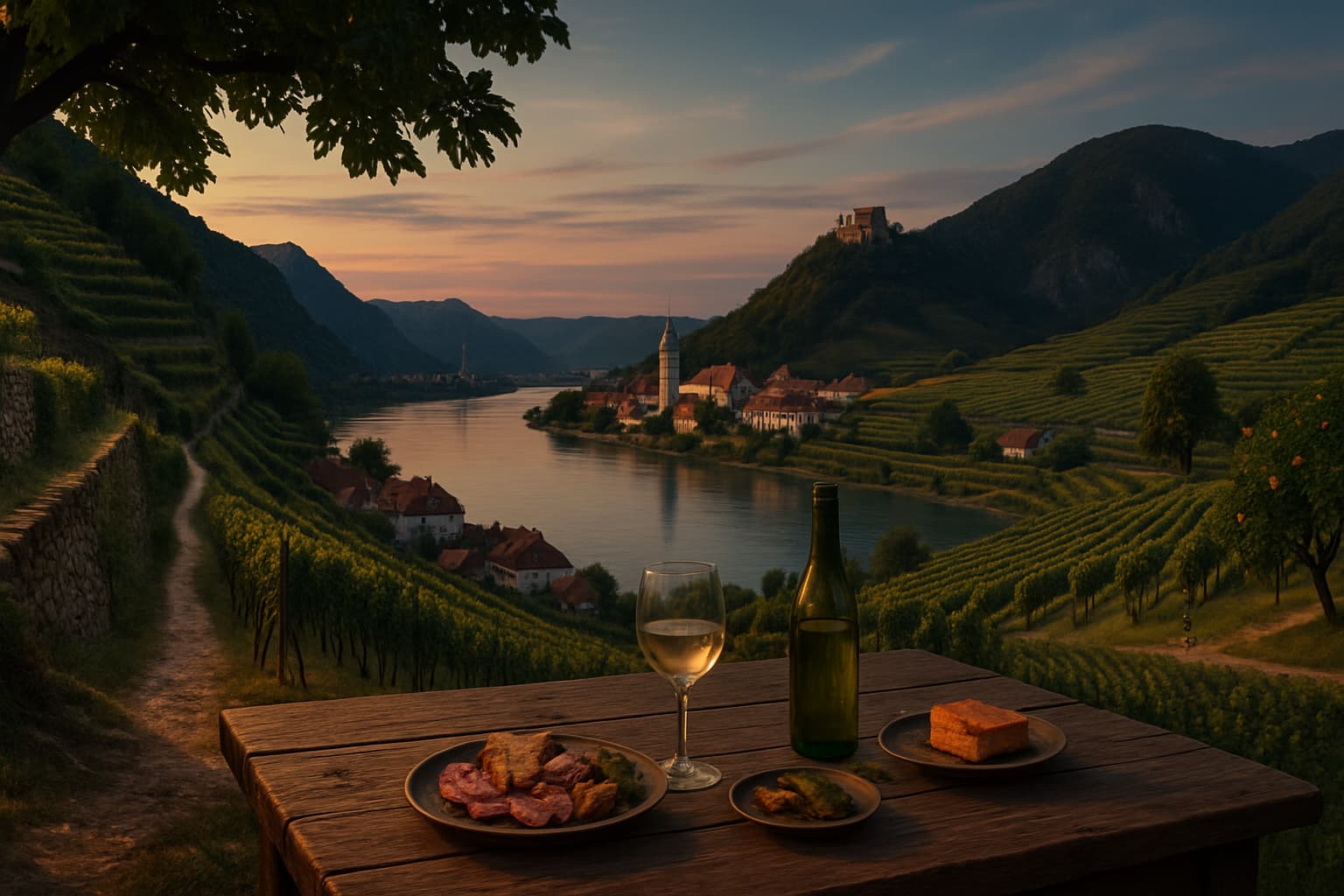
Wine grows where the climate is kind but not too kind. The vine likes struggle. It does not do its best work in easy places. So wine tourism draws you to certain regions, and each has its own character.
In Europe, the vineyards have been there longer than the roads that bring you to them. In France, you walk through Burgundy and see low stone walls and small plots that have names older than your country. In Bordeaux, the châteaux stand with their long, straight drives and their sense of order. In Champagne, the chalk cellars run under the earth like hidden rivers.
In Italy, the hills of Tuscany roll out under a soft light, dotted with cypress trees and old farmhouses. In Piedmont, mist clings to the slopes where Nebbiolo grows, and the wines smell of roses and tar. In Spain, the terraces of Priorat cling to steep, dark hills, and the old vines twist like hands.
Here, wine tourism is tied to history. The rules are strict. The labels carry not just a grape, but a place and a promise of how the wine was made. You feel the weight of the past in every stone and every barrel.
In places like California, Chile, Argentina, South Africa, Australia, and New Zealand, the vineyards are often younger. The roads are wider. The tasting rooms can be sleek and bright, with glass walls and long views over the vines.
Here, wine tourism has more room to play. You may find food trucks by the cellar door, live music on the lawn, art installations between the rows. The winemakers talk more freely of blending, of trying new grapes, of breaking rules that never quite fit this land anyway.
In Napa or Sonoma, you drive from valley to valley, the sun high, the air dry, the wines rich and bold. In New Zealand, you stand by the sea and taste crisp Sauvignon Blanc while the wind comes off the water. In Argentina, you look up from your glass of Malbec and see the Andes, white and sharp against the sky.
The New World shows that wine is not only about history. It is also about possibility.
Wine does not live alone. It needs food and company. Wine tourism brings these together.
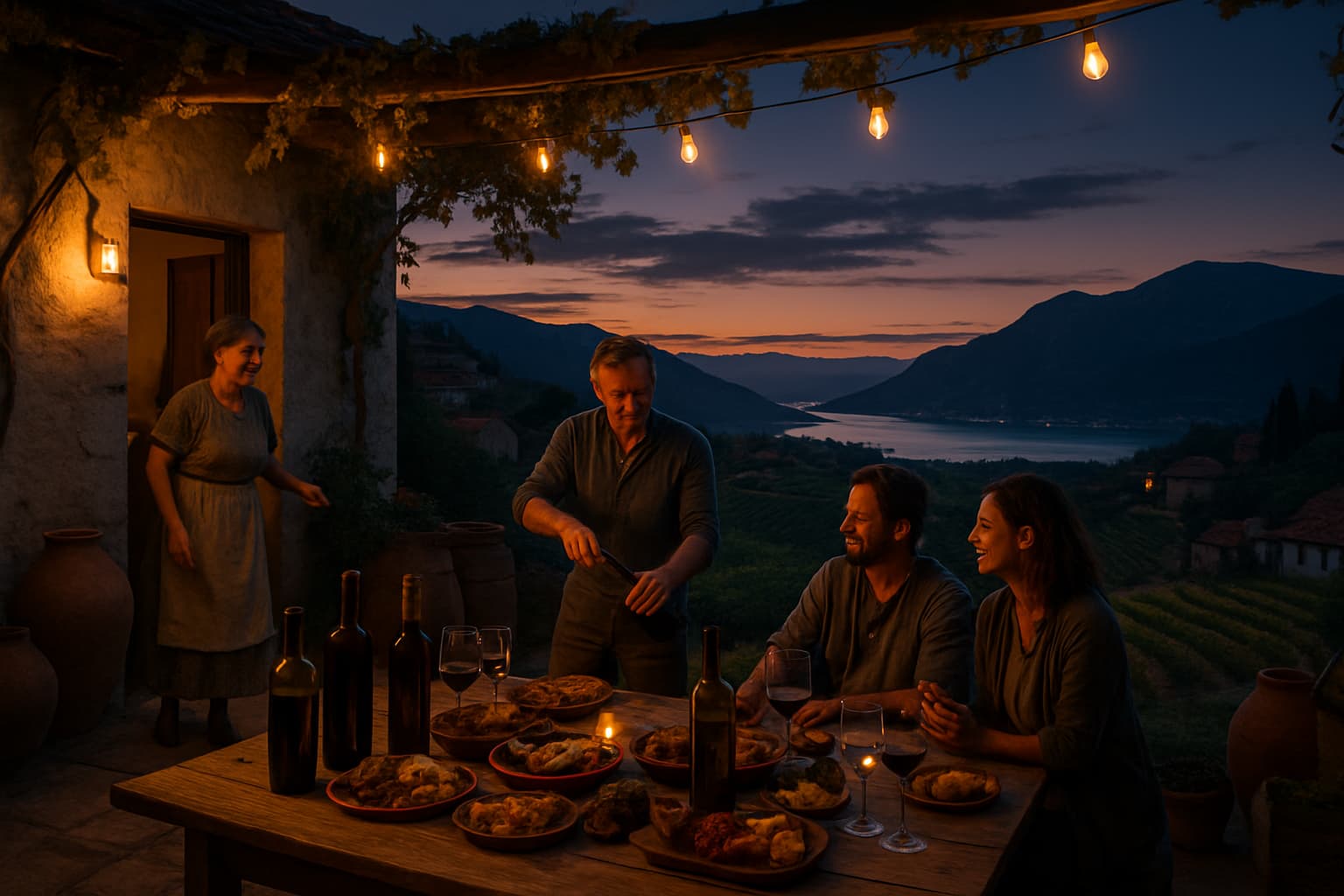
You sit at a long table under a tree. The plates are simple: bread, olive oil, cheese, cured meats, grilled vegetables, perhaps a piece of lamb or fish. The wine is poured. It tastes different with the food—softer, sharper, more alive. You learn that wine is not meant to be judged in silence, but shared.
You meet the people who live by the vine: the grower whose grandfather planted the first rows; the young winemaker who left the city to come back and learn the old ways with new tools; the woman who runs the small inn and remembers every guest who ever stayed.
Their stories are not always romantic. There are years of frost and hail. There are grapes lost to rot. There are taxes and regulations and markets that rise and fall. But there is also a kind of stubborn joy. They keep pruning. They keep picking. They keep fermenting. The next vintage might be better. It might be the best yet.
Wine tourism lets you carry these faces and voices with you. When you open a bottle at home, you remember the hand that poured it for you first.
There are ways to make this kind of travel mean more.
Plan, but not too much. Choose a few producers you care about. Book visits. Leave space between them. Vineyards are not meant to be rushed. Do not try to taste twenty wines in a day and expect to remember any of them.
Respect the work. Arrive on time. Listen when they speak of the land and the harvest. Do not treat the tasting room like a bar. It is more like a small church, or a workshop where something fragile is being made.
Ask simple questions: How was this year’s weather? What is the hardest part of harvest? What do you drink when you are not drinking your own wine? People open up when they feel you are truly curious, not only thirsty.
Eat. Drink water. Take notes if you like—or do not. But pay attention to how you feel in each place. Some vineyards will stay with you for reasons you cannot name: a line of light on the hills, the sound of laughter in the cellar, the way a certain wine made you feel calm and awake at the same time.
And always, if you can, buy a bottle from the places that moved you. It is a way of saying thank you. It is also a way of carrying that patch of earth home.
In the end, wine tourism is not about collecting labels or ticking regions off a list. It is about learning to see.
You see how a hillside, a river, a wind, a stone can become a taste. You see how patience and work and chance come together in a single vintage that will never be repeated in exactly the same way. You see how people tie their lives to a plant that bears fruit only once a year, and how they accept what the season gives them.
You come to understand that a bottle of wine is not just something to drink. It is a story. When you travel to the place where that story began, you step inside it for a while. You feel the sun that warmed the grapes. You walk the soil that fed the roots. You look at the faces that waited and hoped.
Then you go home. The road leaves the vineyard and joins the highway again. The dust settles. But something has changed. The next time you open a bottle, you pause. You pour. You look. You smell. You taste. You remember.
And for a moment, the vineyard is there with you again—the rows of vines, the cool cellar, the hands that worked, the quiet land that gave, and the simple, strong joy of being alive to drink what it offered.
Tannins are astringent compounds found in wine that contribute to its texture and aging potential, often causing a drying or puckering sensation in the mouth. They are derived from grape skins, seeds, and stems, as well as from oak barrels used during aging.
/ˈtænɪnz/
Malic acid is a naturally occurring organic acid found in grapes that contributes to the tart, green apple-like flavor and crispness in wine. It plays a significant role in the taste and acidity of wine.
/mælɪk ˈæsɪd/
Filtration in winemaking is the process of removing solid particles from wine to clarify and stabilize it before bottling, using various types of filters to achieve different levels of clarity and remove unwanted elements like yeast, bacteria, and sediment.
/fɪlˈtreɪʃən/
Oxidation in wine is a chemical reaction between the wine and oxygen that can change its flavor, aroma, and color. This process can be beneficial or detrimental depending on the extent and context of the exposure.
/ˌɒksɪˈdeɪʃən/
Microclimate refers to the unique climate conditions of a small, specific area within a larger region, significantly influencing grapevine growth and the characteristics of the resulting wine.
/ˈmīkrōˌklīmit/
Get weekly wine recommendations, vineyard news, and exclusive content delivered to your inbox.