Wine Tourism
“Where every bottle tells a story”
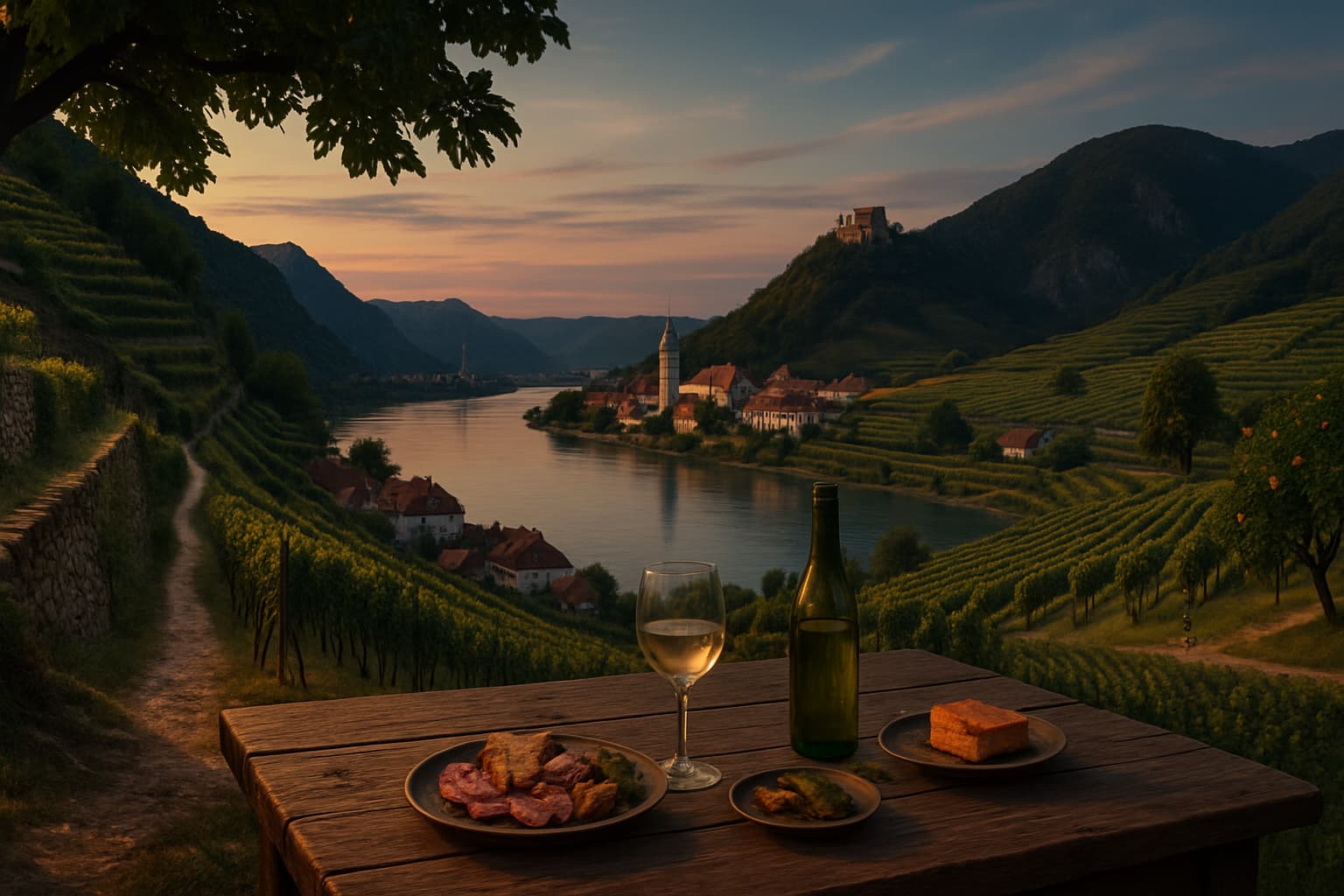
The river runs slow and brown between the hills. Stone rises on both sides. Vines cling to the slopes like men who have known hunger and do not wish to know it again. The air smells of damp rock, crushed leaf, and something clean and sharp that could be hope. This is where the Danube cuts through Wachau, and beyond it lie Kremstal and Kamptal: three valleys, three ways of growing the same stubborn grapes.
You come here to drink wine. You stay because the land will not let you go.
The Danube does not hurry. It has seen armies and emperors and barges and tourists. It has seen monks plant the first vines on terraces of dry stone. The terraces hold the soil like a secret. They keep it from slipping into the river each winter.
In Wachau, the hills close in tight. The valley narrows. The light changes with each bend of the river. One moment the sun hits the stone and you feel the heat on your face. The next, the wind comes down from the forest and you feel the chill in your bones. The vines stand between these two moods. That is why the wines here are sharp and clear and straight as a blade.
Farther east, the land opens. This is Kremstal. The river broadens and the sky is wider. Loess soil lies deep and fine, blown in ages ago by wind that did not care where it dropped its burden. The wines here are softer at the edges but not weak. They are like men who can smile and still keep their fists.
To the north, the Kamptal runs along the Kamp River. It is smaller, cooler, more withdrawn. The vineyards climb the hills, then slip into forests and back again. Granite, gneiss, and loess mix like old stories. The wines are tense and long and sometimes austere. They are not made to please everyone. They are made to be true.
You learn the names the way you learn the faces in a village: slowly. Grüner Veltliner. Riesling. They are not new, but they are honest.
Grüner Veltliner is the backbone here. It grows on loess and on stone. It gives wine that smells of white pepper, green apple, herbs, and sometimes smoke. In Wachau, it can be tight and steely. In Kremstal, it spreads out a little—rounder, with yellow fruit. In Kamptal, it can be both, depending on the slope and the wind and the person who farms it.
Riesling grows where the stone is hardest and the slopes are cruel. It likes poor soils and the sun that bounces back from the rock. It gives wine that smells of apricot, lime, and wet stone—not perfume, just the truth of fruit and earth and time.
In these valleys they do not speak much of glamour. They speak of pruning and frost and harvest dates. They speak of botrytis when it comes in noble form and when it comes like a thief. They speak of the river fog and the autumn sun and how many pickers they can find that year.
“Wine tourism” is a new word for an old thing. People have always come to drink where the wine is made. Now there are roads and bike paths and river cruises. But the core of it is the same: you stand in front of someone who has worked the same slope for years, and you taste what the year gave them.
In Wachau, the villages sit low beside the water. White walls. Red roofs. Church towers that point thin and pale into the sky. Dürnstein, Spitz, Weißenkirchen, Joching. You walk their cobbled streets and hear the river behind the houses.
The vineyards climb behind the villages in narrow, stony steps. The terraces are built of dry-stacked stone. No mortar. Only gravity and the hands of men. They hold heat from the day and give it back at night. They make the difference between ripe fruit and thin sourness.
You can walk these terraces. There are trails between the rows. The stones are worn smooth by boots and rain. You feel the slope in your legs and the wind on your face. When you stop and turn, the river lies below like a long piece of iron, bent and dull in the light.
The wines of Wachau have their own old system of names: Steinfeder, Federspiel, Smaragd. They sound like birds or stones or something from a dream. They mark the weight and ripeness of the wine—light, medium, full. But all of them, when they are good, are clear and direct.
You sit in a Heuriger, a wine tavern, under a chestnut tree. The table is rough. The glass is plain and thick. The wine is cold and pale. It smells of herbs and lime and white pepper. You drink and eat simple food: bread, cold cuts, pickles, spreads. The people talk in low voices. The day slides past.
In the distance you see the blue tower of Dürnstein, bright against the rock. Above it, the ruins of the castle where Richard the Lionheart once sat and waited for ransom. The stones are broken now. The vines below them are not.
This is Wachau: stone, river, terraces, and a light that cuts clean.
Past the narrow throat of Wachau, the Danube eases. The valley widens near Krems. The town is old, with narrow lanes and baroque facades, but it breathes easier than the tight river villages upstream. This is Kremstal.
Here the vineyards roll more gently. Loess lies deep and yellow, soft in the hand. There is still stone on the higher slopes, but much of the land is dust and silt that once blew in from far away. This soil gives Grüner Veltliner a different shape. The wines are often fuller, with yellow apple, ripe pear, and spice. They are no less serious. They are just kinder at first sip.
You can ride a bicycle here without fear of the slopes. The paths run between vines and orchards. Apricot trees stand in rows, their fruit bright and sweet in summer. The same sun that ripens the grapes warms the apricots. In the small cafés they serve apricot cake with the wine. It is not a sin.
Krems itself is worth walking: old churches, small squares, wine bars where bottles from the surrounding hills line the walls. You sit at a table by the window. A car passes slowly on the cobbles. Inside, someone opens a bottle of Riesling from a steep, stony site up in a side valley. The wine smells of citrus and smoke and stone. It is leaner than the Grüner from the loess. You taste them side by side and begin to understand the land without looking at a map.
Kremstal is a bridge. It sits between Wachau’s hard stone and Kamptal’s cooler, broken hills. It has both the river’s breadth and the first hint of the north’s reserve. For the traveler, it is a good place to stay and strike out each day in a different direction.
North of Krems, the road climbs away from the Danube. The air changes. There is more forest. The light is softer. This is Kamptal. The Kamp River is smaller than the Danube, but it cuts its own line through the hills.
Langenlois is the heart of it. It is not large, but it is serious about wine. Modern tasting rooms sit beside old cellars dug into the loess. The vineyards rise around the town like a bowl. Beyond them, the hills grow wild.
In Kamptal, the soils are a patchwork: loess on the gentle slopes, gneiss and granite on the higher, harsher sites. The nights are cooler. The winds can be sharp. The grapes ripen slowly.
Grüner Veltliner here can be both generous and strict. From loess, it is broad and spicy, with yellow fruit and a kind of quiet warmth. From the stony slopes, it is taut and salty, like a rope pulled tight. Riesling on the terraces above gives wines that start hard and closed and then open in the glass, showing citrus, herbs, and a long, stony finish that does not hurry.
You walk a vineyard path near Heiligenstein, one of the famous hills. The ground under your boots is sandy and stony, old volcanic and sandstone layers turned up to the sun. The rows run straight, but the hill curves. The wind comes over the forest and smells of pine and dry grass. You think of how many times these vines have seen frost and heat and hail, and still they stand.
The tourism here is quieter. Fewer river boats. More walkers and people who come with notebooks and questions. They sit in tasting rooms and talk about vintages and parcels and harvest dates. But outside, the valley is simple: vines, woods, a small river, and a sky that can turn cold in an hour.
You can cross these three regions in a day by car, but you should not. The land does not give itself in a hurry.
Take the river first: a slow boat from Krems through Wachau to Melk. Stand on the deck and watch the terraces slide past—churches, castles, ruined walls, and always the lines of vines clinging to the slopes. Get off in a village. Walk. Taste.
Ride a bicycle along the river path. The wind off the water is clean. You stop at a Heuriger when the sign is out and the door is open. You drink what they are pouring that year. It may not be grand, but it is theirs.
Stay a night in Krems or one of the villages nearby. The next day, go north into Kremstal’s side valleys and then on into Kamptal. Visit a small estate where the owner is in the cellar and their partner is in the tasting room. Listen more than you talk.
Do not chase only the famous names. The land is full of people who work hard and speak plainly and make wines that show their slope and their year. Taste widely. Take notes if you must, but better to remember with your senses: the smell of the cellar, the way the light fell on the vines that afternoon, the sound of the river in the distance.
These valleys are not rich in the way cities are rich. They are rich in patience. Stone terraces built by people whose names are gone. Vines tended by hands that will never be written about. Monks who planted the first cuttings and prayed for no frost. Farmers who watched the sky and knew that prayer was not enough.
“Wine tourism” is a soft phrase, but what you find here is not soft. It is work, weather, and waiting. It is the choice to plant on a steep slope when the flat land would be easier. It is the choice to pick late and risk the rain, or early and risk the thinness.
When you stand in a vineyard in Wachau and feel the heat of the stone, when you walk the loess paths of Kremstal and see the dust on your shoes, when you climb the cool, stony hills of Kamptal and taste the wind, you begin to understand that the wine in your glass is not a luxury. It is the form the land takes when people give it their time and their backs and their faith.
You come as a tourist. You leave as something else. Not a local—that takes blood and years. But you leave with a piece of the valleys in you: the river’s slow strength, the terraces’ stubbornness, the quiet certainty of vines that endure.
In the end, you sit at a small table. The bottle is open. The glass is clear. Outside, the light fades over the hills. You raise the glass and taste stone, fruit, and time. It is simple. It is enough.
Tannins are astringent compounds found in wine that contribute to its texture and aging potential, often causing a drying or puckering sensation in the mouth. They are derived from grape skins, seeds, and stems, as well as from oak barrels used during aging.
/ˈtænɪnz/
Malic acid is a naturally occurring organic acid found in grapes that contributes to the tart, green apple-like flavor and crispness in wine. It plays a significant role in the taste and acidity of wine.
/mælɪk ˈæsɪd/
Filtration in winemaking is the process of removing solid particles from wine to clarify and stabilize it before bottling, using various types of filters to achieve different levels of clarity and remove unwanted elements like yeast, bacteria, and sediment.
/fɪlˈtreɪʃən/
Oxidation in wine is a chemical reaction between the wine and oxygen that can change its flavor, aroma, and color. This process can be beneficial or detrimental depending on the extent and context of the exposure.
/ˌɒksɪˈdeɪʃən/
Microclimate refers to the unique climate conditions of a small, specific area within a larger region, significantly influencing grapevine growth and the characteristics of the resulting wine.
/ˈmīkrōˌklīmit/
Get weekly wine recommendations, vineyard news, and exclusive content delivered to your inbox.