Wine Tourism
“Where every bottle tells a story”
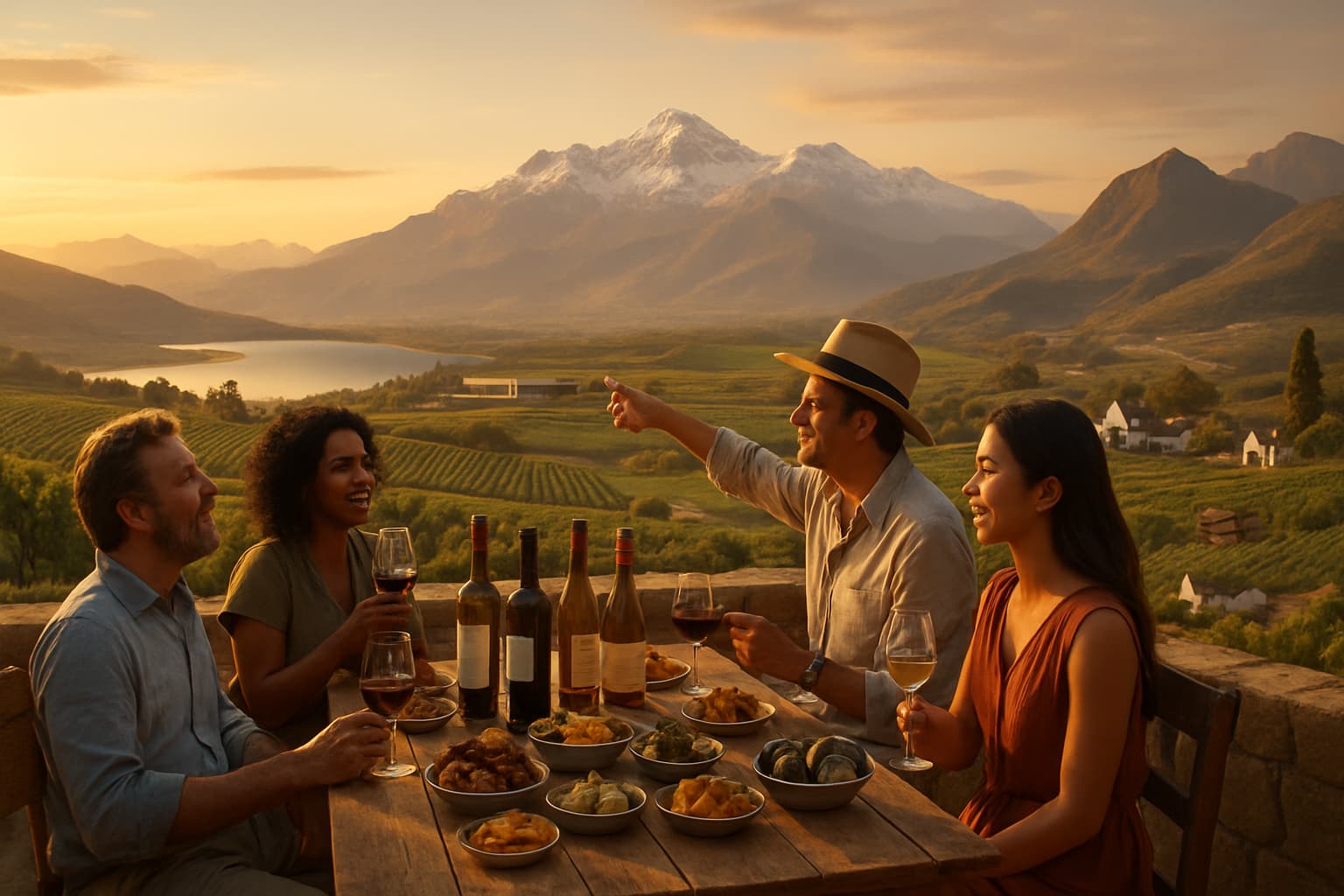
There’s something irresistibly seductive about following wine beyond the cobbled lanes of Europe, slipping the leash of Bordeaux and Barolo, and letting your palate roam where the maps feel less familiar. Think of it as a kind of vinous wanderlust: you trade châteaux for desert skies, monasteries for misty valleys, and centuries‑old cellars for bold, experimental wineries perched on the edge of oceans, mountains, and jungles.
Wine tourism in non‑European regions is not merely about tasting; it’s about stepping into landscapes that feel almost cinematic, meeting winemakers who still have grape juice under their fingernails, and discovering how sun, soil, altitude, and culture shape the liquid in your glass. It’s travel you can taste—sensual, immediate, and gloriously indulgent.
Pour yourself a generous metaphorical glass and wander through the New World of wine: the Americas, Africa, Oceania, and Asia, where vineyards unfurl like green silk in places you might never have imagined.
Europe has given us the language of wine—Burgundy, Rioja, Champagne—but the non‑European world has gifted us a kind of exuberant freedom. Here, the rules are looser, the labels more straightforward, and the experiments delightfully daring.
Visiting wine regions outside Europe offers:
It’s not just about finding “good wine” abroad. It’s about discovering how place becomes flavour—and how travel becomes memory—one glass at a time.
California is the grande dame of New World wine tourism. Napa and Sonoma are names whispered with a certain reverence, and with good reason.
Napa Valley is polished, plush, and a little bit theatrical. Think:
Beyond these icons, Central Coast regions—Paso Robles, Santa Barbara, Santa Ynez—offer Rhône‑style blends, ocean‑kissed Chardonnay, and a more laid‑back, surf‑and‑wine sensibility. You might taste Syrah in a barn, then drive ten minutes to a wild Pacific beach.
Canada’s wine regions feel like a secret whispered among those in the know.
Okanagan Valley (British Columbia):
Wine tourism here is quieter, more contemplative—less about spectacle, more about the hush of snow, the clarity of mountain air, and the slow pleasure of a glass sipped by a fire.
Argentina’s wine country feels like a love affair between the earth and the sky.
Here, wine tourism is gloriously hedonistic:
Further north, in Salta and the Cafayate region, vineyards soar to some of the highest altitudes in the world. The star here is Torrontés, a white wine with the perfume of jasmine and lychee but a crisp, dry finish—a little like biting into a chilled, fragrant peach.
Chile is a long, slender ribbon of a country, and its wine regions stretch like beads on a necklace between the Andes and the Pacific.
Key regions for travellers include:
Wine tourism in Chile often comes with:
The landscapes are dramatic yet understated, and the hospitality has the easy warmth of a country comfortable in its own skin.
South Africa’s Cape Winelands feel almost impossibly picturesque, as though someone designed them with wine tourists in mind.
Just an hour from Cape Town, you enter a world of:
Signature experiences include:
Many estates blend wine with art galleries, sculpture gardens, or wildlife experiences. You might spend the morning on safari, the afternoon tasting single‑vineyard Syrah, and the evening with a plate of grilled springbok and a glass of Bordeaux‑style Cape blend.
Australia’s wine world is vast, varied, and deliciously unpretentious. It’s a place where serious wine is made by people who often prefer to wear shorts and call you by your first name.
Australian wine tourism invites lingering: long brunches, languid tastings, and that lovely, lazy feeling of not having anywhere urgent to be.
If wine could be distilled from pure, clean air and green hills, it would taste like New Zealand.
Wine tourism here pairs easily with outdoor adventures: hiking, cycling, sailing, then returning to a cellar door for a tasting flight and a platter of local lamb or green‑lipped mussels.
Asia may not be the first place you think of for wine, but that makes discovery all the more delicious.
China’s wine scene is young but astonishingly ambitious.
The climate can be harsh—cold winters, hot summers—but modern techniques and careful site selection are yielding wines that surprise and impress, and visiting these regions offers a glimpse into a rapidly evolving wine culture.
In India, regions like Nashik (near Mumbai) are crafting fresh, fruit‑driven wines—Sauvignon Blanc, Chenin Blanc, and sparkling styles—often enjoyed with spicy, aromatic dishes that challenge traditional Western pairing rules in the most delightful way.
Elsewhere in Asia, experimental wineries in Thailand, Vietnam, and Japan (especially for delicate Japanese wines and, of course, sake) offer glimpses of what wine might look like when it takes root in new soils and new culinary traditions.
To savour these regions fully:
And always, always pace yourself. The goal is pleasure, not endurance.
Wine tourism outside Europe is more than a checklist of regions and grapes; it’s a way of understanding how the world tastes when it’s filtered through sun, soil, and human hands. Each non‑European region brings its own accent to the glass: the smoky whisper of South African Pinotage, the sun‑ripe swagger of Argentine Malbec, the sea‑spray snap of Chilean Sauvignon Blanc, the citrus‑bright precision of New Zealand whites, the plush generosity of Australian Shiraz.
To stand in a vineyard far from the Old World and raise a glass is to feel, for a moment, the intimate connection between landscape and pleasure. You taste the altitude of the Andes, the salt off the Southern Ocean, the cool breath of Canadian winters, the fierce, bright sun of the Cape.
And that, perhaps, is the quiet magic of wine tourism in these far‑flung places: it invites you not just to travel, but to inhabit a landscape, to let it wash over your senses and settle on your tongue. You leave with memories bottled inside you—sunsets, conversations, flavours—that you can uncork whenever you like, simply by pouring yourself another glass.
Tannins are astringent compounds found in wine that contribute to its texture and aging potential, often causing a drying or puckering sensation in the mouth. They are derived from grape skins, seeds, and stems, as well as from oak barrels used during aging.
/ˈtænɪnz/
Malic acid is a naturally occurring organic acid found in grapes that contributes to the tart, green apple-like flavor and crispness in wine. It plays a significant role in the taste and acidity of wine.
/mælɪk ˈæsɪd/
Sonoma County is Napa’s more relaxed, bohemian cousin:
Niagara Peninsula (Ontario):
Barossa Valley (South Australia):
McLaren Vale:
Hunter Valley (New South Wales):
Yarra Valley & Mornington Peninsula (Victoria):
Marlborough (South Island):
Central Otago:
Hawke’s Bay (North Island):
Filtration in winemaking is the process of removing solid particles from wine to clarify and stabilize it before bottling, using various types of filters to achieve different levels of clarity and remove unwanted elements like yeast, bacteria, and sediment.
/fɪlˈtreɪʃən/
Oxidation in wine is a chemical reaction between the wine and oxygen that can change its flavor, aroma, and color. This process can be beneficial or detrimental depending on the extent and context of the exposure.
/ˌɒksɪˈdeɪʃən/
Microclimate refers to the unique climate conditions of a small, specific area within a larger region, significantly influencing grapevine growth and the characteristics of the resulting wine.
/ˈmīkrōˌklīmit/
Get weekly wine recommendations, vineyard news, and exclusive content delivered to your inbox.