Wine Tasting
“Where every bottle tells a story”
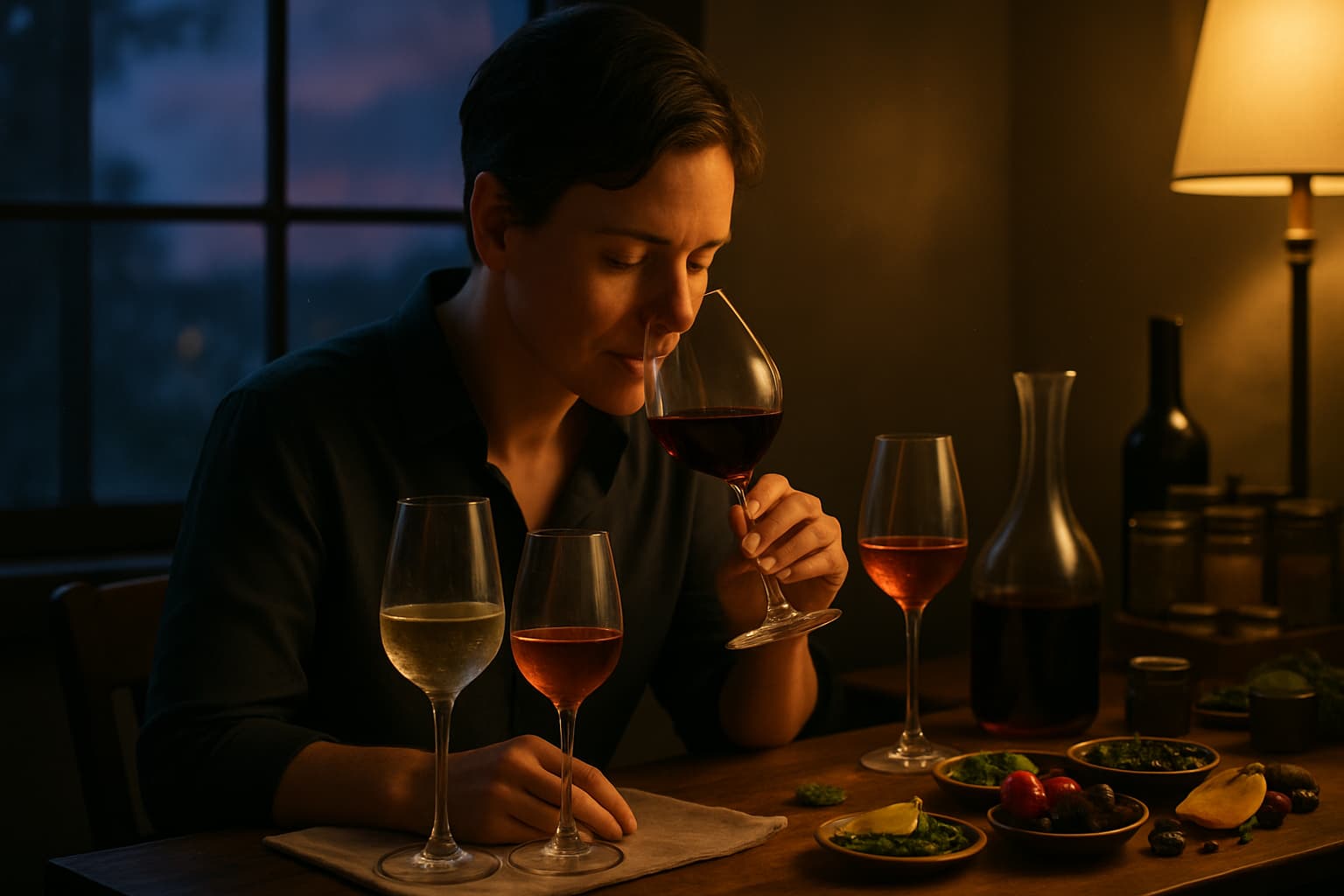
There is a moment, when you first lower your nose to a glass of wine, that feels almost indecently intimate. The world recedes; conversation blurs; time slows. It’s just you and that quiet swirl of scent rising from the glass, promising stories of sun and soil, of cellars and seasons, of patience and pleasure. Learning to read those aromas – to really understand them – is not about snobbery or jargon. It’s about deepening delight. And that, to my mind, is the most delicious kind of education there is.
Let’s walk, slowly and sensually, through the art of using your nose to evaluate wine. Think of this not as a technical manual, but as a love letter to aroma – and a gentle guide to mastering it.
Before we plunge our noses into the glass, it’s worth pausing to understand why smell is so central to wine.
We talk about “tasting” wine, but most of what we call taste is actually aroma. Your tongue, faithful though it is, can only really distinguish a handful of basic sensations: sweet, sour, bitter, salty, and umami. Everything else – the strawberries, the smoke, the honey, the leather-bound library in autumn – is your nose at work.
When you sip wine, aroma molecules travel up the back of your throat to your nasal passages in what’s called retronasal smelling. This is why a blocked nose makes everything taste like damp cardboard. It’s also why, when you train your nose, your whole wine world expands from black-and-white sketch to full Technicolor.
Learning to evaluate aroma isn’t about memorizing a list of “correct” smells. It’s about increasing your sensitivity, your vocabulary, and, perhaps most importantly, your attention. Aroma is where wine stops being just a drink and becomes an experience.
To coax the full aromatic story from your wine, you need to set the scene properly. Think of it as laying the table for your nose.
You don’t need a cupboard full of hyper-specific stemware, but shape does matter.
A wine that’s too cold is like a shy guest in a corner, refusing to speak. Too warm, and it can become loud, blowsy, and unbalanced.
As the wine warms in the glass, aromas will unfurl. Let time be part of the pleasure.
Your nose is easily distracted, and like any diva, it doesn’t like competition.
Evaluating aroma isn’t one single sniff; it’s a gentle, unfolding ritual. Think of it as a three-act play.
Pour the wine and, before you swirl, bring the glass to your nose.
At this stage, you’re getting the lighter, more volatile aromas that leap up straight away. It’s a first hello, not a full conversation.
Now, give the wine a swirl. This is not a performance for Instagram; it’s simply a practical way of encouraging more aroma molecules to escape into the air.
Here, the wine begins to open up. Fruit becomes more defined, flowers bloom, spices emerge. The story is becoming more detailed.
Don’t be afraid to get intimate.
This is where complexity reveals itself: layers of fruit, herbs, earth, wood, perhaps something savoury or smoky. You’re no longer just smelling; you’re listening.
Wine can smell of almost anything, but our poor brains crave order. It helps to group aromas into loose families. You don’t need to force a wine into a box; this is just a way of organising your thoughts.
Most wines – especially younger ones – will give you fruit first.
Notice:
Ripeness in aroma often hints at ripeness in flavour and alcohol.
Some wines are like walking through a garden.
These can signal grape variety (Sauvignon Blanc, for instance, is often grassy or nettly) or cooler-climate wines.
When wine has been aged in oak barrels, or simply has a certain richness, you may find:
These are like the kitchen scents of wine – comforting, warming, inviting. They often come from oak ageing, but can also develop with bottle age.
Some wines are less about fruit salad and more about forest walks and old stone walls.
These savoury, “non-fruity” aromas can make a wine feel more serious, more contemplative, more grown-up.
One of the greatest frustrations in learning to evaluate wine is this: we often recognise a smell, but can’t name it. It hovers just out of reach, like a word on the tip of your tongue.
The solution is not to strain and panic, but to gently train.
Make smelling an everyday habit.
You are building a mental library. The fuller your shelves, the easier it becomes to match what’s in your glass to what’s in your memory.
You don’t have to be exact. Wine does not contain actual strawberries or cigar boxes; it merely reminds you of them.
Instead of fretting over whether it’s blackcurrant or blackberry, you might simply say: “dark berries.” Instead of pinning down whether that’s cedar or cigar box, you might think: “polished wood, a bit smoky.”
Wine language is metaphorical by nature. Let it be suggestive rather than scientific.
While I never want to strip the romance from wine, your nose can also offer practical clues about quality, condition, and style.
Very occasionally, wine can be faulty.
If the dominant impression is unpleasant and overwhelming, rather than intriguing or complex, the wine may be flawed.
Your nose can hint at:
You don’t need to turn every glass into a detective case, but it can be quietly thrilling to let your nose guide your guesses.
Like any sense, your nose gets better with use. Fortunately, this kind of training is gloriously pleasurable.
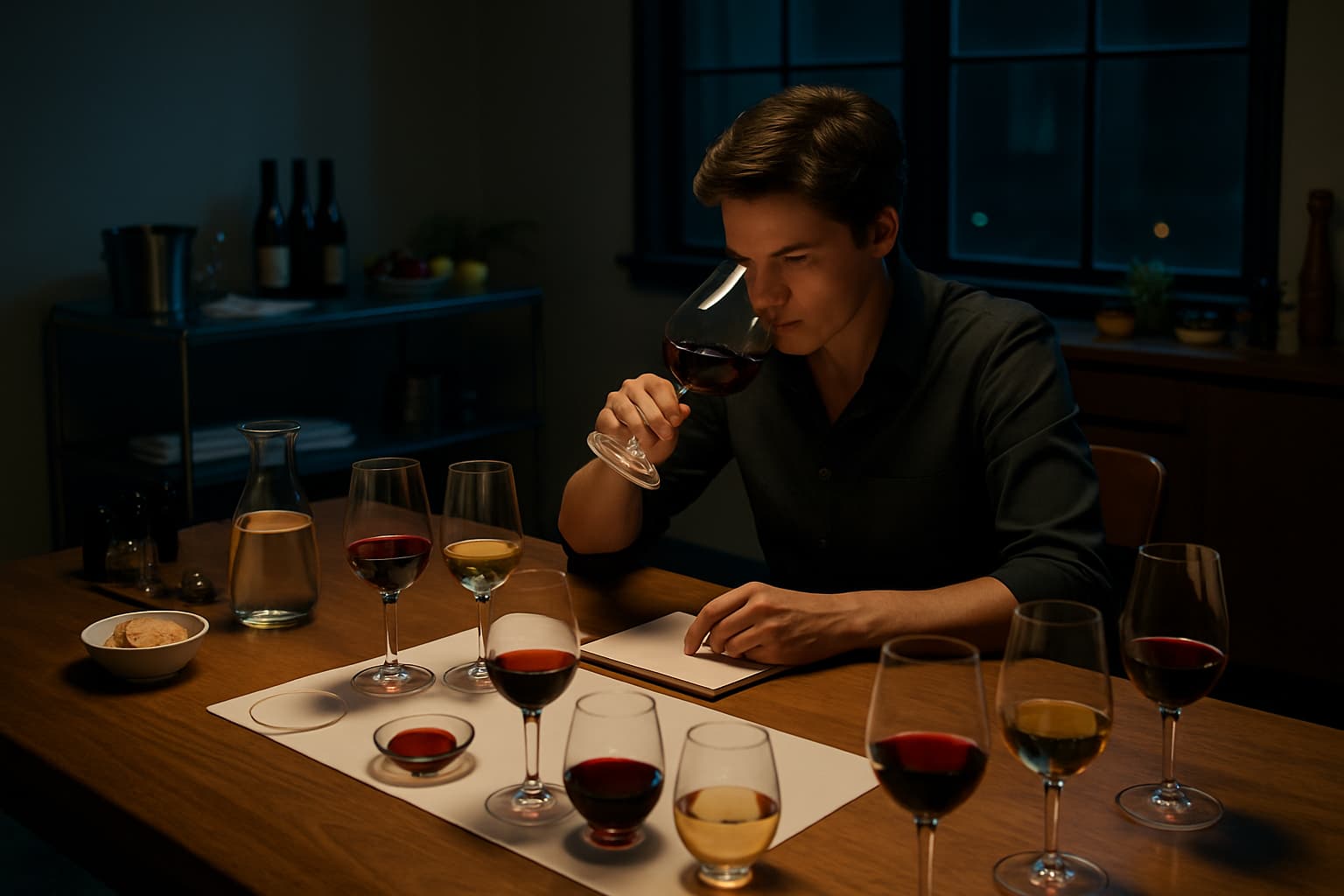
Pour two or three wines at once – they don’t need to be grand, just different.
For example:
Smell them in turn, without worrying about right or wrong. Just ask:
Comparison sharpens perception. It’s easier to notice differences than to analyse one wine in isolation.
You can buy aroma kits, but you can also make your own little olfactory playground.
It’s playful, a little silly, and surprisingly effective.
There is a tendency, in some circles, to turn wine into an exam. Notes must be precise, vocabulary impressive, judgements firm. I would beg you to resist this.
Your nose is not there to prove anything. It is there to give you pleasure, to deepen your relationship with what’s in your glass.
If all you can say at first is “this smells like summer” or “this reminds me of my grandmother’s kitchen,” that is not a failure. It is the beginning of your own, personal wine language. With time, that language will become more detailed, but it should never lose its intimacy.
To master the wine nose is not to become a walking aroma encyclopaedia. It is, instead, to cultivate a kind of scented mindfulness.
You prepare the glass and the room.
You swirl, softly.
You lower your nose and breathe.
You notice the first impression, then the details, then the changes as the wine sits in the glass and in your memory. You let fruit and flower, spice and stone, earth and air all have their say. You don’t rush to label; you simply listen. And slowly, gently, you begin to understand.
In the end, evaluating aroma is less about being clever than about being present. It’s an invitation to linger, to savour, to allow a simple glass of wine to become a small, fragrant ceremony in your day.
So next time you pour yourself a glass, don’t hurry to sip. Pause. Bring it to your nose. Breathe in, deeply and luxuriously. Let the wine tell you its story – and allow your nose, newly attentive and ever more discerning, to revel in every scented syllable.
Tannins are astringent compounds found in wine that contribute to its texture and aging potential, often causing a drying or puckering sensation in the mouth. They are derived from grape skins, seeds, and stems, as well as from oak barrels used during aging.
/ˈtænɪnz/
Malic acid is a naturally occurring organic acid found in grapes that contributes to the tart, green apple-like flavor and crispness in wine. It plays a significant role in the taste and acidity of wine.
/mælɪk ˈæsɪd/
Filtration in winemaking is the process of removing solid particles from wine to clarify and stabilize it before bottling, using various types of filters to achieve different levels of clarity and remove unwanted elements like yeast, bacteria, and sediment.
/fɪlˈtreɪʃən/
Oxidation in wine is a chemical reaction between the wine and oxygen that can change its flavor, aroma, and color. This process can be beneficial or detrimental depending on the extent and context of the exposure.
/ˌɒksɪˈdeɪʃən/
Microclimate refers to the unique climate conditions of a small, specific area within a larger region, significantly influencing grapevine growth and the characteristics of the resulting wine.
/ˈmīkrōˌklīmit/
Get weekly wine recommendations, vineyard news, and exclusive content delivered to your inbox.