Wine Literature and Media
“Where every bottle tells a story”

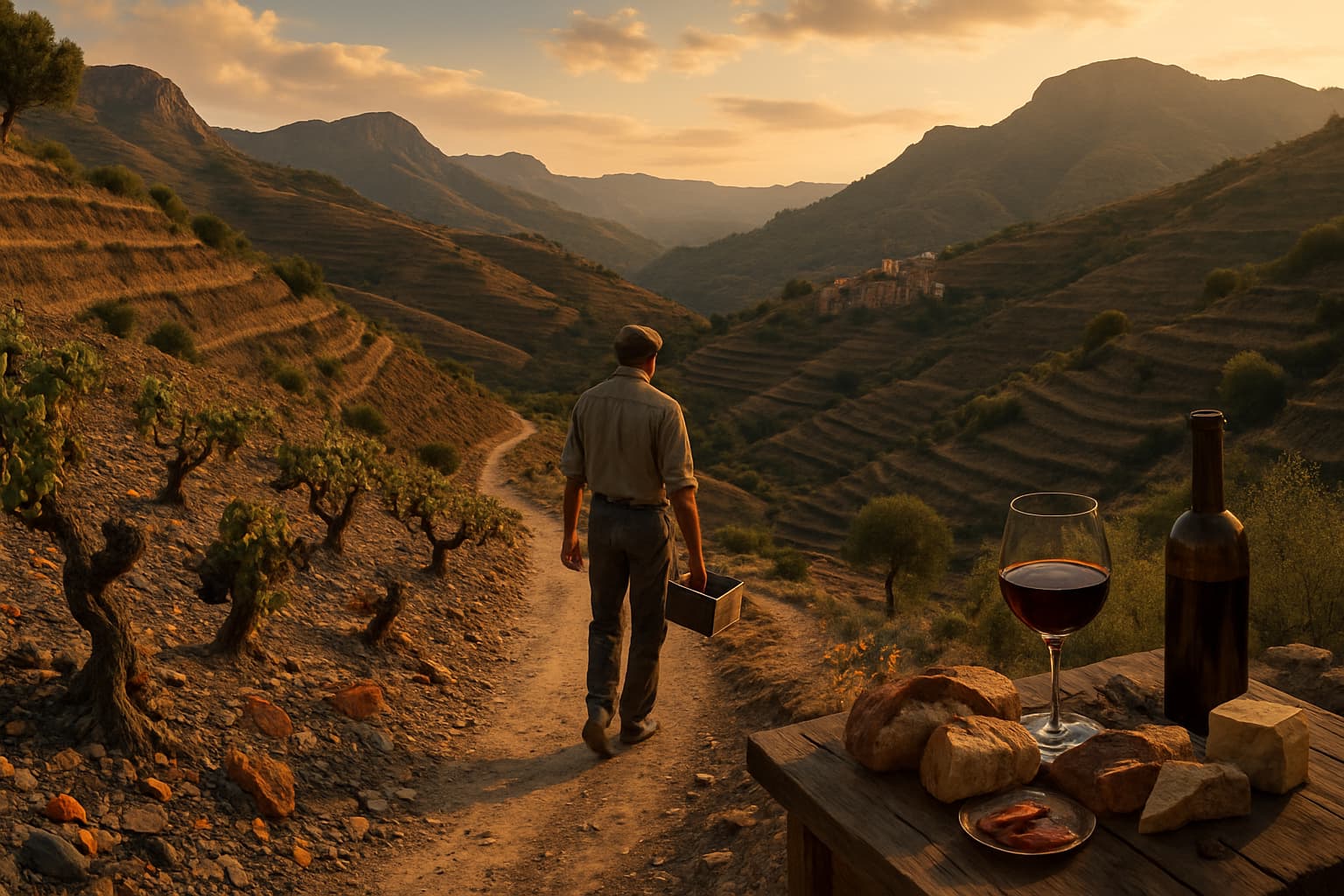
On a quiet hillside, as dawn first brushes the sky with pale light, a vineyard awakens. Dew clings to the leaves, insects stir in the undergrowth, and a blackbird announces the day. Here, in this intricate web of life, something remarkable is happening: grapes are being grown not as industrial commodities, but as living expressions of place, climate, and time. From these grapes, a new generation of wines is emerging—wines that call themselves natural, organic, and biodynamic.
They are not merely drinks. They are, in a sense, bottled landscapes.
In what follows, we will step—gently—into this world. We will trace the roots of natural wine, explore the philosophies of organic and biodynamic viticulture, and consider how these approaches are reshaping not only what we taste in the glass, but how we understand our relationship with the natural world itself.
To understand natural, organic, and biodynamic wines, we must begin not in the cellar, but in the soil.
For much of the 20th century, vineyards increasingly came to resemble factories. Synthetic fertilizers, herbicides, pesticides, and fungicides were applied to control nature—killing weeds, deterring insects, boosting yields. Vines were pruned and trained for maximum production, and in the winery, a battery of technologies stood ready to shape, correct, and polish the resulting wine.
In recent decades, however, a quiet revolution has taken place. A growing number of vignerons—winegrowers—have turned away from this industrial model. They have begun to see the vineyard as a living ecosystem rather than a production line; the soil as a complex community rather than an inert substrate; the grape as a translator of place rather than raw material to be manipulated.
Natural, organic, and biodynamic wines are the expressions of this shift. They share a common impulse: to make wine with fewer interventions, greater respect for nature, and a deeper trust in the vineyard itself.
The term natural wine has no single, universal legal definition. It is more a philosophy than a regulation, more a movement than a category. Yet within this diversity, certain principles are widely shared.
Most natural wine producers adhere to these core ideas:
The result is often a wine that feels more alive. Aromas can be wild, untamed, sometimes cloudy in appearance, occasionally unpredictable. Advocates argue that such wines are more authentic expressions of their terroir—the unique combination of soil, climate, and human touch—because they are less manipulated and more transparent.
Critics, however, point out that “natural” is not synonymous with “fault-free.” Without careful attention, wines can become oxidized, mousy, or unstable. Here one finds a central tension in the movement: how to honor nature’s spontaneity without sacrificing quality and stability.
Yet for many drinkers, this is precisely what makes natural wine so compelling. Each bottle feels like a living conversation between nature and the winemaker, rather than a scripted performance.
If natural wine is a broad philosophy, organic wine is more strictly defined. Organic viticulture is governed by certification bodies, with standards that vary somewhat by country but share common principles.
At its heart, organic winegrowing means:
No synthetic herbicides
Weeds are controlled by mechanical means, mulching, grazing animals, or cover crops rather than by chemical weedkillers.
The philosophy is straightforward: reduce harm to the environment, protect soil health, and limit the chemical footprint of viticulture.
In the winery, organic certification typically restricts certain additives and processes, especially the amount of sulfur dioxide that may be used. The exact limits differ between regions—for instance, the European Union has specific maximum SO₂ levels for organic wines, which are lower than those for conventional wines.
However, organic does not automatically mean “no intervention” in the cellar. An organically certified wine may still use cultured yeasts, filtration, and other technologies. It is possible, therefore, for a wine to be organic but not “natural” in the stricter sense used by natural wine enthusiasts.
Still, organic farming marks a crucial step: a conscious decision to align viticulture more closely with the rhythms and resilience of nature, rather than relying on synthetic shortcuts.
If organic viticulture seeks to reduce chemical inputs, biodynamic viticulture goes further, embracing a holistic, almost spiritual view of the vineyard.
Originating from the ideas of Austrian philosopher Rudolf Steiner in the 1920s, biodynamics treats the farm—or vineyard—as a single, self-sustaining organism. It is not merely a place where grapes grow, but a living entity in which soil, plants, animals, insects, and humans are all interconnected.
Biodynamic winegrowing typically involves:
To some, these practices may sound mystical, even eccentric. Yet, intriguingly, many of the world’s most highly regarded wines come from biodynamically farmed vineyards. Whether one attributes this to cosmic forces or simply to the intense care, observation, and respect these growers bring to their land, the results are often remarkable: wines of striking energy, depth, and clarity.
Certification bodies such as Demeter and Biodyvin oversee biodynamic standards, providing a recognizable seal for consumers.
Once the grapes are harvested—whether from organic or biodynamic vineyards—the philosophy of natural winemaking turns to the cellar. Here, the winemaker faces a delicate task: to guide fermentation and aging without overwhelming the wine’s natural character.
Natural winemakers typically embrace:
The result can be wines that challenge conventional expectations: orange wines made from white grapes fermented on their skins; pétillant-naturel (pét-nat) sparkling wines bottled before fermentation is complete; red wines of surprising lightness and freshness.
For those accustomed to polished, predictable wines, these can seem strange at first. Yet for many, they are thrilling—like walking through a forest after rain, with scents and textures that feel immediate, unvarnished, and alive.
What does all this mean in the glass?
Natural, organic, and biodynamic wines often share certain sensory hallmarks:
Yet it is important to note: not every cloudy or unusual wine is a good one. There is a difference between character and flaw, between complexity and instability. The best natural, organic, and biodynamic wines are not celebrated merely because of how they are made, but because of their balance, harmony, and capacity to move us.
Ultimately, these wines raise a philosophical question: What do we mean by authenticity? Is a wine more authentic if it is technically perfect but heavily engineered, or if it is slightly unruly yet faithfully reflects the vagaries of nature and place?
There is no single answer. But the growing popularity of these wines suggests that many drinkers crave a deeper connection—to the land, to the seasons, to the people who tend the vines.
For those setting out on this journey, a few gentle suggestions:
Seek out wine shops, bars, or sommeliers who specialize in natural, organic, and biodynamic wines. Their knowledge can help you navigate the diversity and avoid bottles that are truly faulty.
In doing so, you may find that your understanding of wine shifts—from a product to be scored, to a story to be listened to.
In the end, natural, organic, and biodynamic wines ask us to look beyond the rim of the glass. They invite us to consider the soil beneath our feet, the insects that pollinate the vines, the fungi and bacteria that knit the underground world together. They remind us that every vineyard is part of a wider ecosystem, and that our choices as consumers ripple outward into that fragile web of life.
When we raise a glass of such wine, we taste not only fermented grape juice, but also the echo of morning birdsong, the quiet labor of earthworms, and the patience of growers who choose to work with nature rather than against it.
In a world increasingly dominated by uniformity and speed, these wines stand as small but potent acts of resistance. They are slower, more particular, more vulnerable to the whims of weather and time. And precisely because of this, they carry within them something precious: a sense of belonging to a place, and of kinship with the living world.
So the next time you pour a wine made from organically or biodynamically grown grapes, perhaps crafted with minimal intervention, pause for a moment. Hold the glass to the light. Observe its color, inhale its scent. In that fragile, shimmering liquid, countless lives have played their part—seen and unseen, human and more-than-human.
To drink such a wine is to take part, however briefly, in that great, ongoing story of nature and time.
Tannins are astringent compounds found in wine that contribute to its texture and aging potential, often causing a drying or puckering sensation in the mouth. They are derived from grape skins, seeds, and stems, as well as from oak barrels used during aging.
/ˈtænɪnz/
Malic acid is a naturally occurring organic acid found in grapes that contributes to the tart, green apple-like flavor and crispness in wine. It plays a significant role in the taste and acidity of wine.
/mælɪk ˈæsɪd/
Farming without synthetic chemicals
Grapes are grown at least organically—often biodynamically—without synthetic herbicides, pesticides, or fertilizers.
Hand-harvesting
Grapes are picked by hand, allowing careful selection and avoiding damage that can occur with machines.
Native, ambient yeasts
Fermentation is carried out by the wild yeasts that live on the grape skins and in the cellar, rather than by cultured, commercial yeasts selected in laboratories.
Minimal additives
The addition of chemicals and processing aids is drastically limited. In many cases, the only permitted additive is a small amount of sulfur dioxide (SO₂), and some producers use none at all.
Low intervention in the cellar
Techniques such as heavy filtration, fining, acid adjustment, de-acidification, concentration, and flavor “correction” are avoided. The wine is allowed to develop with minimal interference.
No synthetic pesticides or fungicides
Insects and fungal diseases are managed through natural or mineral-based treatments (such as copper and sulfur), biological controls, canopy management, and biodiversity.
No synthetic fertilizers
Soil fertility is built through compost, manure, green manures, and cover crops, rather than chemical nitrogen, phosphorus, and potassium.
Encouraging biodiversity
Hedges, trees, grasses, wildflowers, and insect habitats are often preserved or introduced to create a more balanced ecosystem.
Organic practices as a foundation
Biodynamic vineyards avoid synthetic fertilizers, herbicides, and pesticides, just like organic ones.
Biodynamic preparations
Special composts and sprays, such as horn manure (known as Preparation 500) and horn silica (Preparation 501), are applied in homeopathic doses. These are made from natural materials—cow manure, quartz, medicinal herbs—composted and fermented in particular ways. They are believed to stimulate soil life, root growth, and the vine’s ability to adapt to its environment.
Cosmic and lunar rhythms
Vineyard work—planting, pruning, spraying, harvesting—is often timed according to lunar and planetary cycles, based on biodynamic calendars. Proponents argue that these rhythms influence plant vitality and sap flow, much as the moon affects tides.
Biodiversity and self-sufficiency
Biodynamic estates often keep animals, maintain forests, plant trees, and encourage a diversity of crops. The goal is to create a balanced ecosystem that can, as far as possible, sustain itself.
Spontaneous fermentation
Rather than inoculating the must (the crushed grapes and juice) with commercial yeast strains, they allow the yeasts naturally present on the grape skins and in the winery to begin fermentation. This can lead to more complex, site-specific flavors, though it also requires vigilance to prevent unwanted microbes from taking over.
Minimal additions
Many natural winemakers use little or no sulfur dioxide, especially before bottling. Sulfur is a powerful antioxidant and antimicrobial agent, and while it can stabilize wine, it can also mute certain aromas if used excessively.
Avoidance of heavy manipulation
Techniques such as reverse osmosis, vacuum concentration, aggressive filtration, and the addition of tannins, colorants, or flavoring agents are shunned. The aim is to let the wine find its own equilibrium.
Gentle clarification
Some wines are allowed to settle naturally, with particles falling to the bottom of the tank over time. Others may be lightly filtered, but often they remain slightly hazy—a sign, to their makers, of vitality rather than imperfection.
A strong sense of place
Because they are less manipulated, these wines frequently show marked differences from vineyard to vineyard, vintage to vintage. The concept of terroir—the influence of soil, climate, and local ecology—becomes more apparent.
Vivid acidity and energy
Many such wines feel bright, nervy, even electric on the palate, reflecting careful farming and moderate yields.
Aromas that can be unconventional
Notes of fresh herbs, wildflowers, orchard fruit, earth, and sometimes even cider-like or yeasty nuances may appear, especially in wines made with minimal sulfur.
Textural complexity
Particularly in skin-contact whites and lightly extracted reds, texture—tannins, grip, and mouthfeel—plays a central role.
Read the labels carefully
Look for certifications such as “organic,” “biodynamic,” “Demeter,” or “Biodyvin.” While not all natural winemakers seek certification, these marks can provide a starting point.
Taste broadly and patiently
Try wines from different regions, grapes, and styles—crisp whites, skin-contact wines, light reds, structured reds, pét-nats. Allow your palate time to adjust to new textures and aromas.
Embrace variation
Natural, organic, and biodynamic wines often show more vintage variation and bottle-to-bottle individuality. Rather than seeing this as a flaw, consider it a reminder that wine is an agricultural product, not a manufactured one.
Filtration in winemaking is the process of removing solid particles from wine to clarify and stabilize it before bottling, using various types of filters to achieve different levels of clarity and remove unwanted elements like yeast, bacteria, and sediment.
/fɪlˈtreɪʃən/
Oxidation in wine is a chemical reaction between the wine and oxygen that can change its flavor, aroma, and color. This process can be beneficial or detrimental depending on the extent and context of the exposure.
/ˌɒksɪˈdeɪʃən/
Microclimate refers to the unique climate conditions of a small, specific area within a larger region, significantly influencing grapevine growth and the characteristics of the resulting wine.
/ˈmīkrōˌklīmit/
Get weekly wine recommendations, vineyard news, and exclusive content delivered to your inbox.