Wine Literature and Media
“Where every bottle tells a story”
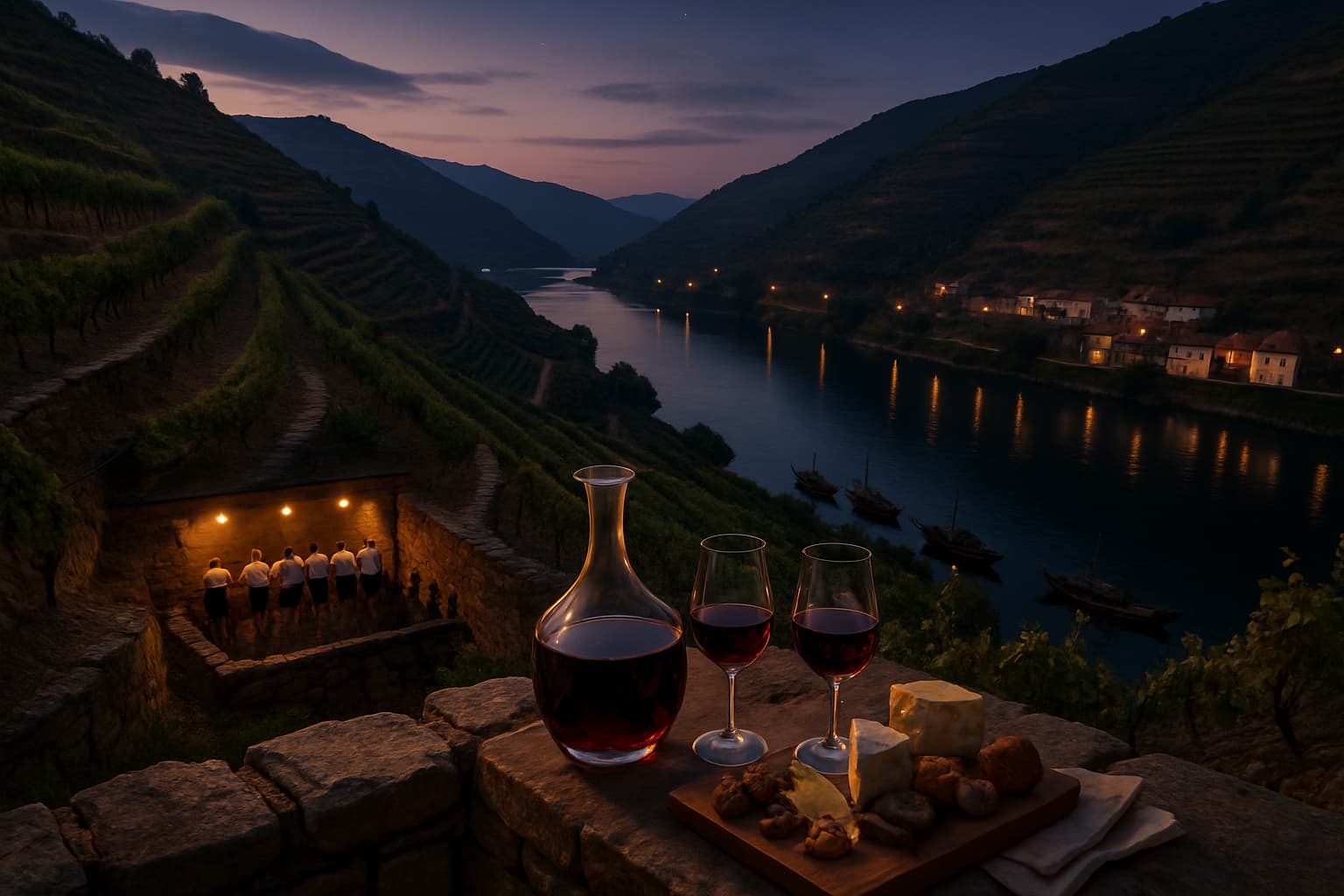
Oh, my dear, if you’ve ever wanted a wine that behaves like a velvet robe for the soul, then you simply must spend some time with Port and the Douro. Pull up a chair, imagine a little clink of glasses, and let’s wander—slowly, luxuriously—through one of the most dramatic wine landscapes on earth and the gloriously old‑fashioned drink it produces.
The Douro is not just a river; it’s the backbone of an entire wine civilization. It begins rather shyly in Spain, then carves its way through northern Portugal in a series of deep, twisting valleys before reaching the Atlantic at Porto. Along its Portuguese stretch, the river passes through the Douro Valley, a place so intensely cultivated and so steeped in history that UNESCO threw up its hands and declared it a World Heritage Site.
From this wild, terraced landscape comes Port—fortified, sweet, warming, and unapologetically indulgent. It’s the wine equivalent of a rich dessert you absolutely shouldn’t have but will, with gusto, and then ask for seconds.
Let’s roll up our sleeves and get the basics straight.
Port is a fortified wine made primarily from indigenous Portuguese grapes grown in the Douro Valley. Unlike table wines, Port is only partially fermented and then fortified with a neutral grape spirit (aguardente), which stops fermentation and leaves natural grape sugars in the wine. The result is a sweet, high‑alcohol wine (usually 19–22% ABV) with layers of flavor and a gloriously long finish.
In practical terms, think of it like this:
The key point: Port is not sweet because sugar is added later—it’s sweet because the natural grape sugar is preserved mid‑fermentation. That’s rather elegant, don’t you think?
The Douro is one of the most physically extreme vineyard regions in the world. This is not gentle, rolling countryside; this is rock, heat, and gravity conspiring against you while you try to grow grapes anyway.
The slopes are so steep that for centuries people have carved terraces—socalcos—into the hillsides. These look like giant stone staircases marching up the valley, each step lined with vines. In many places, the soil is barely soil at all, but fractured schist rock.
Schist is marvelous stuff for vines:
The climate is continental, which is a polite way of saying “hot and dry as an oven in summer, cold and sometimes harsh in winter.” The vines struggle, and in wine, struggling vines often mean character—just as in people.
Port is rarely made from a single grape variety. Instead, traditional vineyards can contain a jumble of mixed plantings—old, gnarly vines of different grapes all in one plot, like a very complicated salad.
Some of the star players:
White Port uses white grapes such as Malvasia Fina, Gouveio, and Viosinho, among others. They may sound unfamiliar, but they behave beautifully in the glass.
Historically, grapes were transported downriver in boats called rabelos to the town of Vila Nova de Gaia, where they were aged. Today, the river journey is mostly ceremonial, but the romance remains.
One of the most enchanting (and frankly, rather theatrical) parts of traditional Port production is foot treading in granite troughs called lagares. Grapes are poured in, and workers—often in lines, arm in arm—march through the fruit, crushing it gently but thoroughly.
This may sound like something out of a rustic opera, but it’s marvelously practical:
Many top‑quality Ports still use this method, though modern mechanical “robotic lagares” now mimic the action without requiring a full chorus line of grape‑stompers.
Imagine a family gathering where everyone is related but no one behaves the same way. That’s Port.
Ruby Port is the entry point—deeply colored, fruit‑forward, and aged relatively briefly in large tanks to preserve freshness.
When a year is truly exceptional, houses may declare a Vintage Port. This is the aristocrat of the family:
Young Vintage Port can be a bit of a beast: dense, tannic, almost chewy, with explosive fruit. With time, it softens and develops layers of spice, dried fruit, violets, chocolate, and that magical old‑wine complexity that defies tidy description.
There are also:
If Ruby and Vintage Ports are about freshness and fruit, Tawny Ports are about time and oxidation. They are aged in smaller casks, where oxygen can slowly weave its way into the wine, turning it from deep red to a beautiful amber‑brown and developing flavors of nuts, caramel, dried fruit, and spice.
You’ll find:
White Port can be dry, off‑dry, or sweet, and is increasingly used in cocktails. A chilled White Port and tonic with a slice of lemon and a sprig of mint is one of the most refreshing apéritifs you can imagine.
Rosé Port is a more recent invention—light, fruity, and made with minimal skin contact to keep the color pale. It’s the Port world having a bit of fun.
For centuries, the Douro was almost synonymous with Port. But in recent decades, the region has blossomed as a source of still red and white wines—often labeled “Douro DOC.”
These wines:
Think of them as the everyday conversation to Port’s grand, after‑dinner speech.
Historically, Port owes much of its fame to British merchants who, centuries ago, needed a sturdy wine that could survive the voyage from Portugal to England. Fortification helped preserve it, and the British developed a deep affection for the style.
This gave rise to:
Port became the classic after‑dinner wine, often enjoyed with cheese, nuts, and conversation that grows progressively more philosophical as the bottle empties.
Now, how to drink the stuff—because that’s really the point, isn’t it?
Use a proper wine glass or a small tulip‑shaped Port glass—something that narrows at the top to focus the aromas. Avoid tiny thimbles; Port deserves room to breathe.
And remember: Port is not just for winter. A chilled White Port and tonic on a hot day is as refreshing as a plunge into the river itself—without the risk of falling off a terrace.
The beauty of Port and the Douro lies in the way old and new coexist. You have:
Yet beneath all this variety is a simple, enduring idea: take a difficult, dramatic landscape; coax grapes from its rocky slopes; and turn them into a wine that brings warmth, sweetness, and a sense of occasion.
Port is not a hurried wine. It’s a wine for after the plates are cleared, when people lean back, loosen their belts a notch, and begin to talk about the big things—family, time, memory, and what they’re cooking next weekend.
So, if you haven’t already, let the Douro into your glass. Explore a Ruby, linger over a Tawny, tuck away a Vintage for a future celebration. This river valley has been perfecting the art of liquid comfort for centuries. All you need to do is pull the cork, pour a measure, and give it the time and attention it so richly deserves.
Tannins are astringent compounds found in wine that contribute to its texture and aging potential, often causing a drying or puckering sensation in the mouth. They are derived from grape skins, seeds, and stems, as well as from oak barrels used during aging.
/ˈtænɪnz/
Malic acid is a naturally occurring organic acid found in grapes that contributes to the tart, green apple-like flavor and crispness in wine. It plays a significant role in the taste and acidity of wine.
/mælɪk ˈæsɪd/
Filtration in winemaking is the process of removing solid particles from wine to clarify and stabilize it before bottling, using various types of filters to achieve different levels of clarity and remove unwanted elements like yeast, bacteria, and sediment.
/fɪlˈtreɪʃən/
Oxidation in wine is a chemical reaction between the wine and oxygen that can change its flavor, aroma, and color. This process can be beneficial or detrimental depending on the extent and context of the exposure.
/ˌɒksɪˈdeɪʃən/
Microclimate refers to the unique climate conditions of a small, specific area within a larger region, significantly influencing grapevine growth and the characteristics of the resulting wine.
/ˈmīkrōˌklīmit/
Get weekly wine recommendations, vineyard news, and exclusive content delivered to your inbox.