Wine Literature and Media
“Where every bottle tells a story”
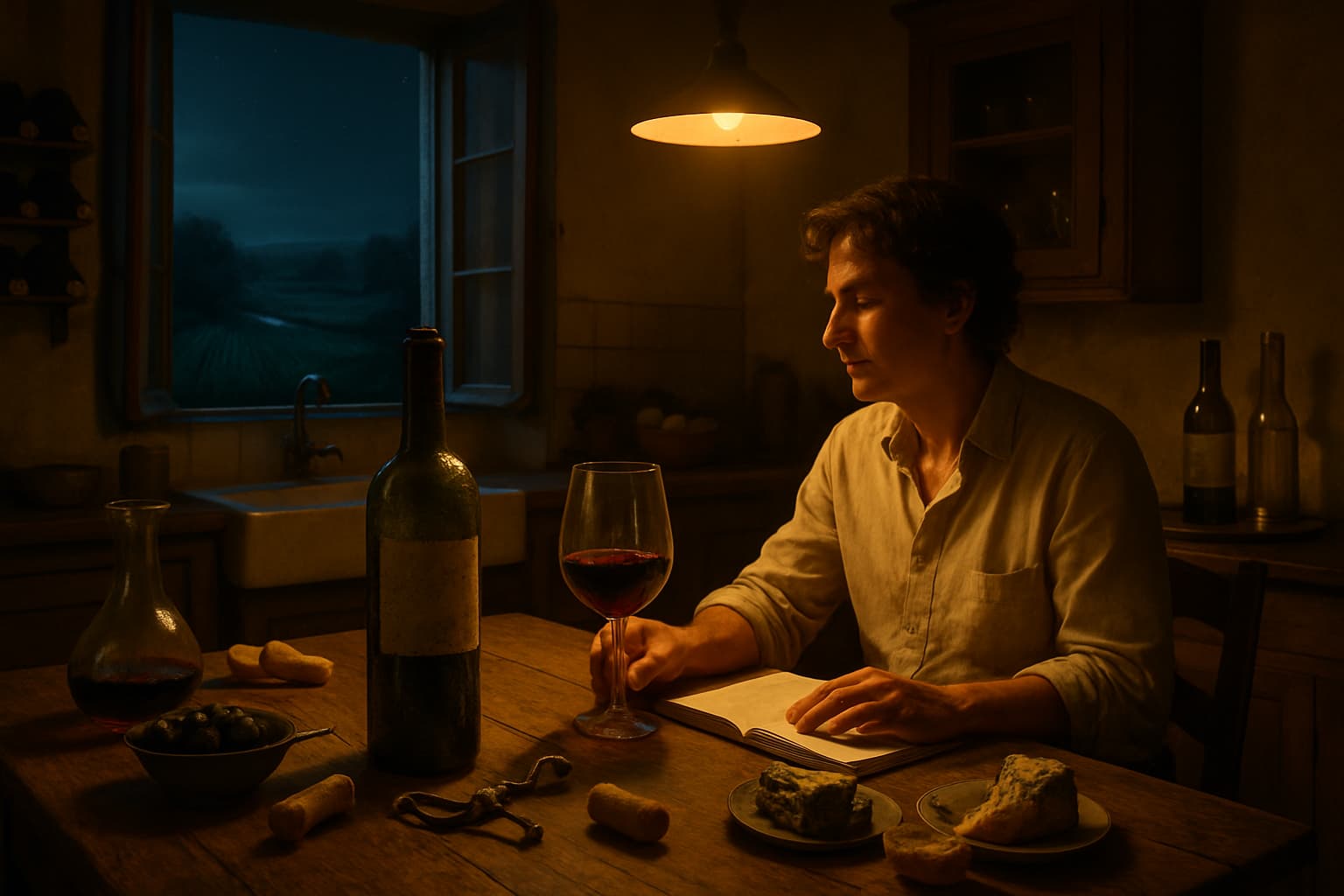
The first glass hits like a velvet hammer.
It’s late—the kind of late when decent people are in bed and only lunatics, poets, and sommeliers are still awake. The bottle on the table is sweating under the yellow kitchen light, label half-torn, cork already pulled with the desperation of a man who’s seen too many cheap hangovers and has finally crawled into the cathedral of the real thing: Bordeaux.
This is not just wine. This is an agricultural hallucination. A chemical telegram from another century. A grand conspiracy of soil, weather, money, and madness—bottled, corked, and sold to you with a smirk. If you’re going to understand the finest wines of Bordeaux, you need to forget the polite tasting notes and brace yourself for a region that runs on obsession, classification, and the quiet terror of a bad vintage.
Welcome to Bordeaux. Keep your glass full and your prejudices empty.
Bordeaux is not just a dot on a map in southwestern France. It’s a sprawling wine-industrial complex wrapped around the Garonne and Dordogne rivers, all flowing into the Gironde estuary like veins into a liver that’s seen too much action.
The region splits into three main psychological zones:
The rivers are not just scenery. They’re temperature regulators, fog machines, and historical shipping lanes for barrels headed to England, Holland, and anywhere else people were thirsty enough to pay for liquid aristocracy.
The Left Bank is where Bordeaux’s mythology puts on a tuxedo and starts talking about “pedigree.” The key appellations here are:
The soils are mostly gravel—stones and pebbles dumped here by ancient glaciers, now serving as a perfect drainage system and solar battery. Cabernet Sauvignon loves this misery: deep roots, stressed vines, small berries, thick skins, and enough tannin to sandblast your gums in youth and then mellow into silk over decades.
In 1855, Napoleon III wanted a wine list for the Exposition Universelle in Paris. The Bordelais obliged with their favorite pastime: ranking themselves.
They created the 1855 Classification of the Médoc and Sauternes, dividing top châteaux into “growths” (crus):
Premier Cru (First Growths) – The gods:
Deuxième, Troisième, Quatrième, Cinquième Crus – Second through Fifth Growths. Still elite, still capable of greatness, but forever living in the shadow of the Firsts.
This classification was based on price at the time—what the market thought of the wines. It has barely changed since, which is both insane and brilliant. Insane because vineyards evolve, ownership changes, winemaking improves or collapses. Brilliant because the sheer stubbornness has created a mythology so strong that people will mortgage their sanity for a case of Lafite.
The finest Left Bank Bordeaux is not a fruit bomb. It’s a structure—an architecture of flavor:
A great Pauillac (think Lafite, Latour, Mouton, Pichon) tastes like a cigar lounge built inside a blackcurrant bush, with a gravel driveway and a library of leather-bound books. Margaux is more perfumed and seductive; Saint-Julien is balanced and classical; Saint-Estèphe is brooding, muscular, almost rustic in its youth.
These wines are built to age. Ten years is a warm-up. Twenty is where the real hallucination starts.
Cross the river and the whole mood changes. The Right Bank is less about formal classifications and more about cults. The major appellations:
Here the soils shift: more clay and limestone. Clay holds water and keeps the vines cooler, which Merlot adores. The result: wines that are rounder, plusher, and often more immediately seductive than their Left Bank cousins.
Saint-Émilion is medieval—cobbled streets, a monolithic church, and a classification system that actually updates (and explodes into lawsuits) every decade or so.
The hierarchy:
The top tier—Classé A—has included legendary names like Château Cheval Blanc and Château Ausone, wines that can combine finesse and power with freakish grace. These are not just Merlot bombs; they often have a serious dose of Cabernet Franc, which brings structure, spice, and a kind of high-wire tension.
A great Saint-Émilion can smell like black cherries, violets, truffles, and wet limestone after a storm. It’s a cathedral in a glass.
Pomerol is small, unclassified, and utterly lethal in the auction house. No official hierarchy, just reputation and price.
At the center of this madness sits Château Pétrus, a Merlot-dominant wine so expensive it might as well be traded in blood diamonds. The plateau of Pomerol is rich in clay and a strange blue clay subsoil that seems to produce wines of insane concentration and polish.
The style: dense, plush, hedonistic, but with a spine. Black plum, cocoa, truffle, sometimes a strange iron note. The best Pomerols—Pétrus, Le Pin, Lafleur, Vieux Château Certan—are like velvet-wrapped sledgehammers: soft at first touch, then devastating.
While the red wines get the glory, there’s another form of lunacy in Bordeaux: botrytized sweet wines—especially from Sauternes and Barsac.
Here the morning mists from the Ciron and Garonne rivers encourage Botrytis cinerea, the “noble rot” that shrivels grapes, concentrating sugars and flavors. The result is liquid gold.
The king is Château d’Yquem, the only Premier Cru Supérieur in the 1855 classification. A great Yquem can outlive empires: honey, apricot, marmalade, saffron, toasted nuts, and a searing, balancing acidity that keeps the sweetness from collapsing into syrup.
These wines are not just dessert. They can dance with blue cheese, foie gras, spicy dishes, or just your own private sense of decadence at 2 a.m.
Bordeaux whites are the quiet professionals in a town of loudmouth reds. The finest dry whites come from Pessac-Léognan and parts of Graves.
Key grapes:
Top estates like Château Haut-Brion Blanc and Domaine de Chevalier Blanc make whites that can age just as long as the reds, evolving from zesty and mineral to waxy, nutty, and haunting.
Entre-Deux-Mers pumps out fresh, citrusy whites that are made for drinking, not collecting. Not every bottle has to be a religious experience. Some are just for surviving the afternoon.
In Bordeaux, the vintage is not a footnote. It’s the whole damned story.
The climate is maritime: unpredictable, moody, occasionally cruel. Rain at harvest can dilute the grapes; too much heat can cook them. Frost, hail, mildew—these are not abstract threats; they’re the difference between glory and disaster.
Legendary modern vintages (especially for reds) include:
Difficult vintages still exist, but modern viticulture and strict selection have made outright disaster rarer. Still, the game of vintage-chasing remains part of the Bordeaux psychosis, especially at the high end.
Bordeaux is not just vineyards; it’s an economic system with the paranoia of Wall Street and the ceremony of the Vatican.
En Primeur – Futures. You buy the wine while it’s still in barrel, based on barrel tastings, critics’ scores, and blind faith. You’re betting that the final bottled wine will be worth more than you paid. Sometimes you win. Sometimes you’re left with an expensive reminder that optimism is a disease.
The Place de Bordeaux – A labyrinth of négociants (merchants) who handle distribution. Most top châteaux don’t sell directly to you; they sell to these middlemen, who then sell to importers, retailers, collectors—a whole food chain of thirst and speculation.
The finest wines of Bordeaux—First Growths, top Right Bank stars, blue-chip Sauternes—have become financial instruments. They live in temperature-controlled vaults, traded like stocks, occasionally opened by people who remember that wine is meant to be drunk, not worshipped behind glass.
You don’t need a Swiss bank account to experience the magic. You just need strategy and a little reckless curiosity.
And remember: you’re not auditioning for a sommelier competition. If it tastes good and makes your brain hum, you’re doing it right.
Underneath the labels, the scores, the auctions, and the pomp, Bordeaux is about a simple, brutal idea: time captured in liquid form.
Every bottle is:
The finest wines of Bordeaux are not just luxury goods. They are agricultural artifacts, edible memory, and occasionally, if you’re lucky and the bottle is right and the company is good, a portal. They can show you what patience tastes like. What risk tastes like. What twenty years in the dark tastes like when the cork finally gives way with that soft, decisive sigh.
In a world that moves too fast and forgets too easily, these wines insist on slowness. On attention. On the idea that something grown in dirt, battered by weather, manipulated by human hands, and left alone in a cellar can someday become more than the sum of its parts: a moment, a story, a little piece of controlled madness in your glass.
So pour another measure. Swirl it. Stick your nose in and inhale the ghosts of gravel, cedar, plum, smoke, and time itself.
Then drink. Because in the end, Bordeaux is not for collectors, critics, or speculators. It’s for the poor bastard at the table, staring into the glass, trying to make sense of the world—one long, dangerous sip at a time.
Tannins are astringent compounds found in wine that contribute to its texture and aging potential, often causing a drying or puckering sensation in the mouth. They are derived from grape skins, seeds, and stems, as well as from oak barrels used during aging.
/ˈtænɪnz/
Malic acid is a naturally occurring organic acid found in grapes that contributes to the tart, green apple-like flavor and crispness in wine. It plays a significant role in the taste and acidity of wine.
/mælɪk ˈæsɪd/
Look for second wines – Many top châteaux make a “second wine” from younger vines or lots that didn’t make the grand vin. More affordable, same house style. Think:
Explore lesser-known appellations –
Age matters – Fine Bordeaux often needs time:
Decanting and glasses – Give young Bordeaux air—1–3 hours in a decanter. Use a decent-sized glass so the aromas can stretch their legs.
Filtration in winemaking is the process of removing solid particles from wine to clarify and stabilize it before bottling, using various types of filters to achieve different levels of clarity and remove unwanted elements like yeast, bacteria, and sediment.
/fɪlˈtreɪʃən/
Oxidation in wine is a chemical reaction between the wine and oxygen that can change its flavor, aroma, and color. This process can be beneficial or detrimental depending on the extent and context of the exposure.
/ˌɒksɪˈdeɪʃən/
Microclimate refers to the unique climate conditions of a small, specific area within a larger region, significantly influencing grapevine growth and the characteristics of the resulting wine.
/ˈmīkrōˌklīmit/
Get weekly wine recommendations, vineyard news, and exclusive content delivered to your inbox.