Wine Literature and Media
“Where every bottle tells a story”

Oh, what a delicious subject we have today. Pour yourself a glass of something red and Spanish—nothing too fancy, just something friendly—and let’s take a good, hearty wander through Rioja and the wild, wonderful northwest of Spain. These are regions that practically shout with character, yet they can be as graceful and subtle as a well-made sauce.
We’ll swirl, sniff, and sip our way through the grapes, the places, the traditions, and the modern twists that make these wines some of the most fascinating in the world.
Imagine a long, sun‑drenched table somewhere between the Atlantic and the Pyrenees, covered with platters of grilled lamb, roasted peppers, and hunks of crusty bread. Now picture bottles—lots of bottles—stretching from one end to the other: Rioja, Ribeira Sacra, Rías Baixas, Bierzo, Ribeiro, and more.
Rioja may be the celebrity of the group, but the northwest of Spain is full of intriguing, sometimes shy, sometimes flamboyant wines that are just aching to be discovered. Together they make a marvelous study in contrasts:
Let’s start where many wine lovers first fall in love with Spanish wine: Rioja.
Rioja is like a bustling country kitchen where tradition and technique have been simmering together for over a century. It lies in north‑central Spain, sheltered by mountains, and is divided into three main zones—each with its own “flavor”:
Tempranillo is the main red grape here, and it’s wonderfully accommodating, like a good stock that can become a dozen different sauces. It can be:
It’s often blended with:
Together they make wines that can range from cheerful and gulpable to profound and contemplative.
Rioja is famous for its love affair with oak, particularly American oak, which can lend flavors of:
Traditional bodegas often age their wines for years in old American oak barrels, creating those haunting aromas of dried cherries, tobacco, and worn leather.
Modern producers are increasingly using French oak, which tends to give:
Neither approach is “better”—they’re just different recipes. The joy is in comparing them.
Rioja has one of the most time-conscious classification systems in the wine world. It’s all about how long the wine is aged before release, especially in barrel and bottle. Think of it like aging a stew: the longer it sits, the more it melds and deepens.
For reds, the traditional categories are:
These rules have evolved and may vary slightly with updates, but the spirit remains: time is an ingredient.
People often forget that Rioja makes white wine, and that’s a bit of a scandal. Viura (Macabeo) is the main grape, sometimes joined by Malvasía, Garnacha Blanca, and others.
Styles range from:
A well‑aged white Rioja can behave like a grand old Burgundy with a Spanish accent.
Now we travel west, toward the Atlantic, where the air gets cooler and saltier, and the vineyards cling to hillsides and river valleys. This is a region of green landscapes, granite, slate, and mist, and the wines taste like it.
Here we find some of Spain’s most thrilling whites and some of its most intriguing, mineral‑driven reds.
Rías Baixas, in Galicia, is Albariño country—a white grape that seems born to marry seafood. The climate is cool and rainy, and the vines are often trained high on pergolas to keep them dry and airy.
Albariño typically offers:
It’s marvelous with oysters, clams, shrimp, or simply a plate of grilled fish with lemon and olive oil. But it’s also delightful all by itself on a warm afternoon.
Styles can vary slightly by subzone—some lean more mineral and stony, others more lush and fruity—but Albariño is almost always lively and refreshing.
Further inland, still in Galicia, we encounter Ribeiro and Valdeorras, two regions that have quietly been polishing their reputations like a well‑used copper pot.
Ribeiro specializes in white blends featuring:
These wines can be wonderfully food‑friendly: citrusy, floral, and mineral, with enough body to stand up to richer dishes—think roast chicken, creamy seafood stews, or even a buttery sole.
Valdeorras is often considered Godello’s spiritual home. Godello is a terrific grape—rather like a cross between Chardonnay and Chenin Blanc in temperament.
Expect:
Some examples are aged in oak, giving them a creamy texture and subtle toast, while others are pure and steely. Either way, they can be surprisingly serious wines, perfect for those who like their whites with both charm and backbone.
Now we climb into the hills and river gorges of Bierzo and Ribeira Sacra, where the red grape Mencía is the star. These are wines with a kind of mountain poetry to them—fresh yet deep, often perfumed with red fruit and herbs.
In both regions, Mencía can show:
These wines are often lighter on their feet than many modern reds, yet full of character. Think of them as cousins to Pinot Noir or cool‑climate Syrah, but with their own distinctly Spanish accent.
Bierzo’s vineyards are a mix of valley floors and hillside plots, and the best wines often come from older vines on poor, rocky soils. You’ll find:
These are splendid with grilled pork, charcuterie, or even a nicely seared duck breast.
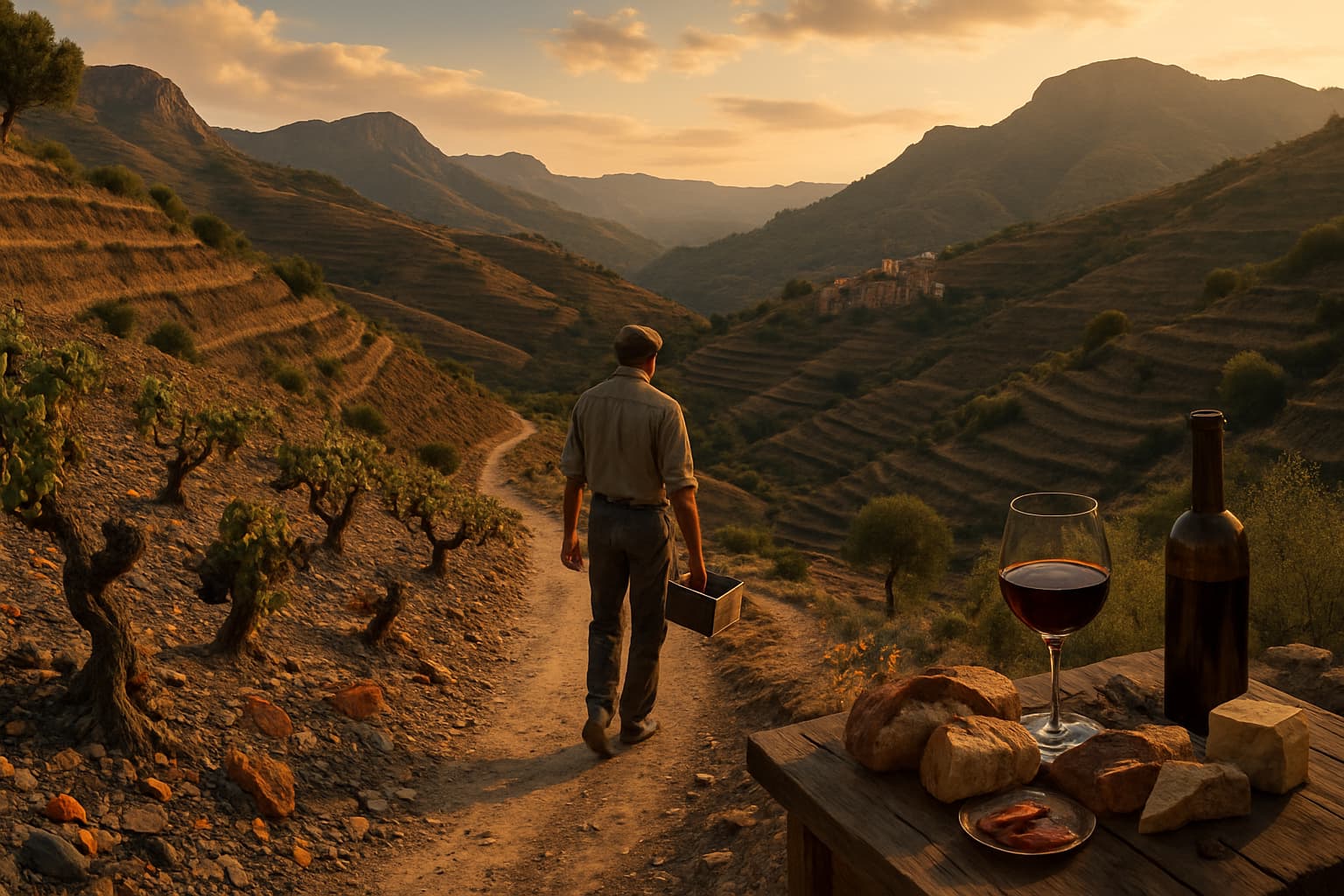
Ribeira Sacra is dramatic—terraced vineyards cascading down steep river gorges. It’s hard, heroic work growing grapes there, and the wines reflect that intensity.
Mencía from Ribeira Sacra tends to be:
These wines are wonderful with simple, honest food—grilled vegetables, roast lamb, earthy stews—where their delicacy and precision can shine.
You don’t need a cellar or a silver tastevin to enjoy Rioja and the wines of northwest Spain—just a bit of curiosity and, ideally, some food. Wine, after all, is meant to be drunk at the table, with company and conversation.
If you’d like to explore, you might assemble:
Taste them in that order, from lightest to most structured, and see how different parts of Spain’s north express themselves in the glass.
Nothing has to be fancy. A well‑roasted chicken and a good bottle of Rioja can be as grand as any banquet.
Rioja and the wines of northwest Spain offer a marvelous combination of deep‑rooted tradition and lively innovation. In Rioja, you have that almost old‑world formality—long aging, classic labels, venerable cellars—alongside modern, vineyard‑driven wines. In Galicia and the surrounding regions, you find a more rugged, exploratory spirit: ancient grapes rediscovered, tiny plots revived, and wines that taste intimately of their place.
Together, they remind us that wine is not just a drink; it’s a story in a bottle—a story of climate, soil, history, and human hands. And like any good story, it’s meant to be shared.
So uncork a Rioja, chill an Albariño, or track down a Mencía from some wind‑buffeted hillside. Set the table, invite a few friends, and let Spain’s northern vineyards speak for themselves. You may find, as so many have, that these wines are not just fine—they’re downright irresistible.
Tannins are astringent compounds found in wine that contribute to its texture and aging potential, often causing a drying or puckering sensation in the mouth. They are derived from grape skins, seeds, and stems, as well as from oak barrels used during aging.
/ˈtænɪnz/
Malic acid is a naturally occurring organic acid found in grapes that contributes to the tart, green apple-like flavor and crispness in wine. It plays a significant role in the taste and acidity of wine.
/mælɪk ˈæsɪd/
Filtration in winemaking is the process of removing solid particles from wine to clarify and stabilize it before bottling, using various types of filters to achieve different levels of clarity and remove unwanted elements like yeast, bacteria, and sediment.
/fɪlˈtreɪʃən/
Oxidation in wine is a chemical reaction between the wine and oxygen that can change its flavor, aroma, and color. This process can be beneficial or detrimental depending on the extent and context of the exposure.
/ˌɒksɪˈdeɪʃən/
Microclimate refers to the unique climate conditions of a small, specific area within a larger region, significantly influencing grapevine growth and the characteristics of the resulting wine.
/ˈmīkrōˌklīmit/
Get weekly wine recommendations, vineyard news, and exclusive content delivered to your inbox.