Wine Literature and Media
“Where every bottle tells a story”
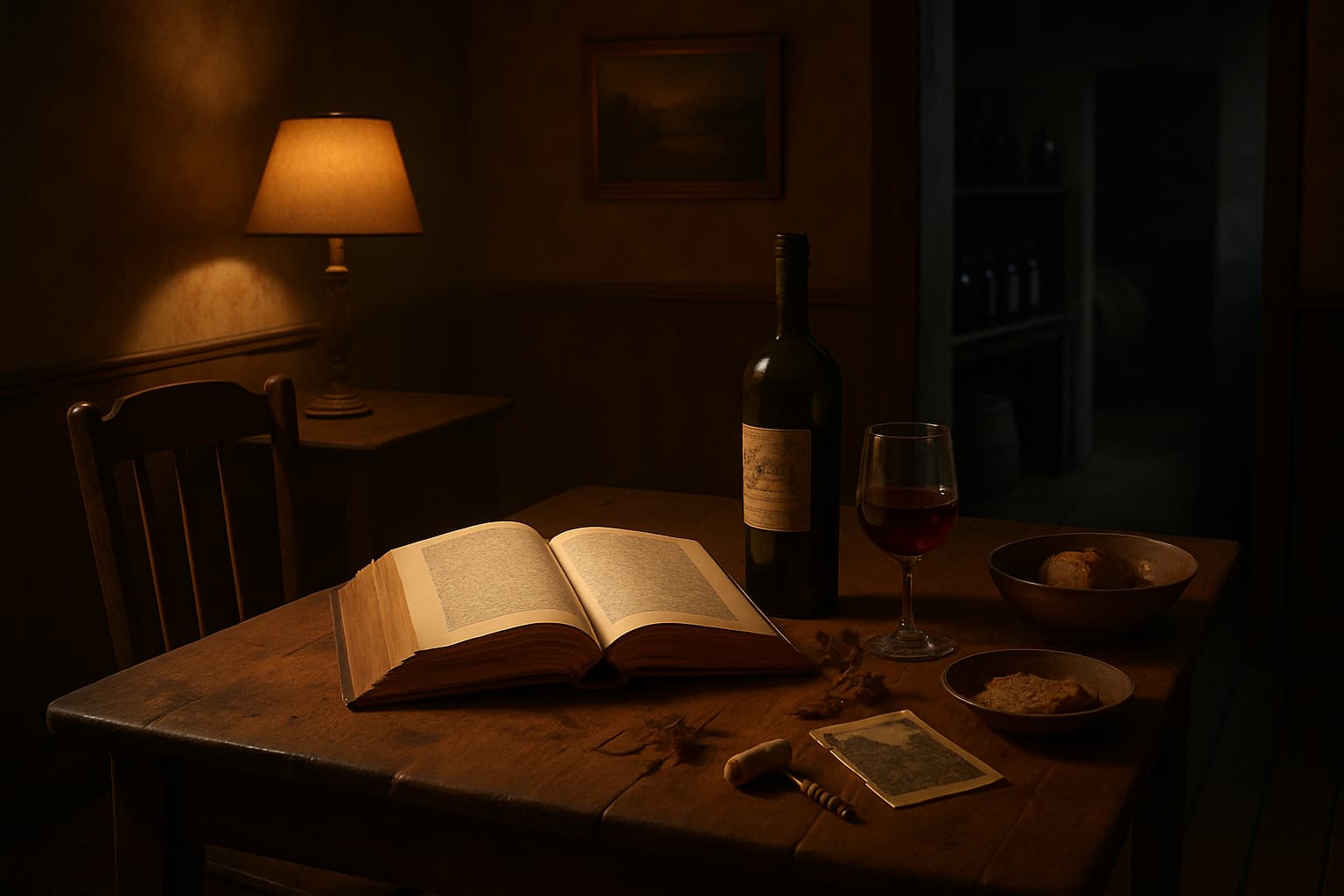
The first time you open a book about wine, you expect lies. You expect the soft talk of silk tablecloths and men who use long words to hide that they are only drinking. But sometimes a book is like a good bottle pulled from a simple shelf. It is sound. It is clear. It does not pretend. It tells you what the soil did and what the sun did and what the person who made the wine tried to do. A book like that can stay with you longer than the taste on your tongue.
A collection like this is not about one vineyard or one year. It is about the long story of wine told in many voices. It is not a guide to impress dinner guests. It is a library you can hold in your hands: people from different centuries, different wars, different hungers, all drinking from the same old cup and trying to say what it means.
That is what matters. Wine does not last. Words do, if they are true enough.
Wine is easy to drink and hard to write. The glass is small, but the story behind it is long. There is the land. There is the year. There is the man who pruned the vines in the rain and the woman who picked the grapes in the heat. There is rot and frost and hail and hope. Then there is the bottle. Then there is the night you open it.
Most writing about wine forgets this. It turns to decoration. It speaks of “bouquets” and “notes” and “hints” until the wine sounds like a perfume. It is cowardly writing. It does not say what the wine really is: a drink that can be thin or strong, clean or dirty, honest or false. A drink that has been with people at weddings and at wakes, on ships and in trenches, in monasteries and in cheap cafés.
A good anthology of wine writing cuts through the lace. It shows you how people spoke of wine when they were not trying to sell it. It gathers travelers, poets, farmers, priests, smugglers, soldiers, and drunkards. It lets them all talk. The book becomes a cellar of voices.
You read it to remember that wine is not a luxury. It is part of how people have stayed alive, and how they have tried to live better than just alive.
Wine is older than the stories we tell, but the stories catch up early. The Greeks had their god of wine, rough and wild. The Romans planted vines where they marched. Monks in stone cloisters watched over thin shoots of green that would, in time, make dark, steady wine for the altar and the table. The words came with the vines.
In old texts, wine is not described the way it is now. There is little talk of berries and flowers. There is talk of strength, of warmth, of comfort. The writers speak of good years and bad years. They speak of wine that travels badly by sea and wine that must be drunk where it is born. They speak of the first taste after a long fast or a long march. They speak of wine as reward and as danger.
These early voices do not pretend that wine is gentle. They know it can make a person foolish or cruel. They also know it can make someone brave enough to say what is in the heart. The page remembers this. The book gathers those memories and lays them out in order, like a row of bottles in a dark room.
You read those pieces and you see that wine has always been tied to power and faith and trade. It is not only a drink. It is a sign of land owned, of labor spent, of prayers said over barrels in cold stone rooms.
Later, the travelers come. They go by horse and coach and train and ship. They go through France and Spain and Italy and Portugal. They taste what the peasants drink and what the nobles keep. They write of wines that are rough and sour and of wines that are deep and good and cost too much. They see the vines cut back after war. They see new vines planted where old ones died.
In their pages you feel the road dust and the hunger of long days. You feel the relief of the first glass at an inn where the bed is hard but the wine is sound. They do not have patience for fancy words. They say if the wine is good enough to drink again. They say if it is thin as water or strong as a man’s hand. They say if it tastes of the place it came from.
Wine writing is often at its best when the writer is tired and honest, when a bag has been carried too far and there is no wish to impress anyone. Then the writer tells you plainly what the wine did. It warmed. It made one forget the damp. It made someone think of home. Or it failed, and it was cursed.
Between wars, the words change. There are long dinners in cities. There are labels and reputations and prices that climb like ivy. But the good writers still look for the same thing: a wine that tastes of where it grew and of the weather it knew. They call this “terroir” in one language and by other names in others. The idea is simple. A wine should not lie about its birthplace.
When you read many writers, from many years, all talking about wine and place, you begin to see which places stay true and which are fashions. The book becomes a map of the world’s thirst.
In time, the experts arrive. They line up glasses and spit into buckets. They score and rank and judge. They build systems, stars, and points. They write columns and guides. They gain power over what people drink and what they pay.
Some of them write well. They know the vineyards and the cellars. They have sat with growers at long wooden tables and have seen the mold on the barrels. They understand that wine is farming before it is anything else. Their words carry the weight of mud and frost and debt.
Others write like bureaucrats. They break wine into flavors as if they were counting coins. They speak of “structure” and “length” and “finish” until the wine sounds like a bridge. They are not wrong, but they are dull. They forget that wine is taken into the body, not into a ledger.
A good anthology does not flatter these experts or mock them. It sets their words beside older words and newer ones. It lets you see how the language of wine has grown fat in some places and sharp in others. You read a tasting note that is all spice and fruit and flowers, and then you read a line from a farmer who says, “This year the wine is thin. We had too much rain.” Both are true, but one cuts closer to the bone.
The book shows you how commerce creeps into the glass. How words can raise the price of a wine beyond the reach of the person who made it. How a sentence in a magazine can change a valley. How fame and scarcity become flavors of their own.
The best writing about wine is not about taste at all. It is about time. A bottle from a certain year is a piece of that year. When it is opened, the year comes back: the hailstorm, the hot September, the early frost, the quarrel at harvest, the laughter in the cellar when the ferment went well. All of it is there, if you know how to listen.
Writers who understand this do not chase clever comparisons. They write about the people who made the wine and the people who drank it. They write about the bottle opened at a wedding when the groom’s hands shook. They write about the bottle saved through bad times and opened when the war was over. They write about the bottle that should have been shared with a friend who died too young.
These are not tasting notes. They are obituaries and love letters. In an anthology, they stand out like old vines among young ones. They are twisted and strong and still alive.
Wine and death go together because both are certain. A bottle cannot last forever. If you keep it too long, it dies in the dark. If you drink it too soon, you waste what it could have become. There is a line in between, and no one knows it for sure. So you guess. You open the bottle. You hope you did not wait too long.
Writers return to this idea again and again. The book gathers their attempts to say it plainly. A good wine, drunk at the right time, with the right people, is a small victory against the long defeat of time. It does not change anything. But for an hour you are warm and honest and less alone.
Not all wine writing is grand. Much of it is small and domestic. There are pieces about cheap table wines drunk with stew in cold kitchens. There are stories of jug wine carried to the field, of thin reds sipped in crowded city rooms, of rough whites poured into chipped glasses by tired hands.
In these pages, wine is not a trophy. It is a tool. It softens bread gone stale. It stretches a meal. It eases a sore back. It makes hard talk easier. It is not the center of the story. It is always there at the edges.
A good anthology does not forget these voices. It does not only speak of cellars and auctions and rare bottles. It remembers the workers who pruned the vines and never tasted the top wines of their own land. It remembers the bar owner who poured more than he drank. It remembers the old woman who mixed wine with water and gave it to her grandchildren on feast days.
When you read these pieces, you understand that wine culture is not built by collectors. It is built by people who drink the same simple wine every day and are grateful when the year is kind.
In a world of quick reviews and bright screens, a thick book of wine writing seems slow. But wine itself is slow. Vines take years to give their best fruit. Barrels sit in the dark. Bottles rest. You wait. The waiting is part of the thing.
Reading many voices on wine is a kind of training. You learn to distrust easy language. You learn which writers have seen vineyards at dawn and which have only seen hotel bars. You learn that the same region can be described as noble and as brutal, depending on the year and the person. You learn that no one owns the truth about a bottle.
Most of all, you learn that wine is not just about pleasure. It is about work, weather, risk, and memory. It is about how people face uncertainty and loss and still plant vines in the spring. The pages show this better than any label.
A good anthology of wine writing is like a mixed case from a careful merchant. Some pieces are light and quick. Some are dense and need time. Some will not suit you. Some will return to you when you are walking alone, and you will wish you had underlined them.
You can drink a bottle once. You can read a line again and again.
In the end, wine is simple: grapes, yeast, time, and a man or woman who cares enough not to ruin it. The books about wine should be the same. Clear. Honest. Without tricks. Full of the knowledge that this thing we drink is older than we are and will outlast us, but for a while, if we are lucky, we can share it.
You close the book. You open a bottle. You pour. You taste. You remember a sentence you read, some old writer talking about a small wine from a hard year that still gave joy. You raise your glass to that writer, though they are long gone. The wine is good. The words were good. Between them, the silence of the room feels less empty.
Tannins are astringent compounds found in wine that contribute to its texture and aging potential, often causing a drying or puckering sensation in the mouth. They are derived from grape skins, seeds, and stems, as well as from oak barrels used during aging.
/ˈtænɪnz/
Malic acid is a naturally occurring organic acid found in grapes that contributes to the tart, green apple-like flavor and crispness in wine. It plays a significant role in the taste and acidity of wine.
/mælɪk ˈæsɪd/
Filtration in winemaking is the process of removing solid particles from wine to clarify and stabilize it before bottling, using various types of filters to achieve different levels of clarity and remove unwanted elements like yeast, bacteria, and sediment.
/fɪlˈtreɪʃən/
Oxidation in wine is a chemical reaction between the wine and oxygen that can change its flavor, aroma, and color. This process can be beneficial or detrimental depending on the extent and context of the exposure.
/ˌɒksɪˈdeɪʃən/
Microclimate refers to the unique climate conditions of a small, specific area within a larger region, significantly influencing grapevine growth and the characteristics of the resulting wine.
/ˈmīkrōˌklīmit/
Get weekly wine recommendations, vineyard news, and exclusive content delivered to your inbox.