Wine Literature and Media
“Where every bottle tells a story”
The wind came down from the scrub hills and crossed the vines and went on to the sea. It carried the smell of thyme and dust and salt, and something else that was older than all three. You could taste it if you opened your mouth. In that part of the country they called it Languedoc, and they had been making wine there since men first learned how to pray to stone gods and carve bulls on rock walls. The wines had changed and the men had changed, but the wind was the same. It moved over the old land and did not care.
You could drink the wines of that country and not know any of this. You could drink them cold and fast on a hot day and only know they were good. But if you stayed longer and watched the light move over the vines, and if you talked to the men and women who worked the land, you would understand that the wines were not simple. They were rough sometimes, and cheap sometimes, and once they were despised. But they had a long memory. They remembered the Romans and the monks and the merchants and the wars. They remembered when they were only bulk wine for thirsty cities, and when they began to stand up again as themselves.
This is a story about that land, and about the wines that come from it, and about why they matter more than the price on the bottle says they do.
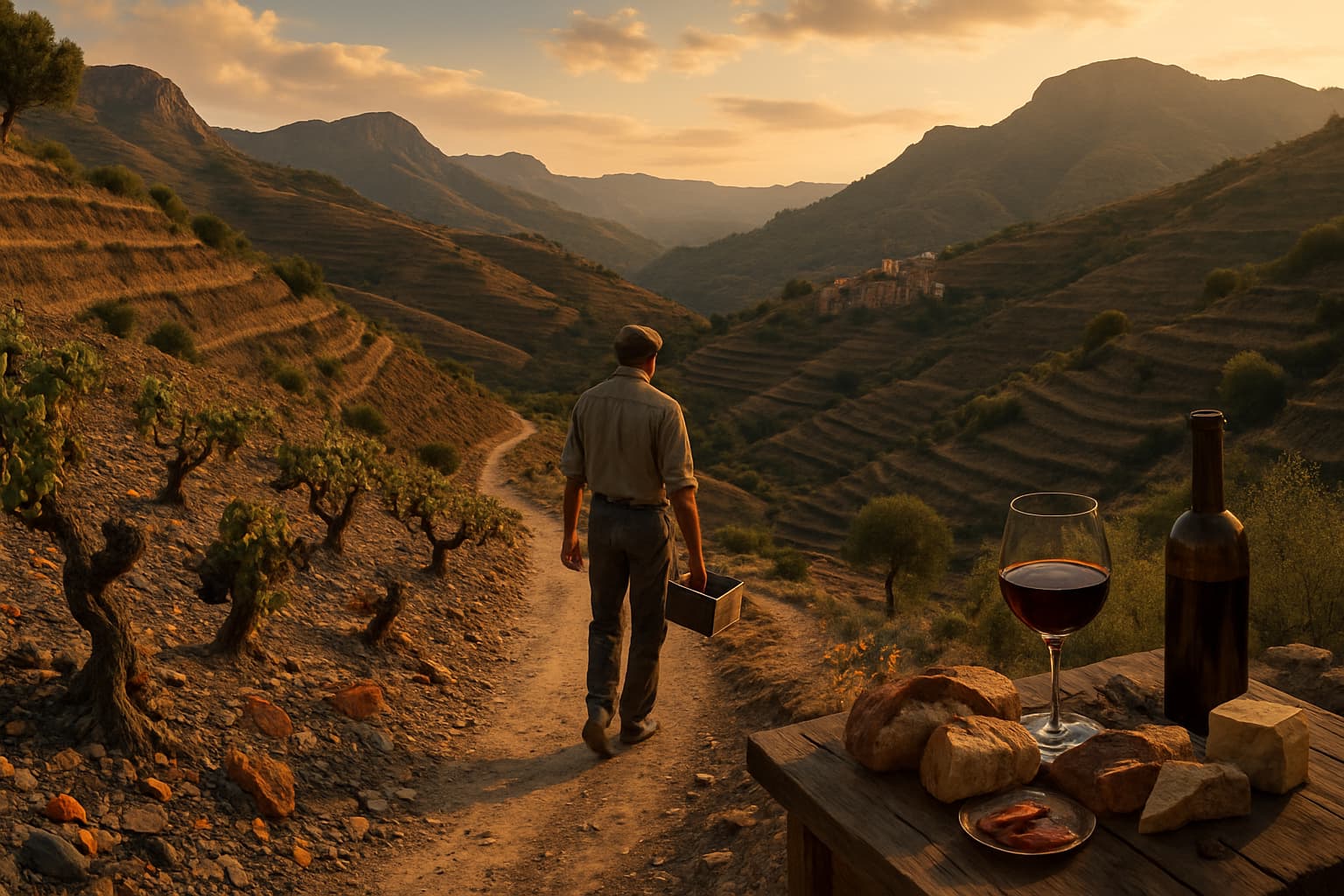
The country runs from the Spanish border to the mouth of the Rhône, between the mountains and the sea. The sun is hard. The soil is stone and clay and broken rock. The scrub is thick with rosemary and garrigue and wild fennel. In summer the heat comes down and stays. The wind from the north, the tramontane, cuts through the vines and dries everything. The sea wind comes in from the south and brings salt and moisture and storms.
It is not gentle land. It is not the soft, tidy country of postcard vineyards. But the vines like it. They dig their roots into the crushed limestone and the red clay and the black schist, and they hold on. They suffer just enough. The old men say that good vines must suffer. They say it the way a soldier talks about a hard campaign: not proud exactly, but knowing.
For centuries this land gave wine the way a hard man gives his word: without ornament, without apology. It was the wine of workers and soldiers and dockhands. The big co-operatives built their concrete vats and filled them with oceans of red. The wines were strong and cheap and without much character. They went north in tankers and into jugs and into the veins of cities.
The land could do better. It always could. But no one asked it to.
Change came slowly, like a man sobering up after a long drunk. In the late twentieth century, some growers were tired of selling anonymous grapes to anonymous co-ops. They had old vines of Carignan and Grenache and Mourvèdre that had seen more history than they had. They had slopes of schist that caught the evening light and terraces of limestone that cooled at night. They had something real, and they were wasting it.
So they began to work smaller. They cut yields. They pulled out bad vines and saved the good ones. They stopped watering. They walked the rows in the heat and watched the skins of the grapes thicken and darken. They bought barrels instead of cement tanks, or they went back to old concrete and big foudres and even clay jars, but they did it with care this time. They put their own names on the labels.
The rules changed too. The old, sprawling appellation of Languedoc began to break into smaller pieces: Faugères, Pic Saint-Loup, Minervois La Livinière, La Clape, Terrasses du Larzac, and more. The names were rough in the mouth if you were not from there, but they meant something. They meant that the land was speaking in smaller, clearer voices.
The men and women who did this were not romantic. They were farmers who rose early and worked until their backs hurt. They were also stubborn. They refused to plant only the fashionable grapes. They kept their Carignan and their Cinsault and their white Terret and their Picpoul. They planted some Syrah and Chardonnay and Cabernet because the market wanted them. But they knew the old grapes were the ones that belonged.
The red wines are the backbone of the country. They carry the weight of the sun and the dust. They smell of black fruit and dried herbs and sometimes of blood and iron and smoke from old fires.
Carignan is the old soldier. For years people cursed it. They said it gave nothing but rough, hard wine. But if you cut the yields and let the old vines speak, it gives deep, dark fruit—sour cherry and wild plum—and a dry, bitter edge that makes you want to drink more instead of less. It is not a polite grape. It is a man with scarred hands who has seen too much.
Grenache is the sun itself. It gives warm, sweet fruit—strawberries baked in the heat, kirsch, dried orange peel. It can be soft and loose if you are not careful, like a man who drinks too much in the afternoon. But on stone and wind it tightens and holds. It carries the heat and makes it gentle.
Syrah came later, from the north, like a younger brother who has been to school. It brings structure and spice and dark, peppery fruit. In the cooler hills it can be elegant. By the sea it can be broad and smoky. It ties the blend together. It is the line in a man’s face that shows he has learned to keep his temper.
Mourvèdre is the shadow. It likes the sea and the heat and the long, slow ripening. It smells of leather and blackberries and game. It is not easy. It needs time. In the blend it brings depth and a sense of something hidden.
Together these grapes make wines that are not smooth in the way of polished things. They have angles and edges. They taste of garrigue, that wild mix of thyme and juniper and dry earth that rises from the hills at dusk. They taste of hot stones after rain. They are wines to drink with meat that has seen fire, with stews that have cooked for hours, with sausages and olives and hard cheese and bread that breaks with a crack.
People do not speak of the white wines as much, but they should. They are quieter, but they carry the sea.
By the coast there is Picpoul de Pinet. It is pale and sharp and bright. It smells of lemon and green apple and broken shells. It cuts through the fat of oysters and grilled fish. It is not complicated, but it is true. On a hot day, with a plate of shellfish and the sound of the sea, it is all a man needs.
In the hills you find blends of Grenache Blanc, Roussanne, Marsanne, Vermentino, Clairette, Bourboulenc, and other old grapes that do not travel much. The wines can be full and waxy, with notes of almond and stone fruit and fennel. They hold the heat, but the best of them keep a line of freshness, like cool air in a stone church. They are not showy. They are like a woman who does not speak much but sees everything.
There are also strange, old things: field blends from forgotten terraces, orange wines made with skins and stems, wines aged in old barrels or clay. Some are clumsy. Some are beautiful. They are all part of the land trying to remember itself.
The country is large, and the wines change as you move.
In the north and west, where the land rises toward the Massif Central, the nights are cooler. In places like Terrasses du Larzac and Pic Saint-Loup, the reds are tighter and fresher. They have more acid, more lift. They can age. You taste black cherries, cracked pepper, and the smell of pine at dusk.
Farther south and east, closer to the sea, the wines are broader, rounder, saltier. In La Clape, an old island now joined to the land, the wind never stops. The reds taste of black olives and sun-baked rock. The whites taste of salt and anise and bitter lemon.
In Faugères and Saint-Chinian, the schist breaks under your hands. The wines from these black, fractured stones are dark and deep, with a kind of electric line running through them. They feel like a man who has been through the war and come back with his humor intact.
In Minervois and Corbières, the land is wide and broken, with pockets of limestone and clay and sand. The wines are as varied as the soil. Some are rough and simple. Some are precise and fine. You must choose carefully. But when you find a good one, it tastes like the whole country in a single glass: fruit, herb, stone, and sun.
For a long time, the world did not care about these wines except as fuel. They were cheap and red and came in large containers. They filled the veins of Paris and London and Brussels. No one asked where they came from. No one wrote about them.
Then the world grew hungry for stories. Wine was no longer just drink; it was culture and status and identity. People talked about Burgundy as if it were a religion, about Bordeaux as if it were a bank. They spoke of Tuscany and Napa and Rioja. Languedoc was still the cheap shelf in the supermarket.
But some writers and importers began to look closer. They drove the narrow roads and tasted from stained barrels in cool, dark cellars. They met men with cracked hands and women with strong arms and clear eyes. They tasted wines that were not perfect but were alive. They began to write about them.
They wrote about value, because the wines were good and not expensive. But they also wrote about honesty. These were not wines made to impress at dinners in big cities. They were wines made to drink with food and friends and family. They were wines that did not pretend to be anything else.
Now there are books and articles and guides. There are tasting notes that speak of garrigue and minerality and wild berries. There are sommeliers who pour Terrasses du Larzac in smart restaurants and talk about altitude and diurnal range. There are critics who give scores.
But the land does not care about any of this. The wind still cuts across the vines. The sun still beats down. The old roots still push deeper.
If you want to know these wines, you must drink them the way they were meant to be drunk.
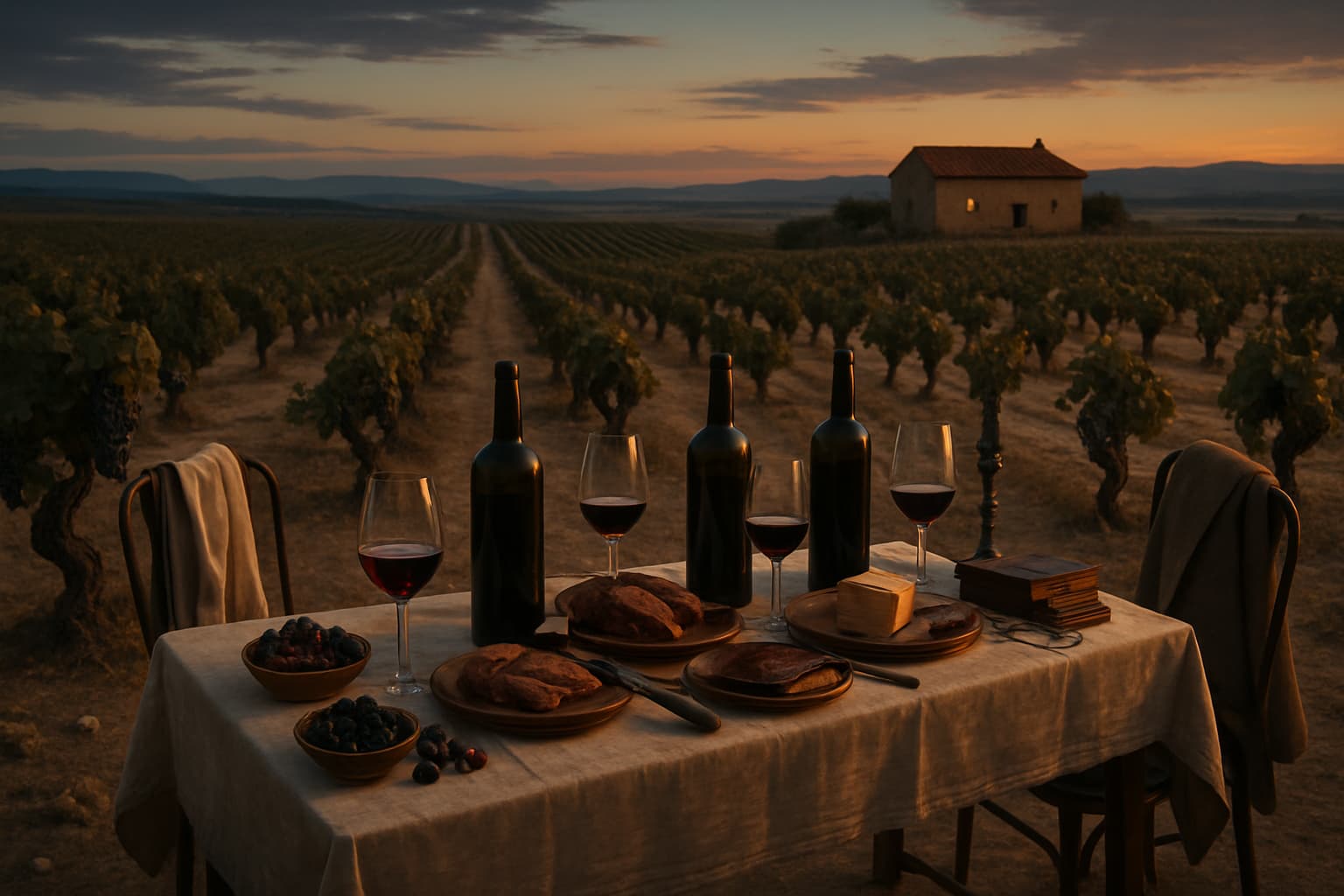
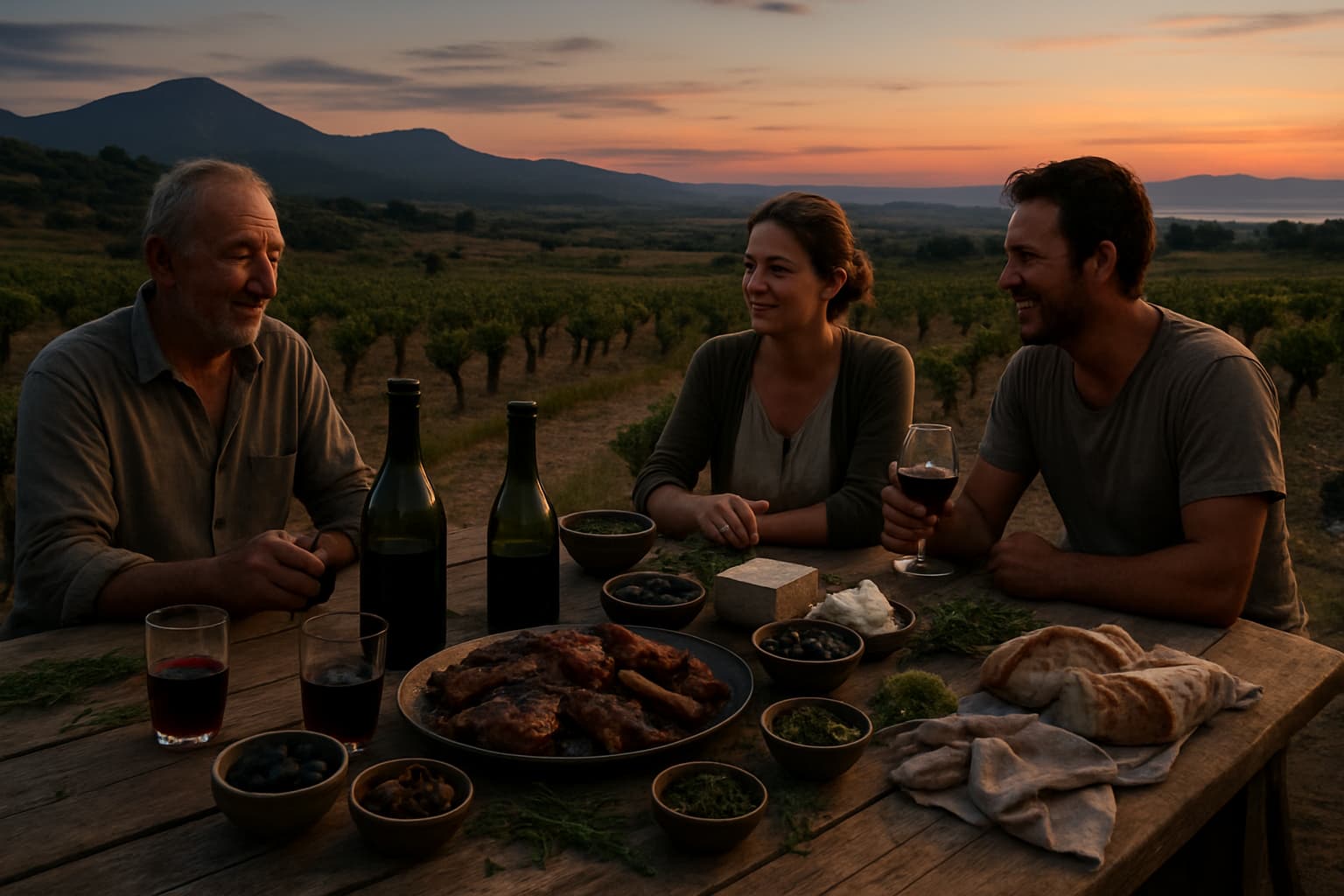
Do not drink them alone with a notebook and a pen, searching for clever words. Open them at a table with food. Roast a leg of lamb with garlic and rosemary. Grill sausages until the fat spits and smokes. Put out olives, anchovies, hard sheep’s cheese, bread with a crust that fights back. Pour the wine into thick glasses and do not worry if it is a degree too warm or too cold. Drink and eat and talk.
Pay attention, but not too much. Let the wine work its way into the conversation the way a good friend does—quietly, without fuss. Notice how the red cuts through the fat, how the herb note in the wine matches the herbs in the food, how the salt in the white snaps the sweetness of shellfish into focus. Notice how the bottle empties faster than you thought it would.
If you can, keep a few bottles from the better hills. Put them away and forget them for five or ten years. When you open them, you will find that the rough edges have softened. The fruit will be quieter, the herbs deeper, the earth more present. The wine will taste like memory.
Languedoc is still poor in many places. The growers still fight hail and drought and low prices. Climate change makes the summers hotter and the rains more violent. Vines burn in wildfires. Yields drop. Some people sell their land. Others dig in.
There is talk now of organics and biodynamics, of cover crops and biodiversity. There are horses in the rows again instead of tractors. There are sheep grazing between the vines. Some of this is fashion. Some of it is survival. The land has been pushed hard for a long time. It needs a gentler hand.
Yet the strength of the place is its toughness. The old vines have deep roots. They can find water when the surface is dry. They can handle heat that would kill younger plants. The people have deep roots too. Their families have been there for generations. They know the wind and the soil and the way the clouds build before a storm.
The wines that come from this will not be perfect. They will not be polished. They will be like the country itself: hard, generous, honest. They will carry the taste of stone and sun and wild herbs and salt. They will tell the story of a land that was once only a source of cheap drink and is now, slowly, being seen for what it always was—a great vineyard, rough and true.
In the end, that is what matters. Not the scores or the fashions or the clever words, but the simple fact that when you raise the glass to your lips, you taste a real place, made by real hands, under a real sky. And the wind from the hills moves over the vines and goes on to the sea, as it always has, and the wine in your glass is its echo.
Tannins are astringent compounds found in wine that contribute to its texture and aging potential, often causing a drying or puckering sensation in the mouth. They are derived from grape skins, seeds, and stems, as well as from oak barrels used during aging.
/ˈtænɪnz/
Malic acid is a naturally occurring organic acid found in grapes that contributes to the tart, green apple-like flavor and crispness in wine. It plays a significant role in the taste and acidity of wine.
/mælɪk ˈæsɪd/
Filtration in winemaking is the process of removing solid particles from wine to clarify and stabilize it before bottling, using various types of filters to achieve different levels of clarity and remove unwanted elements like yeast, bacteria, and sediment.
/fɪlˈtreɪʃən/
Oxidation in wine is a chemical reaction between the wine and oxygen that can change its flavor, aroma, and color. This process can be beneficial or detrimental depending on the extent and context of the exposure.
/ˌɒksɪˈdeɪʃən/
Microclimate refers to the unique climate conditions of a small, specific area within a larger region, significantly influencing grapevine growth and the characteristics of the resulting wine.
/ˈmīkrōˌklīmit/
Get weekly wine recommendations, vineyard news, and exclusive content delivered to your inbox.