Wine Literature and Media
“Where every bottle tells a story”
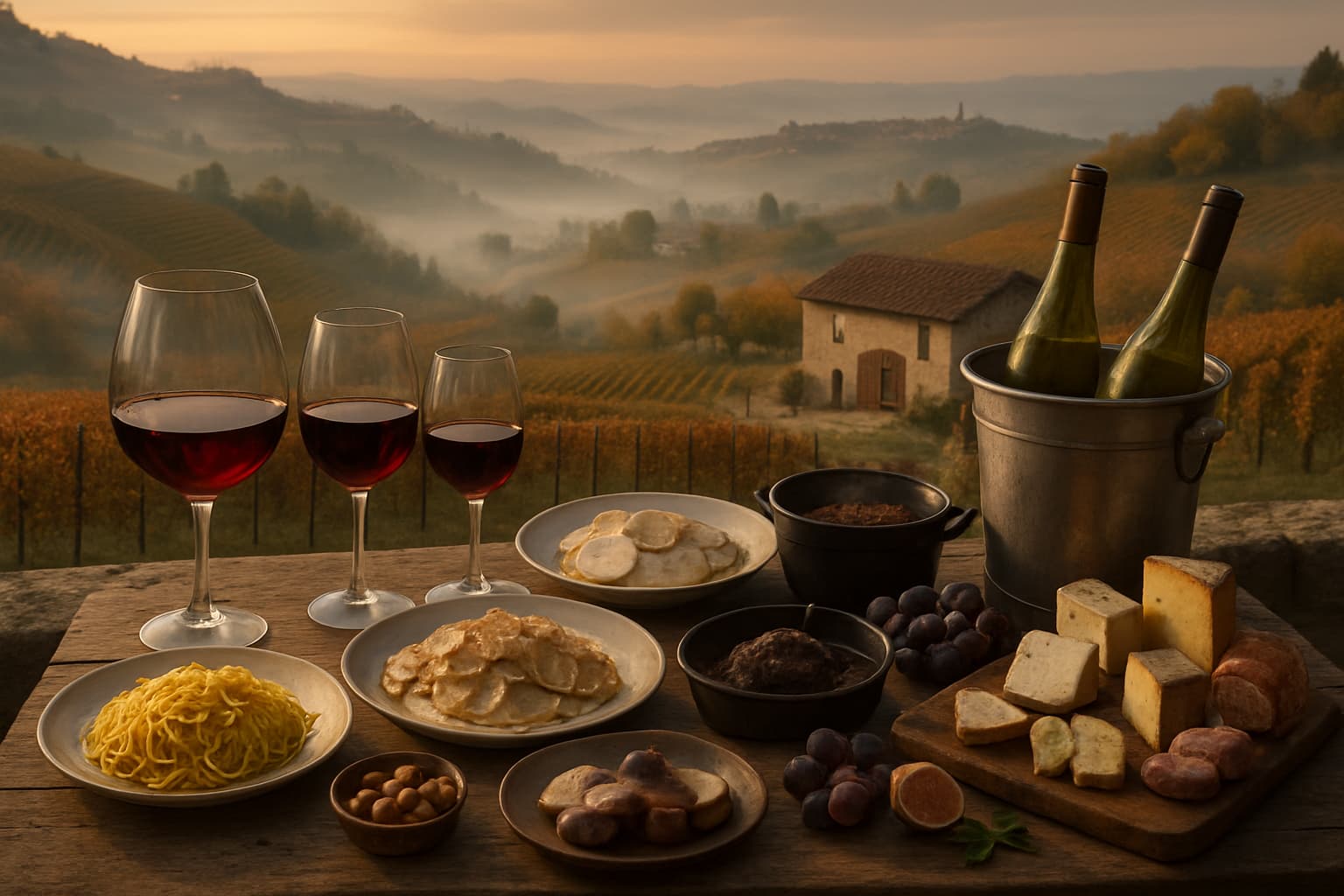
Oh, my dear, pour yourself a little glass of something red and sturdy, and let’s travel together—by nose and palate—to one of the most enchanting wine regions on earth: Piedmont. This is a land of misty hills, slow-cooked sauces, white truffles hiding in the earth, and wines with enough personality to argue back at you. It’s not dainty, not fussy, but it is gloriously complex—rather like a good stew that’s been simmering all day.
Let’s roll up our sleeves and dive in.
Piedmont lies in Italy’s northwest corner, pressed up against the Alps and nestled close to France and Switzerland. The very name means “foot of the mountains,” and those mountains are terribly important. They shield the region from harsh northern winds, while the Po River and rolling hills create a patchwork of microclimates.
In autumn, fog—nebbia—pools in the valleys and curls around the vineyards. That fog gave its name to Nebbiolo, the region’s star grape, and it gives the wines their moody, haunting character. This is not postcard Italy with sun-drenched beaches; this is truffle-hunting, slow-braising, and long conversations over long dinners.
Piedmont is also a region of small family estates, generations of winemakers, and a certain stubbornness—wonderfully so. They do things their way, and the wines show it.
Before we ladle out the wines, let’s meet the grapes. Think of them as characters at a lively dinner party.
Nebbiolo is the grand, eccentric aunt of Piedmont—brilliant, demanding, and not always easy to understand at first meeting.
Nebbiolo is the backbone of Barolo, Barbaresco, and several other appellations. Young Nebbiolo can feel a bit like chewing on a tea bag—those tannins!—but with time it becomes silken and hauntingly complex.
Barbera is the one you invite when you’re not sure what you’re cooking yet.
Traditionally, Barbera was the everyday wine of the region: gulpable, cheerful, poured liberally with dinner. Modern versions can be quite serious, but they still have that mouthwatering, “let’s have another bite” quality.
Despite its name—“little sweet one”—Dolcetto is usually dry and pleasantly bitter, like a good espresso.
Dolcetto is the bistro wine of Piedmont, the pasta-and-pizza companion, meant to be drunk now, not tucked away for your grandchildren.
Piedmont is not just a red-wine kingdom.
These whites provide relief between all those brooding reds—like a sorbet course for your palate.
Ah, Barolo. If Nebbiolo is the grape, Barolo is the throne. This wine has been called “the king of wines and the wine of kings,” and for once the slogan isn’t entirely silly.
Barolo hails from a cluster of hilltop villages—Barolo, La Morra, Serralunga d’Alba, Monforte d’Alba, Castiglione Falletto, and a few others—each with its own character. The vineyards perch on slopes of clay, limestone, and marl. Tiny changes in soil and exposure give the wines distinct personalities.
Classic Barolo is not shy.
It needs time in bottle to soften and open up—like a stew that tastes better the next day. Young Barolo can be stern; older Barolo unfurls like a story told slowly by someone who has lived a long life.
For years there was a bit of a family argument in Barolo:
Today, many producers blend these approaches. You’ll find a spectrum from rustic and powerful to polished and perfumed. The joy is in exploring.
Barbaresco is Nebbiolo’s other great stage, just a few hills away from Barolo but with a subtly different personality—like siblings who share the same bones but dress differently.
Produced around the villages of Barbaresco, Neive, and Treiso, Barbaresco enjoys slightly warmer, more open conditions. The rules around aging are a bit less strict than in Barolo, and the wines often feel a touch more approachable earlier.
Barbaresco is usually:
If Barolo is a hearty braise, Barbaresco is a beautifully reduced sauce—intense but a bit more refined at the edges.
Now, my dear, it would be a terrible mistake to stop at Barolo and Barbaresco. Piedmont’s charm is in its everyday wines, the ones you’d drink on a Tuesday night with a bowl of pasta.
These are the workhorses, and what noble work they do.
They’re marvelous with tomato sauces, sausages, grilled vegetables, and just about anything that benefits from a refreshing, juicy partner.
Dolcetto is the wine you open while you’re still cooking—just to keep you company at the stove.
Dogliani, in particular, is known for more serious, structured Dolcetto that can show surprising depth.
And then there’s Moscato d’Asti, the giggling dessert wine: lightly sweet, gently sparkling, and low in alcohol. It’s perfect with fruit tarts, simple cakes, or just on its own when you want something festive but not heavy.
Piedmont does not only brood in the cellar; it also knows how to celebrate.
These wines are like dessert and conversation in a glass.
Alta Langa is a traditional-method sparkling wine made from Pinot Noir and Chardonnay, aged on the lees like Champagne.
Piedmontese wines make the most sense when you see them in their natural habitat: on a table groaning under the weight of local dishes.
Imagine:
The wines are built for food: the high acidity, the tannins, the savory notes. They come alive when there’s something delicious on the plate.
If you’d like to curl up with a book or a screen and let Piedmont seep into your imagination, there’s a small library of treasures to explore.
The best writing on Piedmont captures not just flavors, but stubbornness, patience, and the deep connection between land, family, and wine.
Documentaries and wine series often feature:
Watching these, you can almost smell the cellar and hear the clink of glasses in the tasting room.
You don’t need a cellar carved into a hillside to enjoy these wines. You just need curiosity and a corkscrew.
A simple progression might be:
Take notes if you like, or simply pay attention. Which grapes speak to you? Which villages? Which styles?
Piedmont’s wines are not about instant gratification; they reward patience, attention, and a healthy appetite. They’re shaped by misty hills, stubborn families, and a cuisine that celebrates both comfort and elegance.
There is grandeur in Barolo and Barbaresco, certainly, but also joy in a humble glass of Dolcetto with a bowl of soup, or a splash of Moscato d’Asti with a slice of cake. The region’s literature and media—its books, films, and stories—remind us that wine is not an isolated object, but part of a life: of meals, seasons, arguments, and celebrations.
So, the next time you’re in the wine shop, let your eye wander to Piedmont. Pick up a bottle or two, invite some friends, and cook something that smells wonderful. Then raise your glass and, in the spirit of exuberant living and good eating, say: “Bon appétit”—or, as they do in Piedmont, “Buon appetito!”
Tannins are astringent compounds found in wine that contribute to its texture and aging potential, often causing a drying or puckering sensation in the mouth. They are derived from grape skins, seeds, and stems, as well as from oak barrels used during aging.
/ˈtænɪnz/
Malic acid is a naturally occurring organic acid found in grapes that contributes to the tart, green apple-like flavor and crispness in wine. It plays a significant role in the taste and acidity of wine.
/mælɪk ˈæsɪd/
Start with Barbera or Dolcetto
Open a Barbera d’Asti or Dolcetto d’Alba with a simple pasta dinner. Notice the freshness, the easy drinkability.
Move to a white
Try a Gavi or Roero Arneis as an aperitif. Pay attention to the contrast: bright, crisp, and aromatic.
Introduce Nebbiolo in a gentler form
Look for a Langhe Nebbiolo, often made from younger vines or declassified Barolo/Barbaresco juice. You’ll get the rose-and-tar perfume without the full tannic punch.
Finally, treat yourself to Barolo or Barbaresco
Choose a bottle with a bit of age if you can—six to ten years is a lovely window.
Serve with something hearty: braised meat, mushroom risotto, or rich polenta.
Give it time in the glass; let it unfurl.
Filtration in winemaking is the process of removing solid particles from wine to clarify and stabilize it before bottling, using various types of filters to achieve different levels of clarity and remove unwanted elements like yeast, bacteria, and sediment.
/fɪlˈtreɪʃən/
Oxidation in wine is a chemical reaction between the wine and oxygen that can change its flavor, aroma, and color. This process can be beneficial or detrimental depending on the extent and context of the exposure.
/ˌɒksɪˈdeɪʃən/
Microclimate refers to the unique climate conditions of a small, specific area within a larger region, significantly influencing grapevine growth and the characteristics of the resulting wine.
/ˈmīkrōˌklīmit/
Get weekly wine recommendations, vineyard news, and exclusive content delivered to your inbox.