Wine Literature and Media
“Where every bottle tells a story”
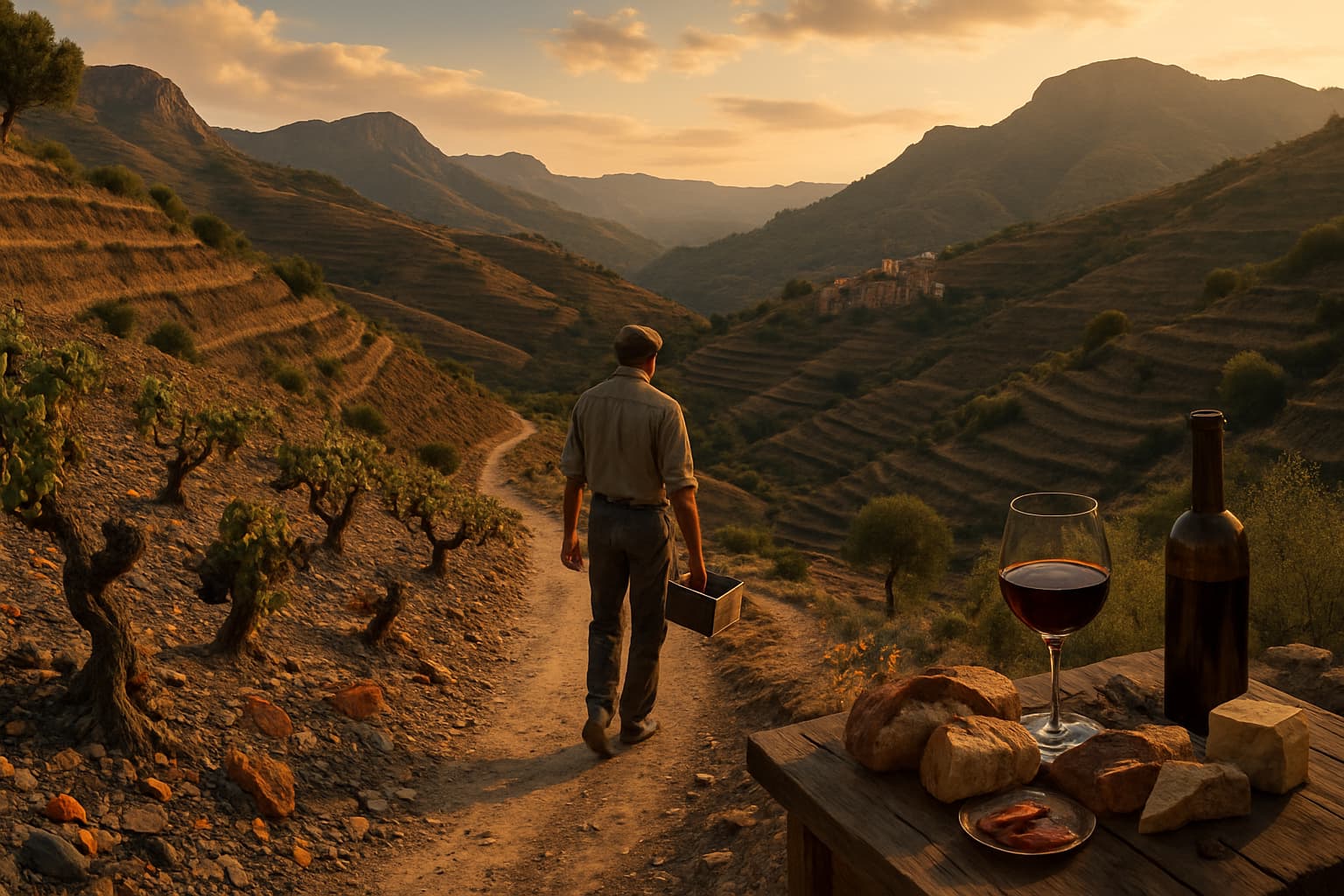
There are some landscapes that feel as if they’ve been slow-cooked by the sun, basted in sea breeze and perfumed with wild herbs; Roussillon is one of them. Imagine a place where the mountains lean down to kiss the Mediterranean, where vineyards cling to steep schist slopes and tumble towards glittering water, and where the air itself seems infused with thyme, rosemary and salt. The wines that come from here taste like that landscape in a glass: vivid, generous, a little wild, and irresistibly moreish.
Roussillon may not yet have the starry name recognition of Bordeaux or Burgundy, but that only adds to its allure. It’s the secret corner of French wine: sun-drenched, Catalan-hearted, and gloriously unbuttoned. Pour a glass, and you’re not just drinking wine; you’re sipping an entire geography of heat, wind, stone and sea.
To understand the wines, you must first picture the place. Roussillon sits in France’s far southwest, pressed up against the Spanish border, the last French region before you slip into Catalonia proper. On one side, the Pyrenees rear up, rugged and imposing; on the other, the Mediterranean stretches out, shimmering and seductive.
This is a bowl of land framed by three mountain ranges—the Corbières to the north, the Pyrenees to the west, and the Albères to the south—opening eastward to the sea. It’s a natural amphitheatre, and the sun is always centre stage. Summers are hot, winters mild, and the sky seems almost permanently blue.
The wind, too, is part of the story. The Tramontane, a fierce, dry northwesterly wind, barrels through the valleys, scouring the sky clean and drying the grapes after rain. It’s like nature’s own air-conditioning and antiseptic, concentrating the fruit and helping keep the vines healthy. This combination of heat, light, wind and poor, stony soils means the vines must work hard, digging deep, yielding less—but what they give is all the more intense.
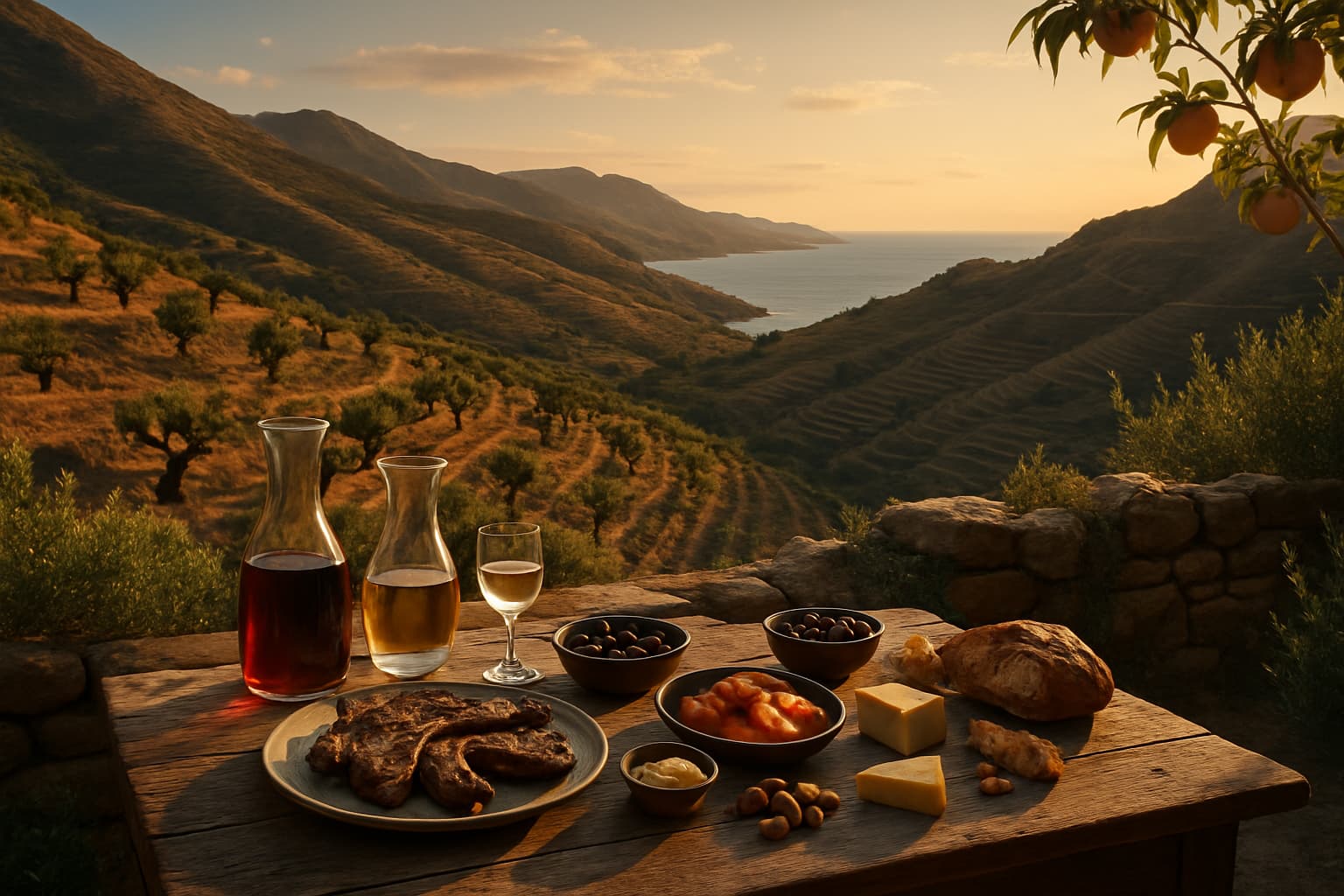
And then there is the culture: Roussillon is French, yes, but it’s also deeply Catalan. This is a place of tapas and anchoïade, of grilled fish and lamb rubbed with herbs, of olives and almonds and peaches that taste like liquefied sunshine. The wines are made to be drunk with food, and with gusto.
Wine is, at heart, geology you can drink, and Roussillon is geologically exuberant. Its soils are a patchwork quilt: black schist that warms quickly and radiates heat into the night; crumbly gneiss; slate that fractures underfoot; rolled river stones that look as if they’ve been polished by time; red clay; limestone; sand.
Each of these soils gives a different nuance to the wines:
Old vines—gnarled, twisted, sometimes looking as though they’ve been sculpted by the wind—are common here. Many are 50, 70, even 100 years old, their roots delving deep into the fractured rock. They yield few grapes, but what fruit they do give is concentrated, complex and hauntingly expressive.
Roussillon’s grape varieties are like its landscape: robust, generous, and unapologetically full-flavoured. There is nothing pale or wan here; these are grapes that have basked in sunlight and survived the Tramontane.
The reds of Roussillon are built on Mediterranean stalwarts:
Together, these grapes can create wines that are plush yet structured, like velvet lined with steel. You may find flavours of black cherries, ripe plums, wild strawberries, black olives, garrigue herbs (thyme, rosemary, lavender), and sometimes a saline edge that seems to echo the nearby sea.
Given the heat, you might expect the whites to be blowsy and overripe, but Roussillon’s whites can be surprisingly poised:
These whites are rarely about piercing acidity; instead, they offer a kind of quiet, sun-warmed elegance: rounded, often textured, sometimes aged in old oak for a gentle, nutty complexity, and frequently marked by a savoury, saline finish that makes them dreamy with food.
If Roussillon has a liquid soul, it is surely found in its vins doux naturels—lightly fortified sweet wines that once dominated the region’s reputation. They are the old family jewels: perhaps not worn every day, but dazzling when brought out.
These wines are made by adding neutral grape spirit to fermenting must, stopping fermentation and preserving some of the grapes’ natural sweetness. The result is a wine that is both sweet and strong, yet capable of astonishing nuance and longevity.
Key appellations include:
There is something almost decadent about these wines: they invite slow sipping, contemplation, and a square (or three) of dark chocolate, a bowl of roasted almonds, or a sliver of blue cheese. They are the wines of late evenings, of stories and secrets.
For much of the twentieth century, Roussillon was known more for quantity than quality, and for its sweet fortified wines above all. But over the past few decades, a quiet revolution has been unfolding.
Old vines once destined for bulk wine are now being cherished. Small domaines—often run by passionate growers who might previously have sold their grapes to co-operatives—are bottling their own wines. There is a palpable sense of experimentation and rediscovery.
Modern dry reds from Roussillon can be thrilling. They retain a sun-drenched generosity, but there is an increasing emphasis on balance, freshness and detail:
The result? Wines that smell of wild berries and crushed herbs, that feel full and satisfying but not lumbering, and that finish with a savoury tug, making you instinctively reach for another sip.
The whites, too, have blossomed. Gentle pressing, cool fermentation, careful lees ageing—all these techniques are being deployed to coax out nuance and length. You may find:
These are not wines that shout; they murmur, coax, and then quietly insist you pay attention.
Wine is always more itself when there is food nearby, and Roussillon’s wines are made to be eaten with.
If you ever doubt the harmony between a wine and its place, drink a Roussillon wine while eating food that tastes of the Mediterranean, and you will understand.
When you’re browsing shelves or scrolling online, look for these appellations:
Roussillon still offers, in many instances, that rarest of pleasures in the wine world: character and complexity at prices that don’t make you wince.
There is something deeply comforting about Roussillon’s wines. They don’t feel austere or forbidding; they feel generous, like a kitchen where the pot on the stove is always full and no one ever leaves hungry. They carry the memory of hot stones underfoot, of sea spray on your skin, of herbs crushed between your fingers.
To drink them is to be drawn into a place where time seems to slow: where you can imagine yourself at a rough wooden table under a plane tree, the air humming with cicadas, a carafe of something ruby or gold catching the late-afternoon light. You tear off a piece of bread, dip it in olive oil, spear a slice of tomato that actually tastes of tomato, and take a sip. The wine isn’t just an accompaniment; it’s a continuation of everything on the plate and in the air.
Roussillon may not be the first name that springs to mind when you think of French wine, but that is precisely what makes it so alluring. It is a region that doesn’t shout for attention, yet once you’ve tasted its wines, they linger in your memory, like the warmth of the sun on your shoulders long after you’ve stepped indoors.
Explore it, glass by glass, and you’ll find a world of flavour that is at once ancient and newly alive—a place where sun, stone, sea and vine come together in wines that are as indulgent, as evocative, and as quietly irresistible as a second helping you never meant to take, but are so very glad you did.
Tannins are astringent compounds found in wine that contribute to its texture and aging potential, often causing a drying or puckering sensation in the mouth. They are derived from grape skins, seeds, and stems, as well as from oak barrels used during aging.
/ˈtænɪnz/
Malic acid is a naturally occurring organic acid found in grapes that contributes to the tart, green apple-like flavor and crispness in wine. It plays a significant role in the taste and acidity of wine.
/mælɪk ˈæsɪd/
Filtration in winemaking is the process of removing solid particles from wine to clarify and stabilize it before bottling, using various types of filters to achieve different levels of clarity and remove unwanted elements like yeast, bacteria, and sediment.
/fɪlˈtreɪʃən/
Oxidation in wine is a chemical reaction between the wine and oxygen that can change its flavor, aroma, and color. This process can be beneficial or detrimental depending on the extent and context of the exposure.
/ˌɒksɪˈdeɪʃən/
Microclimate refers to the unique climate conditions of a small, specific area within a larger region, significantly influencing grapevine growth and the characteristics of the resulting wine.
/ˈmīkrōˌklīmit/
Get weekly wine recommendations, vineyard news, and exclusive content delivered to your inbox.