Wine Literature and Media
“Where every bottle tells a story”
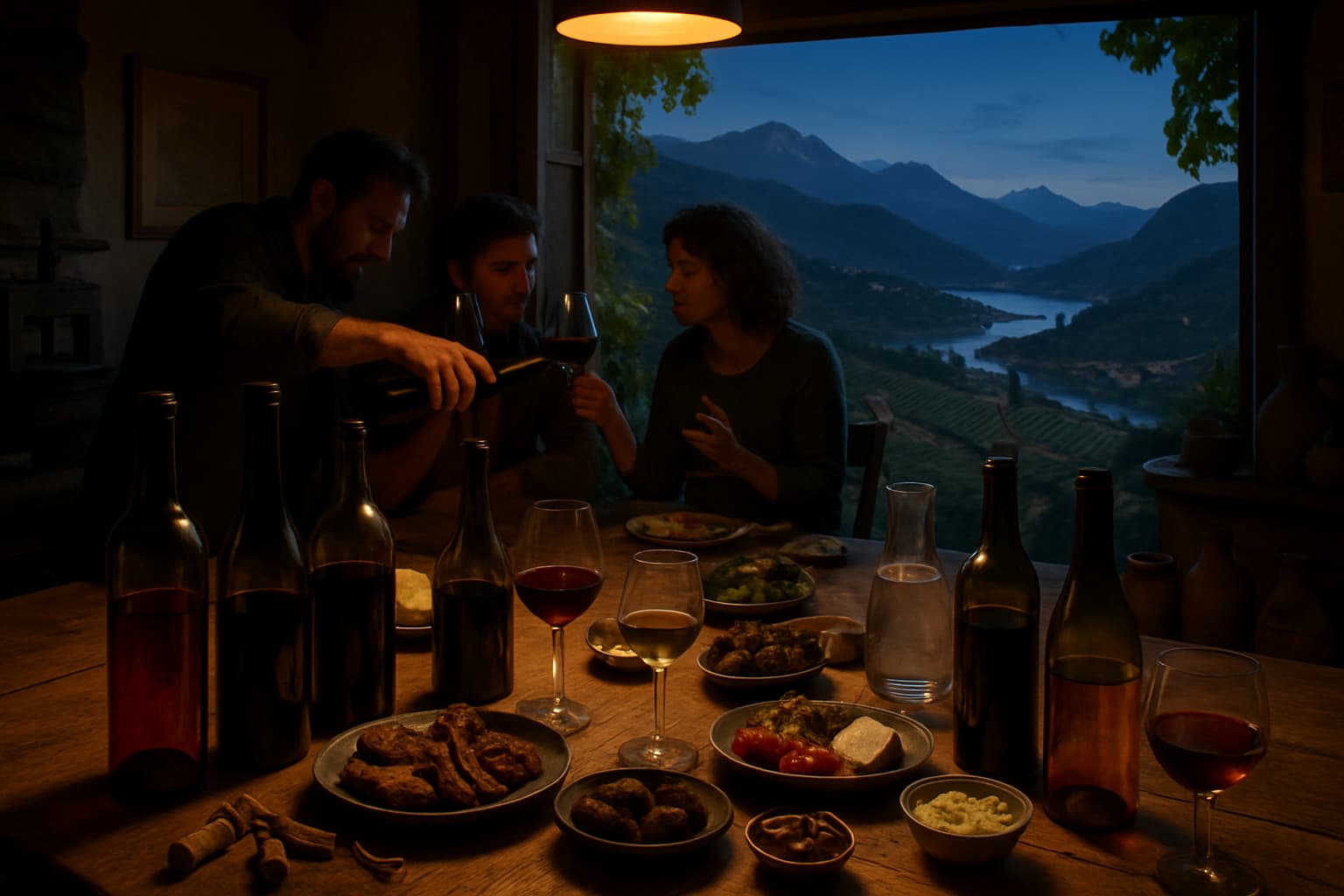
Oh, my dear, pour yourself a nice glass of something—preferably from somewhere you haven’t heard of yet—and let’s go traveling together. Not to Bordeaux, not to Napa, not even to Tuscany. Today we’re going somewhere gloriously underappreciated, a little wild, and utterly delicious: the vineyards of the Balkans.
This is a corner of Europe where wine has been made for thousands of years, where vines creep up mountainsides and snuggle along river valleys, and where every village grandmother has an opinion on how wine ought to taste. It’s rustic and refined all at once, and it’s high time we invited these bottles to our tables.
Let’s set our map straight before we uncork anything.
The Balkans is a region in Southeast Europe that typically includes:
Now imagine this region as a great, rumpled tablecloth of mountains and valleys, with the Adriatic and Black Seas fluttering at the edges. You have:
This is not a “new” wine region; it’s a very old one that’s simply been off the international radar for a few decades. Political upheavals, wars, and shifting borders interrupted wine’s path to the outside world, but the vines remained, tended by families who kept their knowledge like a cherished recipe.
Now, as wineries modernize and export more, we’re seeing a renaissance. Think of it as finally opening that mysterious jar at the back of the pantry and discovering it’s the best thing you’ve tasted all year.
If you enjoy a bit of history with your wine (and I certainly do), the Balkans are a treasure chest.
So when you drink a Balkan wine, you’re not sipping a trend; you’re tasting a very old story that’s just learned how to introduce itself properly again.
Now for the fun part: the grapes, many of which sound like tongue-twisters until you’ve had a glass or two.
Let’s meet some of the regional stars, organized by country, like a little tasting tour.
Bulgaria used to be one of the world’s largest wine exporters under communism, especially to France and the UK. Today, it’s reinventing itself with both international and local grapes.
Key indigenous grapes:
Bulgaria also makes lovely whites from Dimyat and Misket, often floral and fresh.
Croatia’s coastline and islands are a wine lover’s playground. Imagine vines clinging to limestone terraces above the Adriatic, with sea breezes seasoning the grapes like a sprinkle of salt.
Key indigenous grapes:
Croatia also produces orange wines (skin-contact whites), particularly in Istria, which are delightfully food-friendly and a bit adventurous.
Slovenia is like the meticulous home cook who labels everything in the pantry and turns out perfect meals with seeming effortlessness. It borders Italy and Austria, and you can taste that Central European precision.
Key regions:
Notable grapes:
Rebula (Ribolla Gialla)
Often used for both fresh whites and skin-contact “orange” wines—think citrus peel, herbs, and a bit of tannic grip.
Pairing idea: Charcuterie, aged cheeses, and complex vegetable dishes (mushrooms, root vegetables, roasted squash).
Šipon (Furmint)
Related to the grape used in Hungary’s Tokaji. In Slovenia it can be dry, crisp, and mineral, or lusciously sweet.
Pairing idea: Dry versions with fish and salads; sweet versions with desserts or blue cheese.
Slovenian winemakers are often very quality-driven, with a strong natural and organic wine movement.
These three countries share a love for hearty reds and sun-drenched vineyards.
Serbia:
North Macedonia:
North Macedonia’s warm climate and high altitudes create wines with both ripeness and freshness—quite a marvelous combination.
Montenegro:
Albania is still under the radar, but has ancient viticultural roots and a growing quality movement.
Local grapes to watch:
Shesh i Bardhë (white)
Often fresh, light, and citrusy—simple but charming.
Shesh i Zi (red)
Medium-bodied, with red fruit and gentle tannins.
You’ll also find international varieties like Cabernet and Merlot, but the local grapes are where you’ll taste something truly distinct.
Every country and grape has its own personality, of course, but we can make a few broad observations:
This is where things get exciting in the kitchen. Balkan cuisine is hearty, rustic, and absolutely made for wine.
Think of:
A few pairing notions:
If you’re ever in doubt, remember a simple rule: match the heartiness of the dish to the weight of the wine. Big dishes, big wines; lighter dishes, lighter wines.
You don’t need a plane ticket or a Balkan grandmother (though that would be delightful) to start exploring. Here’s how to begin:
There’s something quietly beautiful about drinking wines that aren’t yet global celebrities. It feels a bit like cooking a splendid meal from humble ingredients: cabbage, beans, a good chicken—nothing flashy, but in the right hands, unforgettable.
Balkan wines remind us that:
These are wines made by people who often know their vines by sight, who’ve seen wars and border changes and still pruned the same rows every winter. There’s resilience, history, and a certain joyous stubbornness in these bottles.
If you love wine—and since you’re still reading, I assume you do—then the Balkans are a marvelous next chapter in your tasting story.
You’ll find:
So, next time you’re browsing the shelves, let your eye wander past the familiar French and Italian labels. Reach for something with a long, unfamiliar name—Plavac Mali, Vranec, Mavrud, Prokupac—and invite it home for dinner.
Open the bottle, give it a swirl, take a generous sniff, and sip slowly. You might just find that your new favorite wine comes from a sun-splashed hillside in a corner of Europe you’ve never visited—but now, in a small, delicious way, you have.
Tannins are astringent compounds found in wine that contribute to its texture and aging potential, often causing a drying or puckering sensation in the mouth. They are derived from grape skins, seeds, and stems, as well as from oak barrels used during aging.
/ˈtænɪnz/
Malic acid is a naturally occurring organic acid found in grapes that contributes to the tart, green apple-like flavor and crispness in wine. It plays a significant role in the taste and acidity of wine.
/mælɪk ˈæsɪd/
Mavrud
A deep, dark red from Thrace (around Plovdiv), full of blackberries, plums, and sometimes a whiff of herbs and smoke. If you love Cabernet Sauvignon or Syrah, this is your new friend.
Pairing idea: Rich stews, lamb shanks, moussaka, or anything roasted until it’s sticky and caramelized.
Melnik (Shiroka Melnishka Loza)
From the southwestern corner near Greece. Spicy, medium-bodied, often with red cherry and dried herbs. Winston Churchill reportedly adored it—he supposedly had it shipped to him regularly.
Pairing idea: Grilled sausages, charcuterie, and dishes with paprika.
Rubin (a cross of Nebbiolo and Syrah)
Not ancient, but very Balkan in spirit—structured like Nebbiolo, spicy and dark like Syrah.
Pairing idea: A good steak, grilled vegetables, or aged cheeses.
Plavac Mali
The powerful red of Dalmatia. It’s actually a relative of Zinfandel (through the local grape Crljenak Kaštelanski). Plavac Mali tends to be robust, with high tannins, dark fruit, dried figs, and a salty, herbal character.
Pairing idea: Grilled lamb, hearty meat dishes, or aged hard cheeses. It’s a wine that likes food with a bit of oomph.
Pošip
A white grape from the island of Korčula, now planted more widely. Full, aromatic, often with notes of stone fruit, citrus, and Mediterranean herbs. It can be bright and fresh or richer and oak-aged.
Pairing idea: Grilled fish, octopus salad, shellfish, or roast chicken with lemon and herbs.
Graševina (Welschriesling)
Grown across Central Europe, but in continental Croatia it can be marvelous: crisp, apple-y, sometimes with a touch of honey or almond.
Pairing idea: Lighter dishes—salads, white fish, simple pasta—and also a splendid aperitif.
Reds tend to be:
Whites are often:
Orange and natural wines:
Plavac Mali & Vranec
With grilled lamb, beef, and rich stews. These wines can stand up to smoky char and fat.
Mavrud & Melnik
With braised dishes, roasted root vegetables, and spiced meats—anything that cooks low and slow.
Pošip & coastal whites
With seafood—grilled fish, shellfish, octopus, and garlicky shrimp.
Graševina & lighter whites
With salads, vegetable dishes, mild cheeses, and as an aperitif.
Orange Rebula & other skin-contact whites
With complex, umami-rich dishes: mushrooms, aged cheeses, charcuterie, roasted poultry, and even some curries.
Look for a few key names on labels
Visit a good wine shop
Ask the staff specifically for Balkan wines. Many shops now carry at least a few bottles from Croatia, Slovenia, or Bulgaria.
Host a themed tasting
Pick 3–4 bottles from different countries—say, a Bulgarian Mavrud, a Croatian Pošip, a Slovenian Rebula, and a Macedonian Vranec. Arrange some simple foods: cheese, olives, grilled sausages, roasted peppers, and bread. Taste, compare, and take notes.
Be adventurous with vintages and styles
Try a fresh, young Vranec next to an older one, or a classic Pošip next to an orange Rebula. The contrast is half the fun.
Filtration in winemaking is the process of removing solid particles from wine to clarify and stabilize it before bottling, using various types of filters to achieve different levels of clarity and remove unwanted elements like yeast, bacteria, and sediment.
/fɪlˈtreɪʃən/
Oxidation in wine is a chemical reaction between the wine and oxygen that can change its flavor, aroma, and color. This process can be beneficial or detrimental depending on the extent and context of the exposure.
/ˌɒksɪˈdeɪʃən/
Microclimate refers to the unique climate conditions of a small, specific area within a larger region, significantly influencing grapevine growth and the characteristics of the resulting wine.
/ˈmīkrōˌklīmit/
Get weekly wine recommendations, vineyard news, and exclusive content delivered to your inbox.