Wine Literature and Media
“Where every bottle tells a story”
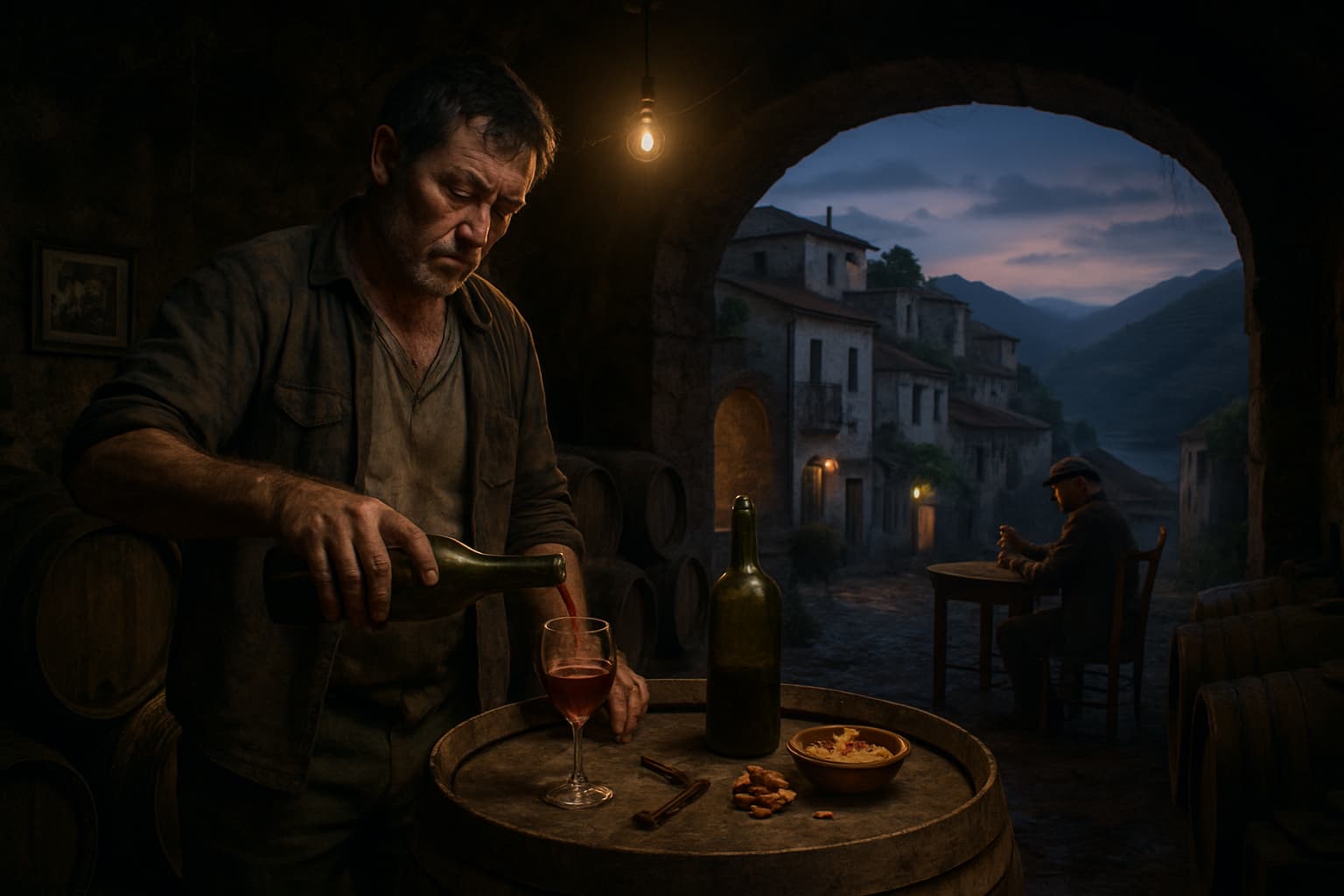
You don’t really know a place until you’ve seen what people drink when the cameras aren’t supposed to be rolling. And you definitely don’t understand Spain or Portugal until you’ve watched a winemaker in dusty boots and a stained T‑shirt pour something out of a cloudy bottle in a damp cellar and say, “This never leaves the village.”
The problem: most wine “content” is a beige, overproduced snoozefest—gleaming glasses, perfect vineyards, a British voiceover that sounds like it’s selling you insurance. Spain and Portugal deserve better than that. They deserve film that smells like wet stone, orange peel, diesel tractors, and old barrels. They deserve stories about people, not just “terroir.”
There actually are documentaries that do this—some raw, some polished, some quietly devastating. If you want to understand Iberian wine beyond the supermarket Rioja and the “house Vinho Verde,” you start here: in the dark, with a screen, a bottle, and a willingness to see that wine is less about luxury and more about survival, stubbornness, and memory.
France has the myth‑making machine. Italy has the romance. Spain and Portugal? They have scars: civil war, dictatorships, economic collapse. Whole regions emptied out while kids fled to Madrid, Barcelona, London, Berlin—anywhere but the village.
What’s left behind: old vines, older people, and a handful of maniacs who decided to stay—or come back—and make wine in places where no sane investor would put a cent. Documentaries in Iberia, when they’re honest, aren’t about “lifestyle.” They’re about whether the village bar will still exist in ten years.
Watch enough of these films and a pattern emerges:
That’s the tension that makes these documentaries worth your time.
Technically, Our Blood Is Wine is about Georgia (the country), not Spain. So why mention it? Because if you want to understand Galicia—Spain’s rainy, Atlantic, Celtic corner—this film is the emotional blueprint.
Georgian winemakers bury clay qvevri in the ground, fermenting wine the way their ancestors did thousands of years ago. Galicia’s old‑timers don’t use qvevri, but they share the same posture: middle finger up to modernity, devotion to old vines on slopes that make your knees hurt just looking at them.
Watch Our Blood Is Wine with a bottle of Ribeira Sacra Mencía or some salty Albariño, and you’ll start to see Spain’s northwest not as “value wine country,” but as a cultural frontline: old ways vs. the bulldozer of global sameness. Then go looking for Iberian docs that carry that same energy.
Let’s talk about them.
This one’s more of a hybrid: partly fiction, partly documentary, but it nails something essential about Spanish (and broader Latin) wine culture. An Argentine sommelier loses his sense of taste and wanders through Spain, trying to figure out who he is without his palate.
Spain here isn’t a postcard. It’s bars with fluorescent lighting, back‑room tastings, anonymous hotel rooms, and conversations with people who actually make the stuff. The film isn’t about “Rioja vs. Ribera”; it’s about what happens when the supposed “expert” is suddenly useless, and the only people who still know what they’re doing are the ones with dirt under their nails.
If you’ve ever sat in a fancy wine bar and thought, “These tasting notes sound like bad poetry,” this film is your quiet revenge.
Priorat used to be a forgotten patch of Catalonia—terraced vineyards, slate soils, monasteries, and not much else. Then a group of lunatics in the 1980s and ’90s—René Barbier, Álvaro Palacios, and a few others—decided to make world‑class wine there. They had no money, no infrastructure, just belief and a lot of stubbornness.
The documentary Priorat (various versions and TV cuts exist) tells that story. It’s not slick. It doesn’t need to be. The landscape does the heavy lifting: black slate (llicorella) that looks like dragon skin, vines clinging to absurdly steep slopes, and a handful of people who bet their lives on a place everyone else had written off.
What makes it interesting isn’t the usual “rags to Parker 98 points” arc. It’s the tension:
Watch it with a bottle of Priorat or neighboring Montsant, and think about the cost of success—who pays, who wins, who gets pushed out.
Sherry is one of the world’s most misunderstood wines. In Jerez, the bodegas are like cathedrals: high ceilings, dust, spiderwebs, barrels stacked like aging tombstones. The documentaries that get Jerez right treat it like what it is: a ghost story.
Look for Spanish‑ and UK‑produced docs and TV features simply titled Jerez or Sherry—often short, sometimes part of broader wine series. The good ones show:
The best Jerez films aren’t about food pairing. They’re about memory—about a town that tied its fate to one style of wine and woke up to find the world had moved on to vodka and gin‑tonics. Watching them, you feel the weight of barrels and time and bad business decisions.
Open a Fino or Amontillado while you watch. Don’t ask what to pair it with. Pair it with regret, survival, and fried fish if you must.
Portugal is a country that spent centuries staring at the ocean and wondering what was on the other side. Its wine regions feel like that too: remote, stubborn, a little melancholic. The documentaries that work here don’t just talk about grapes; they talk about history, poverty, dictatorship, and a kind of quiet, enduring pride.
Part of a trilogy (A Year in Burgundy, A Year in Champagne), A Year in Port is the most accessible entry point into Portuguese wine on film. It’s beautifully shot, well structured, and clearly made with export markets in mind. You’ll see:
This is the glossy version of the story, but even here the cracks show. You catch glimpses of:
Watch it, enjoy the scenery, drink some Tawny, but understand: this is the polite version. The reality on the ground is rougher, poorer, and more complicated.
Manoel de Oliveira’s Douro, Faina Fluvial (1931) is a short, silent, black‑and‑white documentary about life along the Douro River long before Port became a “brand.”
No tasting notes. No sommeliers. Just:
It’s harsh, industrial, almost brutal. And that’s exactly why it matters. Every time you see a modern wine ad with drone shots and soft piano music, remember this film. Wine didn’t start as a luxury product. It started as farm work and river work and backbreaking labor. The Douro is built on that.
Pour yourself a dry Douro red or a crusty old Port and watch this. It’s like ripping the label off a fancy bottle and seeing the scar tissue underneath.
A lot of Portugal’s best wine storytelling isn’t in big feature films; it’s in short documentaries, regional TV pieces, and online projects with names that sound like art‑school experiments: Lisboa Cru, Vinho Verde Stories, Dão: O Segredo (The Secret), Bairrada 3D—you get the idea.
They usually share a few things:
In Minho (Vinho Verde), you see:
In Dão and Bairrada:
These pieces are less polished, more intimate. They’re worth hunting down, even if you don’t understand every word. Pour a cheap Portuguese white, turn on subtitles if you can, and let the landscapes do the talking.
Strip away the wine jargon and the pretty shots, and these films—Spanish and Portuguese alike—are about a few basic things.
The best Iberian documentaries don’t romanticize the work. They show:
Wine, in these films, is not an Instagram hobby. It’s a job. A hard one. The glamour comes later, in someone else’s city, with someone else’s money.
You’ll see plenty of old barrels, old vines, old men. But tradition here isn’t a museum piece—it’s a negotiation:
The films that matter don’t pretend tradition is sacred. They show it as fragile, contested, sometimes suffocating—and sometimes the only thing standing between a place and oblivion.
You’ll see:
Without this global interest, a lot of these wineries would be dead. But the danger is obvious: make everything taste the same, look the same, feel the same, and you’ve killed the whole point of the place.
The best documentaries lean into that tension. They don’t solve it. They just let you sit with it.
If you’re going to watch wine documentaries about Spain and Portugal, don’t treat them like background noise while you scroll your phone.
Do this instead:
Notice:
You’ll come out the other side understanding that wine isn’t a “note of cherry and leather.” It’s a village deciding whether it still wants to exist.
Spain and Portugal aren’t just “value wine” countries or vacation backdrops. They’re places with long memories and short bank accounts. The best documentaries coming out of their vineyards and cellars don’t sell you a fantasy; they invite you into a very real, often uncomfortable reality: this might all go away.
Watch the films. Drink the wines. Remember that behind every bottle is someone who got up in the dark, in the cold, in the heat, and did the work. Documentaries, when they’re honest, are the only chance most of these people have to be seen by anyone beyond the next village over.
And if, after all that, you still think wine is just a “lifestyle accessory,” you weren’t paying attention.
Tannins are astringent compounds found in wine that contribute to its texture and aging potential, often causing a drying or puckering sensation in the mouth. They are derived from grape skins, seeds, and stems, as well as from oak barrels used during aging.
/ˈtænɪnz/
Malic acid is a naturally occurring organic acid found in grapes that contributes to the tart, green apple-like flavor and crispness in wine. It plays a significant role in the taste and acidity of wine.
/mælɪk ˈæsɪd/
Filtration in winemaking is the process of removing solid particles from wine to clarify and stabilize it before bottling, using various types of filters to achieve different levels of clarity and remove unwanted elements like yeast, bacteria, and sediment.
/fɪlˈtreɪʃən/
Oxidation in wine is a chemical reaction between the wine and oxygen that can change its flavor, aroma, and color. This process can be beneficial or detrimental depending on the extent and context of the exposure.
/ˌɒksɪˈdeɪʃən/
Microclimate refers to the unique climate conditions of a small, specific area within a larger region, significantly influencing grapevine growth and the characteristics of the resulting wine.
/ˈmīkrōˌklīmit/
Get weekly wine recommendations, vineyard news, and exclusive content delivered to your inbox.