Wine Literature and Media
“Where every bottle tells a story”
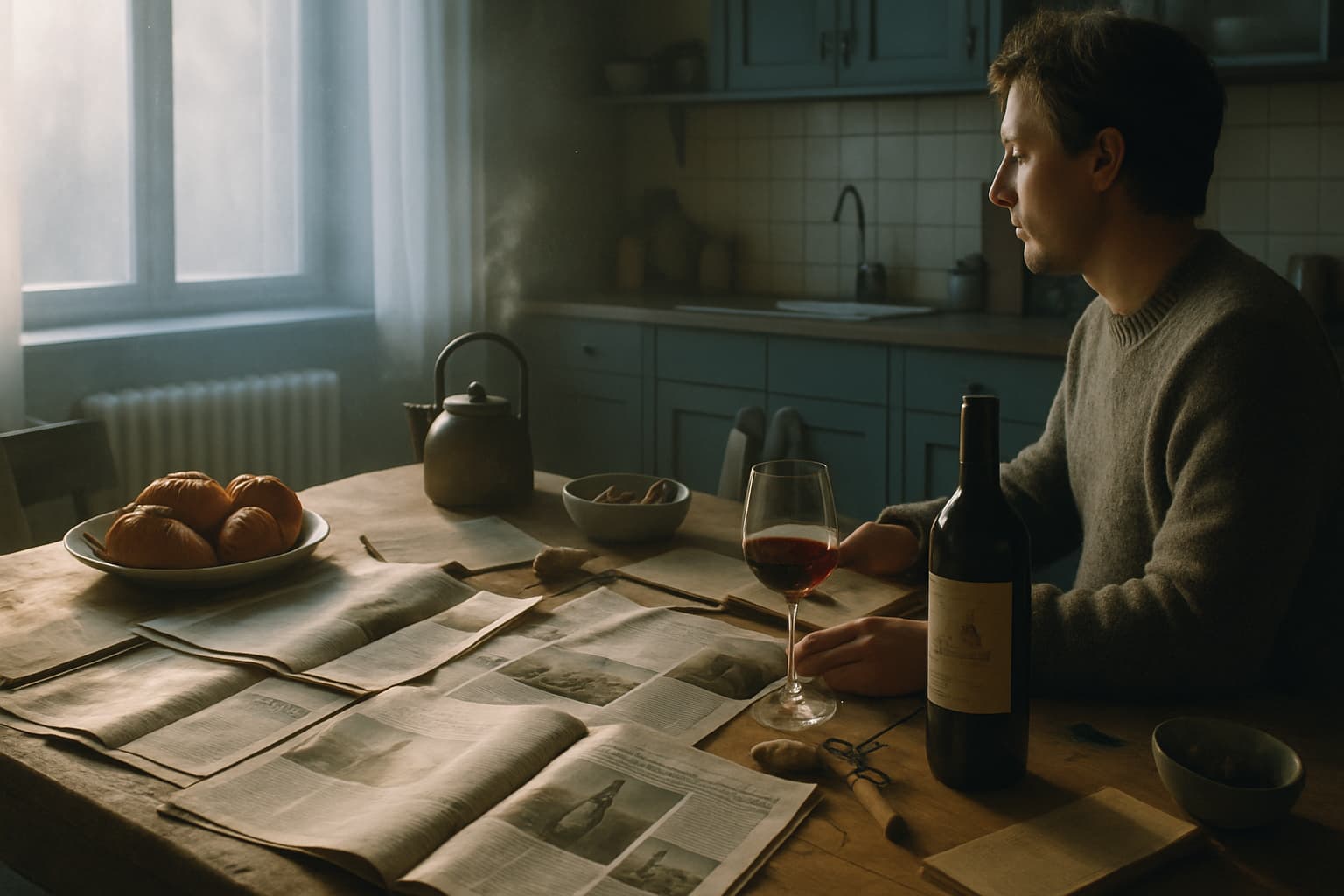
Imagine, if you will, a chilly Sunday morning somewhere between Bordeaux and Berlin. The kettle is whistling, the croissants are just a bit too brown on the edges, and spread out across the kitchen table is a glorious mess of newspapers—ink on your fingers, headlines shouting about politics and football, and tucked in between it all… a tiny column about wine.
There it is: a few inches of type, perhaps a small photo of a bottle, and yet that little square of newsprint has shaped how millions of Europeans think, talk, and dream about wine. Not in a fussy, intimidating way, but in a very human, very hungry way. Let’s pull up a chair, pour a glass, and see how wine in European newspapers—through columns and criticism—has become one of the great public stages for talking about pleasure, culture, and taste.
In the early days, newspapers treated wine rather like potatoes or coal—something to be bought, sold, and taxed. Wine appeared in the financial pages: harvest reports from Bordeaux, export statistics from Porto, grumbles about tariffs in London. It was commerce, not cuisine.
But slowly, especially in the 20th century, wine slipped from the back pages to the cultural sections. Post-war prosperity meant more people could afford wine, not just on feast days but on Tuesday nights. Supermarkets began stocking bottles from Spain, Italy, and beyond. Suddenly readers needed help:
Enter the wine columnist: part guide, part gossip, part teacher. European newspapers realized that wine could be a weekly conversation, not just a line on a customs form. And as the audience grew, so did the personality and power of these writers.
A good wine columnist is a bit like a kindly cooking teacher in your kitchen: sleeves rolled up, not afraid to spill, and absolutely determined to make you less scared of what’s on the table.
Across Europe, newspapers began to develop regular wine voices:
These writers did more than recommend bottles; they taught people how to think about flavor. They introduced concepts like acidity, tannin, balance, and structure in plain language. They translated the secret codes of labels, demystified appellations, and, with a little wink, told readers that it was perfectly acceptable to prefer a simple table wine to a grand cru if that’s what made dinner sing.
Wine criticism in newspapers is a curious thing. You have a few hundred words, a handful of bottles, and a readership that ranges from seasoned collectors to folks who buy whatever is on sale. The critic’s job is to be both precise and welcoming—rather like serving boeuf bourguignon to both gourmets and complete beginners.
Most European newspaper wine reviews follow a familiar pattern:
European newspaper critics, at their best, understand that wine is not a math exam. They carry authority—they taste widely, know the producers, understand vintages—but they also admit their own preferences and limitations. You will often see phrases like:
This is important. It turns criticism from a decree into a conversation. It gives the reader permission to like what they like. That’s when criticism becomes liberating rather than intimidating.
Just as wines express their regions, wine columns often reflect national character. Open the newspapers of Europe and you’ll find a banquet of voices.
French newspapers often treat wine as a cultural birthright. Columns may:
The tone can be serious, even philosophical. A bottle of Burgundy is never just a beverage—it’s a question of identity, history, and sometimes national pride. But there is also playfulness: summer rosé roundups, holiday Champagne guides, and gentle arguments over whether Bordeaux is making itself too “international.”
In British newspapers, wine columns often feel like travel diaries and confessional comedy rolled into one. You may find:
There is a strong consumer focus: critics know their readers are often buying from big retail chains, not from châteaux. The aim is to help ordinary shoppers upgrade their weeknight wine without feeling foolish—or fleeced.
In Italy and Spain, newspapers frequently weave wine into the fabric of daily eating. Columns might:
The message is clear: wine belongs with food, family, and celebration. It is not meant to be admired in isolation, like a museum piece; it is meant to be opened, shared, and finished.
In German and Austrian newspapers, you’ll often find a strong sense of regional geography and technical detail:
Yet even here, there has been a shift toward more approachable language and broader European and global coverage. The modern reader, after all, wants to know both about Mosel Riesling and about what to do with a bottle of Portuguese red.
Those little newspaper columns don’t just fill space between the classifieds and the crossword; they move bottles, shape reputations, and influence entire regions.
A single enthusiastic review in a major European paper can:
Producers know this, of course, and court the critics with tastings, samples, and visits. Ethical newspapers maintain clear boundaries: critics must remain independent, disclosing conflicts of interest and refusing gifts that might compromise their judgment.
Over time, wine columns gently nudge readers toward:
They also help readers recognize marketing nonsense. When a label screams “Gold Medal!” or “Reserve!”, a good columnist will calmly explain what those terms do—and do not—mean.
Of course, the newspaper page is no longer the only stage. Many European wine columnists now have:
Yet the newspaper format still matters. It imposes discipline: limited space, regular deadlines, and a broad, general audience. The critic can’t assume specialized knowledge; they must stay grounded, clear, and helpful. It keeps wine criticism tied to the everyday, not just the enthusiast’s niche.
The best newspaper critics have adapted beautifully. They use the paper to reach the widest audience with accessible guidance, and the digital world to go deeper: extended interviews with winemakers, video tastings, regional guides, and behind-the-scenes stories.
If you read European newspaper wine columns over time, you begin to see larger cultural shifts reflected in the glass:
Wine criticism, in this sense, is not just about taste—it’s about values. What we praise in wine (authenticity, sustainability, affordability, originality) tells us what we praise in life.
At the end of the day—or better yet, at the beginning of dinner—wine in European newspapers has one enduring mission: to help people drink better, with more understanding and less fear.
The finest wine columns and criticism do not scold or show off. They invite. They say:
They remind us that wine is a conversation between land, maker, and drinker, and that newspapers—those crinkly, inky companions to our morning coffee—are one of the great public forums where that conversation unfolds.
So the next time you unfold a European newspaper and your eye catches a modest wine column, treat it as an invitation. Clip it out, tuck it next to your shopping list, and let it lead you to a bottle you’ve never tried.
Then pour a glass, set the table, and raise it not just to the winemaker, but to the unseen critic and columnist who helped bring that wine from the vineyard to your glass—and who, week after week, quietly teaches a continent how to taste, to question, and to enjoy.
Tannins are astringent compounds found in wine that contribute to its texture and aging potential, often causing a drying or puckering sensation in the mouth. They are derived from grape skins, seeds, and stems, as well as from oak barrels used during aging.
/ˈtænɪnz/
Malic acid is a naturally occurring organic acid found in grapes that contributes to the tart, green apple-like flavor and crispness in wine. It plays a significant role in the taste and acidity of wine.
/mælɪk ˈæsɪd/
Context
A short introduction: the region, the grape, the occasion. Perhaps a note on a recent vintage or a new trend—organic wines, orange wines, lower-alcohol styles, and so on.
Description
Tasting notes, but not the sort that sound like a perfume catalogue. Good newspaper critics learn to speak in images and experiences:
Judgment
Is it well-made? Is it typical of its region? Is it interesting, or just dull? The critic must make a call—and stand by it.
Usefulness
Serving temperature, food pairings, aging potential, and, crucially, whether it’s good value for money. A critic who forgets the price has forgotten the reader.
Filtration in winemaking is the process of removing solid particles from wine to clarify and stabilize it before bottling, using various types of filters to achieve different levels of clarity and remove unwanted elements like yeast, bacteria, and sediment.
/fɪlˈtreɪʃən/
Oxidation in wine is a chemical reaction between the wine and oxygen that can change its flavor, aroma, and color. This process can be beneficial or detrimental depending on the extent and context of the exposure.
/ˌɒksɪˈdeɪʃən/
Microclimate refers to the unique climate conditions of a small, specific area within a larger region, significantly influencing grapevine growth and the characteristics of the resulting wine.
/ˈmīkrōˌklīmit/
Get weekly wine recommendations, vineyard news, and exclusive content delivered to your inbox.