Wine Literature and Media
“Where every bottle tells a story”
-ebbd370d.webp&w=3840&q=75)
The year in wine was like any other year and not like any other year. Vines woke in the cold, pushed green through tired wood, and reached for a sun that was sometimes kind and sometimes cruel. Men and women walked the rows, watched the sky, cursed in many languages, and hoped the fruit would be enough. It usually is, but never in the same way. Wine does not repeat itself. It only rhymes.
This is a report of that rhyme across the world. It is not about points or trophies. It is about weather and work, about land and people, about a drink that remembers the year more honestly than most men do.
In Europe, the vineyards are old and the stories are older. You taste them in the glass. The year laid itself over those stories the way a fresh scar lies over an old wound.
In France, the year was hot again. Not the sharp, sudden heat of a summer storm, but the slow, insistent kind that comes earlier each year and leaves later. The growers in Bordeaux and Burgundy know this now. They hope for cool nights, and they get fewer of them.
Bordeaux saw early budbreak, which always makes a person nervous. Frost came close in some places and took what it could, but not as much as feared. Summer was dry. In the gravel of the Left Bank the vines dug deep. Old vines survived; young vines learned what struggle means. The reds grew thick-skinned and dark. Tannins came ripe and strong. Alcohol pushed higher. The best wines show power and black fruit and a salt of the river and the sea. The lesser wines are heavy, like someone who drank too much and lost the thread of their story.
On the Right Bank the Merlot ripened early and fast. Some picked too soon, fearing storms that never came. Others waited and found depth and plum and a line of freshness from the clay. The good wines there have warmth but also a kind of calm. They will drink well sooner than the big Left Bank wines.
Burgundy lived on a knife edge, as it always does. Spring frost and flowering rains cut yields in places. Hail hit some unlucky villages and spared others. Summer was warm. The Chardonnay ripened with golden skins and low juice. The best white wines are concentrated, with citrus and stone fruit and a hard, clean line of acid beneath them. They feel like a river running over smooth rocks. The reds from Pinot Noir are pale in some places, deeper in others, but the good ones are fine-boned and clear. You taste cherry, earth, and that strange thing people call “Burgundy” when they cannot find better words.
In the Rhône the sun was strong. In the north, Syrah on the slopes of Hermitage and Côte-Rôtie found black pepper and violets and smoke. In the south, Grenache baked on stones that held the heat long after sunset. Châteauneuf-du-Pape gave rich, heady wines, some tipping into heat, others saved by old vines and careful hands. Alcohol continues to creep up. The best growers picked in the early mornings, hunted shade, and kept freshness alive.
Italy is not one year but many. The Dolomites do not know what Sicily feels. Yet the same new heat touches them all.
In Piedmont the Nebbiolo opened its buds early and feared frost that came close but did not kill the year. Summer was warm but not cruel. Long autumn days and cool nights gave slow, even ripening. Barolo and Barbaresco from this harvest will be classic in shape: firm tannins, roses and tar, red cherry, the taste of iron and dust. They will need time. Good growers managed canopy and picked by taste, not by the calendar. Those who chased ripeness too long found alcohol and lost balance.
Tuscany saw another warm season. In Chianti Classico the high vineyards did best. Sangiovese there kept its sour cherry heart and its bitter edge of herbs and blood orange. Lower, flatter vineyards felt the heat more. Some wines are broad and soft, missing the bite that makes them alive. In Brunello di Montalcino the south-facing slopes gave powerful wines, dense and dark. The north side of the hill, cooler and higher, gave wines with more line and less weight. The divide between styles grows wider with each hot year.
Farther south, in Puglia and Sicily, heat is no stranger. But even there it grows more insistent. Old bush vines of Nero d’Avola and Primitivo survived with small, concentrated berries and low yields. The wines are rich, but the best have a kind of wild freshness, like wind off the sea at night. Altitude becomes a refuge. On Etna, Nerello Mascalese on black volcanic sand made nervous, pale wines, tight with acid and smoke.
Spain is a land of light and stone, and the year pressed hard on both.
In Rioja, spring was mild and flowering was good. Then came summer heat and a dry spell that lasted. Old bush vines on poor soils did what they always do: they endured. The Tempranillo from higher sites kept red fruit and spice. Lower, warmer vineyards gave darker fruit and softer lines. Producers who kept oak in check made wines that feel honest, with tobacco and dill and red cherry. Those who chased extraction and heavy wood made wines that taste more of cellar than of land.
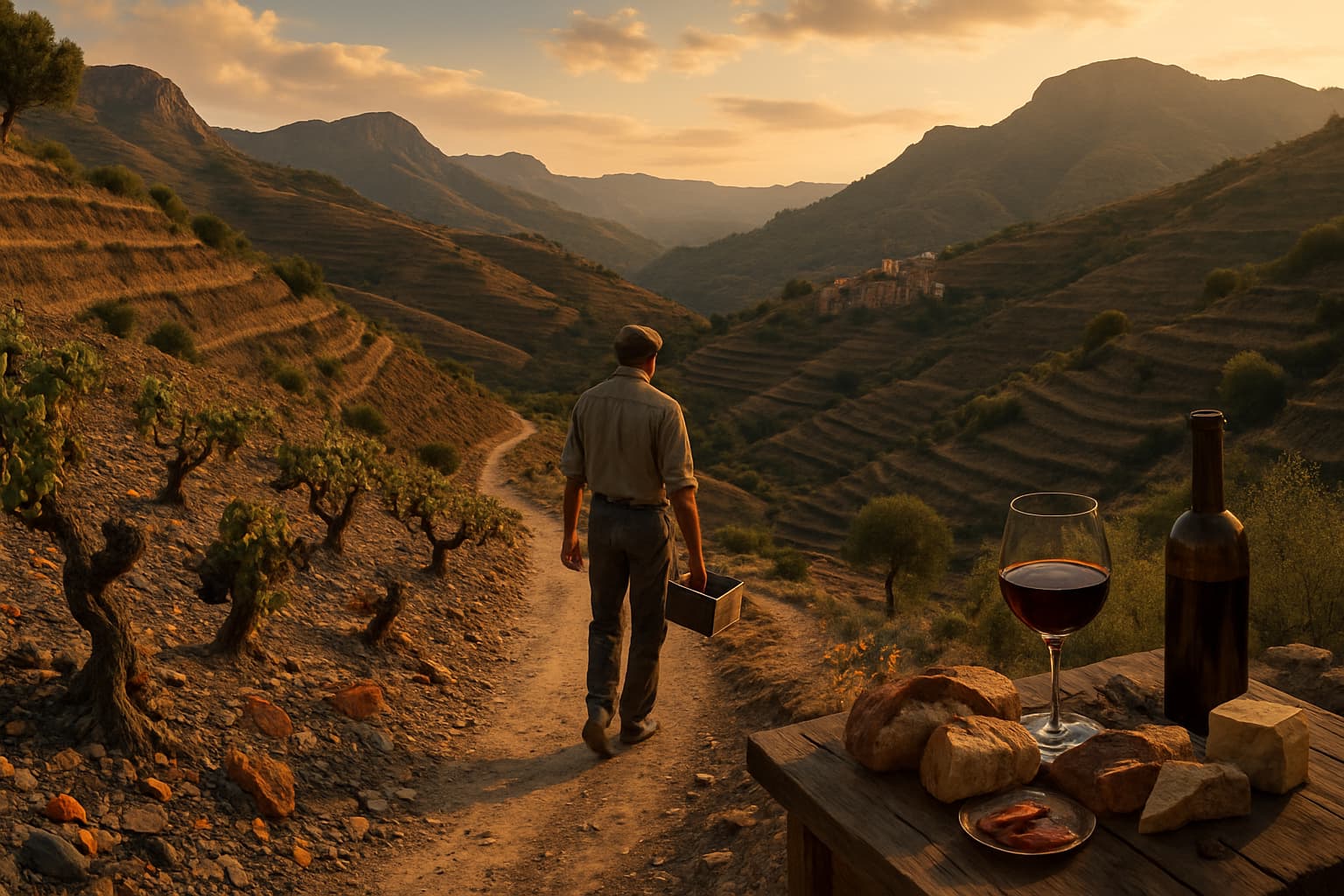
In Ribera del Duero the plateau baked. Yields dropped. The best wines, from high, chalky sites and old vines, are dense but not dead. They have black fruit, graphite, and a stern backbone. They will need time to come around. In Priorat the terraces held onto what little water they had. The wines are intense, with black fruit, licorice, and a mineral streak that feels like sucking on slate. Alcohol is high, but the land gives a kind of sternness that keeps the wines from falling apart.
In the New World the vines are younger and the stories are shorter, but the land is old and does not care about passports.
In California the year began with worry and ended with a kind of relief. Rain came in winter after some dry years. Reservoirs filled a little. Budbreak came on time. There were fewer fires than in some cursed recent seasons, though smoke still haunted memory more than grapes.
Napa Valley saw a temperate growing season by recent standards—warm, but not savage. Cabernet Sauvignon ripened well. The wines are ripe, with cassis and plum, but with better balance than in the hottest years. Tannins are fine and long. Alcohol stays high but not absurd. The best wines carry both fruit and structure, and they may age well. Valley-floor sites can be lush; hillside vineyards show more tension and graphite.
Sonoma had a good year. In the Russian River Valley the fog still came in, though it lingers a little less each decade. Pinot Noir and Chardonnay did well. The Pinots show red fruit, cola, and forest floor, with enough acid to keep them moving. Chardonnays range from lean, citrus-driven styles to rich, oaked wines. The best keep their core of freshness. Along the Sonoma Coast, wind and ocean kept things cool. Wines there are taut and bright, with salt and citrus and red berries.
In Oregon the Willamette Valley walked the line between warm and too warm. Pinot Noir found full ripeness with darker fruit than in cooler years. Some wines are plush, others more nervy, depending on site and picking choices. Acidities are slightly lower than in classic vintages, but the best wines keep their shape. Chardonnay continues to improve, with focused, mineral-driven examples that rival good Burgundy in spirit if not in exact taste.
In Argentina, Mendoza felt the push and pull of weather from the Andes. Snowpack in the mountains was modest, and water management remained a constant worry. The growing season was warm and mostly dry. Malbec from higher altitudes—Uco Valley, Gualtallary, Paraje Altamira—showed freshness, violet perfume, and fine tannins. Lower, hotter sites made softer, more generous wines. The best producers picked earlier, used less new oak, and let the stones and height speak.
Chile saw another year of contrast between cool coastal zones and hotter inland valleys. In the Casablanca and Leyda valleys, Sauvignon Blanc and Chardonnay kept good acidity and citrus-driven profiles. In Maipo and Colchagua, Cabernet and Carmenère ripened fully, giving black fruit and the green edge of pepper that, when held in check, brings character. Drought and the memory of past wildfires kept growers on edge, but the harvest was solid.
Australia felt the usual extremes. Some regions were cool and kind; others were dry and hard. In Barossa, Shiraz grew thick and strong, with dark fruit and chocolate and spice. Alcohol remains high, but the best growers pulled back on extraction and oak, seeking balance instead of brute force. In McLaren Vale and Clare, old vines again proved their worth, shrugging off heat better than young plantings.
Cooler regions fared well. Yarra Valley Pinot Noir and Chardonnay showed finesse, with red fruit, earth, and bright acid. Tasmania continued its quiet rise, turning out sparkling base wines and still Pinots with a clean, cold edge. These southern islands may be some of the winners in a warming world.
New Zealand had a growing season that suited its strengths. In Marlborough, Sauvignon Blanc was abundant and aromatic, with passionfruit, lime, and the sharp, green cut people expect. Some producers pushed for riper, more textural styles, with wild ferments and time on lees, giving wines of more depth and less shrillness. Pinot Noir from Central Otago came in ripe and dark-fruited, with good structure and a line of alpine freshness.
You cannot talk about wine now without talking about the weather and how it is changing. The old maps are not wrong, but they are less right each year.
Budbreak comes earlier. Harvests creep forward on the calendar. Alcohol rises. Acid falls. Diseases and pests move into places that never knew them. Hail comes harder. Frost comes in strange weeks. Heat waves stack on each other. Drought grips some regions while others drown.
Yet vines are tough. They are like people who have seen war and still get up in the morning. Growers adapt. They plant at higher altitudes. They shift from south-facing to east-facing slopes. They keep more leaves for shade. They pick at night. They change rootstocks and varieties—Cabernet in Bordeaux gives some ground to Cabernet Franc and Petit Verdot; in hotter spots, white grapes and lighter reds find new homes.
In the north, new regions wake up. England makes more and better sparkling wine each year from chalky soils that feel like Champagne did decades ago. In Scandinavia, small vineyards push the line of possibility farther north. In the higher reaches of Spain, Italy, and the Americas, places once too cold now seem just right.
This is not romance. It is survival. But in that hard work there is also a strange, rough beauty.
Wine is not only what grows in the field. It is what moves in the world.
Prices at the top stay high. The great names of Bordeaux, Burgundy, Napa, and Barolo sell futures and allocations to a small circle of wealthy drinkers and speculators. These wines live in cellars and trading accounts more than on tables. They are fine wines. Some are great. But they are not the whole story.
Below them there is a wide sea of wine. Supermarkets and online shops move oceans of bottles. Some are dull and sweet and made to a formula. Others, from modest appellations and unknown hillsides, offer honest pleasure. Regions like the Languedoc, Sicily, Portugal’s Dão and Bairrada, Spain’s Bierzo, Argentina’s lesser-known valleys, and Chile’s Itata and Maule give good wine at fair prices. They are the working person’s vintages.
Natural wine continues to draw a certain crowd. Cloudy, low-sulfur, skin-contact, wild ferment—these words have become both banner and battleground. Some bottles are alive and electric, full of energy and place. Others are simply flawed. The best of this movement has pushed the wider world toward less manipulation, less oak, less gloss. That is a useful push.
Wine writing and media change, too. Fewer people read long tasting reports. More watch short videos and scroll through pictures of bottles and glasses. Scores still matter for certain buyers, but younger drinkers look more to friends, to importers they trust, to the story behind the label. They care about how the vineyard is farmed, how the workers are treated, how much the wine feels like a thing made by human hands instead of a product built by committee.
A global report can make you feel small. There are so many places, so many bottles, so many numbers. But wine is not meant to be carried in your head. It is meant to be carried in the glass and then in the body.
From this year, look for balance in the hot regions and ripeness in the cool ones. In warm European classics—Bordeaux, the southern Rhône, Tuscany—seek out producers who speak of freshness and restraint, not just power. In Burgundy and Piedmont, be ready for smaller yields and higher prices, but know that the best wines will be true to their hills.
In the New World, follow altitude and latitude. Higher, cooler sites often gave the most interesting wines. Look to coastal Chile, high Argentina, Oregon, the cooler parts of California, Australia’s southern reaches, New Zealand’s south. Seek producers who talk more about vineyards than about barrels.
Most of all, drink across borders. Do not marry one region and ignore the rest. The year was not kind everywhere, nor was it cruel everywhere. It was mixed, as life is mixed.
When you lift a glass from this harvest, you hold more than fermented juice. You hold the memory of a season, of heat and rain and wind and worry. You hold the work of people who rose before dawn and bent their backs under the sun. You hold the quiet stubbornness of vines that push roots into rock and refuse to die.
This year, like the last and the next, showed that wine lives in a world that is changing fast. The lines on the map blur. Old certainties crack. New possibilities open. Some things are lost and cannot be brought back. Others are born.
Still, at the end of the day, a bottle is opened. The wine moves in the glass. You look at its color. You smell it. You taste it. For a moment the noise of prices and points and climate and fashion falls away. There is only the thing itself—sharp or soft, bright or dark, simple or deep—and the company you keep.
That is what remains when the reports are done and the numbers are counted: a person, a table, a glass, and a year captured in liquid, asking only to be noticed before it is gone.
Tannins are astringent compounds found in wine that contribute to its texture and aging potential, often causing a drying or puckering sensation in the mouth. They are derived from grape skins, seeds, and stems, as well as from oak barrels used during aging.
/ˈtænɪnz/
Malic acid is a naturally occurring organic acid found in grapes that contributes to the tart, green apple-like flavor and crispness in wine. It plays a significant role in the taste and acidity of wine.
/mælɪk ˈæsɪd/
Filtration in winemaking is the process of removing solid particles from wine to clarify and stabilize it before bottling, using various types of filters to achieve different levels of clarity and remove unwanted elements like yeast, bacteria, and sediment.
/fɪlˈtreɪʃən/
Oxidation in wine is a chemical reaction between the wine and oxygen that can change its flavor, aroma, and color. This process can be beneficial or detrimental depending on the extent and context of the exposure.
/ˌɒksɪˈdeɪʃən/
Microclimate refers to the unique climate conditions of a small, specific area within a larger region, significantly influencing grapevine growth and the characteristics of the resulting wine.
/ˈmīkrōˌklīmit/
Get weekly wine recommendations, vineyard news, and exclusive content delivered to your inbox.