Wine Tourism
“Where every bottle tells a story”
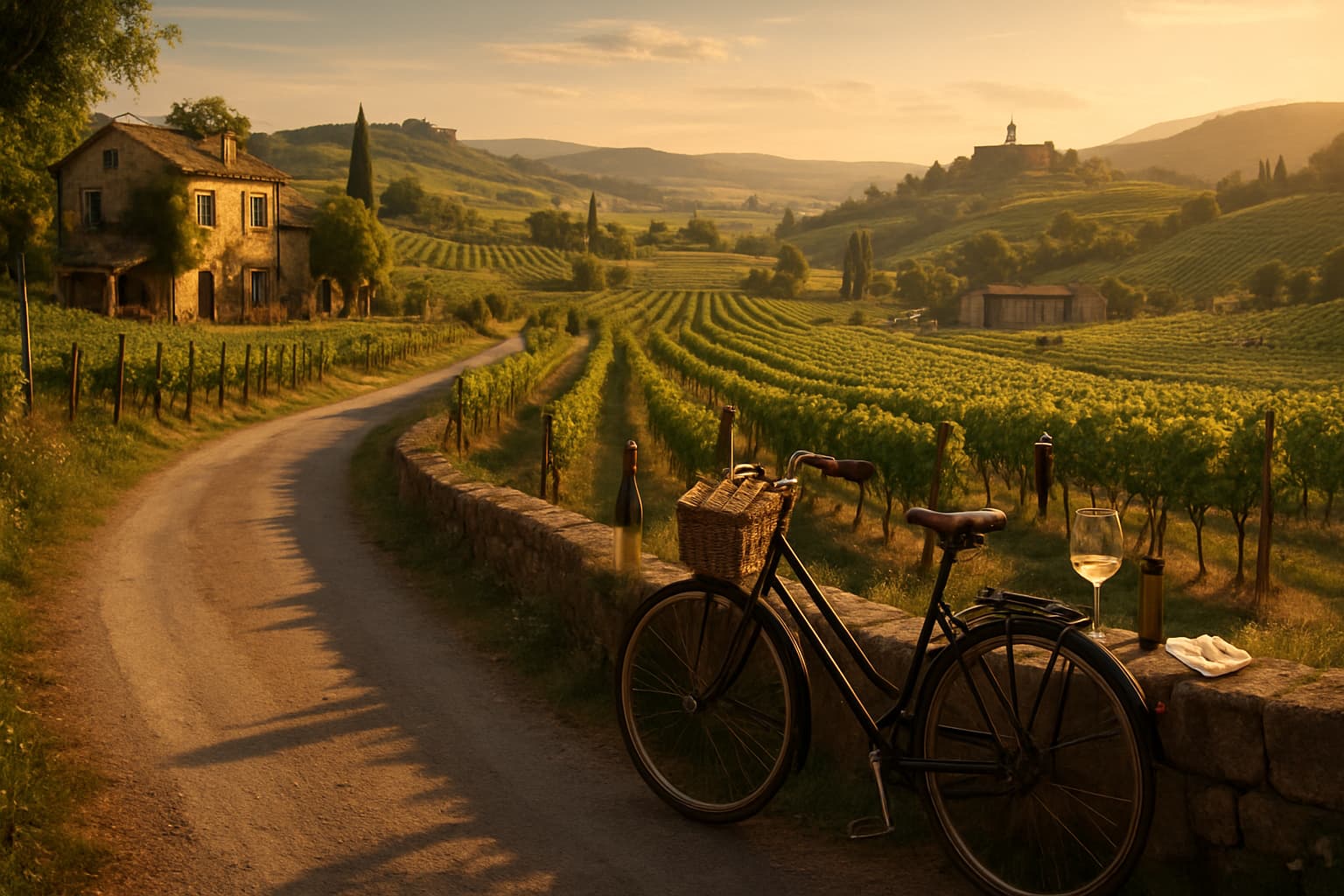
It has often been observed that the pleasures of life, when properly arranged, rarely travel alone. Scenery is improved by conversation; conversation is animated by good company; and good company, it must be confessed, is frequently improved by a glass of wine. When all three are united in a single excursion, and when the road itself is designed to lead the traveller from vineyard to vineyard, from cellar to cellar, the arrangement begins to look less like chance and more like a very happy design.
Such, dear reader, is the essence of what the world now calls wine routes and wine roads: deliberate pathways through the countryside, contrived (with more or less art) to unite the charms of landscape, hospitality, and the vine. To travel them is not merely to drink; it is to observe, to compare, to reflect, and—if one is wise—to learn something both of wine and of the people who cultivate it. Let us, therefore, examine these routes with the attention due to any subject that so artfully combines pleasure with instruction.
A wine route, or wine road, is a formally marked itinerary through a wine-producing region, guiding visitors along a succession of vineyards, cellars, villages, and viewpoints. It is not a random meander inspired by a map and a hopeful heart, but a curated experience—signposted, mapped, and often supported by local authorities and winegrowers’ associations.
These routes may take many forms:
Their purpose is twofold: to assist the traveller in discovering wines they might otherwise never encounter, and to assist the winegrower in discovering visitors they might otherwise never receive. It is an arrangement mutually beneficial, and therefore, in the language of polite society, eminently proper.
Any road may bring you past a vineyard; that is mere geography. A wine road, however, is distinguished by intention.
Thus, while an ordinary road conveys one from one’s aunt to one’s uncle, a wine road conveys one from curiosity to comprehension, with several agreeable pauses in between.
It would be a pleasing fancy to imagine that the Romans, who understood both roads and wine, invented the first wine routes with a flourish of their standards. In truth, the modern wine road is a younger contrivance, born not of empire, but of tourism.
In the early twentieth century, certain European regions began to formalise their wine-producing landscapes as destinations. After the disruptions of war and economic distress, winegrowers, particularly in Germany and France, perceived that visitors might be persuaded to come not only for the wine, but for the beauty and romance of the countryside itself.
From these beginnings, the idea spread. Today, one may find wine routes in Italy, Spain, Portugal, Central and Eastern Europe, the New World—indeed, wherever vines and ambition grow together.
A wine road is not merely a string of tasting rooms, like beads on a necklace with no regard for colour or order. Its charm lies in the dialogue between three elements.
The traveller along a wine route is invited to observe how the land itself participates in the making of wine. Hills, rivers, valleys, and soils are no longer abstract features; they become actors in the drama of taste.
The more observant the traveller, the more they will perceive how geography is translated into flavour, and how the glass in their hand is a miniature portrait of the hillside they have just climbed.
Wine roads often highlight particular grapes: Riesling in one region, Pinot Noir in another, Tempranillo or Sangiovese elsewhere. By tasting along a route, the visitor may conduct a kind of informal experiment:
Such comparisons, undertaken with a modest degree of attention, can teach more about wine in two days than a dozen books read in a distracted parlour.
Perhaps the greatest charm of a wine road lies in the encounters it affords. The traveller may find:
Through conversation—sometimes fluent, sometimes halting—one learns that wine is not only an agricultural product, but a cultural one. It embodies local customs, family histories, and the quiet pride of those who devote their lives to a particular piece of earth.
Wine routes are as various as the visitors who travel them. Some are designed for brisk, efficient tasting; others for leisurely immersion, in which one scarcely knows whether one has come for the wine or for the village fêtes.
Among the experiences most commonly encountered are:
Elegance in travel, as in conversation, is often the result of careful preparation. To derive the greatest pleasure from a wine route, some prudence is required.
Wine routes are not mere entertainments for the idle. They are instruments by which rural regions sustain themselves, preserving landscapes and traditions that might otherwise be abandoned.
Economic Support
Wine tourism brings income not only to estates, but to inns, restaurants, craftsmen, and guides. It encourages small producers to bottle and sell under their own name, rather than disappearing anonymously into larger blends.
Landscape Preservation
When visitors value vineyards for their beauty as well as their wine, there is greater incentive to maintain terraces, stone walls, and traditional practices, rather than replacing them with less picturesque, though perhaps more immediately profitable, alternatives.
Thus, the wine road becomes not only a path through the countryside, but a thread connecting regions to the wider world, allowing them to remain themselves while welcoming others.
Not every road suits every traveller. Some prefer grandeur, others intimacy; some seek novelty, others tradition. In selecting a wine route, one might consider:
To follow a wine road is, in a modest way, to practise a form of attentive living. One moves more slowly than on a highway, stops more often, and considers what one sees and tastes with greater care. The road invites questions: Why are the vines planted thus? Why does this village prefer one grape and that another? Why does a slope facing the sun taste different from one that turns away?
In seeking the answers, the traveller discovers that wine, which in careless hands is merely a drink, becomes in thoughtful company a conversation between land, time, and human intention. The wine route is the stage upon which this conversation is most clearly heard.
If, at the end of such a journey, one returns home with a few bottles, a handful of new names, and a deeper appreciation of how place becomes flavour, then the road has fulfilled its purpose. It has united pleasure with knowledge, leisure with learning, and shown that, when properly conducted, tourism need not be a vulgar intrusion, but may become a respectful visit.
And should anyone suggest that such voyages are frivolous, one may reply, with perfect composure, that there are worse ways to study geography, agriculture, history, and human character than in the company of a well-chosen wine road—and that a little wisdom gained along the way is all the more agreeable for being accompanied by a well-filled glass.
Tannins are astringent compounds found in wine that contribute to its texture and aging potential, often causing a drying or puckering sensation in the mouth. They are derived from grape skins, seeds, and stems, as well as from oak barrels used during aging.
/ˈtænɪnz/
Malic acid is a naturally occurring organic acid found in grapes that contributes to the tart, green apple-like flavor and crispness in wine. It plays a significant role in the taste and acidity of wine.
/mælɪk ˈæsɪd/
Curation rather than accident
Estates are chosen because they welcome visitors, represent different styles, or illustrate the character of the region. One is not abandoned to chance or to the mercy of a surly gatekeeper.
Signage and interpretation
There are often signs indicating appellations, grape varieties, and villages of note. Some regions provide explanatory panels, brochures, or even small museums, so that the traveller may not only drink, but understand what they drink—an improvement upon many social occasions.
Hospitality as part of the design
Wine routes are constructed with the expectation that strangers will appear. Tasting rooms are prepared, hours are posted, and hosts are instructed (more or less successfully) in the arts of welcome and explanation.
Connection to broader tourism
The wine road is commonly interwoven with other attractions—castles, churches, markets, walking trails, and viewpoints—so that even the most abstemious companion may find something to admire.
Cellar Visits and Tastings
The foundation of any wine road. One tours the cellar, hears of barrels and fermentation, and tastes a selection of wines. The best hosts speak plainly, answer questions honestly, and do not confuse the visitor with unnecessary jargon.
Vineyard Walks
Increasingly, estates invite guests to walk among the vines, either on marked paths or guided tours. Here, one may see pruning, training, and harvest, and understand that each bottle is the conclusion of a year’s labour and a season’s risks.
Food and Wine Pairings
Some estates or nearby restaurants offer menus designed to display the wines in their most flattering light. This is both agreeable and instructive; many a wine that seemed severe alone becomes charming in the company of the right dish—rather like certain people.
Festivals and Harvest Celebrations
In many regions, the grape harvest or the release of a new vintage is marked by cheerful festivities. There may be music, parades, grape-stomping (for the amusement of visitors more than the necessity of the cellar), and general merriment.
Educational Workshops
Classes in tasting, blending, or even cooking with wine are sometimes offered. The traveller with a studious disposition may learn to recognise aromas, assess structure, or distinguish between styles with more confidence.
Planning and Reservations
While some estates welcome spontaneous visitors, many prefer or require an appointment. It is wise to consult the region’s official wine route website or tourist office, and to reserve tastings, particularly in harvest season, when the cellar is busy and the winemaker’s patience may be stretched.
Pace and Moderation
An itinerary of ten estates in a single day may look impressive on paper, but in practice leads to confusion of palate and a certain moral fatigue. Three to five visits, with time for rest and reflection, generally produce more lasting impressions—and a more graceful demeanour.
Transport and Safety
Where wine is concerned, the question of who will drive is not romantic, but it is essential. Many regions offer drivers, shuttles, or even bicycles and walking routes. To rely on fate or fortitude is neither wise nor admirable.
Season and Atmosphere
Spring and autumn often offer the most agreeable conditions: in spring, the promise of the new vintage; in autumn, the bustle of harvest and the glow of ripening vines. Summer may bring crowds and heat; winter, though quieter, can reveal the bare structure of the vineyard and the intimacy of the cellar.
Etiquette and Conduct
Politeness is never out of season. One should:
Cultural Exchange
Travellers bring curiosity; hosts offer knowledge. Misconceptions are corrected, stereotypes softened, and mutual understanding improved—sometimes over a glass, often over two.
Fame versus Discovery
Prestigious regions offer renowned names and polished hospitality, but also crowds and higher prices. Lesser-known areas may provide more personal encounters and unexpected delights, at the cost of some glamour.
Style of Wine
Lovers of sparkling wines, robust reds, delicate whites, or sweet wines will each find routes suited to their inclinations. It is no use travelling a hundred miles to taste what one does not in general enjoy, merely because a guidebook insists upon its greatness.
Activity Level
Some routes are best explored by car; others offer walking or cycling paths among the vines. The energetic and the contemplative may each be satisfied, if they choose wisely.
Companions
A party of friends intent on merriment will not always find itself in harmony with a quiet, scholarly estate, and vice versa. Matching one’s company to one’s route is as important as matching wine to food.
Filtration in winemaking is the process of removing solid particles from wine to clarify and stabilize it before bottling, using various types of filters to achieve different levels of clarity and remove unwanted elements like yeast, bacteria, and sediment.
/fɪlˈtreɪʃən/
Oxidation in wine is a chemical reaction between the wine and oxygen that can change its flavor, aroma, and color. This process can be beneficial or detrimental depending on the extent and context of the exposure.
/ˌɒksɪˈdeɪʃən/
Microclimate refers to the unique climate conditions of a small, specific area within a larger region, significantly influencing grapevine growth and the characteristics of the resulting wine.
/ˈmīkrōˌklīmit/
Get weekly wine recommendations, vineyard news, and exclusive content delivered to your inbox.