Wine Tourism
“Where every bottle tells a story”
It is a truth very generally acknowledged that a person in possession of a curious mind must be in want of a journey; and if that person possesses even the slightest partiality for wine, the journey will, sooner or later, conduct them to a vineyard.
Wine tourism, though it may sound a most modern contrivance, is in fact but a new name for a very old pleasure: the civilised act of visiting the place where one’s drink is born, observing its infancy in the vine, its education in the cellar, and its debut in the glass. To walk among vines, to converse with those who tend them, and to taste the fruits of their labour is a form of travel that gratifies both the intellect and the senses—an arrangement that would recommend itself to any rational creature.
In the following pages, we shall consider what awaits the traveller who resolves to visit wineries and vineyards: what may be expected, what ought to be sought, and how one might extract from such expeditions not merely amusement, but understanding.
There are, I believe, four principal attractions that draw visitors to vineyards, and it would be unjust to omit any of them: scenery, society, story, and taste.
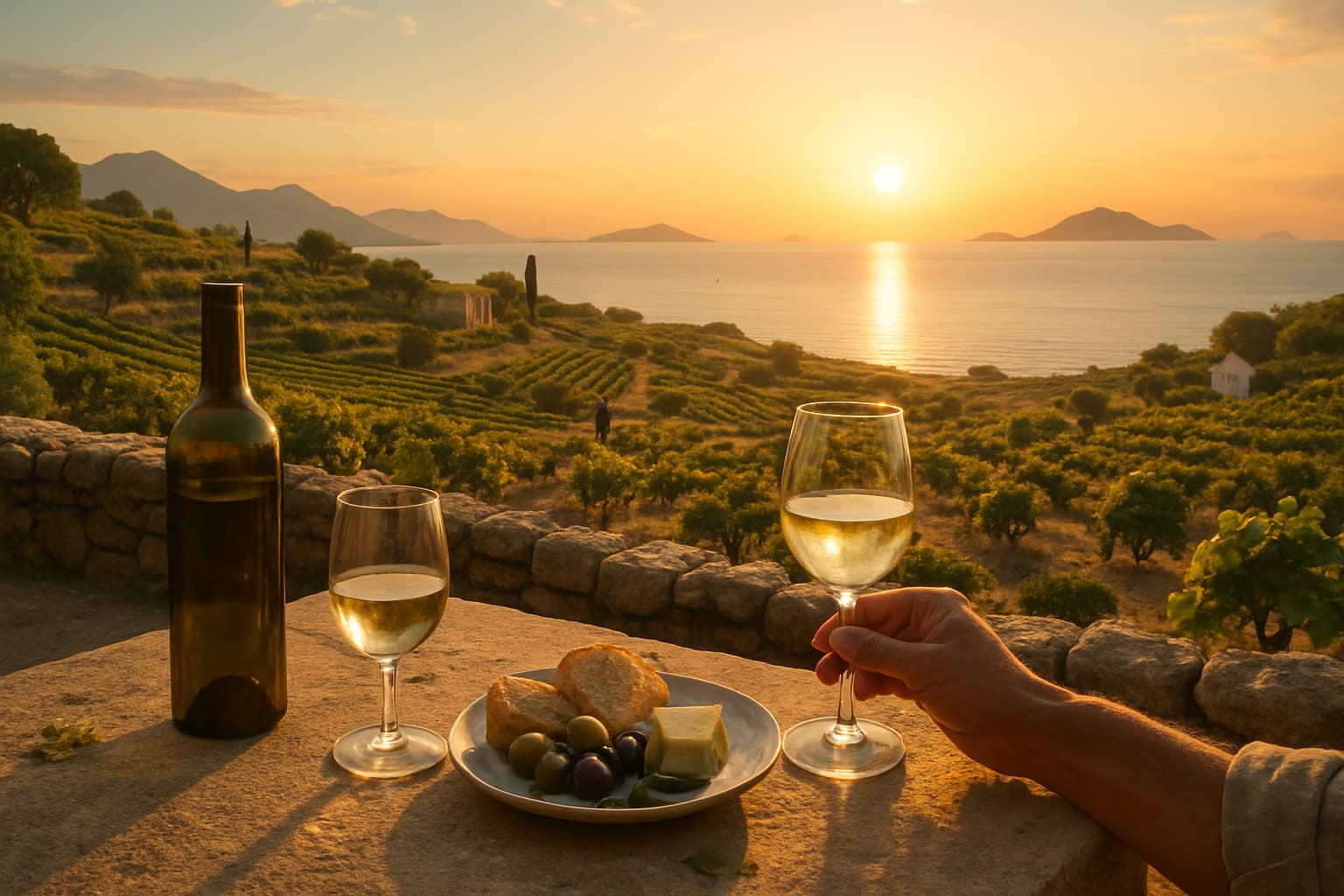
Scenery is the first and most obvious. Vineyards are very seldom to be found in ugly places. They cling to sun‑warmed hillsides, unfold across gentle valleys, or gaze, with an air of languid superiority, upon rivers and seas. To stand amidst the ordered rows of vines, where human intention and natural beauty have entered into a most agreeable partnership, is to feel that the world is not entirely ill‑designed.
Society is the second attraction. Wine is a social creature; it does not thrive in solitude. In visiting wineries, one encounters not only the proprietors and their staff, but fellow travellers from various countries and conditions. The tasting room becomes a little theatre of manners, where strangers compare impressions, confess preferences, and occasionally display prejudices with all the frankness that a glass or two encourages.
Story comes next. Each wine, if properly interrogated, has a history: of the land from which it sprang, the family who planted it, the storms it survived, and the fashions it has outlived. Wine tourism is, in essence, an exercise in narrative. The visitor listens to the tale of the estate, and if the tale is well told, the wine itself appears to participate in it. A glass of white ceases to be merely cold and agreeable; it becomes the liquid embodiment of a particular slope, a particular year, a particular choice.
Lastly, there is taste—for we must not pretend to be too elevated. To sip a wine in the very place it was made, with the vineyard in view and the cellar beneath one’s feet, is to experience it in its most flattering circumstances. The wine is, as it were, at home; and like many at home, it appears more at ease, more itself, more readily understood.
Those who arrive at a winery imagining that they shall be instantly pressed to the bosom of the proprietor and invited to roam at will among the barrels may be disappointed. The civilised winery visit, like any good social call, has its forms.
In many regions, a prior engagement is now as necessary for a tasting as for a dinner. Wineries, particularly those much admired, cannot be expected to receive the entire world at once. A prudent visitor will consult the estate’s published information, determine its opening hours, and secure an appointment if required. This simple act of forethought spares one the mortification of being turned away at the very door of delight.
Upon arrival, the traveller is commonly greeted in a tasting room—a space designed to be both hospitable and instructive. Some are modest, with wooden counters and a view of the vines; others are palatial, with chandeliers, art, and a degree of grandeur that suggests the wine has done very well for itself indeed.
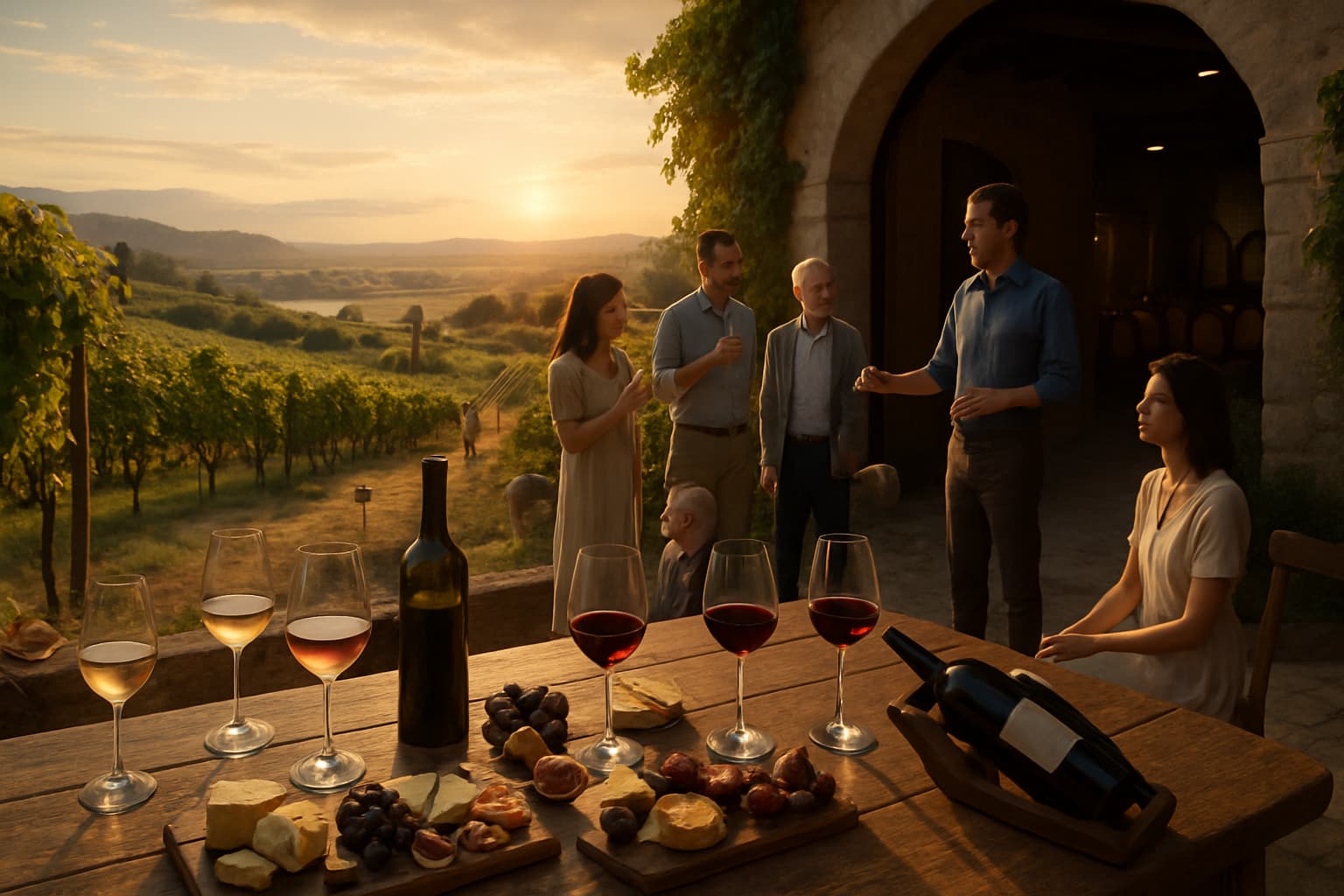
The tasting itself follows a certain choreography. Glasses are presented; wines are poured in modest quantities; descriptions are offered. The visitor is invited to look, to swirl, to smell, and at last to taste. The observance of these steps is not mere affectation. Each reveals something of the wine’s character—its colour, its perfume, its texture, its finish.
One need not be an accomplished critic to participate. It is enough to be attentive. Notice whether the wine seems light or full, sharp or soft, simple or complex. Observe what it reminds you of—fruit, flowers, herbs, spices, or perhaps the more mysterious impressions of stone, smoke, or earth. Such reflections, if shared politely, are usually received with more pleasure than any attempt to recite fashionable jargon.
Spitting, that most inelegant yet sensible practice, is often provided for, particularly when many wines are to be tasted. One may, without any loss of dignity, employ the spittoon, especially if one’s constitution or transport arrangements require a clear head.
It must be acknowledged that the winery, while hospitable, is also a place of business. The tasting is frequently offered for a modest fee, sometimes waived upon the purchase of bottles. To buy is not an obligation, but when one has been kindly received and has found a wine much to one’s taste, a small purchase is a graceful conclusion.
The staff—whether family members, oenologists, or trained hosts—vary in their manner. Some are reserved, some expansive, some almost poetical in their descriptions. The visitor’s task is to listen, to inquire, and to carry away not only a list of wines tasted, but a clearer sense of what pleases them and why.
If the tasting room is the drawing‑room of the estate, the vineyard is its soul. To step into it is to enter the wine’s native country.
The French, with their usual talent for making a single word do the work of twenty, speak of terroir—a term that encompasses soil, climate, slope, exposure, and all those subtle influences that distinguish one parcel of land from another. It is, in short, the character of the place.
A vineyard walk, whether guided or solitary, allows one to see terroir in the flesh. Note how the vines on the hillside differ from those in the valley; how stones appear in one row and deep earth in another; how the wind moves, how the sun falls. These are not romantic fancies, but practical realities that shape the wine.
The more observant visitor will ask:
The answers reveal not only the vineyard’s physical conditions, but also the philosophy of those who manage it.
Vineyards are creatures of the calendar. To visit in spring is to see the first shy leaves and the promise of a new vintage. In summer, the vines are in full vigour, grapes swelling under a hot sun, and the air is rich with green scents. Autumn brings harvest: a time of urgency, when decisions made in days will determine the quality of the year’s wine. Winter shows the bones of the vineyard—bare trunks, pruned canes, and the quiet industry of preparation.
Each season offers its own lessons. A thoughtful visitor, returning at different times of year, comes to understand that wine is not an instantaneous product, but the result of a long and patient conversation between vine, weather, and human hand.
If the vineyard is open and sunlit, the cellar is its opposite: cool, dim, and secretive. Here, grapes become wine, and wine becomes itself.
The process, though it may be described in a few sentences, occupies months and years in practice. Grapes are harvested, sorted, and crushed. Their juice—sometimes with skins, sometimes without—is encouraged to ferment, that is, to transform its sugar into alcohol. Temperature is watched, vessels are chosen (of steel, concrete, or oak), and countless small decisions are made.
A cellar tour often reveals these choices in physical form: gleaming tanks, rows of barrels, perhaps amphorae or other traditional vessels. The guide may speak of yeasts (wild or selected), maceration (how long skins and juice remain together), and aging (how long the wine rests before it is bottled). Though the vocabulary may be unfamiliar at first, the principle is simple: every choice bends the wine in one direction or another—towards freshness or richness, delicacy or power.
Barrels, in particular, inspire both reverence and argument. Some winemakers employ them lavishly, seeking the vanilla, spice, and structure that oak can bestow. Others use them sparingly, fearful that the wood may overshadow the fruit. The visitor, seeing rows of barrels in their quiet regiments, may reflect on the expense and patience they represent. Wine in barrel is capital at rest; it cannot be sold, only waited upon.
Bottles, too, slumber in their racks, labels not yet applied, their contents slowly knitting together. Time in bottle softens edges, integrates flavours, and creates the mysterious impressions we call complexity. To witness these sleeping vintages is to understand that wine is not merely consumed; it is also, in some sense, aged like a character in a novel, acquiring depth and nuance with the years.
Not all winery visits are alike. They range from the simple to the elaborate, from the rustic to the opulent. A traveller may choose according to inclination, purse, and patience.
The most common experience is the classic tasting: a selection of wines, tasted in order, with brief explanations. It is efficient, instructive, and often affordable. For those at the beginning of their acquaintance with wine, it offers an excellent overview.
More elaborate arrangements may include a cellar and vineyard tour, followed by a tasting. Others offer food pairings, where cheeses, charcuterie, or small dishes are set beside each wine, demonstrating how flavours may clash or harmonise. Here, one learns that a wine which seemed modest alone may shine beside the right dish, and that a powerful wine may overwhelm a delicate plate.
Some estates present vertical tastings (the same wine from different years) or horizontal tastings (different producers or vineyards from the same vintage). These are particularly enlightening, allowing the visitor to perceive the influence of weather, age, and style with unusual clarity.
In certain regions, the enthusiastic traveller may stay on the estate itself, in rooms overlooking the vines, waking each morning to the sight of their green ranks. Activities may include blending workshops, picnics among the rows, or even, for the stout‑hearted, participation in the harvest: picking grapes under a brisk sun, discovering that romance and fatigue are not mutually exclusive.
Such immersive experiences transform the visitor from mere spectator to temporary accomplice in the making of wine.
As with any social engagement, there are ways to behave that encourage goodwill, and others that do not.
Above all, one ought to bring a spirit of curiosity rather than conquest. The aim is not to prove one’s superior discernment, but to learn, to taste, and to enjoy.
The world, being inconveniently large, offers more wine regions than any one person can reasonably visit, unless they possess an income and leisure quite out of the common way. Selection must therefore be made.
One may choose according to reputation—the great and historic regions whose names are spoken with reverence. Or one may seek the lesser‑known, where prices are gentler, crowds thinner, and discoveries more frequent. Some travellers prefer cool climates, where wines are taut and refreshing; others favour warm regions, where the wines are rich and generous.
A sensible approach is to consider one’s existing tastes. If one is habitually charmed by a certain style of wine, it is a natural pleasure to visit the place of its origin. At the same time, a little adventurousness is no bad thing. To step beyond one’s usual preferences is to allow the world the chance to surprise.
When the journey is over, and the traveller has returned home, perhaps with a few carefully chosen bottles in their luggage and a faint regret that they could not bring the entire cellar, the true value of wine tourism begins to reveal itself.
To open a bottle from a visited estate is to uncork not only wine, but memory. The first sip recalls the slope of the vineyard, the cool of the cellar, the voice of the person who poured it, the light of that particular afternoon. The wine ceases to be an anonymous commodity; it becomes a correspondence between places and times, between the present table and the distant hill.
In this way, winery visits and vineyard experiences do something rather rare: they join pleasure to knowledge, indulgence to education, and travel to taste. They remind us that every glass contains not only grapes and labour, but land, weather, history, and choice.
To engage in wine tourism, then, is not merely to chase agreeable flavours, though there is no harm in that. It is to cultivate a more attentive palate, a more observant eye, and a more patient appreciation of how many small, deliberate acts are required to produce a single, well‑made bottle. It is to discover that the world is richer, more various, and more hospitable than one had supposed.
And if, along the way, one acquires a disposition to speak of vintages and vineyards with a degree of animation that astonishes one’s less travelled friends—well, that is only another of wine tourism’s many, and not least, satisfactions.
Tannins are astringent compounds found in wine that contribute to its texture and aging potential, often causing a drying or puckering sensation in the mouth. They are derived from grape skins, seeds, and stems, as well as from oak barrels used during aging.
/ˈtænɪnz/
Malic acid is a naturally occurring organic acid found in grapes that contributes to the tart, green apple-like flavor and crispness in wine. It plays a significant role in the taste and acidity of wine.
/mælɪk ˈæsɪd/
Filtration in winemaking is the process of removing solid particles from wine to clarify and stabilize it before bottling, using various types of filters to achieve different levels of clarity and remove unwanted elements like yeast, bacteria, and sediment.
/fɪlˈtreɪʃən/
Oxidation in wine is a chemical reaction between the wine and oxygen that can change its flavor, aroma, and color. This process can be beneficial or detrimental depending on the extent and context of the exposure.
/ˌɒksɪˈdeɪʃən/
Microclimate refers to the unique climate conditions of a small, specific area within a larger region, significantly influencing grapevine growth and the characteristics of the resulting wine.
/ˈmīkrōˌklīmit/
Get weekly wine recommendations, vineyard news, and exclusive content delivered to your inbox.