Wine Tourism
“Where every bottle tells a story”
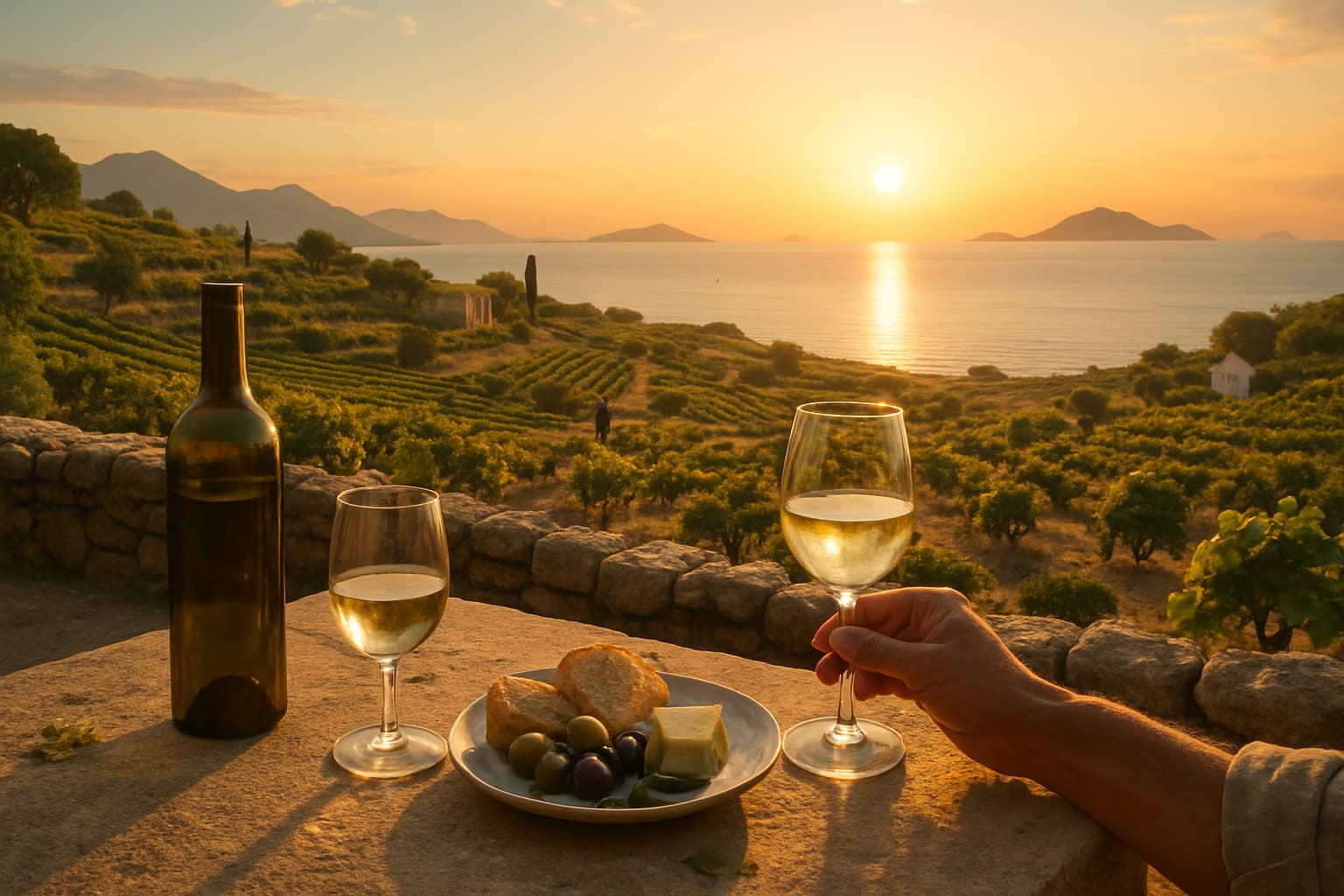
The sun hits the sea first. It comes up hard and bright over the water and lays a road of light between the islands and the far shore. The fishermen are already out. The vineyards are still. The stones hold the night’s cool. You stand on a terrace with a glass in your hand, and the day begins.
This is how wine is meant to be understood in the Mediterranean islands. Not in a tasting room with polished counters and chilled air, but with salt on your lips, dust on your shoes, and the sea close enough that you can hear it breathing. Wine tourism here is not a tour or a package. It is a way of moving through a place. It is work and heat and history, poured into a glass.
The Mediterranean is not one sea but many, broken by islands and peninsulas and straits. The islands sit in it like old ships. Some are green and soft. Some are bare and hard as bone. They have names you know and names you do not: Sicily and Sardinia, Corsica and Crete, Santorini and Mallorca, Menorca and Cyprus, Malta and the smaller ones that hang around them like satellites.
They all have vines.
The vines grow where they can: on terraced hills, on volcanic slopes, in dry, stony fields that look like nothing could live there. The wind comes off the sea and dries the grapes. The sun burns them. The soil is thin or black or red, and the roots go down deep because they must.
On these islands, wine is not a luxury. It is a crop and a craft. It is something you drink at noon in the shade with bread and olives and fish. It is what the land gives back for all the stone you pulled out of it.
To travel here for wine is to see how these vines and these people have held on for centuries, between drought and war and the restless sea.
Sicily is large and rough and alive. The island smells of wild fennel, dust, and hot stone. The vineyards spread across it in patches, but the ones that call you hardest sit high on the slopes of Etna, where the mountain smokes and the earth is never still.
On Etna, the vines grow in black volcanic soil. The ground is sharp and brittle under your boots. Old dry-stone walls hold the terraces. The wind is strong. The sun is stronger. The grapes—Nerello Mascalese, Nerello Cappuccio, Carricante—grow as bush vines or on old stakes, bent and twisted from years of wind.
You walk through these vines with the grower. He does not talk much. He points. He shows you the ash from last year’s eruption, fine as flour. He picks a grape and splits it with his thumb. The juice runs clear. You taste the skin. It is tight and bitter and carries the mountain in it.
Later, you sit in a cellar dug into lava rock. The air is cool and smells of damp stone and fermenting must. The wines are pale but strong. The reds are lean and salty, with a taste like iron and sour cherry and smoke. The whites are sharp and bright, like biting into a lemon in the shade.
This is wine tourism here: walking the black soil, feeling the mountain under your feet, knowing that the same slopes that grow these vines can bury them in a night.
Elsewhere in Sicily, near Marsala, the sea presses closer. Salt pans shine white in the sun. The wind is full of brine. The vineyards lie low and flat. You taste fortified wine in old cellars with high ceilings and dusty barrels. The wine is amber and smells of nuts and dried fruit and the sea that stands just beyond the door. It is not fashionable now, they say, but it has weight and memory in it.
You leave Sicily with black dust in the seams of your shoes and the sense that the island makes you earn every glass.
Sardinia is another kind of island: hard, spare, with granite hills and a long, broken coast. The wind here has its own name—maestrale—and it does not stop. It comes clean off the sea and burns the vines with salt. The vines that survive are low and gnarled and close to the ground.
You drive inland on narrow roads between stone walls. Flocks of sheep move like smoke across the hills. The vineyards appear suddenly: small plots, old bush vines, no wires, no neat lines. Cannonau is the word you hear most. They say it is the same as Grenache, but the wines here are different. They are darker and more serious, with a wild edge, like the island itself.
In the north, by the sea, you find Vermentino. The vines look out over the water. The whites are fresh and bitter, with a salt taste that lingers. You drink them with grilled fish, the skin blistered and crisp from the coals. The sun drops into the sea and the glass sweats in your hand.
Wine tourism in Sardinia is quiet. There are no big buses. You knock on doors, you sit at rough wooden tables, you drink from simple glasses. The winemaker talks about the wind and the old vines that his grandfather planted. He pours you a wine from one of those plots. It is not polished. It is good. It tastes of place and time and the work of hands.
The Greek islands are scattered across the sea like stones thrown from a giant’s hand. On some, the vines grow high on hillsides. On others, they crouch close to the ground, twisted into shapes that seem like tricks.
On Santorini, the land is all cliff and caldera and broken rock. The sun is merciless. The wind is worse. To protect the grapes, the growers weave the vines into low baskets, kouloura, hugging the ground. You walk among them in the early morning. The baskets are dark circles against the pale volcanic soil. The air smells of thyme, dust, and hot pumice.
The grapes here are mostly Assyrtiko. The whites they make are fierce and clean. You taste them in a winery perched on the edge of the caldera. The sea is far below, a deep blue basin. The glass is cold in your hand. The wine is sharp with lemon and smoke and salt. It cuts through the heat like a knife.
You learn that the roots of these vines are old—some say more than a hundred years. Phylloxera never made it here. The soils are too poor, too harsh. The vines live on, grafted and regrafted, deep in the volcanic ash.
On Crete, farther south, the hills are greener. The vineyards roll up from the coast into the mountains. You taste Liatiko and Kotsifali, Vidiano and Thrapsathiri—names that feel rough in the mouth until you get used to them. The reds are warm and spicy. The whites are full but still fresh. You sit in the shade of a stone house with plates of grilled lamb, wild greens, and bread. The wine is part of the table, not a show.
Wine tourism here is tied to the old ways. You visit monasteries where monks still make wine in thick-walled cellars. You see stone troughs where grapes were once crushed by foot. You understand that these islands have been making wine since before most nations had names.
The Balearic Islands—Mallorca, Menorca, Ibiza—are known for beaches and nightlife. But inland, away from the resorts, the land is dry and pale and lined with low stone walls. The vineyards lie there, quiet and patient.
On Mallorca, you walk through fields of Manto Negro and Callet, local grapes that once seemed destined to vanish. Now small wineries bring them back. The sun is strong, but the nights are cooler than you expect. The wines show it. The reds are light in color but carry herbs and red fruit and a dust of tannin. The whites, often from Prensal Blanc or blends, are lean and stony.
You taste in old fincas with thick walls that keep out the heat. The owners talk about balance: between tradition and tourism, between making wines they can sell to the summer crowds and wines that speak of the island. Some do both. They pour you a simple, chilled red to drink with charred octopus and aioli. Then they open a bottle from an old plot, something they made in a small number of barrels. You taste more depth, more shadow, more of the land.
In Menorca, the vineyards are fewer, the winds stronger. Low stone walls break the gusts. The wines are fresher, cooler, with a maritime edge. You sit on a terrace above a small cove and drink a glass of white as the sky turns from blue to red to black. The sea keeps moving in the dark.
On Cyprus, the mountains rise from the middle of the island like the spine of an animal. The vineyards cling to their sides. The sun is fierce, but the altitude brings cool nights. You drive through villages of stone houses and tiled roofs. Old men sit in the shade. They nod as you pass.
There is a wine here older than most countries: Commandaria. The grapes—Xynisteri and Mavro—are picked late, dried in the sun, and pressed. The wine is aged in old barrels, sometimes in soleras that stretch back decades. You taste it in a small, dark cellar that smells of wood and sugar and time. The wine is amber and thick. It tastes of figs, dates, nuts, and smoke. You feel history in your throat.
Elsewhere on the island, young winemakers work with local grapes: Maratheftiko, Yiannoudi, Promara. They plant higher, chase freshness, fight the heat. You walk their vineyards at dusk, when the hills turn purple and the air cools. They talk about water, about erosion, about keeping the old varieties alive. You drink their wines on a terrace with halloumi grilled over coals, and plates of olives and tomatoes that taste of the sun.
In Malta, the vineyards are small and scattered. The island is dense with stone—walls, houses, churches, fortifications—and the fields are caught between them. The sea is never far. The vines grow in pockets of soil held by rock. Many wines are from international varieties, but the conditions shape them. The whites are bright and saline. The reds are firm and direct.
You stand on a bastion wall at sunset with a glass in hand. The harbor below is full of boats. The limestone glows gold. The wine is simple and honest. It belongs to this view.
To move through these islands as a wine traveler, you must accept certain things.
You will drive on narrow roads that twist and climb. You will get lost. You will turn around in small farmyards and wake dogs. You will sweat. The sun will burn the back of your neck as you walk the rows. The wind will throw dust in your eyes.
You must plan enough to know which wineries to visit, and little enough to let the day change. Call ahead. Many of these are small family places. They are not waiting for you behind a counter. They are in the vines or the cellar. When they make time, respect it.
Taste with attention. Do not chase only the famous names. Ask for the local grapes, the small plots, the wines they made for themselves. Drink water. Eat the food they put on the table. It will be simple and good: bread, cheese, olives, cured meats, grilled fish, lamb, tomatoes that smell of the plant.
Do not rush. Wine here is slow. The vines are old. The people have seen tourists come and go for decades. They will open to you if you stay a while, if you listen more than you talk.
On these islands, wine is not a showpiece. It is a thread that runs through work and faith and survival. The vines hold the soil on steep slopes. They give farmers something to sell when other crops fail. They carry the taste of ash, salt, wind, and stone into the glass.
Wine tourism, if it is honest, is not about collecting labels or ticking off regions. It is about standing in the place where the grapes grew and feeling the line between land and bottle. It is about knowing that this sea, which has carried traders and invaders and migrants for thousands of years, also carries the weather that shapes these wines.
You come to these islands for the sun and the sea. You stay in the vineyards longer than you planned. You watch the light change on the hills and the terraces. You drink something that could not have been made anywhere else. You feel the old weight of time and labor in it.
When you leave, you carry a few bottles in your bag. They are heavy. Back home, you open one on a gray day. You pour the wine and raise the glass. For a moment, you taste hot stone, wild herbs, salt, and the steady breath of the sea. The islands are far away, but the line between you and them is clear and straight, like that first road of light the sun laid on the water at dawn.
Tannins are astringent compounds found in wine that contribute to its texture and aging potential, often causing a drying or puckering sensation in the mouth. They are derived from grape skins, seeds, and stems, as well as from oak barrels used during aging.
/ˈtænɪnz/
Malic acid is a naturally occurring organic acid found in grapes that contributes to the tart, green apple-like flavor and crispness in wine. It plays a significant role in the taste and acidity of wine.
/mælɪk ˈæsɪd/
Filtration in winemaking is the process of removing solid particles from wine to clarify and stabilize it before bottling, using various types of filters to achieve different levels of clarity and remove unwanted elements like yeast, bacteria, and sediment.
/fɪlˈtreɪʃən/
Oxidation in wine is a chemical reaction between the wine and oxygen that can change its flavor, aroma, and color. This process can be beneficial or detrimental depending on the extent and context of the exposure.
/ˌɒksɪˈdeɪʃən/
Microclimate refers to the unique climate conditions of a small, specific area within a larger region, significantly influencing grapevine growth and the characteristics of the resulting wine.
/ˈmīkrōˌklīmit/
Get weekly wine recommendations, vineyard news, and exclusive content delivered to your inbox.